Listen to the podcast based on this article:
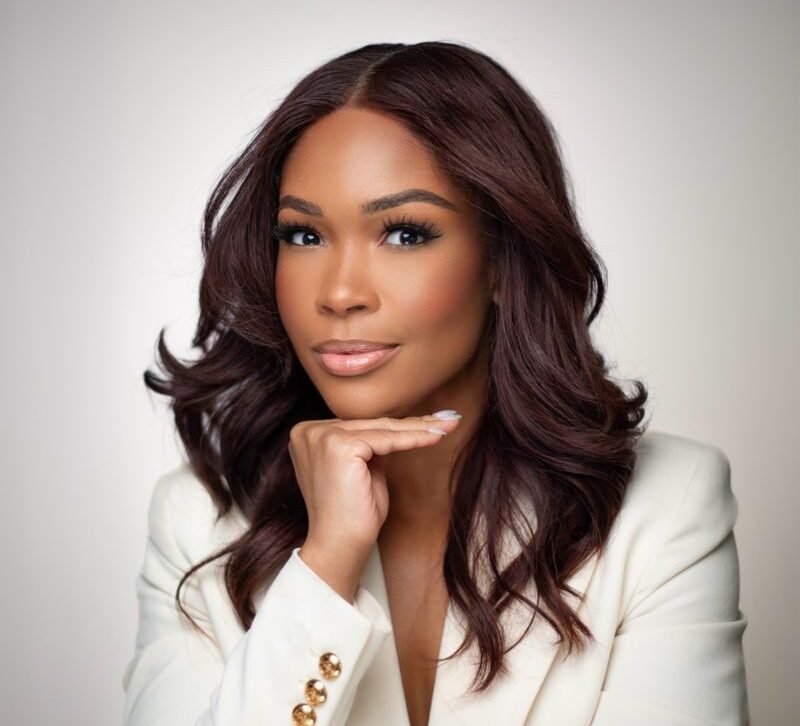
Spending her time between Accra and London, Mimi Kufuor is constantly on the move, pitching crypto to skeptics and arranging speaking engagements to discuss moves being taken by the startup KoinKoin.
Nearly three years into leading operations for the Africa-focused cryptocurrency exchange, she moves with the ease of someone who has long since stopped chasing conventional success.
“I’ve always known I’d be successful,” she says, “but on my own terms.”
Her journey has seen her spend childhood summers in Manhattan, walking the high-octane trading floors of London, experiencing Meta’s remote-work pandemic heyday, and now traversing the still-nascent world of African digital assets.
Now, as Ghana finalises its licensing regime for virtual asset providers, Ms. Kufuor is at the centre of an industry that once seemed fringe and is suddenly, almost overnight, mainstream.
From Manhattan to Accra
Born in Accra, Kufuor left at age three when her father, a diplomat in Ghana’s Foreign Ministry, was posted to New York.
The family — parents, an older sister, and two older brothers — settled in Manhattan for six years. She attended local schools but later returned to Ghana at nine.
Even then, creativity ran through her. “I loved reading,” she recalls. English was her favourite subject. Her mother, a dressmaker who later took fashion courses in New York, would put on television painting programmes while the older siblings were at school.
At one point, she and a friend vowed to become computer scientists, dazzled by the family’s new desktop. A career in paediatrics flickered briefly; law appealed because her father had studied it, and she relished debate.
But practicality — and a touch of teenage rebellion — prevailed.
When her father dismissed marketing as unnecessary for university, she chose economics, the subject in which she excelled. She earned her degree at the University of Leicester in Britain.
Jumping into Investment Banking
Whilst in Britain, a charismatic lecturer with an investment-banking past, made the City of London sound irresistible.
Internships followed, then a placement year at Schroders. Soon, Kufuor landed on the trading floor at Credit Suisse.
Contrary to the screaming chaos of Hollywood myth, her team was young, tight-knit, and sociable.
“We had fun,” she says. “There were always drinks, parties — a bit over the top, but nothing like the movies.”
The work was exhilarating: seeing university textbooks in active use, supporting traders in real time.
Yet the corporate ladder began to feel finite. After several years in consulting — leading risk and transformation projects across investment banks — she grew restless.
“Even if you make partner,” she thought, “then what?”
Pivot to Crypto
A friend’s fintech start-up offered an escape. During the pandemic, after an unhappy stint at Bank of America and a brief, surreal turn at Meta (recruited at a friend’s birthday party), layoffs hit.
The same friend renewed his pitch: join as a C-suite executive at a digital-assets exchange modelled on Coinbase and Binance, but built for Africa.
She hesitated — “You can’t afford my Meta package,” she told him — but the vision won out. Equity, ownership, and the chance to shape something meaningful in Ghana proved decisive.
The early days were bruising. “Crypto was a swear word in finance,” she says. Banks balked at opening accounts; friends admitted bewilderment. Yet the technology’s promise for the continent was clear to her.
Currency crises, punishing remittance fees, cross-border friction — digital assets, especially stablecoins, offered relief. Nigeria’s rapid adoption during the naira’s collapse had already proved the point.
Ghana’s Virtual Asset Push
In 2025, Ghana issued its draft framework for virtual asset providers. Kufuor threw herself into the process, splitting time between London and Accra, meeting regulators, speaking at conferences, and embedding herself in the local ecosystem.
The framework has since become law; licensing applications are advancing. “Last year was about getting things off the ground,” she says.
This year, her focus broadens: building her personal brand, speaking widely, and — most urgently — educating.
“I want everyone to be able to sit at a dinner table and talk about Bitcoin or digital assets without feeling lost,” she says. The goal is not evangelism but accessibility: bridging the gap between early adopters and wary sceptics so adoption can accelerate across Africa.
Future Forward
Looking back, she has few regrets. Creative outlets have always simmered alongside the day job — an Afrocentric accessories line called Ahoma, a growing collection of African art.
One day, perhaps in her 50s or 60s, she imagines an art gallery that blends interiors, fashion, and pure creativity. For now, those passions wait.
Her advice to younger professionals is blunt and hard-won: know yourself, follow genuine interest, and do not fear pivoting.
“I’ve left jobs, been fired, been laid off — everything,” she says. “But I’m still here, and clearer than ever about what I want.”
Corporations, she warns, offer no real loyalty. Fulfilment, not titles or salary alone, is the metric that lasts.
In an industry suddenly flush with political tailwinds and institutional money, Kufuor remains grounded in the continent’s specific needs. From Manhattan schoolyards to Accra’s regulatory meetings, her path has been anything but linear — and, she insists, all the better for it.