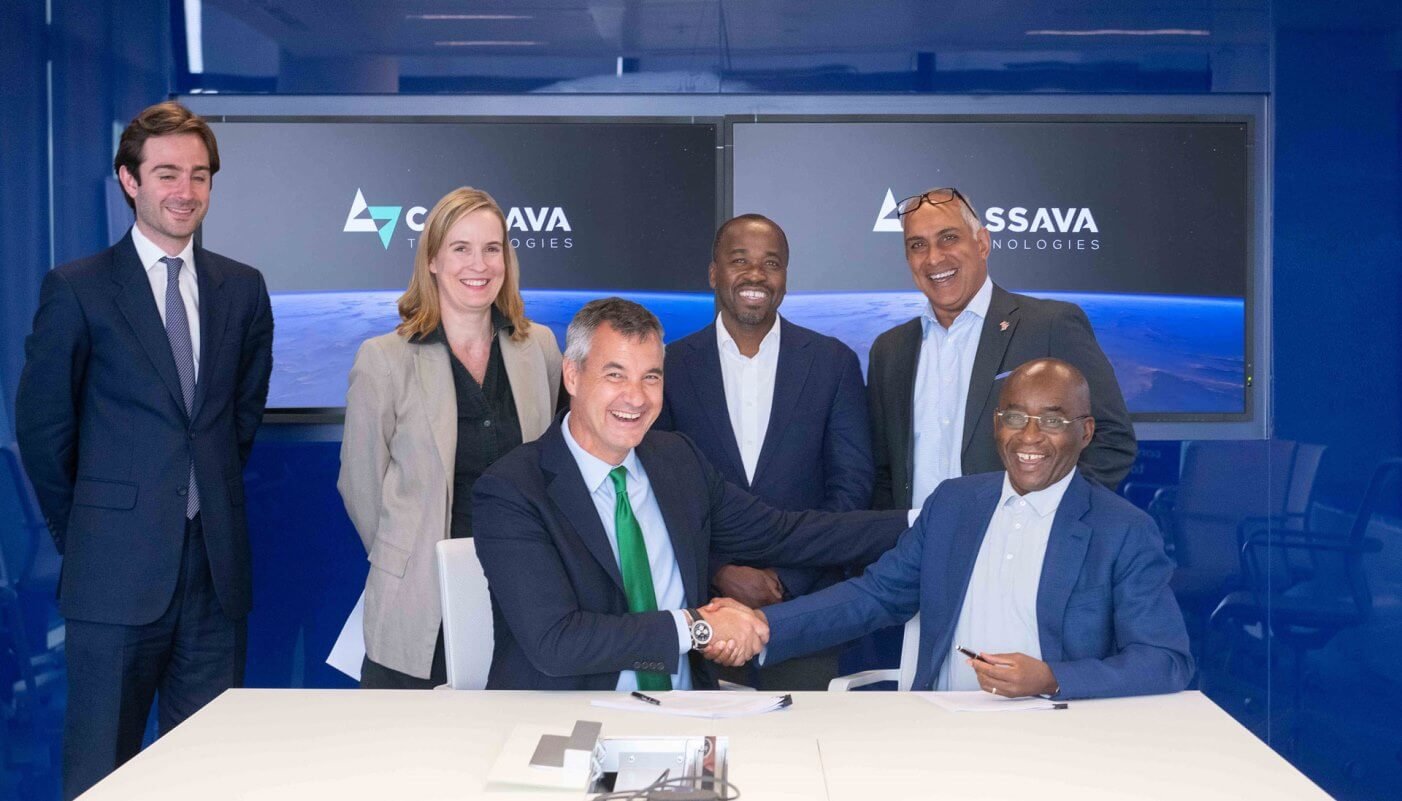
LONDON — For years, Cassava Technologies has pitched itself as the ultimate “Pan-African” success story: a sprawling digital titan boasting 110,000 kilometers of fiber optic cable and grand ambitions to build “AI factories” from Cape Town to Cairo.
Backed by blue-chip partners like Google and Nvidia, and led by the celebrated billionaire philanthropist Strive Masiyiwa, the company seemed to represent the continent’s high-tech future.
But in a stinging credit opinion released in late 2025, Moody’s Investors Service quietly inserted a sentence that has sent a chill through the international bond market.
Strip away the subsidiaries spanning 31 countries, the ratings agency noted, and Cassava’s interest coverage ratio—a vital measure of financial health—falls below 1.0.
In plain English: Cassava cannot even pay the interest on its debt without the cash generated by a single company in one country: Econet Wireless Zimbabwe.
Munyaradzi Hoto, C-suite technology executive and strategic advisor, documented his findings on Cassava Technologies in an X article.
He reframes the entire edifice of Mr. Masiyiwa’s empire.
What was marketed as a diversified continental powerhouse now appears to be a heavily indebted holding company dependent on a Zimbabwean mobile operator that sits entirely outside the legal reach of Cassava’s creditors.
The Arithmetic of Dependency
The math is as stark as it is alarming. An interest coverage ratio below 1.0 suggests that Cassava’s non-Zimbabwean operations—the very assets supposedly driving its “Pan-African” growth—generate less earnings than the roughly $40 million required to service its annual interest bill.
By contrast, Econet Wireless Zimbabwe is a juggernaut. It holds a 73 percent market share and maintains EBITDA margins exceeding 45 percent. It is, by all accounts, phenomenally profitable.
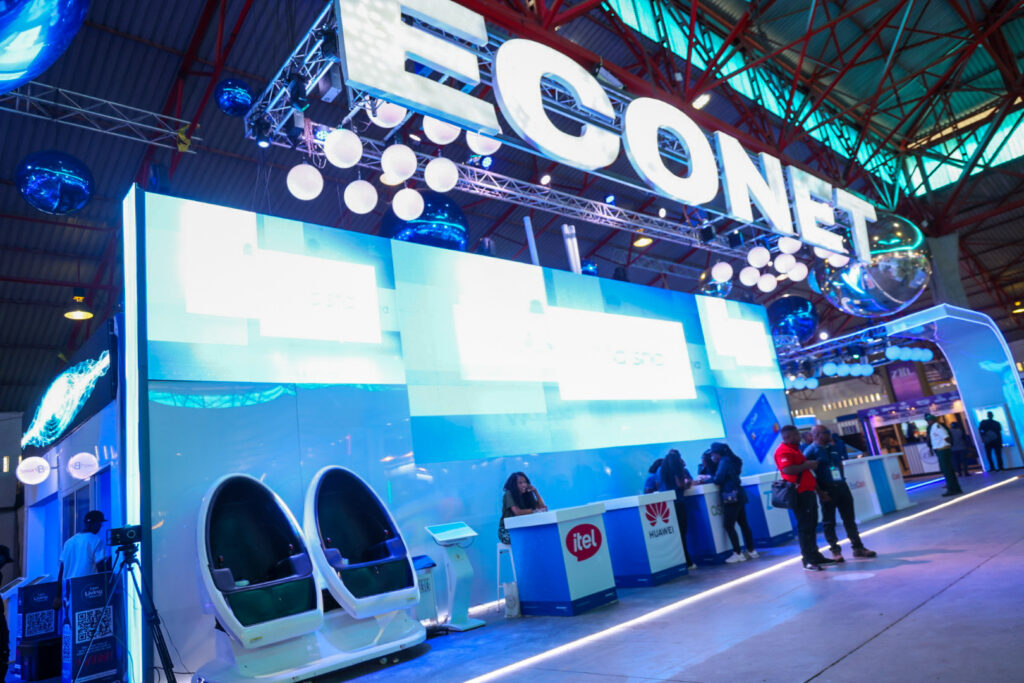
The problem for bondholders, who are owed $620 million, is that Econet Zimbabwe is a separately listed entity on the Zimbabwe Stock Exchange. Creditors have no direct claim to its assets.
They cannot compel dividends, and they cannot seize its towers. They extended credit to a parent company whose core operational assets, when properly measured, cannot support the debt.
A Strategic Disappearance
As Cassava approaches a massive $751 million maturity that it appears unable to meet, Mr. Masiyiwa has made a move that has further unnerved the markets.
In December, he announced that Econet Zimbabwe would delist from public markets, citing persistent valuation discounts.
The timing is significant. As a public company, Econet Zimbabwe must disclose quarterly financials and material transactions. As a private entity, it enters a “black box.” Bondholders will lose the ability to verify the very cash flows their recovery depends on.
“The question is straightforward,” Mr. Hoto wrote in his article. “If Econet Zimbabwe has been undervalued for years, why choose this moment—with $751 million maturing and no credible refinancing path—to remove it from public scrutiny?”
The ‘AI Paradox’
While the company’s treasury department struggles with missed deadlines, its marketing arm has been in overdrive.
Cassava recently announced plans to deploy 12,000 Nvidia GPUs to create “AI factories.”
Yet, the economics are difficult to reconcile. Enterprise GPUs and the infrastructure to support them cost hundreds of millions of dollars, with revenue likely years away.
Simultaneously, Cassava agreed to sell a stake in its Africa Data Centres to STANLIB to raise cash for debt reduction.
To some observers, the strategy looks less like a coherent expansion and more like capital markets positioning—selling the buildings while promising to fill them with expensive computers.
The Pattern of Slippage
The refinancing effort has been characterized by what creditors call “repeated slippage.” A conditional commitment from a consortium including Standard Bank and the IFC remains stalled, contingent on a $125 million equity raise.
Despite the presence of sophisticated investors like the U.S. International Development Finance Corporation (DFC) and British International Investment (BII) on the register, $65 million of that raise remains elusive.
According to analyst Mr. Hoto, the delay raises an uncomfortable question: What have these blue-chip investors seen in the data room that is giving them pause?
The Creditor’s Dilemma
Bondholders now face an unenviable choice. They can accept a restructuring at a significant loss, or they can attempt to enforce their rights across 25 different African jurisdictions with wildly varying legal frameworks.
Their third option is to simply hope that Mr. Masiyiwa continues to upstream dividends voluntarily.
But in the world of high-stakes finance, hope is not a legal right.
Mr. Masiyiwa is a man who built his empire through five years of grueling litigation against a hostile government; his achievements in infrastructure are undeniable. But none of that changes the arithmetic.
Without the Zimbabwean “cash cow” visible to the public eye, the Pan-African tech story looks increasingly like a heavily indebted collection of assets tethered to a single point of failure.
This article was edited with AI and reviewed by human editors