


Republished from Substack
On the evening of February 6, 2026, a 29-year-old engineer named Charles Amissah was struck by a hit-and-run driver at the Nkrumah Circle Overpass in Accra. He was on his way home from work.
Emergency Medical Technicians from the National Ambulance Service received the call at 10:32 pm and arrived within three minutes; that response time would be creditable anywhere in the world.
But what followed was a replay of the grim spectacle that decades of political indifference have made eerily familiar: for nearly three hours, a crew that had responded promptly, stabilized their patient, and pleaded against further transport as his condition deteriorated was forced to try their luck – staking a dying man’s narrowing window of survival on the blind hope that the next gate they pulled up to would belong to a facility that could actually receive him.
The three hospitals that turned away the crew and their patient were not small private clinics or under-resourced district facilities but, by any reasonable measure, some of the best-equipped facilities in the capital.
Charles Amissah went into cardiac arrest and died on the road between the institutions meant to save his life.
Days later, while his family was still searching for him as a missing person, the Ashanti Regional Ambulance Service issued a stark warning that the same pattern of ambulances trapped for hours searching for beds is crippling emergency response in Kumasi – a reminder that this is not a localized failure but a national one.
And this is not new. In 2018, it was Anthony Opoku-Acheampong, a 70-year-old man who was turned away by seven hospitals in Accra. In 2021, it was a 12-year-old boy in the Volta Region, referred from Battor Catholic Hospital to Korle Bu, turned away, and left to die while two Members of Parliament scrambled by phone to find him a bed.
These are some of the stories we know. They do not account for the pregnant women who haemorrhage in transit between facilities that cannot admit them, the accident victims who bleed out in ambulances circling a city full of hospitals with nothing to give, or the countless others in the unseen and forgotten places of this country whose deaths never make the news.
That this is still happening in 2026 – not for lack of knowledge, not for lack of policy options, and not for lack of public outcry – is obscene. There is no other honest word for it.
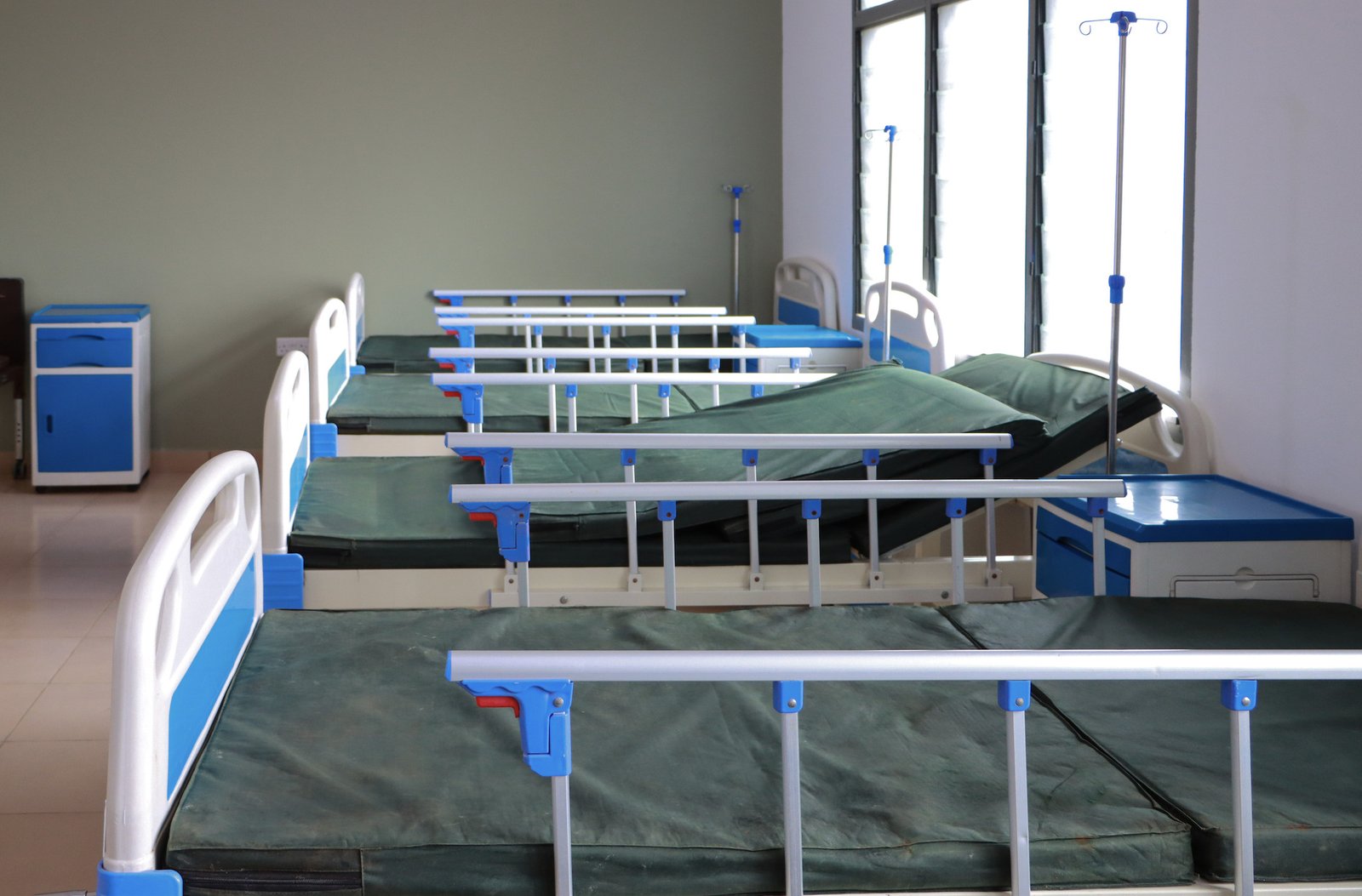
To understand the crisis of emergency care in Ghana, we should start by retiring the label “no-bed syndrome.” Ghana indeed has only 0.9 hospital beds per 1,000 people, well below the World Health Organization’s recommended minimum of five.
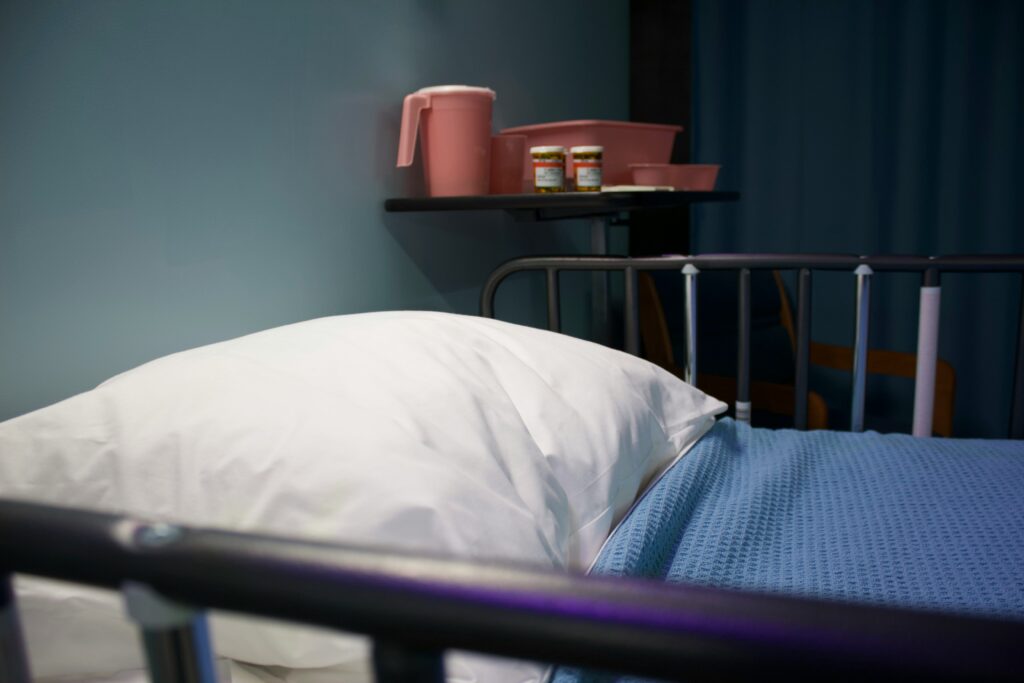
The 2023 National Harmonised Health Facility Assessment, which surveyed all facility levels except tertiary hospitals, counted 26,172 actual inpatient beds nationwide.
This figure, in fact, was 4,299 fewer than the 30,471 officially authorized, suggesting a national contraction in bed stock on the blindside of the system as worn-out beds are decommissioned without replacement.
During the COVID-19 pandemic, ten of sixteen regions had zero ICU beds. The entire nation of thirty million shared 113 adult and 36 paediatric intensive care beds until private sector actors constructed the Ghana Infectious Disease Centre.
These figures are a scandal. The wasted opportunity to meaningfully address the situation with the billions that flowed into Ghana during the pandemic is even more so.
Building bed capacity is necessary work, but naming the entire emergency care crisis after a single metric is a convenient fiction that obscures deeper, more perturbing failures.
The “no-bed” label sanitizes the perennial crisis of emergency care by reducing the complex ecosystem of life-saving interventions into a simple furnishing issue. It implies that the solution is merely more beds, when what is actually missing is adequate capacity: the right space to receive and stabilize, the right staff to assess and treat, the right staff to monitor and intervene.
The euphemism invites the comfortable conclusion that if we just added more beds, the problem would be resolved. It will not. When a facility turns away an emergency, it is rarely because there is literally no flat surface on which to place a patient.
The facility is using a shorthand for a universe of concealed failures: a lack of functional ventilators, a shortage of critical care nurses, exhausted oxygen supplies, or a breakdown in the referral chain, to name just a few. It is because the facility lacks the combination of personnel, equipment, and medication required to take responsibility for that patient’s life.
To call this a “no-bed” problem is akin to calling a famine a “no-plate” problem.

And this is not merely a semantic objection. The “no bed” framing does something more insidious: it misdirects responsibility. When we frame the crisis as a bed shortage, we locate the point of failure at the interface between patient and health worker; the nurse who said no, the doctor who did not come out, the hospital that closed its doors.
The bed becomes the explanation, and the health worker becomes the villain. This framing is comforting for lay understanding because it gives public grief a human target. It is convenient for the political class because it deflects attention from its own failures of investment, design, governance, and conscience.
What it found is not merely a bed shortage. It is a system-wide deficit in readiness that goes a long way toward explaining why so many emergencies end up at the gates of a handful of tertiary hospitals in the first place.
This framing allows every incident to be discussed as an isolated operational failure at a specific hospital on a specific night, rather than the grim, inevitable harvest of chronic, systemic underinvestment and neglect.
It absolves the state of its own obligations and creates the impression that a clinician confronted with a critical patient and no ventilator, no blood, no surgical capacity, and no space is simply choosing not to help – as though the problem were callousness of the health worker, not collapse of the health system.
But any honest accounting must recognise that our healthcare workers are victims, too. They are overworked. They are under-equipped. They are underpaid. Many of them cannot even afford care at the very facilities where they work. These are the people we expect to save Charles Amissah. These are the people we blame when they cannot.
The Real Diagnosis
The 2023 National Harmonised Health Facility Assessment surveyed every level of the health system below the tertiary hospitals – the district and regional hospitals, polyclinics, health centres, and CHPS compounds that form the vast majority of the country’s care infrastructure, and from which patients are stabilized and referred upward.
What it found is not merely a bed shortage. It is a system-wide deficit in readiness that goes a long way toward explaining why so many emergencies end up at the gates of a handful of tertiary hospitals in the first place.
Do we have the right staff, and do we have enough of them? Only 32 percent of facilities surveyed had staff who had received any training in emergency services in the preceding two years, and only three in ten facilities had a strategy to meet staffing needs during an emergency.
Among the workforce that has received training, we are hemorrhaging it to emigration, and research consistently shows that it is the most experienced and specialized professionals who leave, the very people whose skills take years and significant public investment to develop, and whom newly qualified replacements cannot substitute for.
Only 15 percent of facilities had 24-hour rapid access to emergency transport for referral out, and only four percent had round-the-clock radiological services – a devastating figure when you consider that road traffic injuries, like the one that killed Mr. Amissah, require imaging to assess.
The United Kingdom now employs more Ghanaian nurses than Ghana does. Nearly half of the nurses in this country have considered emigrating, driven by low wages that are often delayed, negligible career progression, the absence of basic consumables, and the grinding psychological toll of a system where patients die from constraints no clinician can control.
Over 70,000 trained health workers remain unemployed at home while thirteen countries actively recruit our professionals. We invest heavily in producing talent, fail to employ much of it, and engineer the precise conditions for its departure. The few who are trained leave. Many who stay are not equipped. The gap widens in both directions.
Are we giving them the best tools?
The facts are unambiguous. Only four percent of facilities offering emergency services have all essential equipment for airway intervention, one of the most fundamental acts in emergency medicine.
Only two percent have all the essential equipment for circulation intervention. Safe blood transfusion is available at just 15 percent of emergency facilities nationwide.
Not a single one of the 1,487 facilities surveyed had all the assessed cardiac intervention equipment and medicines available on the day of the survey – not one. Less than 55 percent of hospitals and polyclinics had any cardiac intervention capability at all.
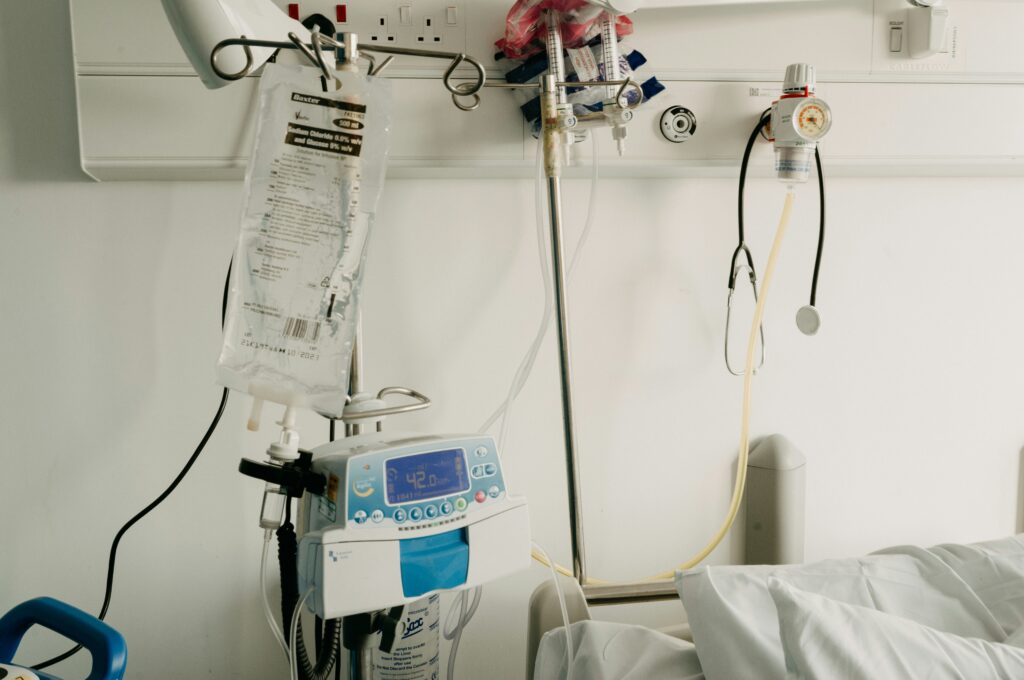
Defibrillators, without which cardiac arrest is effectively untreatable, were present in only 69 percent of regional hospitals, 43 percent of district hospitals, and 35 percent of other general hospitals. Adrenaline and aspirin – two of the most basic emergency medicines – were found in just 33 and 30 percent of emergency facilities, respectively.
Only 15 percent of facilities had 24-hour rapid access to emergency transport for referral out, and only four percent had round-the-clock radiological services – a devastating figure when you consider that road traffic injuries, like the one that killed Mr. Amissah, require imaging to assess.
When a district hospital lacks the equipment to manage a case it should be capable of handling, that case gets pushed upward. Multiply this across hundreds of facilities, and the result is predictable: a handful of tertiary hospitals bear the impossible weight of a system that cannot manage emergencies at any level below them. And the tertiary hospitals themselves are not the outliers we might hope.
The distribution of specialists and critical equipment is heavily skewed toward major urban centres, and even there, capacity is thin. The facilities at the top of the referral chain are better resourced, but they are not well resourced; they are simply the least deprived point in a system that is deprived throughout.
Are we building the right environments and systems for them to work?
Only 19 percent of all facilities have a 24-hour dedicated emergency unit. Nearly half of all facilities offering emergency services have never been able to provide oxygen in the emergency area.
Only 15 percent had systems in place for routine maintenance of basic infrastructure, and only 51 percent had a communication system of any kind, dropping to 36 percent at the CHPS level.
Where the physical infrastructure is absent, the operational systems that depend on it collapse with it: only 19 percent of facilities offering emergency services had protocols for the initial approach to ABCs – the most elementary framework in emergency medicine.
Only 34 percent had a formal triage system. Six percent had a trauma care checklist, four percent had a standardized emergency clinical form, and just 12 percent had conducted an emergency drill in the preceding year.
Are we investing enough in emergency care, and are we investing with intention?
The question is not simply whether money is being spent, but whether it is being spent in a coordinated way that is designed to produce systemic outcomes. Too often, investment in health infrastructure has been driven by procurement rather than by problems — by what can be purchased and commissioned rather than by what the system actually needs to function as a system.

We build facilities without equipping them. We equip them without staffing them. We staff them without connecting them. Each investment is treated as a standalone transaction rather than a component of a coherent strategy for emergency care delivery.
The financing of emergency admissions compounds the dysfunction. For years, the National Health Insurance Scheme was a source of disillusionment rather than confidence for health facilities: claims delayed by nine months or more turned the promise of reimbursement into a fiscal gamble that many hospitals could not afford to take.
The new NHIS leadership has brought welcome energy and a genuine effort to restore the institution’s credibility – but the hangover from years of disappointment is real.
Not Every Refusal Is Justified. But Most Are Predictable
None of this is to suggest that every refusal is justified, or that individual accountability does not matter. There are facilities where leadership is poor, where protocols are ignored, not because they are unsupported but because they are unenforced, and where clinicians make decisions that fall below the standard of care they are trained and equipped to provide.
Those cases exist, and they deserve scrutiny. The investigation into Charles Amissah’s death may well reveal instances where individuals could and should have acted differently.
But to treat individual culpability as the primary explanation for a pattern that repeats itself across regions, across years, and across governments is to mistake the symptom for the disease.
A system in which the majority of emergency facilities lack basic airway equipment, in which most have no triage protocol, and in which half cannot even provide oxygen is not a system being failed by bad actors. It is a system designed to produce the outcomes it is producing.
The honest question is not why did those three hospitals turn Charles away, but why do we continue to build and fund a health system that makes turning patients away the rational decision?
Whose Responsibility Is This?
Every one of these failures – retention, equipment, information, infrastructure, financing – points in one direction: away from the hospital floor and toward the people who set policy, allocate budgets, and make political choices.
The staff at Police Hospital, Ridge, and Korle Bu that night were not acting in a vacuum. They were acting inside a system that the political class has constructed, chronically underfunded, and then routinely turns on them when it produced its predictable result.

What does it say about the national conscience that we can diagnose these problems with perfect clarity and yet tolerate them across successive governments? What message does it send if the political response to a preventable death is an investigation committee, but the fiscal response is silence?
The death of Charles Amissah is not just a clinical failure. It is also a political failure. The investigation should be welcomed, and the Minister’s decision to personally chair it suggests a seriousness of intent. But its terms of reference should extend far beyond three hospital reception desks.
If the investigation is to mean anything, it must ask not just what happened at those hospitals on that night, but what we have done – and failed to do – to make sure that the next ambulance crew does not face the same impossible situation.
The answer to that question will not be found in a disciplinary hearing. It will be found in a budget, in a workforce strategy, in an equipment procurement plan, in an information system, and in the political will to treat emergency care not as an afterthought but as a basic obligation of the state.
The system that should have saved Charles Amissah’s life did not break down that night – it performed exactly as it had been designed to perform. The least we owe him is the honesty to say so and the urgency to build something better.
The “Reset” we are promised cannot be a cosmetic exercise in reshuffling committees or donating more metal frames to overcrowded wards. It must be a radical restoration of the social compact – the understanding that a state which collects taxes, demands loyalty, and promises development owes its citizens, at the very least, a fighting chance at survival when catastrophe strikes.
It requires a health system where data flows faster than the ambulances, where healthcare workers are treated as national treasures rather than disposable labor, and where accountability is a systemic mandate rather than a periodic performance for the cameras.
We can no longer afford the luxury of performative outrage. If we do not dismantle this ritual of dehumanization now, we are merely waiting our turn in the back of that ambulance, pleading at the same gates. No one who lives in this country is exempt from that reality.
The bell that tolls for Charles Amissah does not distinguish between the engineer and the minister, the nurse and the parliamentarian, the trader and the judge. So every time we hear it, we must know it tolls for us all.
The views and opinions expressed in this article are those of the author and do not necessarily reflect the views of The Labari Journal. This content represents the author’s perspective and analysis.



Follow