


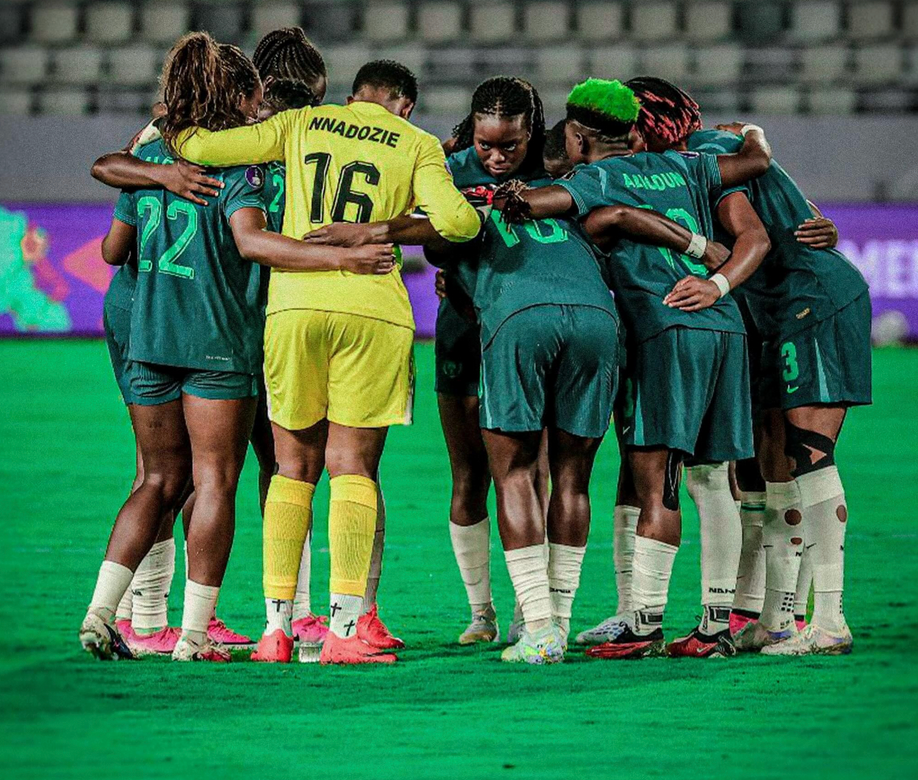
Mission XI is over.
For the first time since the inaugural FIFA Women’s World Cup in 1991, Nigeria will not be there. The Super Falcons, the only African team to have appeared at every edition of the tournament, will watch Brazil 2027 from home.
It is difficult to overstate the significance of that sentence.
Nigeria arrived in Morocco as defending champions, ranked first of the continent and carrying ten WAFCON titles behind them. They leave having lost three matches in a single campaign: first to tournament debutants Malawi, then to Cameroon in the quarter-finals, and finally to South Africa in the play-off that represented their last pathway towards Brazil.
What began in defeat ended in defeat. Now, the Super Falcons are on their way home from Morocco. For a team accustomed to making history, this was history of a different kind.
Group C consisted of Zambia, Egypt, Malawi and Nigeria. On paper, progression looked achievable for the most successful team African women’s football has ever produced. But football is not played on paper, and reputations do not score goals.
When the Super Falcons stepped onto the pitch for their opening match, almost no one expected them to lose to a nation playing its first WAFCON. For 72 minutes, the score remained 0-0.
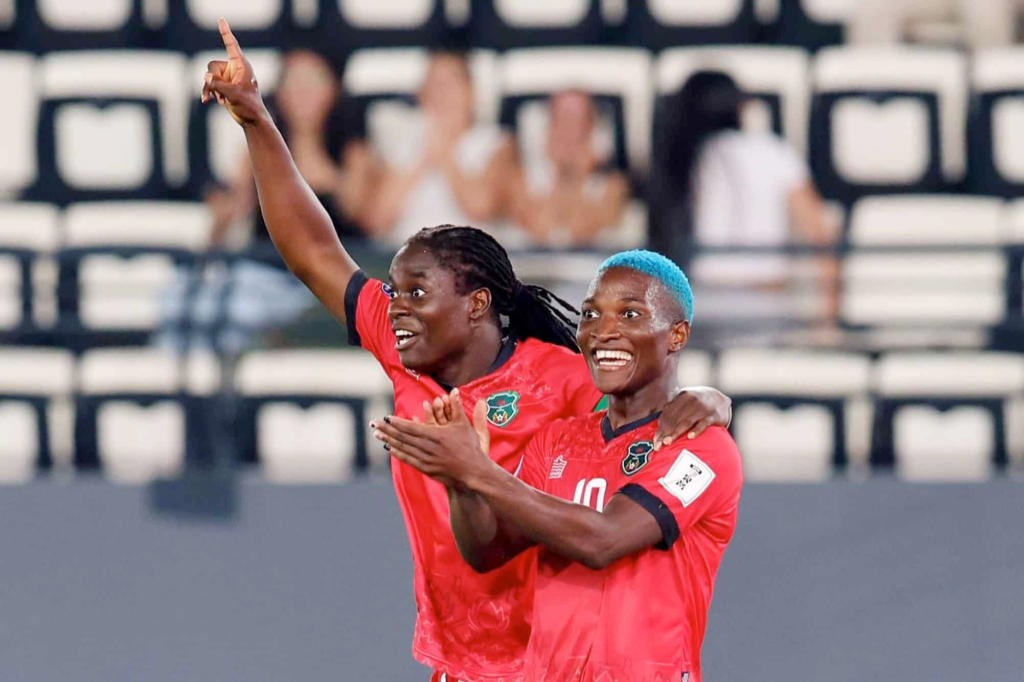
Then came Temwa Chawinga.
She scored in the 73rd minute. Six minutes later, her sister Tabitha bumped the scoreline to 2-0. Everyone watching was stunned. Nigeria, who looked as though they were expecting an easy victory, scrambled to find their edge in the remaining minutes.
Rasheedat Ajibade converted a penalty in the second minute of stoppage time to give Nigeria hope, only for Temwa to score again three minutes later. Uchenna Kanu’s goal in nine minutes of extra time changed the scoreline, but not the outcome. Nigeria had lost their opening match. The wake up call came too late.
Nigeria 2, Malawi 3.
The Chawinga sisters had announced Malawi’s arrival on African football’s biggest stage by defeating its most decorated team. Nigeria’s journey beyond the group stage was no longer a straight line.
When you have won as often as Nigeria has, there is an inclination to begin treating winning as a surety rather than an achievement, something earned. That temptation does not belong solely to the players.
It belongs to all of us who make up team Nigeria: supporters, administrators, coaches, the country’s football federation, a football establishment that has spent decades expecting the Super Falcons to overcome whatever circumstances are placed in front of them, preparedness aside.
Leading up to the tournament, the narrative around the team was one of well-deserved hype. But that hype served more as a distraction than a driver of ambition, evidence of what is possible through intentionality.
Before this year, Nigeria had fought and won the battle 10 out of the 13 official WAFCON tournaments, a feat that felt like history repeating itself each time. The next closest country, Equatorial Guinea, had won twice but failed to qualify this year. South Africa, the next in line, had only won once. Neither team has come close to dethroning Nigeria of this accomplishment.
All Eyes on the Falcons
Nigeria entered this tournament as global favourites. Their road to an 11th title seemed imminent, almost written in the stars. But sometimes, fact is stranger than fiction. A year ago, the Super Falcons had produced one of the greatest comebacks in WAFCON history.
In the 2024 final, the team were down 2-0 against hosts Morocco. During the second half, they scored three second-half goals and became history-making champions for a solid tenth time. Mission X was complete. An astonishing coup cemented.
It may have also allowed Nigerian football to forget a simple truth: history does not defend titles. Teams do. Well-prepared teams.
As Nigeria climbed its way to the top and stayed there, year after year, the rest of Africa was paying attention. Watching almost any other team in the tournament, it was easy to see how heightened the level of preparedness was. A distinction could be made between Nigeria and every opponent they faced in the hunger that drove them to push the Falcons further and further away from easy victory.
No one was interested in preserving Nigeria’s mythology. Each team was determined to write their own. They approached each match against the Falcons as an opportunity to challenge the status quo. Nigeria’s reputation might have once been enough to make opponents move with caution, but this year, it morphed into a motivating factor. The only ones that woke up too late to this reality were Nigeria.
What We Cannot Forget
If forgetting contributed to Nigeria’s fall, it has also shaped the reaction to it. The criticism since Nigeria’s elimination has been fierce, and it comes from both supporters and those publicly rooting for their downfall. Perhaps some of it is deserved, but at the center of it all, some may forget, are human beings.
Yes, the team did not perform to the standard expected of it. Tactical decisions deserve examination. The coach, along with the Nigerian Football Federation’s preparation of the team, deserves critical probing.
For the most successful women’s football programme in Africa, improvisation should not be the operating model. A country with high ambitions for women’s football cannot respond to failure by treating accountability as disrespect. But accountability and amnesia are not the same thing.
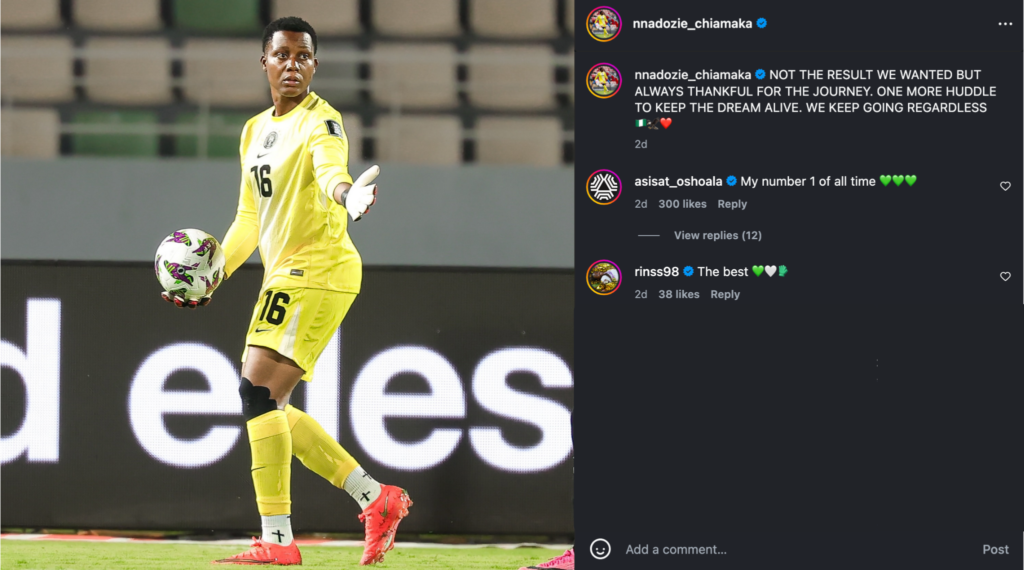
Throughout this year’s tournament, with every defeat encountered, the players took to social media to publicly hang their heads in shame , promising fans that as long as hope was kept alive, they would put their all on the line to secure a positive outcome.
Few things in this life are promised, and sometimes, we learn the hard way. Despite this, I still believe in the team. One bad tournament cannot retroactively erase what these women have achieved.
A year ago, many of the same players being criticized were standing on a podium in Rabat with another African championship medal around their necks. Nigeria went through that entire tournament unbeaten. That happened. Ten championships happened. Nigeria’s uninterrupted presence at every Women’s World Cup from 1991 to 2023 happened. And so did 2026. All of it forms the story of the Super Falcons.
There is a particularly cruel habit in sport, and in life, of treating greatness as something one must continuously prove in order to be treated with care. Win, and everything that came before is evidence of greatness. Lose, and suddenly everything that came before becomes irrelevant.
We should resist that.
Remember This
There will be no World Cup for Nigeria next year. That hurts. Something went wrong. Pretending otherwise would honor no one. But reform should begin with memory, not erase it.
Remember what it felt like to watch a team that had never missed a Women’s World Cup realise that, this time, there would be no way back. Those memories should hurt enough to demand change.
Remember that this team did not inherit its reputation. It earned it. The Super Falcons remain the highest-scoring team in the tournament’s history, with 199 goals, 103 more than South Africa, who are next with 96.
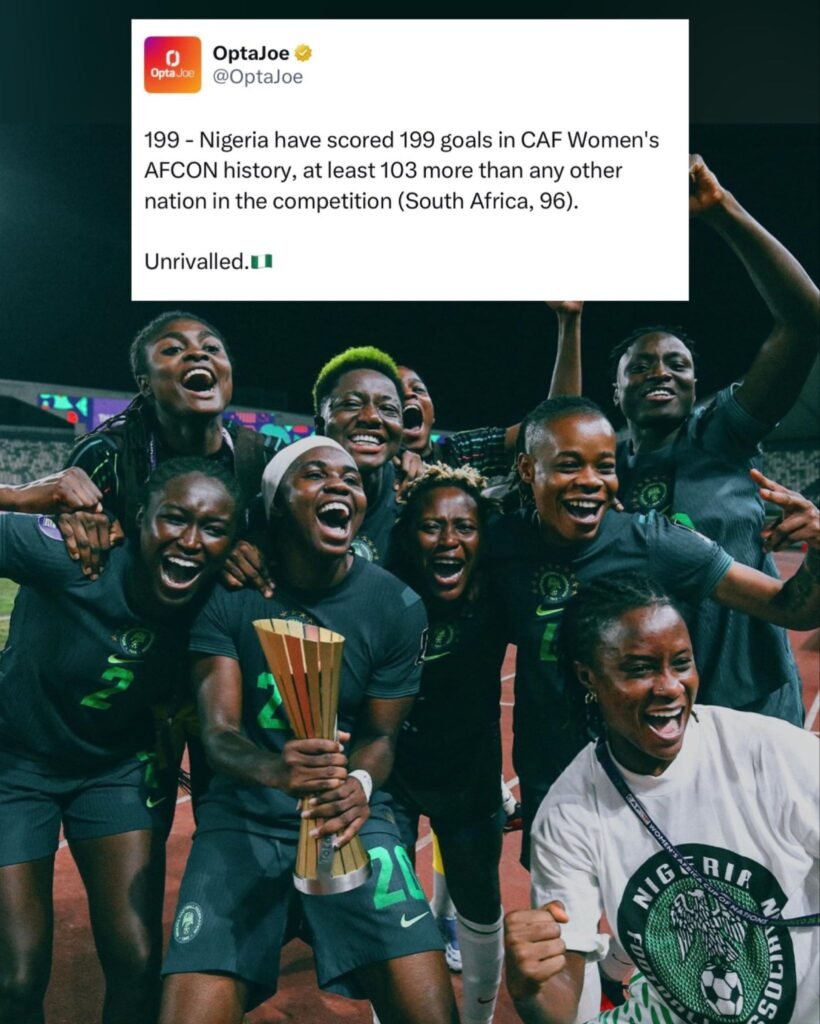
But remember ten championships, victories that did not come easily. The grit, the grind and the guts that led them to glory. Remember every generation of women who built a football dynasty in a country that has not always built the infrastructure their achievements deserved.
Perhaps the most useful lesson of WAFCON 2026 is that there are things the Super Falcons must remember and there are things they must forget: the assumption that yesterday’s dominance guarantees tomorrow’s victory, the idea that Nigeria’s name alone still frightens opponents and the expectation that another miraculous comeback will always arrive.
And the things they must remember?
Who they are. What they have done. And what it took to do it.
To every player who walked off that pitch in tears: we saw you. It was not enough this time. That is the reality of sport. But this tournament does not erase what came before it.
Let it become the reason for what comes next.


Follow