


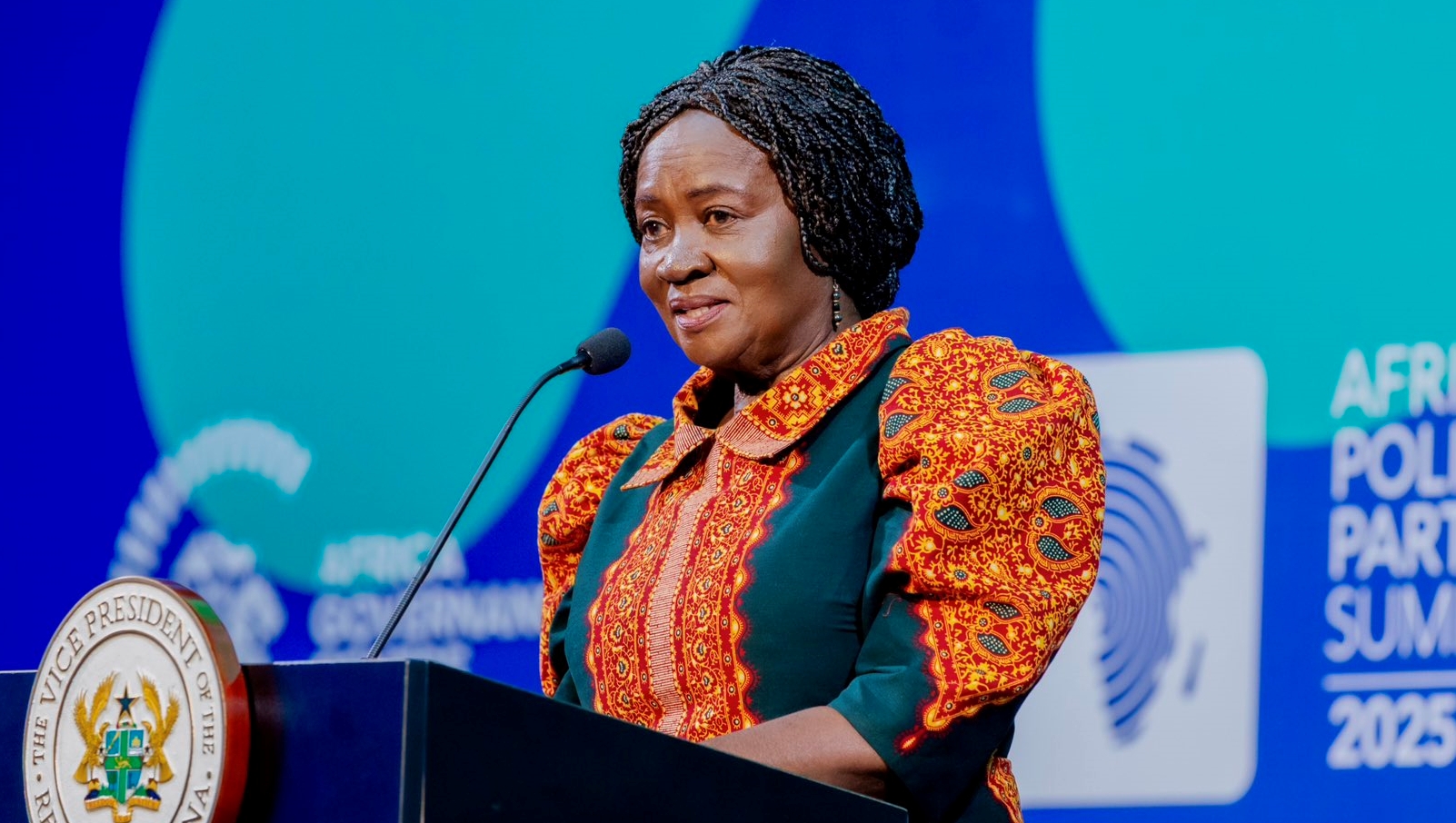
On January 7, 2025, Professor Naana Jane Opoku-Agyemang was sworn in as Ghana’s eighth Vice President, becoming the country’s first-ever female to hold the office.
Professor Opoku-Agyemang has a career in the field of academia and had previously held political office as Ghana’s Minister of Education in 2015.
As an advocate for women’s empowerment, expectations were sky-high when she was sworn into office, with many anticipating her to amplify marginalized voices, challenge systemic barriers, and push for some tangible reforms.
Ten months into her tenure, a pattern has emerged: Prof. Opoku-Agyemang’s surprising silence on recent high-profile issues that strike at the heart of gender equity in Ghana.
The Vice President and her office have not given any statements on recent issues, including the lack of women in President Mahama’s cabinet, the viral outrage over forced haircuts on schoolgirls, and the controversy surrounding the unpaid bonuses for the Black Queens, Ghana’s women’s national football team.
It can be speculated that Prof. Opoku-Agyemang’s lack of public statements on these issues is due to prioritizing political harmony in President Mahama’s term.
But with her continued silence on pertinent female issues, it could damage her brand as an outspoken advocate for female issues in the country, especially given her position as Ghana’s first female Vice President.
Women Sidelined In Cabinet
During his 2024 campaign, President Mahama pledged to nominate a cabinet where at least 30% of appointees would be women, a bold commitment aimed at addressing Ghana’s chronic underrepresentation in leadership.
“Within the first 14 days of my presidency, I will nominate my Cabinet—30% of whom will be women,” he declared, framing it as a cornerstone of inclusive governance.

The Labari Journal published in story that spells out how the Mahama administration has so far failed to honor its promise.
With 55 ministers, including sector, deputy, and regional ministers sworn in, only 10 are women—representing just 18% of the total.
Parliament’s Speaker, Alban Bagbin, did not mince words earlier in March, labeling the low female representation “unacceptable” and a betrayal of the gender equality agenda.
For Prof. Opoku-Agyemang, one of the administration’s most prominent female figures, her voice could have been a call for course correction.
Instead, silence. No public statements, no social media nudges toward greater parity.
Commentators might state that the Vice President began sick leave in April, which could have turned her priority to her health.
But she resumed official duties afterwards and still did not comment.
In October, the Vice President commented and championed gender mainstreaming—urging ministries to integrate women into planning and reaffirming commitments to vulnerable groups.
She has yet to address the issue of female underrepresentation in Mahama’s cabinet.
Her selection to be Vice President was meant to signal a huge win for gender inclusiveness. Yet, her absent voice appears to show complicity in the system.
No Voice On Archaic Female Grooming Rules in Schools
The Vice President’s voice has also been absent from recent local issues.
A video surfaced from Yaa Asantewaa Girls’ Senior High School, showing a newly enrolled first-year student in tears as matrons trimmed her hair to comply with the school’s strict grooming policy.
The video caused widespread debate on social media about why the practice of cutting short hair persists.
The Labari Journal published a story on the debate, noting that the practice is reminiscent of colonial times, where former colonizers viewed natural hair as “dirty” and “uncouth“.

The Minister of Education, Haruna Edrisu, weighed in, stating that the practice is here to stay and its purpose is to build “character” in female students.
He further stated that school was meant to be a place for learning and not “beauty pageants“.
In a moment ripe for leadership, Prof. Opoku-Agyemang—herself a former educator who once decried barriers to girls’ education—could have seized the narrative.
A simple tweet or public statement could have signaled for more conversation on the current practice.
Yet, as of the end of October, there has been no response from the Vice President.
No condemnation of the practice and no call for reviews of grooming policies across senior high schools.
The void is deafening, especially amid her recent speeches on empowering women entrepreneurs and strengthening gender protections.
Black Queens Left in the Lurch
Another controversy that could have used the Vice President’s voice was the non-payment of bonuses for Ghana’s female national team, the Black Queens.
Just days before a crucial qualifier for the 2026 Women’s Africa Cup of Nations against Egypt, the players halted training and threatened to boycott matches in protest over unpaid bonuses.

The players were reportedly owed $9,500 for victories in six games across the 2024 Women’s Africa Cup of Nations.
The standoff unfolded publicly on social media and in news outlets, highlighted deep-seated frustrations: While the men’s Black Stars have historically received prompt payments and perks, the women’s team continued to endure delays.
Prof. Opoku-Agyemang, who congratulated the Black Queens just months earlier in July for their semi-final run at the Women’s AFCON 2025, had an opportunity to bridge the gap between rhetoric and reality.
While she may not have direct control to expedite payments for the team, the Vice President did not publicly voice any opinion on the issue.
This absence was especially stark, given the administration’s broader promises of inclusivity in athletics.
The team resumed training ahead of their game, and their payment was expedited thanks to pressure from social media.
Her silence could be a calculated deference to the presidency, where critiquing cabinet picks or sports funding might fracture unity.
Cost of Complicity
The Vice President has not been entirely mute on women’s issues. In October, she urged transparent resource management to support women and called for investments in female-led businesses to drive Africa’s growth.
Likely, she will also be at the forefront of the National Women’s Development Bank when it is officially launched.
Earlier, at international forums, she recommitted to partnerships that uplift the vulnerable, echoing Mahama’s vision for inclusivity.
But generalities ring hollow when specifics demand attention.
These incidents—the cabinet’s male dominance, continued colonial relics of female grooming in high schools, and the Black Queens’ delay of money owed to them—aren’t abstract; they embody the everyday erosions of women’s dignity in Ghana.

Her continued silence on relevant issues risks undermining her legacy, painting her as a spectator in President Mahama’s cabinet.
Her silence could be a calculated deference to the presidency, where critiquing cabinet picks or sports funding might fracture unity.
Or it could be an oversight in a whirlwind of duties, from medical travels to global dialogues.
Whatever the reason, it underscores an uncomfortable truth: Breaking barriers is one thing; dismantling them from within is another.
Gender Inclusion in Politics
In October, President Mahama predicted Ghana would have a female president “in the very near future.”
Prof. Opoku-Agyemang, with her intellect and influence, holds unparalleled power to do so.
However, according to opinion polls, NDC members have other candidates in mind to fill in after Mahama’s exit in 2028.

An April survey conducted by the data firm Global InfoAnalytics has persons, including Ato Forson (Minister of Finance), Asiedu Nkatia (Chairman of the National Democratic Congress), and Haruna Iddris (Minister of Education), as potential contenders for the National Democratic Congress (NDC) party leadership in 2028.
Meanwhile, their political opponents, the National Patriotic Party (NPP), have all male candidates vying for the flagbearer. Former Vice President, Dr Mahamudu Bawumia, is currently in the lead to assume the position according to opinion polls.
If this trend continues, Ghana should expect a male President in 2029. Whether the country will see another female Vice President remains to be seen.
Prof. Opoku-Agyemang, in her current time in office, has an opportunity to do a lot for female issues in the country. She can choose to speak not in platitudes, but in the language of urgent change to push the needle.
At the moment, her silence on public issues relating to female issues is deafening.



Follow