A flagship government program intended to catapult Ghana’s senior high school students into the digital age has become ensnared in an unexpected and deeply unsettling controversy.
The “One Student, One Tablet” initiative, a key pillar of the Ghana Smart Schools Project, aimed to equip over a million students with free tablets pre-loaded with digital textbooks and learning resources.
However, on the floor of Ghana’s Parliament, Minister of Education, Haruna Iddrisu, announced that some students have been using their devices to access pornographic content.
About The One Tablet, One Student Policy
The Ghana Smart Schools Project, which includes the “One Student, One Tablet” policy, was officially launched by President Nana Addo Dankwa Akufo-Addo on Monday, March 25, 2024, in Accra.
The “One Student, One Tablet” initiative is a component of the project. The government planned to distribute 1.3 million tablets nationwide to enhance learning.
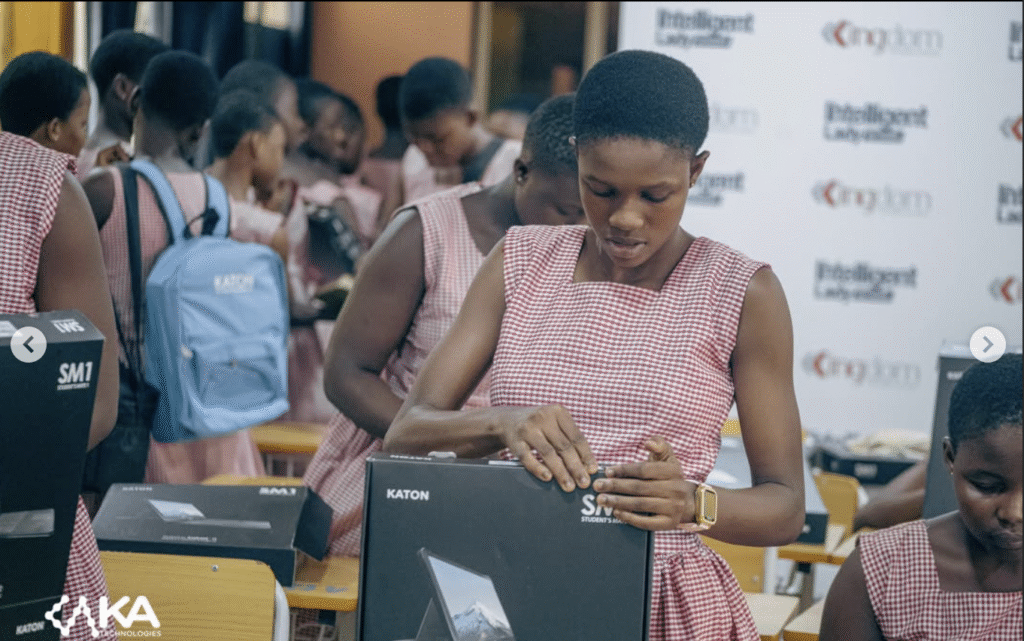
An initial 450,000 tablets were procured and distributed across public senior high schools. According to the government at the time, each tablet costs $250 ( Ghs 3,308.11) and would be supplied by a local firm called KA Technologies.
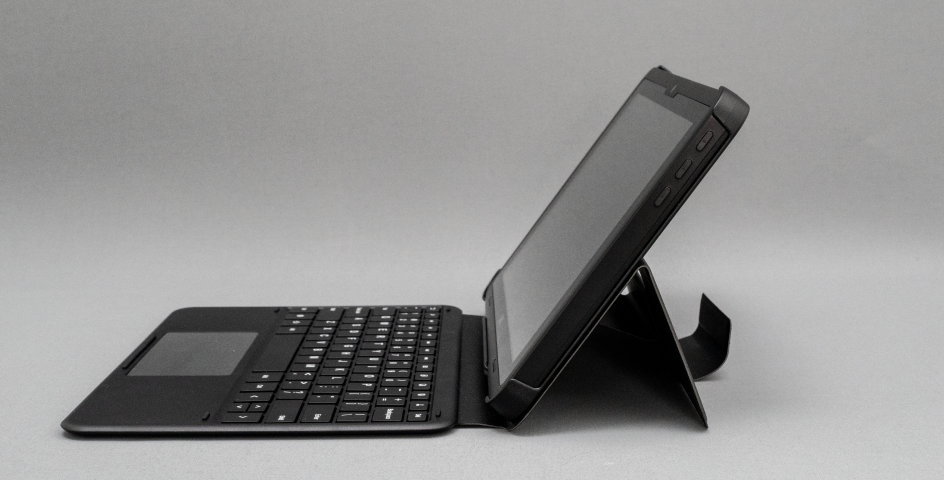
The tablets were reportedly equipped with a Learning Management System (LMS) loaded with necessary academic materials to help ease the burden of carrying heavy physical textbooks.
The project garnered some controversy after members of the opposition political party, the National Democratic Congress (NDC), accused the ruling government of using the project as a form of “vote buying” in an election year.
Lack of Guardrails
On November 28th, the Minister of Education, Haruna Iddrisu, revealed that students had been accessing pornographic materials on the free tablets. He noted that the tablets were not retrofitted with software to prevent access to adult content.
“My attention this morning, Mr Speaker, was drawn to the fact that many of the devices are not customised and the students are using it for other purposes, including pornography, which is not acceptable,” he said in a parliamentary hearing.
He also disclosed that 980,000 tablets out of the original 1.3 million had been distributed so far. He stated that the government would be taking action to restrict future access.
“Government is taking a high view of it, and there must be restrictions as to what the tablets can be used for, and it should be used strictly for the purpose of study,” he told Parliament.
Calls For Recall
Africa Education Watch (Eduwatch), an education policy think tank, has issued an urgent directive for the recall of all devices from all Senior High School (SHS) students to install robust safety controls.
Eduwatch called out the government for its failure to initially equip devices with proper UNESCO-approved safety features and firewalls from the start.
“Those tablets have already been procured and distributed. We recommend that GES retrieve them and ensure that the safety measures are fully implemented,” Kofi Nkansah Sarkodie, Project Management Specialist at Eduwatch, said in a statement.
Some of UNESCO’s standards include a content filtering system that automatically and reliably blocks access to harmful and age-inappropriate content, including pornography. This is usually managed via a centralized Mobile Device Management (MDM) system.
It is yet to be determined whether the tablets had filters installed upon initial distribution.