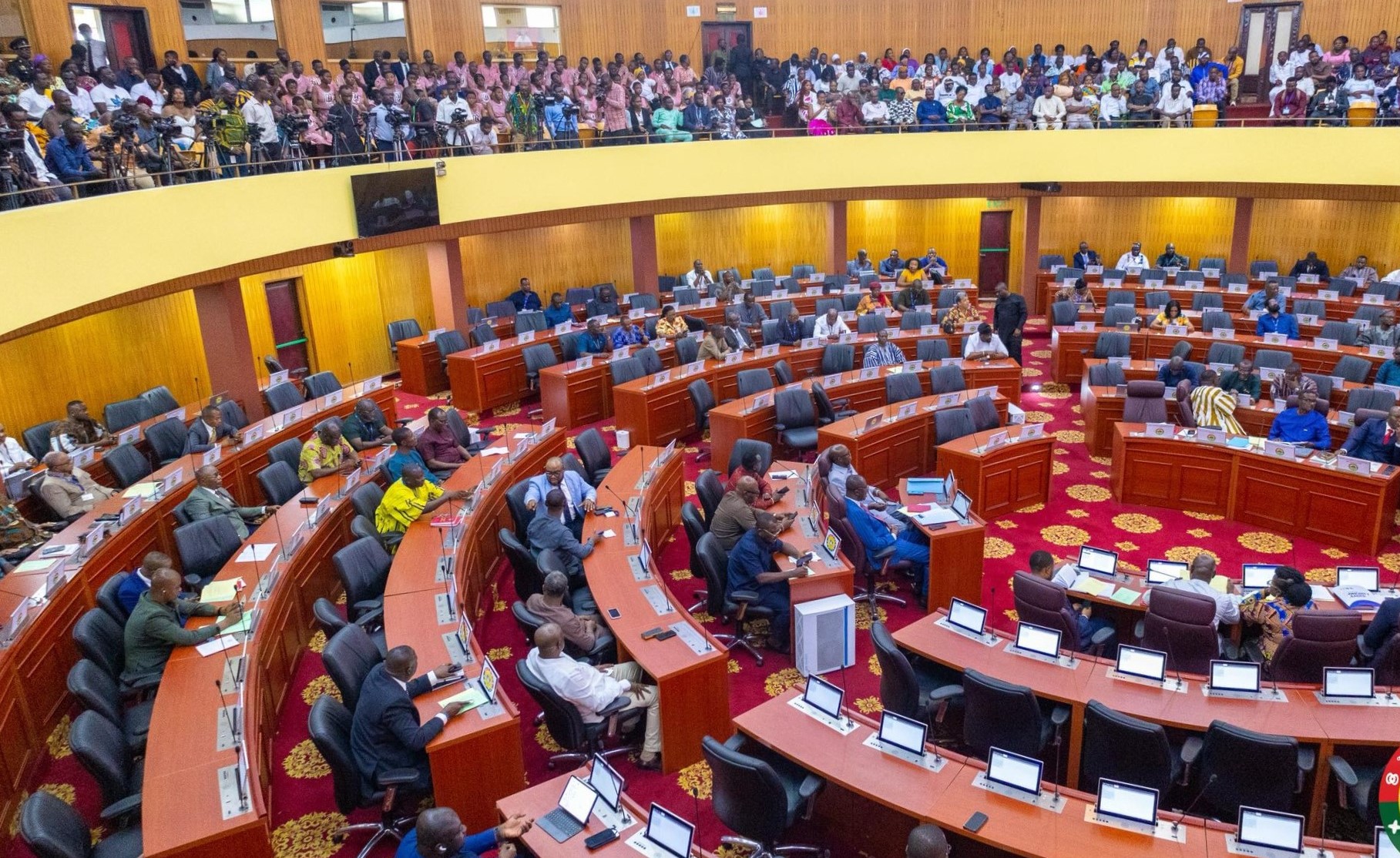
A government-appointed constitutional review committee presented President John Dramani Mahama with an ambitious set of reform proposals this week, recommending sweeping changes to Ghana’s 1992 Constitution.
The proposals would limit executive dominance, strengthen local governance, and reorient the country toward long-term development rather than short-term electoral politics.
President Mahama received the final report from the eight-member Constitutional Review Committee on Monday, fulfilling a campaign promise to revisit the country’s governing framework after his return to office earlier this year.
The panel, appointed in January 2025 with a six-month mandate, conducted extensive nationwide consultations involving more than 21,500 citizens, zonal engagements, and expert submissions before delivering its findings.
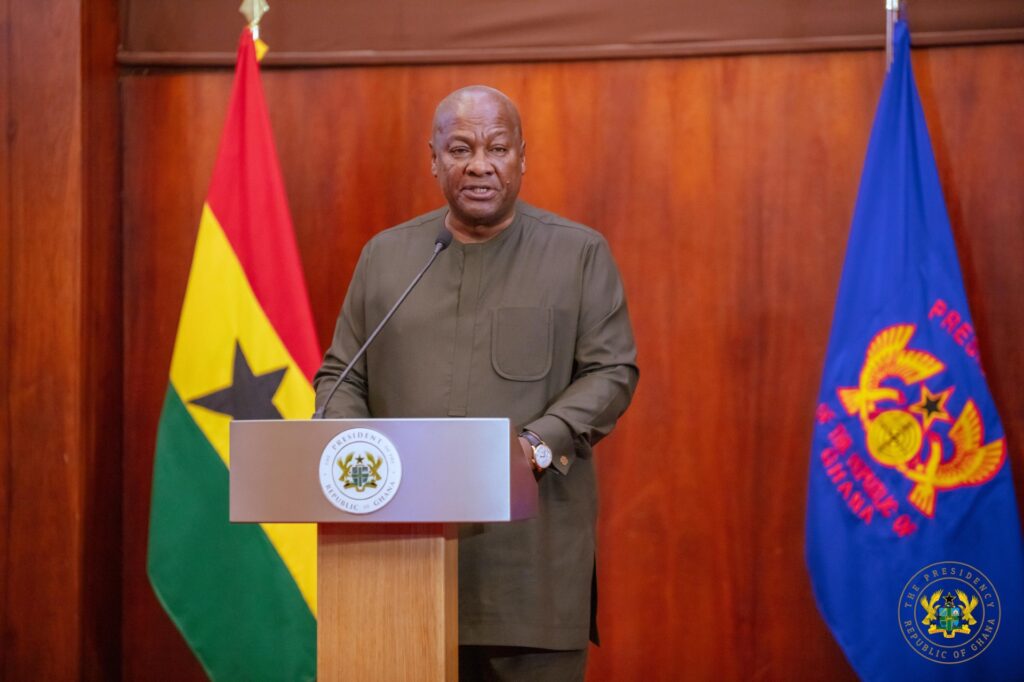
President Mahama described the recommendations as “revolutionary and radical” but welcomed them, pledging to pursue implementation through a bipartisan process.
“We will implement the Constitution Review Committee report in a bipartisan manner,” he said, signaling an intent to build consensus in a country often polarized by winner-takes-all politics.
Proposals for Amendment
The report argues that Ghana’s stable electoral system has not translated into sustained economic progress.
It identifies excessive presidential powers, patronage-driven appointments, and fiscal indiscipline as core obstacles.
Among the most far-reaching proposals:
- Extending the presidential and parliamentary terms from four to five years, with aligned election cycles, to allow longer-term policy planning.
- Prohibiting members of Parliament from serving as ministers, aiming to separate the executive and legislative branches, and reduce presidential influence over lawmakers.
- Phasing in direct, non-partisan elections for metropolitan, municipal, and district chief executives (MMDCEs), a long-standing demand for greater local autonomy.
- Establishing a standalone Ethics and Anti-Corruption Commission with enhanced independence and enforcement powers.
- Binding future governments to a national development plan, capping tax exemptions, and requiring parliamentary approval for natural resource concessions to promote fiscal discipline.
Reform of the Electoral Commission and Other Recommendations
The committee also called for reforms to the Electoral Commission, the creation of an independent regulator for political parties and campaign finance, and measures to deepen decentralization, including a larger share of national revenue for district assemblies.
Other notable suggestions include abolishing the death penalty, enshrining additional socioeconomic rights, and introducing tiered amendment procedures to make the constitution more adaptable without undermining its core principles.
Implementation Committee
At the event for the presentation of the report, President Mahama stated that he would put together an implementation committee to implement some of the recommendations proposed.
Most provisions would demand approval by two-thirds of Parliament and a national referendum, while others need simple legislative majorities.
Past reform efforts — including a 2010 review commission under a previous Mahama administration — saw limited follow-through amid partisan gridlock.
President Mahama’s National Democratic Congress (NDC) currently holds the majority of Parliament with 185 members out of 276.
Shades of Previous Constitution Reviews
This would not be the first time Ghana has undertaken a review of its constitution.
Most notable was the comprehensive 2010–2011 Constitution Review Commission (CRC) under President John Atta Mills (which produced a detailed report and government White Paper, leading to limited amendments).
The follow-up Constitutional Review Implementation Committee (CRIC) in 2015, and the more recent 2023–2024 Constitution Review Consultative Committee (CRCC) under President Nana Akufo-Addo, which submitted its report in December 2024.
Recommendations of the Constitutional Review can be found below
This article was edited with AI and reviewed by human editors