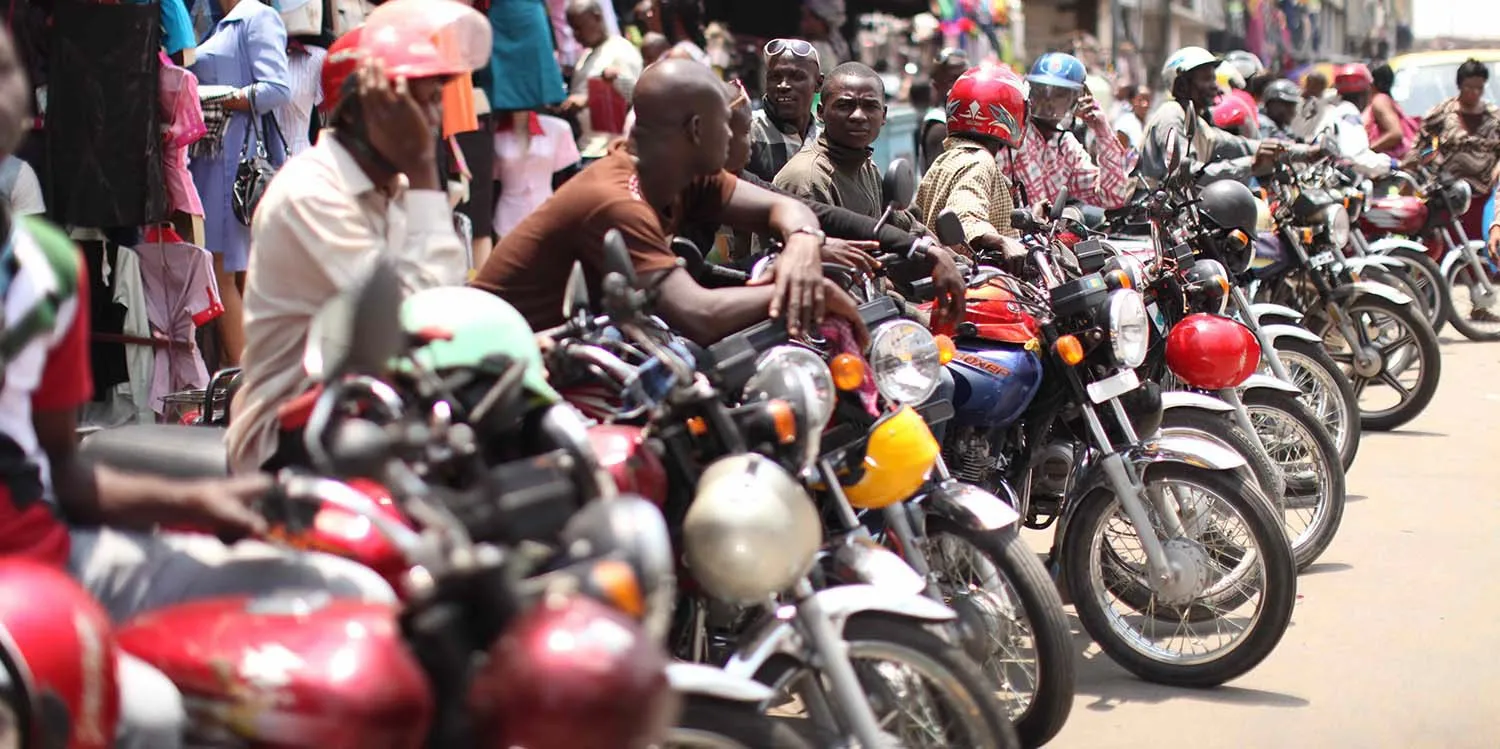
Many commuters in major cities, including Accra and Kumasi, would say that there is a giant traffic problem.
Rush hours in the mornings and evenings are basically bumper-to-bumper traffic, with vehicles trudging slowly towards their destinations.
To mitigate these jams, some commuters have resorted to jumping on “okadas” or motorcycles, which weave between gridlocked traffic to ferry passengers quickly to their destinations.
But there’s one problem: Use of okadas for public transportation is illegal.
The reason for the ban is for safety reasons, including reckless speeding and failing to provide helmets.
But that looks like it’s about to change.
Ghana’s Driver and Vehicle Licensing Authority (DVLA) is stepping in with a plan to legalize and professionalize the sector, aiming to transform thousands of riders into certified public transportation workers.
The initiative, which could go into law next year, promises unique license plates, mandatory helmets etched with identification numbers, and rigorous testing for operators.
But as Ghana treads this path, skeptics wonder: Can regulation tame the okada beast, or will it merely drive it underground, as seen in neighboring nations?
The Framework
Earlier in the year, the Mahama administration gave the green light for a bill proposing okada legalization to be laid in Parliament for approval. The initial age limit qualification for okada riders has been reduced from 25 years to 21 years in preparation for the legislation.
The recent DVLA framework, unveiled by Kelvin Caternor, the agency’s deputy director for planning, monitoring, and evaluation, envisions a licensing regime akin to that for taxi drivers.
Riders would undergo oral exams on road rules, written theory tests, and vision screenings before earning certification as “responsible road users.”
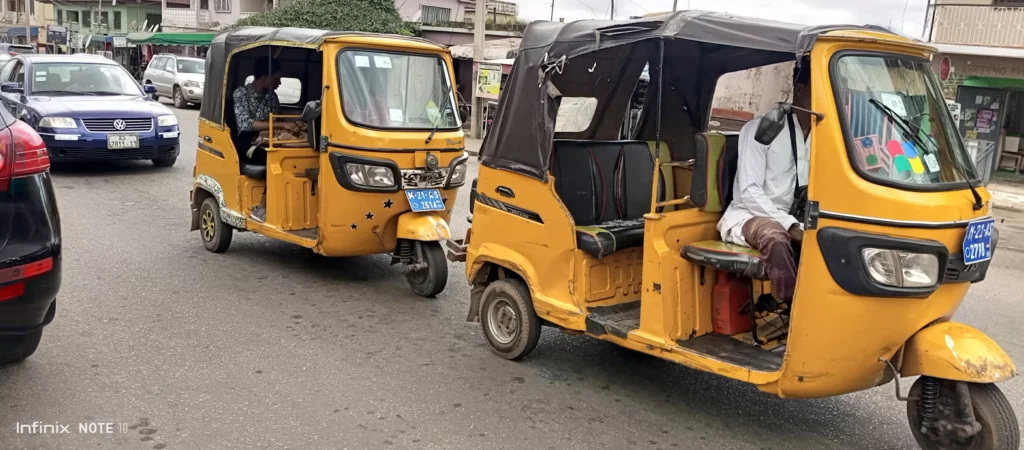
Each bike would sport a distinctive plate for easy tracking by police, while helmets — one for the rider, one for the passenger — would bear serial numbers.
The push comes amid growing pressure from riders themselves.
In October, tricycle operators in Kumasi — known locally as “pragia” — staged protests demanding formal recognition, highlighting the desperation of informal transport workers.
Motorcycle Safety
Motorcycles do not have the best safety reputation in the country.
According to data from the National Road Safety Authority (NRSA), pedestrians, motorbike riders, and bicyclists accounted for 86 per cent of reported road traffic fatalities in 2024.
In a report conducted by the Accra Metropolitan Assembly, road traffic deaths and serious injuries recorded at the Korle Bu Teaching Hospital (KBTH) and the Greater Accra Regional Hospital (Ridge Hospital) showed that 55% of road crash victims who died in 2017 suffered severe head or neck injuries. A majority of these victims were motorcycle users.
Proponents of legalisation and formalisation of riders are hoping that safety standards will be applied to help reduce these incidents.
Case Studies: Jakarta and the Philippines
So what are the odds for the success of the legalisation of okadas in Ghana?
Across Southeast Asia, Indonesia’s ojek (motorbike taxis) sector offers some insight with a tech-infused lesson in scaling regulation.
In 2010, the ojek exploded with apps like Gojek, which formalized millions of riders through digital IDs, GPS tracking, and insurance mandates.
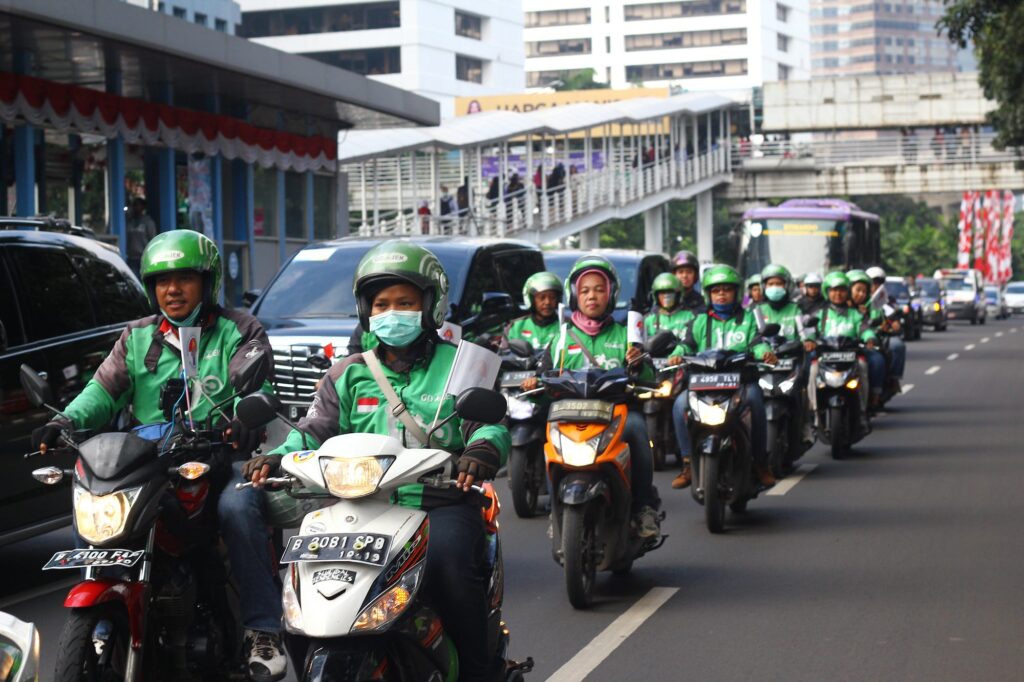
By 2020, the platform had registered over 2 million drivers. Gojek’s internal data from January to November 2024 indicated that accidents and incidents causing injuries accounted for only around 1% of total reports.
Success was also attained through partnerships. Go-Jek subsidized training, while regulators imposed fare caps to prevent exploitation.
But legalisation and formalisation of riders have led to some downsides.
Jakarta has reported an increase in scooters (estimates say there are about 3 million), which has increased congestion in the city.
Closer to home, the Philippines’ ongoing saga with “habal-habal” mirrors Ghana’s dilemma.
A 2024 pilot legalized motorcycle taxis in Metro Manila, mandating training and vehicle inspections.
Early data shows a 20 percent uptick in ridership, with apps like Move It enforcing safety via AI-monitored helmets.
Unfortunately, accidents persist.
The Philippine National Police reported almost 500 motorcycle taxi incidents in 2025 alone, prompting calls for stricter laws.
Phased Enforcement
A 2024 World Bank guide stresses “phased enforcement” to build trust, warning that top-down edicts often backfire in informal economies.
As the DVLA prepares to roll out its framework, the question is whether this will lead to more positives or negatives on Accra’s roads.
On one hand, it could sanitise the sector, leading to more safety and enforcement of road rules.
On the other hand, it could lead to more congestion on Accra and Kumasi’s already gridlocked roads.
It should be interesting to see how it all pans out and whether private sector players like Uber and Bolt will join in to help infuse technology into the mix.