



STORY HIGHLIGHTS
- Kofi Okyere-Darko, Director of the Diaspora Affairs Office, announced the “Diaspora National Service” programme on July 13, 2026, at the maiden Ghana Diaspora Students Forum (GDSF)
- The initiative targets second- and third-generation diaspora youth for a two-month cultural and institutional immersion before they enter university
- Officials say the goal is deeper long-term engagement, not permanent return, positioning diaspora youth as future entrepreneurs, researchers and policymakers
- The announcement comes as domestic National Service Personnel contend with allowance delays and a monthly stipend of roughly GH¢715 (about $50), while youth unemployment stood at 32.5% as of Q3 2025
- Cost, funding source, eligibility criteria and a firm launch date have not been disclosed
Kofi Okyere-Darko, Director of the Diaspora Affairs Office at the Office of the President, used the keynote address at the maiden Ghana Diaspora Students Forum on July 13, 2026, to unveil a new government initiative aimed at Ghanaian youth abroad.
The programme will target young members of the Ghanaian diaspora before they enter university, with participants spending about two months in Ghana immersing themselves in the country’s culture, institutions and way of life before returning abroad to continue their education.
The virtual forum, organised by the National Union of Ghana Students (NUGS) chapters in Germany, the United Kingdom and China, brought together students, alumni, government officials, industry representatives, research institutions and civil society under the theme “Pathways, Ecosystems and Diaspora as Development.”
Okyere-Darko framed the initiative as part of a broader strategic recalibration in how Ghana engages its diaspora.
“The question is no longer whether Ghanaian students abroad matter. The question is how Ghana intends to engage them before they graduate, while they build their careers and long after they become established professionals,” he told the forum.
No Push for Permanent Return
Officials have been careful to distinguish the programme from resettlement drives. Mr. Okyere-Darko stressed that the objective is not to persuade every Ghanaian student to return home immediately after graduation, but to ensure that wherever they find themselves, Ghana remains part of their professional journey.
He described Ghanaian students abroad as one of the country’s most strategic national assets, characterising them as Ghana’s future entrepreneurs, researchers, engineers, healthcare professionals and policymakers.
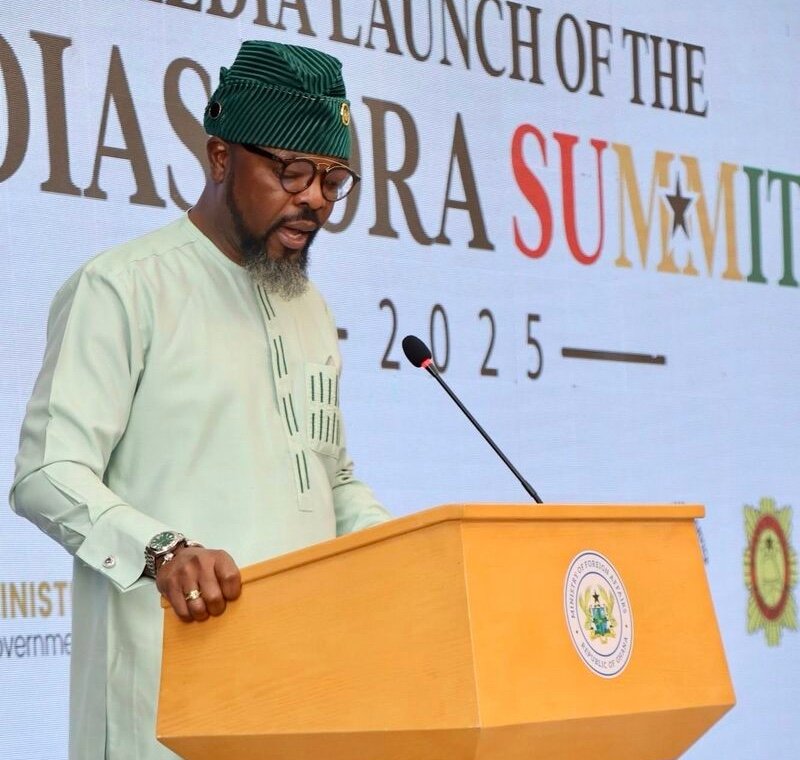
The pitch fits a pattern the Diaspora Affairs Office has pursued since Mr. Okyere-Darko’s appointment in February 2025.
The office has previously backed smaller-scale exchange efforts, including the Roots to Ghana programme, which brought second- and third-generation European-based Ghanaians into short-term skills-sharing placements in fields such as digital innovation, fashion and agriculture.
It has also engaged the African-American community through cultural enrichment visits and pursued a Historic Diaspora Citizenship process at the W.E.B. Du Bois Memorial Centre.
Officials have consistently framed such initiatives as part of a broader goal of moving diaspora engagement beyond remittances toward skills transfer and investment.
A Domestic Backdrop of Strain
The announcement lands against a starkly different reality for Ghanaians already inside the country’s mandatory National Service system, which every tertiary graduate must complete for a year.
Service personnel currently receive a monthly allowance of roughly GH¢715 — about $50 at prevailing exchange rates — a figure youth advocates and even a governing-party youth wing have called insufficient given the cost of living.
Payment delays have been a recurring grievance. In February 2026, the National Service Authority publicly reassured personnel that arrears would be cleared after delays tied to a bank verification process, an episode that echoed earlier disruptions, including a 2024 strike by service personnel over unpaid stipends stretching several months.
The broader labour market context is equally strained. Speaking in Parliament, MP Kojo Oppong Nkrumah cited Ghana Statistical Service data showing youth unemployment for those aged 15 to 24 stood at 32% in December 2024 and had risen to 32.5% by the third quarter of 2025.
In Greater Accra, the rate reached 49.3% over the same period — nearly one in every two young people in the capital region unemployed.
The Ghana Statistical Service classifies 1.34 million young people as not in education, employment or training; extending the definition to age 35 pushes that figure to 1.95 million.
It is against this backdrop that the diaspora programme’s timing has drawn scrutiny from segments of the public, who question why government attention and resources are being directed toward attracting youth from abroad while resident graduates face unpaid or delayed stipends and a shrinking pool of formal jobs.
Mixed Public Reaction
Reaction to the announcement has been divided. Some diaspora advocates and development practitioners have welcomed the concept as a genuine avenue for knowledge exchange, arguing that structured, short-term immersion could translate into longer-term investment, mentorship and skills transfer
Diaspora participants in that earlier initiative have described their engagement in explicitly patriotic terms, framing it as a contribution that goes beyond remittances.

Others, including members of the public reacting to news of the announcement, have questioned whether the initiative reflects misplaced priorities, given that thousands of Ghanaian graduates already inside the country are struggling within a National Service framework beset by its own funding and payment problems.
The contrast between a $50 monthly allowance for resident service personnel and a new programme aimed at diaspora youth — most of whom come from comparatively higher-income households abroad — has become a recurring point of criticism in public commentary.
What Remains Unclear
Several operational details of the Diaspora National Service programme remain undisclosed. The Diaspora Affairs Office has not published a launch date, eligibility criteria beyond the broad “second- and third-generation” descriptor, funding source, or projected cost per participant or in aggregate.
It is also unclear whether the programme will be run directly by the Office of the President, delivered in partnership with organisations such as NUGS or private diaspora-led groups, or structured similarly to existing short-term exchange models like Roots to Ghana.
This article was edited with AI and reviewed by human editors



Follow