


Story Highlights
- Ghana has decided to formally apply to join BRICS, the group of emerging-market and developing countries.
- Foreign Minister Samuel Okudzeto Ablakwa said Cabinet approved the decision.
- The government frames the bid as part of a shift from economic stabilisation to “transformative growth.”
- Ghana has applied but has not yet joined. Admission requires consensus among existing members.
- Ghana would join South Africa, Egypt and Ethiopia as African members if admitted. Nigeria and Uganda currently hold partner-country status.
Ghana will formally apply to join BRICS, the bloc of major emerging and developing economies, the government has announced.
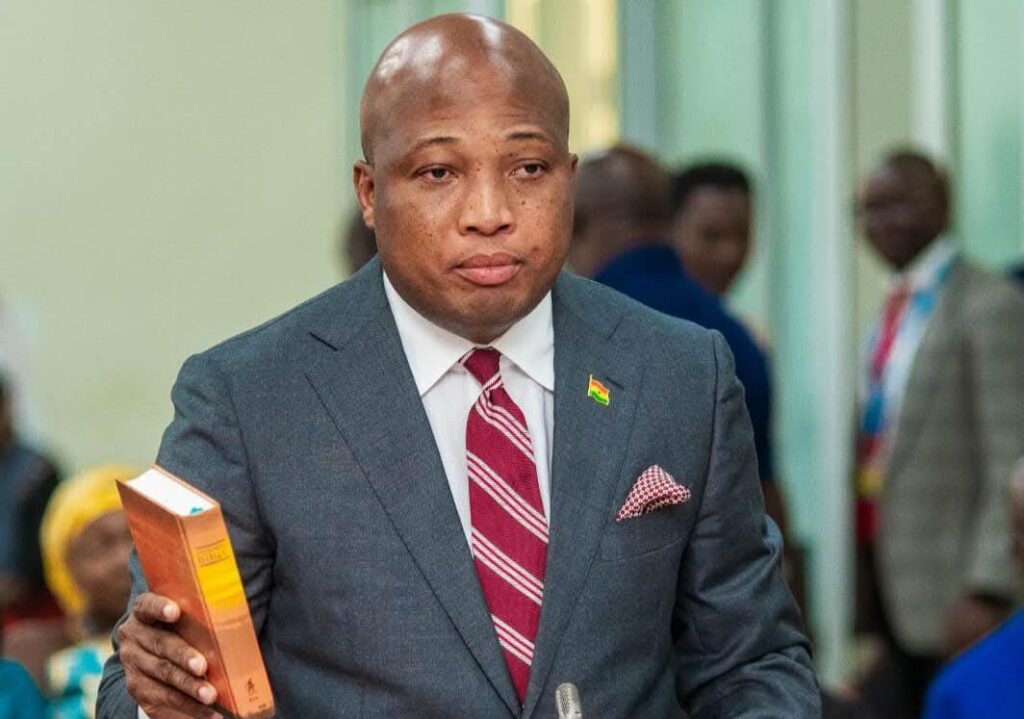
Foreign Minister Samuel Okudzeto Ablakwa disclosed the decision, according to the Ghana News Agency. He said Cabinet had approved it.
He described the move as part of efforts to diversify Ghana’s international partnerships and secure more options for economic transformation. It forms part of the Mahama administration’s broader strategy to move the country “from economic stabilisation to a transformative growth path,” he said.
The government has not publicly said whether Ghana is seeking full membership or the bloc’s partner-country status. It also has not given a timeline for the application.
From Openness to a Formal Bid
The announcement turns months of signals into formal policy.
Early in the Mahama administration, Ablakwa outlined a non-aligned foreign policy. He said Ghana would not hesitate to join blocs such as BRICS if it judged the conditions favourable, as a way of expanding its trade frontiers. He also said the bloc could not be ignored given current international forces.
Lawmakers had pushed in the same direction. In May 2025, Emmanuel Bedzrah, chairman of Parliament’s energy committee, told RIA Novosti that joining BRICS was one of Ghana’s main goals and could be a “game changer”.
Until now, Ghana had no formal status with the bloc. A fact-check published earlier this year found that BRICS’s official website and publications did not list Ghana as a member or an official candidate.
The closest formal link came in July 2026. The state-owned Ghana News Agency then became the 34th participant in the TV BRICS media information exchange.
What BRICS Is
BRICS began as an investment-bank acronym. In 2001, Goldman Sachs economist Jim O’Neill coined “BRIC” to describe Brazil, Russia, India and China, four large economies he expected to drive global growth.
The four countries turned the label into a diplomatic forum. Their leaders held their first summit in Yekaterinburg, Russia, in 2009. South Africa joined in 2010, adding the “S” and giving the group its first African member.
The bloc is not a treaty organisation with a binding charter. It works by consensus through annual leaders’ summits and ministerial meetings. The presidency rotates among members.
Its most concrete institution is the New Development Bank. Founded in 2014 and headquartered in Shanghai, it lends for infrastructure and sustainable development projects. Members also created a Contingent Reserve Arrangement, a currency-swap mechanism meant to provide support during balance-of-payments pressures.
A Rapidly Expanding Bloc
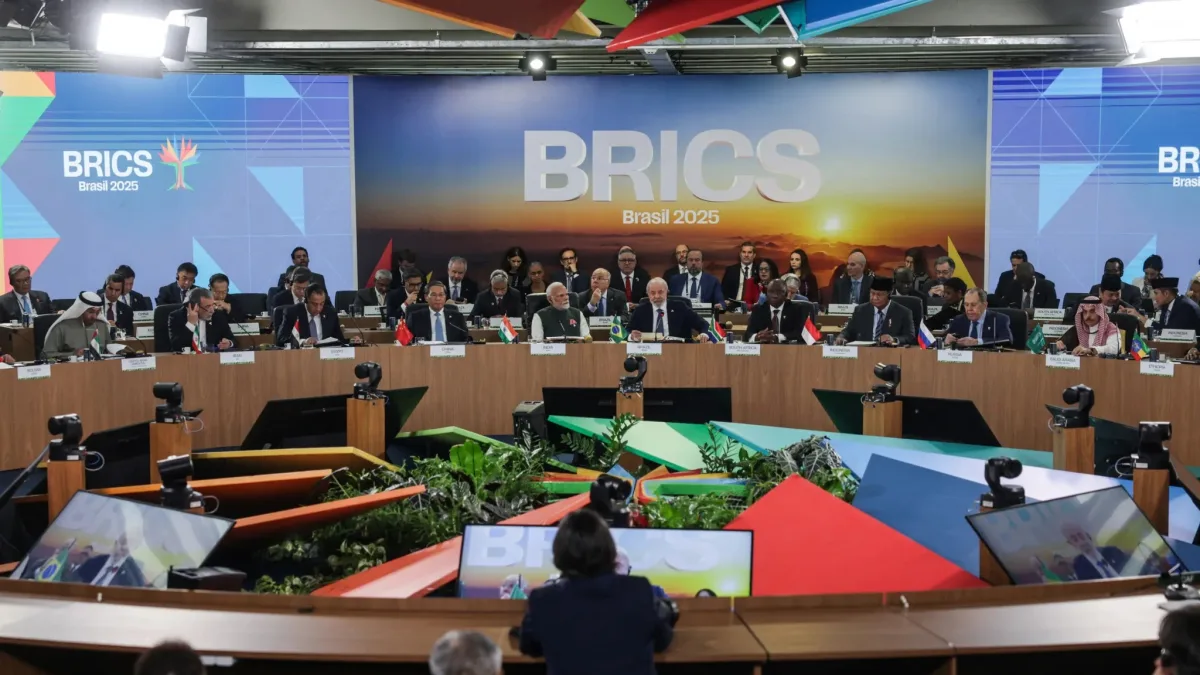
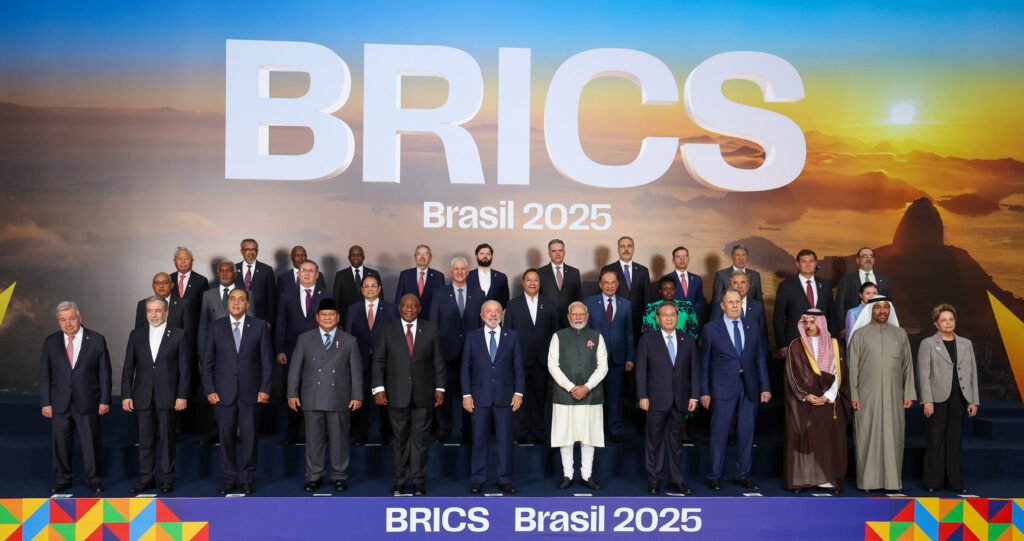
BRICS remained a five-member group for more than a decade. That changed at the 2023 summit in Johannesburg, where leaders agreed on guidelines for expansion and invited six countries to join.
Egypt, Ethiopia, Iran and the United Arab Emirates took up membership in January 2024. Argentina declined after a change of government. Saudi Arabia has not formally confirmed its status. Indonesia joined as a full member in January 2025.
At the 2024 summit in Kazan, Russia, the bloc created a new “partner country” tier. It offers a closer relationship short of full membership. Nigeria and Uganda are among the African states holding that status.
The expansion reflects the bloc’s pitch to the Global South. Members say they want a greater voice in global institutions such as the International Monetary Fund and the World Bank. They have also discussed expanding trade settlement in local currencies, reducing reliance on the US dollar.
Critics see the bloc as a vehicle for Chinese and Russian influence. Its members also have competing interests. China and India have a long-running border dispute. Several members maintain close security and trade ties with the United States and Europe.
What Membership Could Mean for Ghana
Supporters of the bid point to trade and finance. China and India are among Ghana’s largest trading partners. Membership could open access to New Development Bank financing for infrastructure.
Ghana also hosts the secretariat of the African Continental Free Trade Area. Advocates say this could position the country as a bridge between BRICS and African trade integration.
Analysts have urged caution. Some have argued Ghana should first pursue partner status or strategic partnerships, rather than full membership. That route, one commentary noted, would let the country benefit from trade and investment without fully committing to the diplomatic shifts membership might require.
The bid also arrives with relations with Western partners in mind. Ghana completed an IMF-supported programme as it recovered from its 2022 debt crisis. It relies heavily on Western markets, investors and development partners. Sanctions on Russia, a founding BRICS member, could complicate some financial dealings.
The government insists the move does not signal a break with the West. Ablakwa has repeatedly described Ghana’s foreign policy as non-aligned, a friend to all and an enemy to none.
What Happens Next
Ghana’s application must now go through BRICS’s consensus process. Any new member or partner must be accepted by all existing members.
The bloc has not publicly responded to Ghana’s announcement. India holds the BRICS chair in 2026. Decisions on new members and partners are usually announced at the annual leaders’ summit.
Ghana has not said whether Parliament will be asked to ratify the decision. The government has not published the Cabinet memorandum behind it.
This article was edited with AI and reviewed by human editors


Follow