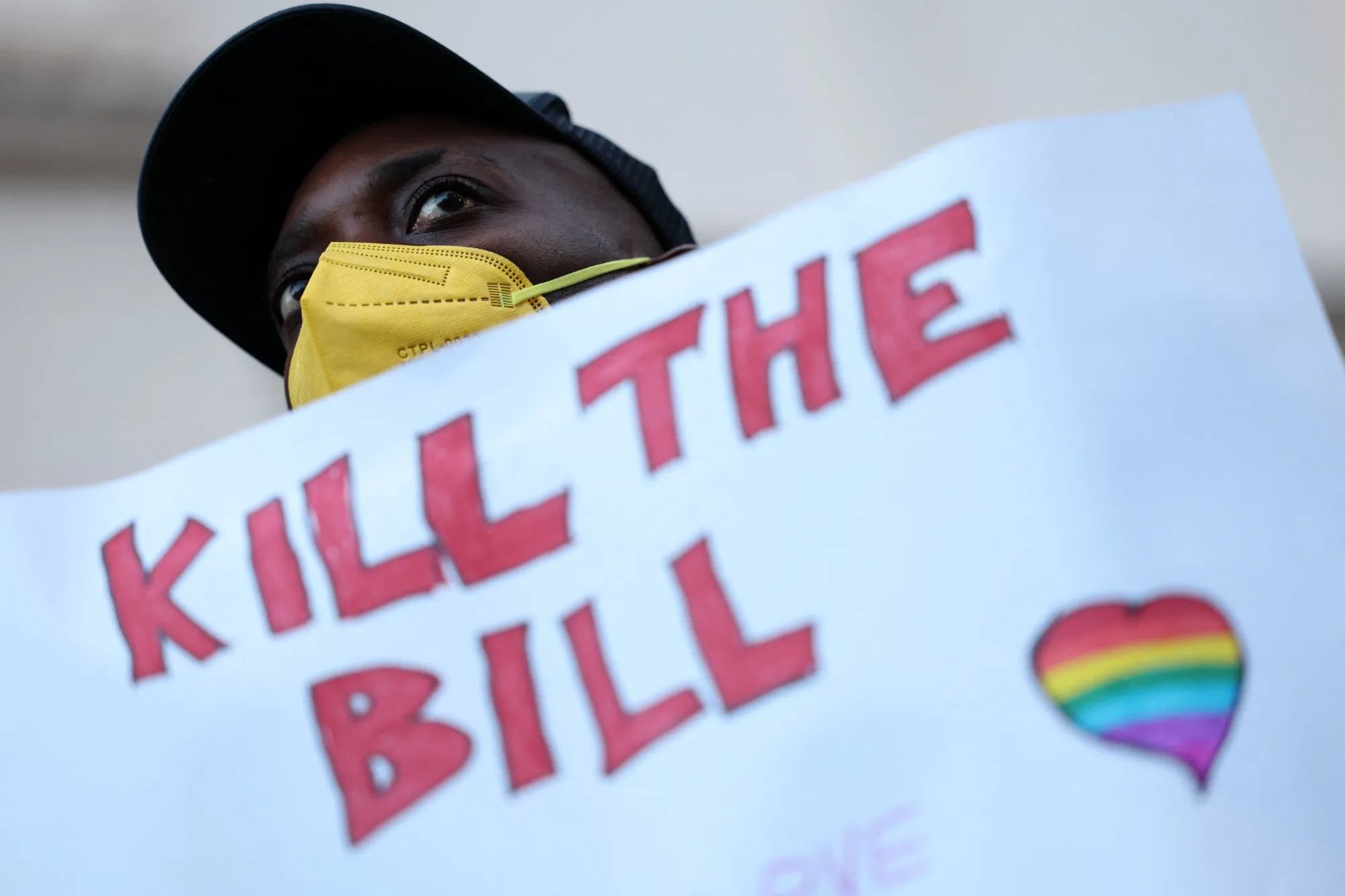
ACCRA, Ghana — Two weeks ago, the topic of LGBTQ found its way back into Ghana’s mainstream news.
A Ranking Member on Ghana’s Parliament Defence and Interior Committee, Rev. John Ntim Fordjour, accused the government of covertly introducing LGBTQ-related content into Ghana’s school curriculum.
In a social media post on Tuesday, January 13, the MP criticised the printing and distribution of teachers’ manuals and other learning materials.
He alleged that the governing NDC had “mischievously and deliberately smuggled” LGBTQ ideology into the curriculum.
The former Deputy Minister for Education claimed that the materials were designed to promote LGBTQ sexuality education in schools, contrary to Ghanaian cultural values and constitutional principles.
His evidence? A definition contained in the Year 2 Physical Education and Health Teacher Manual.
The book defined gender identity as “a person’s deeply felt internal experience of gender which may or may not correspond with the sex assigned at birth“.
The manual stated that gender could include being “male, female or a blend of both,” and recognized a “diversity of gender experiences and expressions.“
The controversy resulted in members from both political sides casting blame for the content printed in the books.
The National Council for Curriculum and Assessment (NaCCA) directed teachers in possession of hard copies of the manual to return them, as authorities review their internal quality assurance systems.
The topic of LGBTQ, over the last few years, reached a high point, especially during the 2024 general elections, with the National Democratic Congress (NDC) criticising then President Akufo Addo for failing to sign an anti-LGBTQ bill into law.
With the NDC having grabbed both the Presidency and a majority in Parliament, the National Patriotic Party (NPP) has been pushing President Mahama to sign the bill into law.
This issue has seemingly evolved into a high-stakes “political football,” kicked back and forth by a political class desperate to score points.
The Anti-LGBTQ Bill
The escalation of the LGBTQ controversy began in earnest in 2021, when a small advocacy center opened in Accra.
The backlash was swift, and the result ended with legislators drafting a bill to quash the advancement of LGBTQ rights and advocacy.
Led by Member of Parliament Sam George, a coalition of lawmakers introduced a bill so sweeping it doesn’t just criminalize same-sex acts—already a misdemeanor under the 1960 Criminal Code—but also targets advocacy, funding, and even the failure to report “suspected” queer individuals.
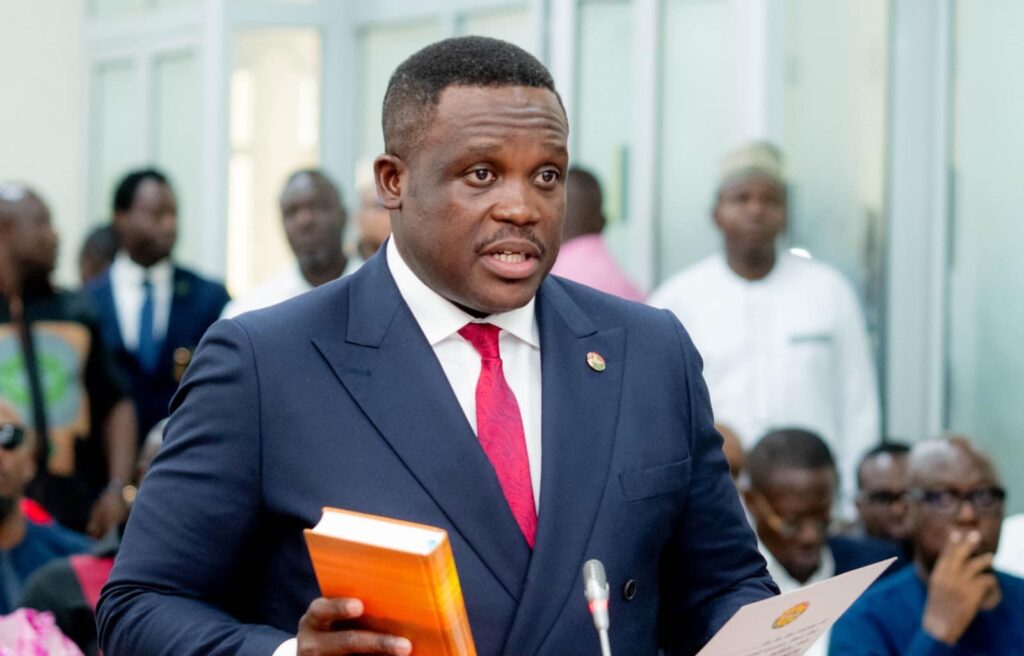
For the NPP and the NDC, the bill became a convenient shield.
Although facing double-digit inflation and a $3 billion IMF bailout, politicians found in the “anti-gay” rhetoric a rare point of national consensus.
Fast forward, and there is still clamor, mostly from religious bodies, to pass the anti-LGBTQ+ bill into law.
Weaponising LGBTQ in Politics
The bill’s journey through Parliament has been a masterclass in political maneuvering.
By the time it passed in early 2024, it had become a “trap” for President Nana Akufo-Addo.
The NDC, led by former President John Mahama, positioned itself as the true guardian of tradition, daring the incumbent to veto the bill and risk the wrath of Ghanaians, including the powerful Christian and Muslim clergy.
Akufo-Addo, long touted as a human rights champion on the international stage, found himself caught between the threat of losing billions in World Bank funding and a domestic base that viewed the bill as a stand against “Western imperialism.”
Akufo-Addo argued that he was waiting for the Supreme Court to determine its constitutionality before he could act.
Ultimately, the president never signed the bill into law, and his party was voted out in the 2024 general elections.
John Mahama, now the president, has publicly stated that once parliament passes the anti-LGBTQ, he will sign it into law.
Members of the NPP, now in opposition, have been criticising the President and the majority in Parliament for dragging their feet.
The Human Cost of the Game
While politicians trade barbs on talk radio, the “football” in this game—the queer Ghanaians themselves—is being bruised.
Angel Maxine (born Maxwell Okyere Opoku), a Ghanaian musician and activist widely recognized as the first openly transgender musician in the country, has been personally affected by this upcoming bill.
In 2024, due to increasing harassment and safety concerns, she relocated to Berlin, Germany, where she continues to release music and advocate for those left behind.
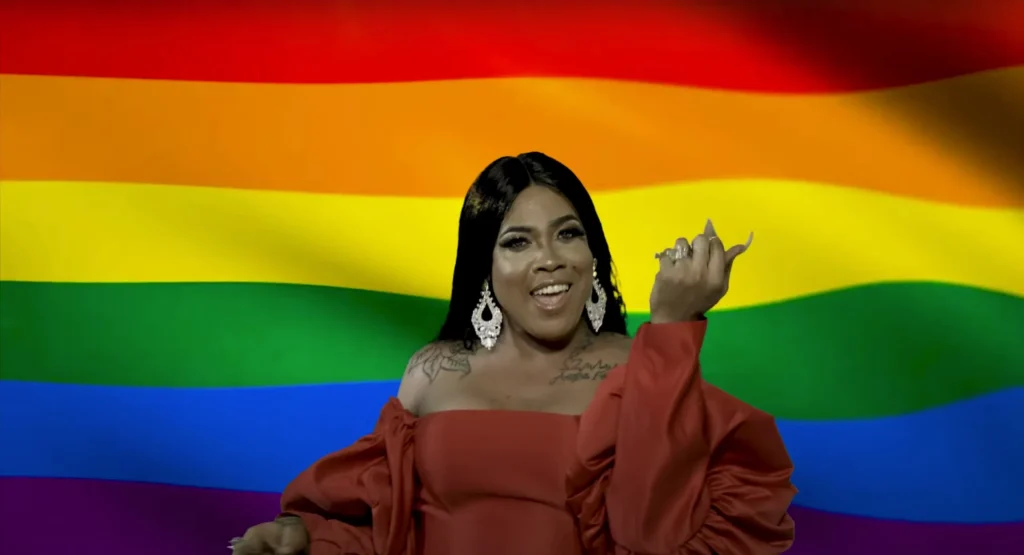
“Being an openly transgender woman in Ghana is warfare,” she said in an online video.
“I couldn’t walk on the streets. I couldn’t take the public bus. I couldn’t go to certain places. I couldn’t perform at certain places.”
Born into a religious household as the daughter of a reverend and a prophetess, Maxine has spoken openly about her childhood femininity and her journey to self-acceptance.
Ghanaians who have publicly protested against the bill have found themselves being accused of belonging to the LGBTQ community, with some facing cyberbullying and death threats.
In 2021, Ghanaian police in the Volta region, assisted by security forces, raided and unlawfully arrested 21 people during a paralegal training workshop about how to document and report human rights violations against LGBT people.
They were detained for 22 days and charged with a misdemeanor. The case was later dismissed for lack of evidence of a crime.
A Sovereignty Shield
The rhetoric has also shifted toward a broader geopolitical struggle. Supporters of the bill frequently frame LGBTQ rights as a “foreign export.”
By attacking these rights, politicians can wrap themselves in the flag of sovereignty.
“This is not about hate,” Sam George argued in an interview. “I say hate the act not the human being, that is me not you.”
Yet, critics point out the irony: much of the bill’s drafting was influenced by ultra-conservative religious groups based in the United States, effectively replacing one “foreign” influence with another.
The Deadlock
Since the previous version of the bill was not signed before the 8th Parliament dissolved, it legally lapsed.
In October 2025, a bipartisan group of MPs reintroduced it as the Human Sexual Rights and Family Values Bill 2025.
The Speaker of Parliament, Alban Bagbin, has expressed a strong determination to see the bill passed in 2026. It must undergo a series of readings and debates before it can be sent to the President.
The delay of the bill appears to be tactical; as long as the bill is “pending,” the government avoids the potential international sanctions that would follow its signing, while the opposition can continue to use its “non-passage” as a stick to beat the ruling party.
But for those who this bill will actually affect, this is not a game that they like being a part of.
Maxine, the transgender singer in Berlin, says she fears for the future of LGBTQ persons in the country.
“As we can see now, everything going on in Ghana [with LGBTQ rights] is political propaganda,” she said.