


Story Highlights
- Companies licensed to buy gold for GoldBod, Ghana’s state gold marketing agency, say they have not been paid for up to three weeks, forcing some to halt purchases or borrow to stay afloat.
- The squeeze follows the Bank of Ghana’s withdrawal from financing gold purchases after the IMF flagged mounting losses tied to the programme.
- GoldBod CEO Sammy Gyamfi says the agency raised nearly $839 million in advances between March and May; a $75 million commercial bank auction on August 3 was paused pending consultations with the central bank.
- The disruption comes as an IMF report puts the Bank of Ghana’s total gold-related losses at $1.7 billion for 2025 — far above the $214 million figure first disclosed — and its negative equity at 6.7 percent of GDP.
Companies licensed to buy gold on behalf of Ghana’s Ghana Gold Board, known as GoldBod, have not been paid for up to three weeks, five industry sources told Reuters.
The delays have forced some operators to pause purchases altogether or borrow money to keep operating, even as bullion prices hover near record levels.
The squeeze marks an early test of GoldBod’s ability to function without the Bank of Ghana underwriting its purchases. Created in 2025, GoldBod holds exclusive rights to buy, sell and export artisanal and small-scale gold, a mandate designed to curb smuggling and channel more foreign currency through official state hands.
In its first year, the agency exceeded its target of exporting 100 tons of gold.
For most of that first year, the central bank financed GoldBod’s purchases directly. That arrangement helped swell Ghana’s foreign reserves and was credited, in part, with supporting the cedi’s recovery.
But the International Monetary Fund pushed for the practice to end after concluding it was generating substantial losses on the Bank of Ghana’s own books. GoldBod is now left sourcing liquidity from commercial banks and gold importers instead — a transition that appears to have created the current payment bottleneck.
Buyers Left Waiting
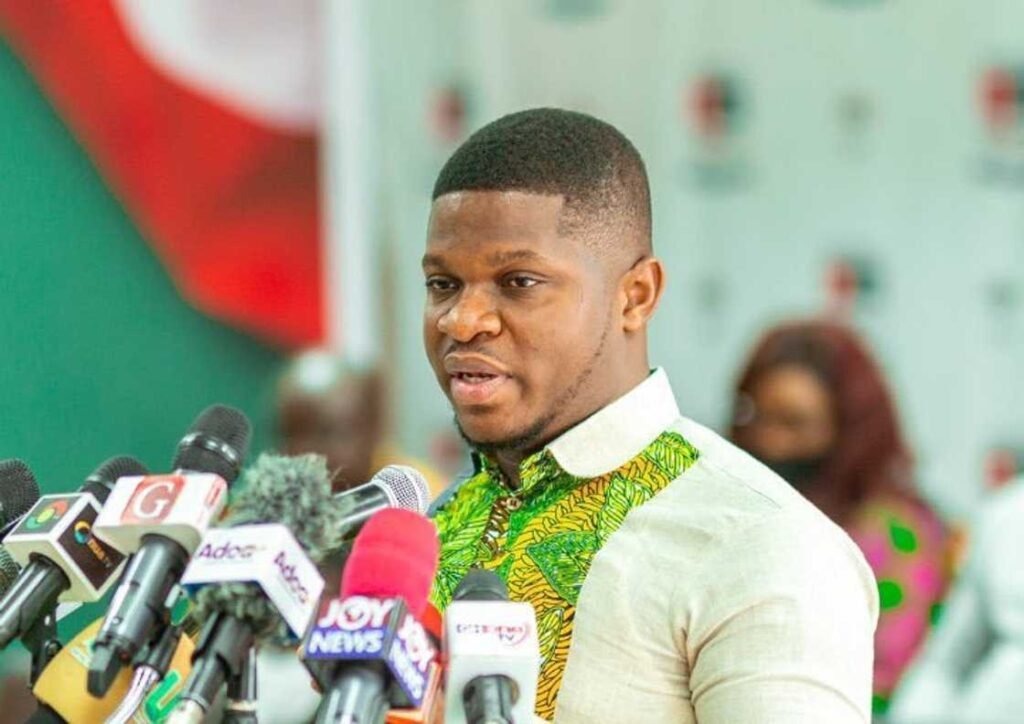
GoldBod’s chief executive, Sammy Gyamfi, told a press conference last week that the agency had raised nearly $839 million in advances for purchases between March and May.
A foreign exchange auction to commercial banks on August 3 raised a further $75 million before being paused for what officials described as consultations with the central bank.
Three banking executives told Reuters that the Bank of Ghana viewed GoldBod’s auction programme as inconsistent with its operating framework, and that both institutions were working to resolve the disagreement. Neither side has offered a public timeline for when normal funding flows might resume.
Kwaku Ohemeng Amoah, chief executive of the Chamber of Gold Buyers, said the payment delays reflect the practical limits of GoldBod’s financing since the central bank’s exit.
He said licensed buyers could seek supplementary funding of their own to bridge the gap, though he did not say how many operators have the balance sheets to do so. Smaller buying companies, industry sources said, are more exposed to the disruption than larger, better-capitalised firms.
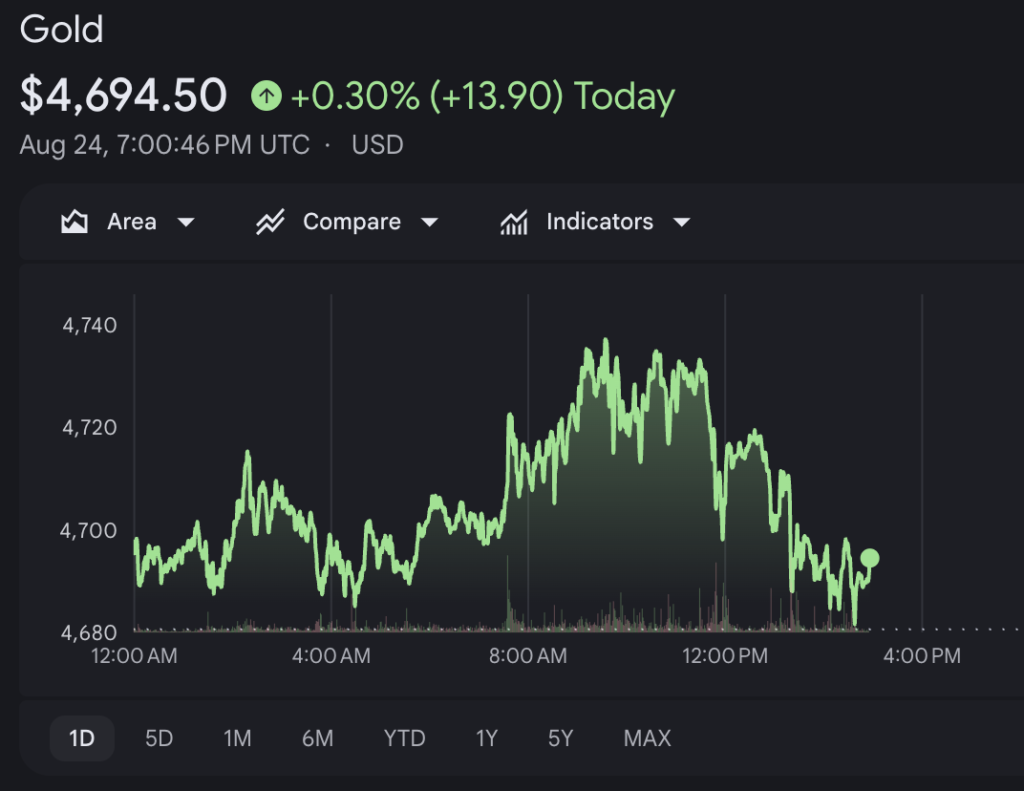
The timing compounds the pressure. Spot gold has traded above $4,000 an ounce through much of August, a level that sharply raises the working capital buyers need to keep purchasing from artisanal miners at competitive rates.
Buyers unable to pay promptly risk losing supply to informal or illicit channels — the very outcome GoldBod’s exclusive licensing regime was designed to prevent.
The Cost Behind the Retreat
The central bank’s withdrawal from gold financing did not happen in a vacuum.
An IMF report prepared as background for Ghana’s 2026 Article IV Consultation found that losses from the Bank of Ghana’s Domestic Gold Purchase Programme reached more than $1.7 billion in 2025 — roughly 1.5 percent of GDP, and eight times larger than the $214 million figure first disclosed late last year.
The Fund attributed the losses chiefly to the spread between the forex-bureau rate the central bank paid to acquire gold and the cedi reference rate used in its own accounts, compounded by service and assay fees.
The scale of those losses helped push the Bank of Ghana’s shareholders’ equity from a positive GH¢6.2 billion in 2021 to a negative GH¢93.8 billion by the end of 2025 — negative equity equivalent to 6.7 percent of GDP.
Parliament’s Minority Caucus has demanded that GoldBod account publicly for the losses, calling the arrangement a “disingenuous accounting arrangement” that shifted foreign-exchange risk onto the central bank’s balance sheet while protecting GoldBod’s own books.
Under the terms of Ghana’s now-completed IMF programme, all gold purchase operations and associated costs were required to transfer fully from the Bank of Ghana to GoldBod from July 1, 2026, ending the central bank’s direct role in financing.
Gyamfi announced on August 11 that GoldBod had secured an initial $75 million in pilot financing from commercial banks, describing the shift as a step toward the agency’s “operational independence.”
Parliament has separately amended the Bank of Ghana Act to raise the central bank’s minimum authorised capital from GH¢10 million to GH¢1 billion, part of a recapitalisation agreement with the Finance Ministry running through 2032.
What Comes Next
The current payment delays suggest that replacing central bank liquidity with commercial financing is proving more difficult in practice than in announcement.
GoldBod has not disclosed how much of its $839 million in advances remains outstanding to buyers, nor set out a public plan for closing the gap exposed by the paused August 3 auction.
For now, the agency’s exclusive licensing model depends on buyers being able to pay miners promptly and in cash — a requirement that a three-week payment lag makes difficult to sustain.
How quickly GoldBod and the Bank of Ghana resolve their dispute over the auction programme’s structure will determine whether the disruption is temporary or the first sign of a deeper financing shortfall.
This article was edited with AI and reviewed by human editors



Follow