ACCRA, Ghana — Ghana’s High Commissioner to Nigeria, Baba Jamal Mohammed Ahmed, caused controversy when he announced he would be competing for the Member of Parliament (MP) candidacy for the Ayawaso East Constituency under the National Democratic Congress (NDC) party.
The previous MP, Naser Toure Mahama, passed away from an illness on 4 January, and many expected his widow, Hajia Amina Adam, to take his place and contest for the seat.
On Saturday, 7th February, voting for an NDC candidate took place with five candidates vying for votes.
Election pollsters had pegged Hajia Adam to win the contest.
But after tallying the final votes, Baba Jamal won outright, gaining 431 votes. Hajia Amina Adam came second with 399 votes.
However, the win was not without controversy.
On social media, there were many allegations of “vote buying”. Different candidates had offered delegates either cash or sponsored trips to voting centers, allegedly to entice their vote.
Baba Ahmed stood out after it was revealed that he had given voting delegates 32-inch television sets as “gifts”.

When confronted, he denied that he was engaging in vote-buying.
“So if you give television sets to people, what is wrong with it? This is not the first time I am gifting things to people,” he told reporters.
Those who know me know that every Christmas and every occasion, I have put down GHS 2.5 million to give free loans to people.”
The allegations prompted a response from the presidency, which announced it was forming a committee to look into the vote-buying allegations.
The President also announced that Mr. Ahmed had been recalled from his post as High Commissioner to Nigeria.
On Sunday, the NDC majority caucus in parliament put out a public statement, calling for annulment of the elections pending investigations.
The “Transport Allowance” Charade
The practice of “vote buying” is not a new phenomenon in elections in Ghana.
Candidates often deny direct bribery, instead framing cash handouts as “transportation allowances” or “feeding fees” for delegates traveling from remote districts.
However, observers on the ground tell a different story.
In the lead-up to the National Patriotic Party’s flagbearer elections, allegations of “voting buying” surfaced with reports alleging that candidates were handing out money to delegates to secure their vote.
In Ghana, giving money or handing out gifts for special favors is considered “bribery”.
Section 33 of the Representation of the People Law in Ghana’s constitution stipulates that a person is guilty of bribery if they “directly or indirectly provide money, gifts, loans, or “valuable consideration” to induce someone to vote or refrain from voting.”
A Cycle of Economic Despair
The persistence of vote buying is inextricably linked to Ghana’s current economic climate.
With inflation remaining a stubborn thorn in the side of the average Ghanaian family, the “rational choice” for a voter is often the immediate benefit.
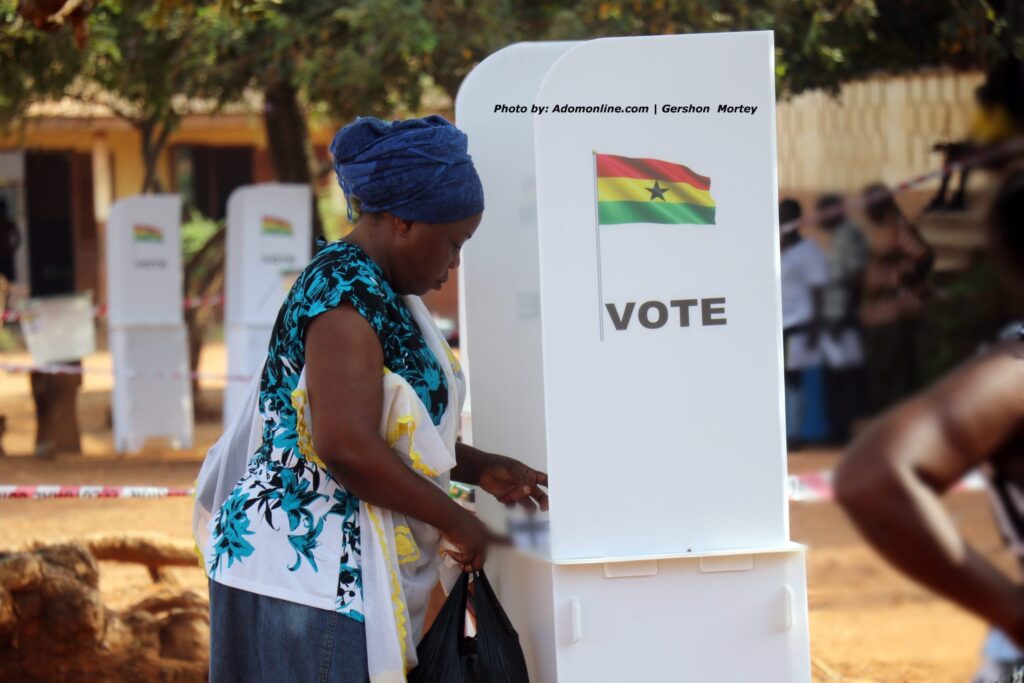
According to a study by the International Journal of Research and Innovation in Social Science, many first-time voters held the view that receiving incentives from politicians during elections was a deeply embedded social mechanism.
“By premising their motivation to vote on material benefits instead of civic duty, the practice gradually erodes their sense of political accountability and the moral obligation to act in the collective interest,” noted analysis from the report.
The Cost of Entry
The monetization of politics creates a steep barrier to entry.
In a system where a single parliamentary primary can cost a candidate hundreds of thousands of dollars in “gifts,” the most qualified individuals are often priced out by the most “resourced.”
According to the Ghana Centre for Democratic Development (CDD-Ghana), an independent, non-profit think tank, estimated costs for parliamentary candidates were likely to exceed $693,000 in an election.
The costs skyrocket dramatically for presidential candidates who are likely to spend up to $150 million during their campaigns.
The Road to Reform
With the latest elections, the current administration might be trying to turn the tide.
The NDC’s National Executive, led by General Secretary Fiifi Kwetey, announced new directives that require party members in government positions to resign months before contesting internal roles, an effort to prevent the use of state resources for personal campaigning.
However, the directives were announced after Baba Jamal had announced his candidacy for the parliamentary seat.
The Office of the Special Prosecutor, following reports of vote buying, announced that it would be investigating allegations for both the NPP flagbearer elections and the NDC Ayawaso East Constituency parliamentary elections.
Critics of the current system of internal party politics are calling for an overhaul.
George K. Ofosu, an Assistant Professor at the Department of Government, London School of Economics and Political Science, wrote in a Brookings article that politicians need to reshape how delegates make decisions in primaries.
Others have taken it a bit further.
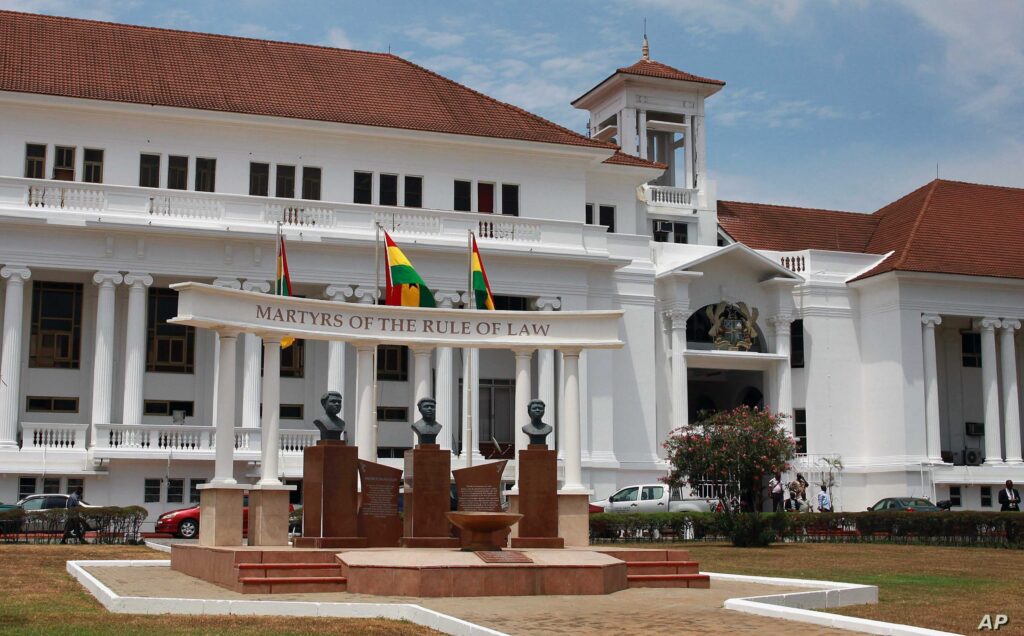
Cardiothoracic surgeon Prof. Kwabena Frimpong-Boateng, medical practitioner Dr. Nyaho Nyaho-Tamakloe, and former Minister of State Dr. Christine Amoako-Nuamah, all filed a lawsuit at the Supreme Court, arguing that the current method of selecting presidential and parliamentary candidates is unconstitutional and “oligarchic”.
The lawsuit, filed on January 23, 2026, argues that the NPP, NDC, and the Convention People’s Party (CPP) have replaced broad-based democracy with a “restricted electoral college” system.
They stated that with these current rules, only a tiny fraction of party members—typically executives, office holders, and selected delegates—are permitted to vote for a flagbearer.
With a lot at stake in elections, for both the candidate and the electorate, the voting-buying phenomenon might be a hard thing to shake.
The NDC’s move to investigate its own members and the results of the OSP’s investigation might set a precedent for the future. It remains to be seen.