Story Highlights
- FMCG spending in Ghana rose 12.9% in 2025, according to Worldpanel by Numerator’s Brand Footprint 2026 report.
- Local and regional brands accounted for 84% of Consumer Reach Points among Ghana’s top 250 FMCG brands.
- Ghanaian households made 4.192 billion brand choices in 2025, though only 52% of top brands grew their reach.
- Milo remained the most chosen FMCG brand, followed by Onga and a fast-rising Kivo, which posted 112.8% CRP growth.
- 82% of top brands still reach less than half of Ghanaian households, leaving room for expansion.
Ghanaian households spent significantly more on fast-moving consumer goods in 2025, but that increased spending did not translate into broad-based gains for brands.
Worldpanel by Numerator’s Brand Footprint 2026 report found that FMCG spending in Ghana grew 12.9% over the year, even as competition for consumer choice intensified.
Households made 4.192 billion brand choices across the market in 2025. Yet only 52% of the country’s top 250 FMCG brands increased their Consumer Reach Points (CRPs) — a metric that measures how often and how widely a brand is chosen — despite 69% of those brands recording growth in overall consumer spending.
The gap between spending growth and reach growth suggests that existing customers are spending more, rather than brands necessarily winning new shoppers.
Ifedayo Akinyele, Country Manager at Worldpanel by Numerator Ghana, said the results point to increasingly value-conscious shoppers.
“Ghanaian shoppers remain highly conscious of the value they get from every purchase. For brands, this means growth cannot rely on higher spend alone. The opportunity is to remain relevant to households, reach more shoppers and give them compelling reasons to choose the brand again,” Akinyele said.
Local Brands Command the Market
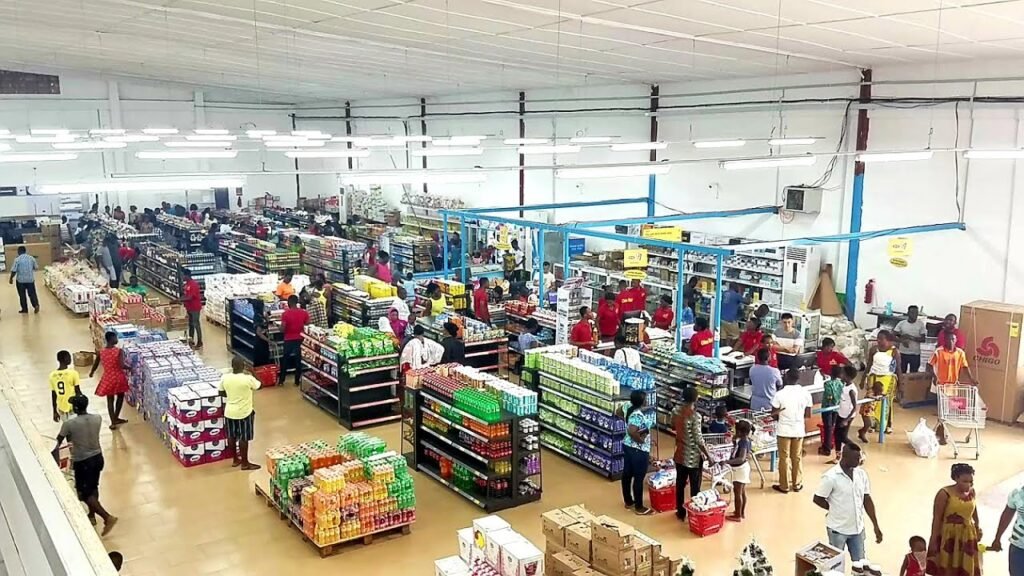
The report’s central finding is the continued dominance of local and regional brands, which accounted for 84% of CRPs generated by Ghana’s top 250 FMCG brands. That figure underscores how closely tied consumer choice remains to brands built around local tastes, needs and budgets, even as multinational competitors vie for market share.
The scale of local-brand dominance suggests that affordability and cultural familiarity continue to outweigh other factors in shaping everyday purchasing decisions in Ghana’s FMCG sector.
Milo Holds the Top Spot
Milo retained its position as Ghana’s most chosen FMCG brand in 2025, generating 245.3 million CRPs. Onga followed in second place with 226.7 million choices.
The most notable shift in this year’s rankings came from Kivo, which jumped seven positions to reach third place with 161.9 million CRPs. Gino rounded out the fourth position with 130.3 million CRPs, followed by Guinness Malta in fifth with 129.5 million.
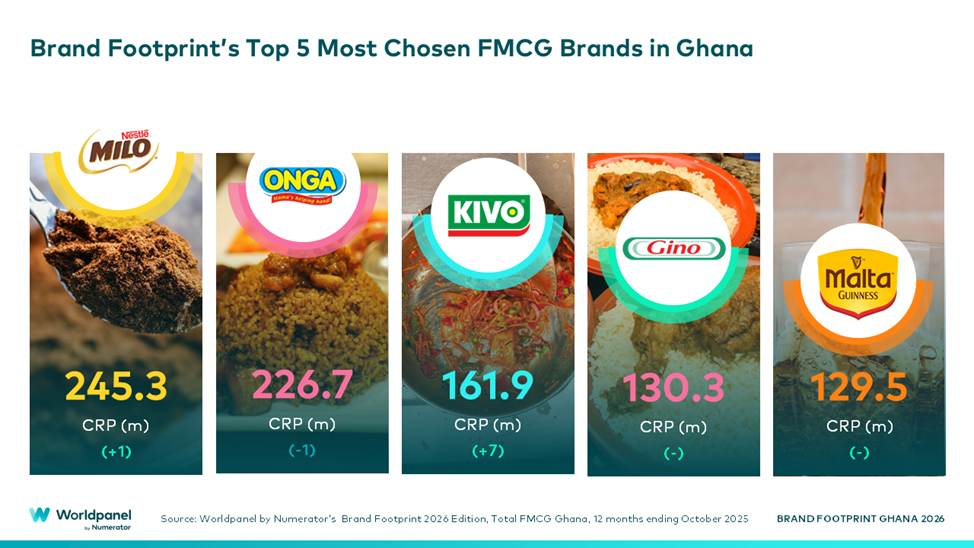
Kivo’s rise was the standout story of the report. The brand recorded the strongest CRP growth among Ghana’s top 50 brands, expanding 112.8% year on year, and now reaches 85.9% of Ghanaian households.
Its performance reflects a strategy built around familiar products, affordability and mass-market appeal — a combination that appears to resonate strongly with cost-conscious shoppers.
What’s Driving Growth
Kivo’s trajectory illustrates a wider pattern identified in the report: brands that combine broad reach with sustained relevance are better positioned to capture consumer choice than those relying on price or promotion alone.
Among brands that grew their CRPs by more than 2.5%, roughly 62% achieved that growth by simultaneously increasing both household penetration and purchase frequency — winning new shoppers while also getting existing customers to buy more often.
That dual approach appears to be a more durable growth strategy than expanding reach or frequency in isolation, particularly in a market where shoppers are scrutinizing every purchase.
Room to Grow
Despite the intensity of competition at the top of the market, the report found substantial headroom for expansion. Some 82% of Ghana’s top 250 FMCG brands currently reach less than half of the country’s households, meaning shopper recruitment remains one of the clearest paths to growth for brands across the sector.
Akinyele said unlocking that potential will depend on how well brands read shifting household priorities. “Ghana offers considerable room for brands to grow, but that growth depends on understanding how household priorities are changing. The brands that can combine accessibility, relevance and strong consumer reach will be best positioned to win more choices,” she said.
What It Means for the Market
The Brand Footprint 2026 findings paint a picture of a Ghanaian FMCG market that is expanding in value but not uniformly rewarding brands for that expansion.
With local and regional players commanding the vast majority of consumer choice, multinational and challenger brands face a market where affordability, familiarity and consistent household reach carry more weight than spending power alone.
For brands still reaching less than half of Ghanaian households, the data suggests the opportunity is less about deepening loyalty among existing customers and more about the harder task of winning new ones — a challenge that will likely shape competitive strategy across the sector in the year ahead.
This article was edited with AI and reviewed by human editors