



STORY HIGHLIGHTS
- An Accra High Court convicted Larry Dogbey, Managing Editor of The Herald, sentencing him to seven days in prison over publications related to the Kevin Okyere-Petraco SA dispute
- Dogbey insists The Herald only reported on petitions submitted by Petraco Oil Company SA to state agencies — CID, EOCO, GIPC, and the Attorney-General
- The conviction follows a broader legal battle in which Kevin Okyere obtained a court injunction restraining further publications he claims damaged his reputation
- The underlying dispute involves allegations of a US$94 million fraud by Petraco against Springfield Exploration and Production, which has already spilled into courts in the United Kingdom and the United Arab Emirates
Larry Dogbey, Managing Editor and editor of The Herald newspaper, was on Thursday convicted and sentenced to seven days’ imprisonment by an Accra High Court, in a case rooted in The Herald’s coverage of a multimillion-dollar dispute between Ghanaian oil businessman Kevin Okyere and Switzerland-based Petraco Oil Company SA.
The ruling was delivered by Justice Isaac Addo of the Accra High Court on June 25, 2026.
The precise charges underpinning the conviction — whether criminal libel, contempt of court, or another legal basis — were not immediately confirmed at the time of filing this report, though the case is understood to relate to alleged breach of a court injunction obtained by Okyere.
Reacting to the judgment, Dogbey expressed disappointment, insisting that the publication in question was based on a petition submitted by Petraco SA to state investigative institutions, including the Criminal Investigations Department (CID), the Economic and Organised Crime Office (EOCO), the Ghana Investment Promotion Centre (GIPC), and the Attorney-General’s Department.
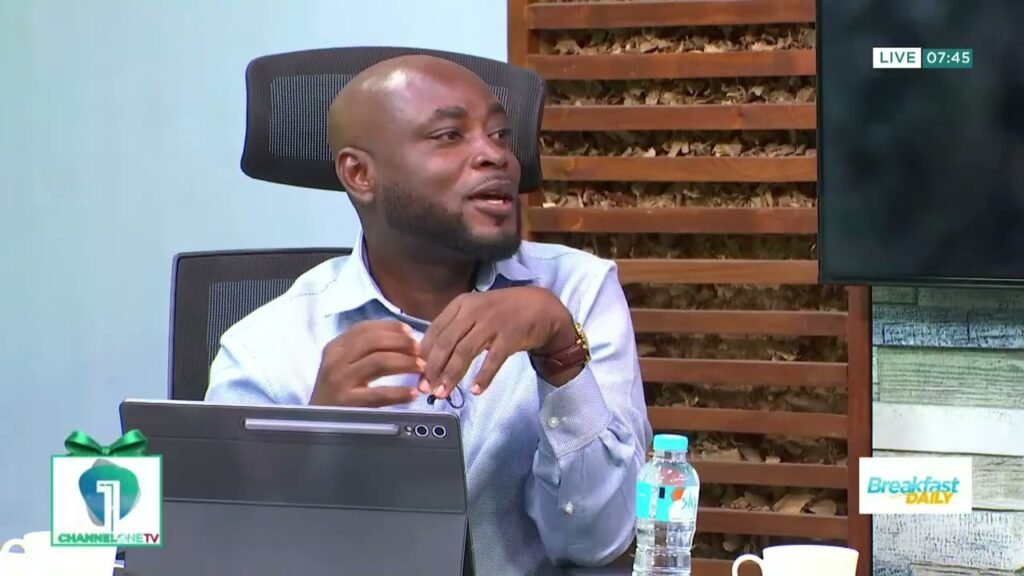
Posting on social media shortly after the ruling, Dogbey wrote that the newspaper had merely reported on a petition filed by the multinational company with state institutions, adding: “Journalism is not a crime.”
A Dispute That Crossed Three Continents
The underlying commercial and legal conflict stretches back to mid-2025, when Petraco Oil Company SA formally escalated its grievances against Kevin Okyere, founder of Springfield Exploration and Production Limited (SEP), to Ghanaian and international authorities.
According to a petition signed by Alberto G. Salsiccia, Petraco’s Chief Financial Officer, the allegations span two major schemes: a petroleum products fraud totalling over US$30 million and a unitisation loan fraud totalling at least US$63 million.
Petraco alleged that Okyere and affiliated entities — including GMP Energy Limited, owned by Springfield partner Geena Malkani — diverted proceeds from joint-venture liftings and failed to repay a US$100 million facility extended to support the unitisation of Springfield’s Afina oil discovery with the proven Sankofa-Gye Nyame field offshore Ghana.
Springfield and GMP Energy denied any wrongdoing. Springfield described the allegations as “misleading and damaging,” asserting that the loan transaction was a legitimate commercial arrangement secured by a charge over 10 per cent of its shares.
GMP Energy similarly dismissed the fraud claims, describing the dispute as a straightforward commercial disagreement under arbitration in Dubai.
Frustrated by what it characterised as inaction by Ghanaian authorities, Petraco activated legal processes in Dubai, where the company is registered, and unlike in Ghana, where the matter appeared to have stalled, Dubai authorities acted swiftly, leading to Kevin Okyere’s arrest.
Mr Okyere was at the centre of the alleged US$94 million fraud case, and the matter resulted in his temporary restriction from leaving Dubai.

He was eventually released in early February 2026 and returned to Ghana, reportedly after an initial payment of US$5 million was made and diplomatic channels were engaged — including, according to The Herald’s own reporting at the time, a visit by President John Mahama to Dubai.
In a parallel track, UK courts also entered the picture. Westminster Magistrates’ Court summoned Okyere over charges related to an alleged fraud of approximately US$29.3 million involving a cargo of gasoline supplied by EDURC Company DMCC and discharged at Tema, Ghana, on September 5, 2024, with the alleged offences falling under Sections 1 and 2 of the UK Fraud Act 2006.
Okyere reportedly declined to travel to the UK to attend the hearing. Dubai Public Prosecution later declined jurisdiction over a related complaint, redirecting attention back to Ghana’s own law enforcement institutions.
An Injunction, Then a Conviction
Running alongside these international proceedings, Okyere pursued a parallel legal strategy in Accra’s courts aimed at containing media coverage of the dispute.
In earlier court filings, he argued that the High Court had restrained further publications intended to undermine his reputation pending the final determination of the suit, yet publications continued, including those referencing a “US$94 million fraud” narrative and an alleged arrest warrant.
In cross-examination connected to his effort to sanction publications he says breached the injunction, Okyere confirmed he was detained in Dubai and acknowledged that a Springfield-linked entity drew down US$50 million under a loan facility, while insisting he had not personally taken a loan.
Thursday’s conviction of Dogbey suggests the court accepted arguments that The Herald’s coverage fell afoul of the injunction, a finding The Herald’s editor contests.
The paper has a prior history with Okyere: in 2015, Okyere filed a lawsuit against The Herald seeking GH¢10 million in damages for libel, which resulted in the newspaper issuing an unreserved apology and withdrawing the offending publications.
Press Freedom Concerns
The conviction arrives at a moment of heightened scrutiny over the use of courts to constrain journalism in Ghana. Whether Dogbey will serve the seven-day sentence, seek to purge the contempt through compliance, or appeal the ruling was not confirmed at the time of publication.
The Media Foundation for West Africa and other press freedom bodies had not publicly commented on the case at the time this report was filed. The Ghana Journalists Association was also yet to issue a statement.
The case raises a question that extends beyond this particular dispute: where, under Ghanaian law, does the publication of a petition submitted to state agencies — documents that are, in principle, public instruments intended to prompt official action — end and contemptuous reporting begin?
That question is now squarely before the court of public opinion, even as it moves through the formal legal system.
This article was edited with AI and reviewed by human editors



