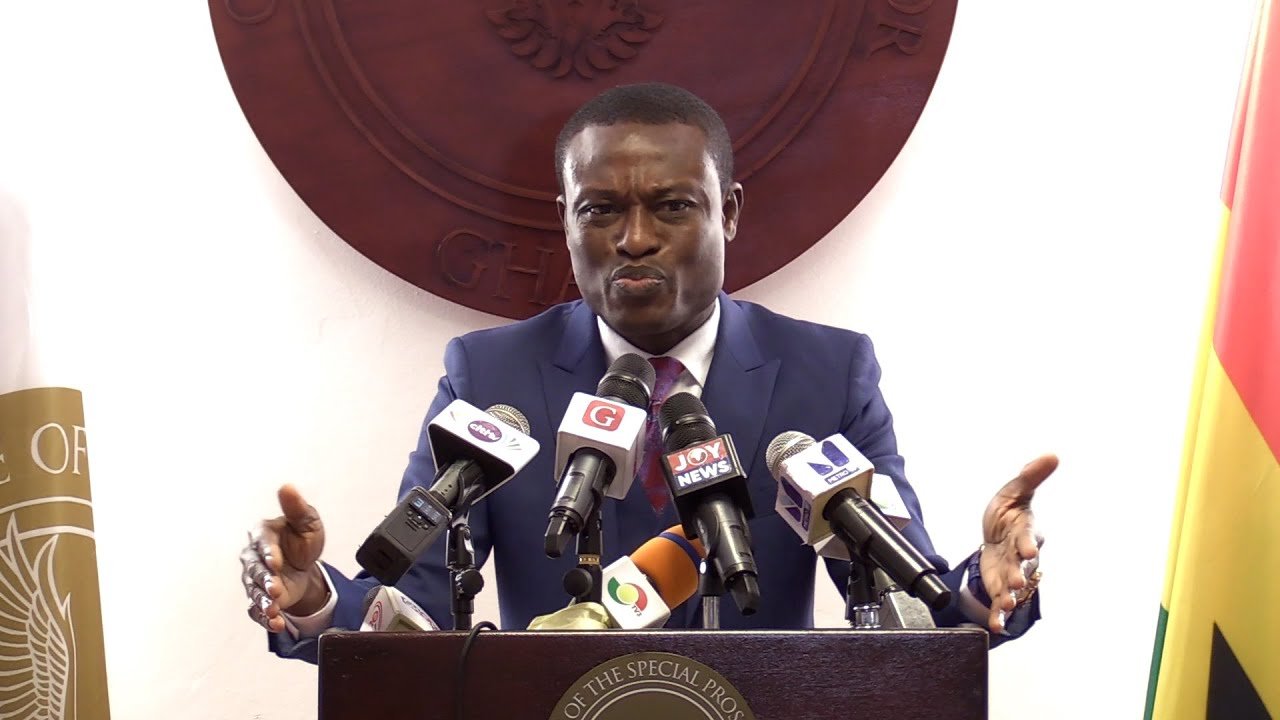
The Office of the Special Prosecutor (OSP)—a body once envisioned as Ghana’s supreme independent weapon against high-level political corruption—is fighting for its very existence.
Over the last few weeks, the entity has come under fire after a member of the ruling party, the National Democratic Party (NDC), was arrested by the OSP for “misconduct”.
Since the incident, there have been debates and calls for the abolishment of the OSP and dismissal of the Special Prosecutor, Kissi Agyebeng.
Recently, two members of Ghana’s parliament have drafted a bill to close down the OSP, arguing against its high cost and duplication of duties with the office of the Attorney General.
Powers of The Prosecutor
The OSP was granted powers by the Office of the Special Prosecutor Act, 2017 (Act 959) in 2018 by the Akufo-Addo government.
These powers were specifically designed to overcome the limitations of existing anti-corruption bodies and shield the OSP from political manipulation, making it a powerful, unique hybrid agency:
| Core Mandate and Powers | Description |
| Independent Prosecution | Authorized to initiate and conduct criminal prosecutions of corruption and corruption-related offences without specific direction or control from the Attorney-General (AG). |
| Full Police Powers | The Special Prosecutor and authorized officers possess all the powers of a police officer under the Criminal and Other Offences (Procedure) Act, including the power of arrest. |
| Asset Tracing & Recovery | Empowered to seize, freeze, and confiscate property suspected to be proceeds of corruption (“tainted property”), demand disclosure of assets and income, and apply for Pecuniary Penalty Orders to disgorge illicit wealth. |
| Intelligence & Surveillance | Functions encompass national security and intelligence gathering, surveillance, and counter-surveillance capabilities, enabling a comprehensive approach to investigating complex financial crimes. |
| Witness Protection | Mandated to take all reasonable steps to protect the safety and welfare of witnesses, victims, and whistleblowers, a critical tool for tackling high-level cases. |
The President’s choice for the inaugural Special Prosecutor, Martin Amidu, was hailed across the political spectrum.
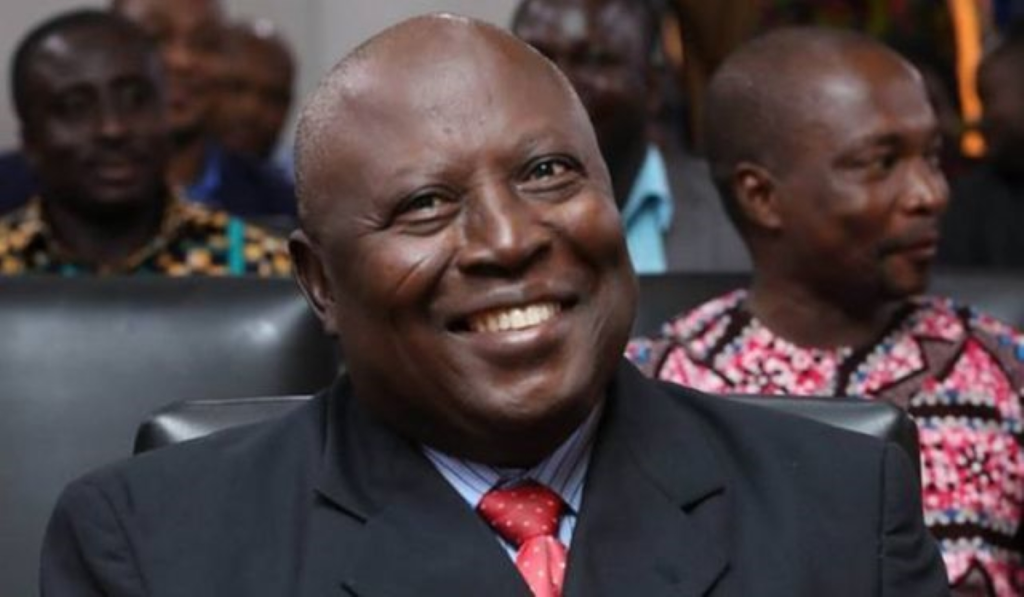
A former Attorney General and known anti-corruption crusader, nicknamed the “Citizen Vigilante,” Amidu, an opposition NDC member, was seen as the ideal non-partisan figure to hold the state accountable.
However, the initial hope quickly soured.
Amidu’s two-year tenure (2018-2020) was dogged by a lack of visible prosecutions, which he consistently blamed on the government’s failure to provide adequate funding, staffing, and, most critically, political support.
The ultimate crisis came with the controversial Agyapa Royalties Deal. Amidu completed a “corruption risk assessment” of the deal, which the government planned to use to raise revenue from Ghana’s gold royalties.
He famously resigned in November 2020, citing “political interference” by President Nana Akufo-Addo following his investigation into the transaction.
In his scathing resignation letter, Amidu stated the President’s reaction “convinces me beyond every reasonable doubt that you had laboured under the mistaken belief that I could hold the Office of Special Prosecutor as a poodle.”
The Agyebeng Era: High-Profile Probes and Internal Turmoil
Amidu was succeeded by the current Special Prosecutor, Kissi Agyebeng, a private legal practitioner and law lecturer, who took office in 2021 with a pledge to make corruption a “very costly” venture.
His tenure has been marked by a more aggressive approach, initiating several high-profile probes into politically exposed persons (PEPs).
Agyebeng’s most publicized cases include the investigation into the former Minister of Sanitation, Cecilia Dapaah, following the alleged theft of vast sums of cash (including $1 million USD and €300,000) from her private residence.
The OSP launched a probe into the source of the funds, leading to a legal tussle with the Attorney General’s office over jurisdiction.
Another controversial case was the investigation into former Minister of State for Finance, Charles Adu Boahen, over allegations of influence peddling, which the OSP had to drop due to what it determined was a lack of a clear legal mandate to prosecute “influence peddling” under the OSP Act.
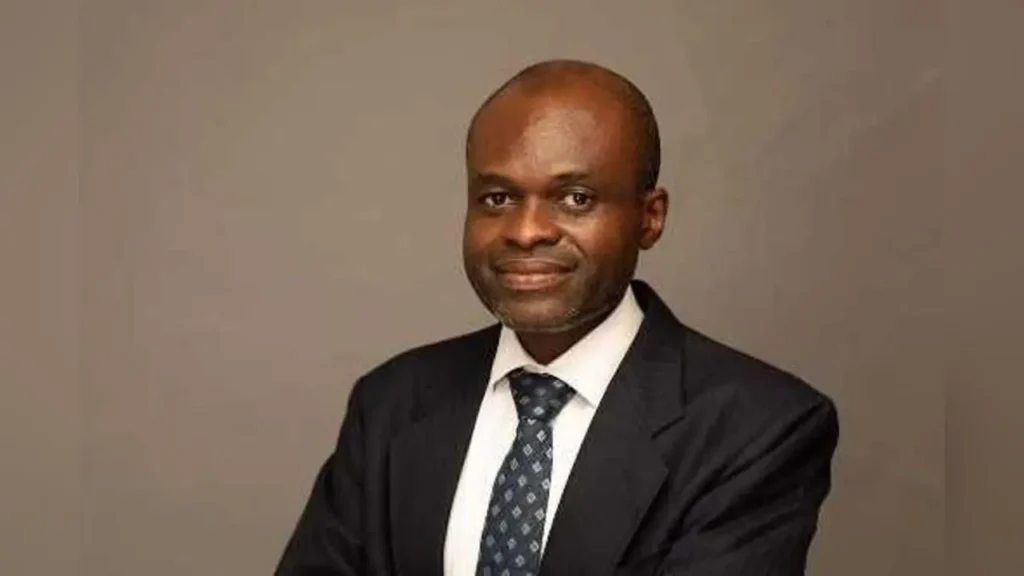
Most recently, Agyebeng’s office has been embroiled in a highly charged public and legal spat with prominent lawyer Martin Kpebu, who himself is an anti-corruption advocate.
The OSP arrested Kpebu on allegations related to an earlier matter, which Kpebu and his supporters have condemned as an attempt to intimidate critics and an abuse of power, leading to a public call for Agyebeng’s dismissal.
The Political Angle: A Weapon or a Shield?
Civil society organizations (CSOs) view the timing of the abolition call as highly suspicious.
They argue that if the OSP is struggling, the solution is to reform the law—perhaps by enshrining its mandate in the Constitution, as Amidu suggested—rather than eliminating the most potent symbolic commitment to anti-corruption.
Ghana’s President John Mahama has weighed in on the matter, calling for plans to scrap the OSP “premature“.
The Special Prosecutor has yet to comment on the matter.
Whether the bill drafted by MPs to scrap the office gets moved forward by parliament remains to be seen.