An investigation by Corruption Watch Ghana has laid bare a troubling pattern of noncompliance with the Right to Information (RTI) law among some of the country’s most critical governance institutions.
Titled “Saga Over RTI: Millions Paid as Penalty,” the report, released today, reveals that public and private entities, including the Ghana Police Service, the Commission on Human Rights and Administrative Justice (CHRAJ), the Parliamentary Service, the Judicial Service of Ghana, the Attorney-General’s Department, and the Social Security and National Insurance Trust (SSNIT), have collectively incurred fines totaling approximately 5.6 million Ghana Cedis for failing to provide information requested by citizens under the RTI Act.
The findings, gathered over a six-month investigation from February to July 2025, expose a systemic disregard for transparency among institutions tasked with upholding governance and public trust.
The RTI Commission (RTIC), responsible for enforcing the law, has imposed penalties in over 70 determinations involving at least 60 distinct entities.
These fines, often paid using taxpayers’ money, highlight a troubling irony: public funds are being used to settle penalties for denying citizens access to information they are legally entitled to.
Key Institutions Implicated
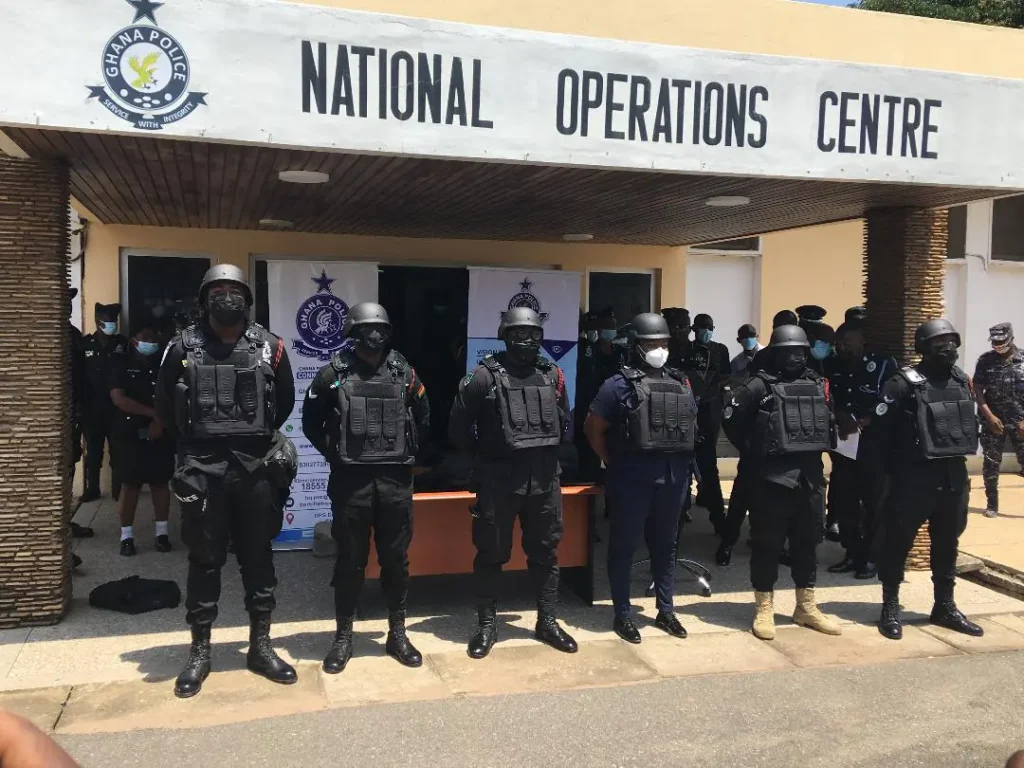
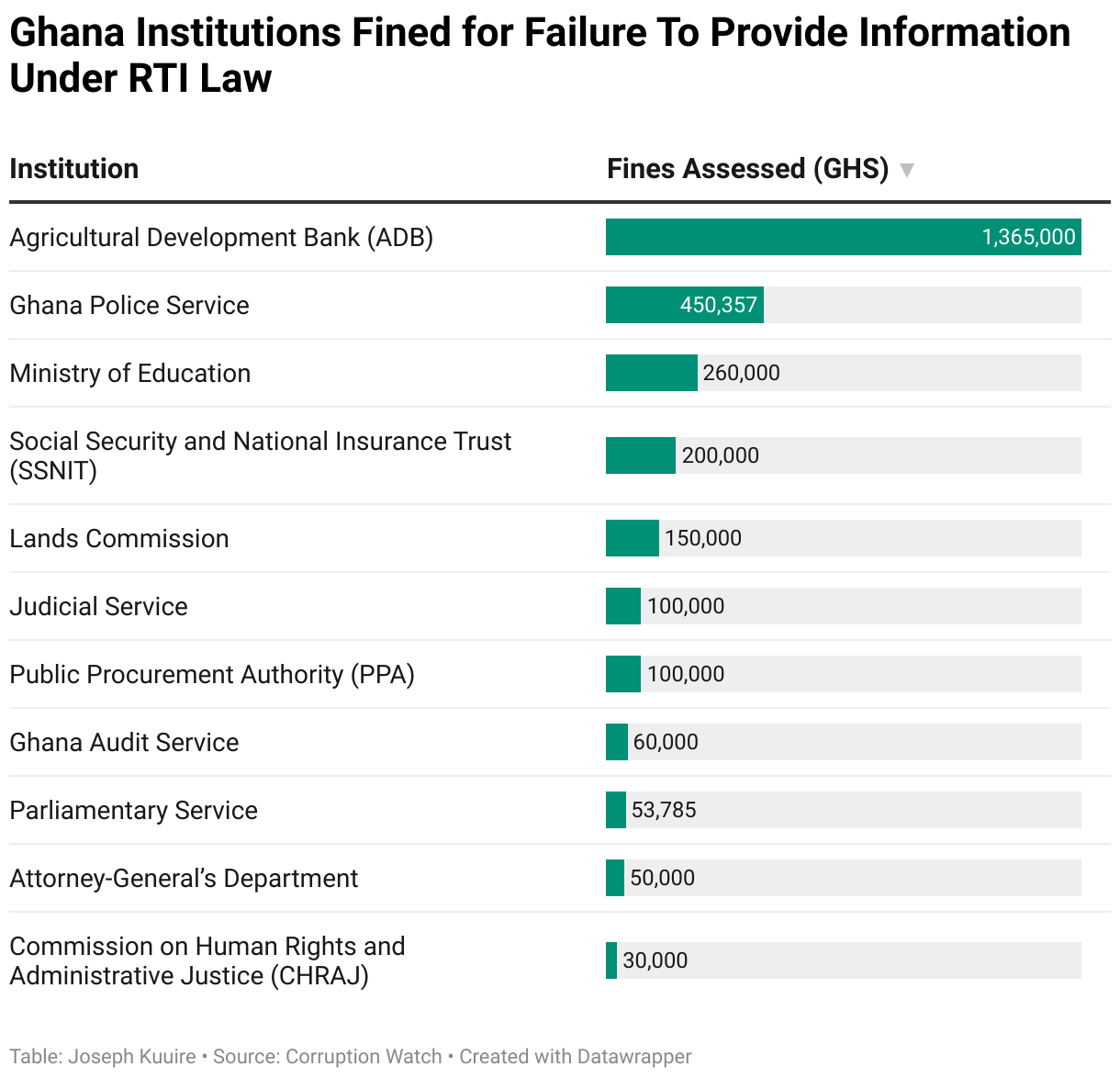
The Ghana Police Service, a cornerstone of public safety, has paid fines amounting to 450,357 Ghana Cedis for RTI violations, while CHRAJ, the body charged with protecting human rights, has yet to settle a 30,000 Ghana Cedis penalty.
The Parliamentary Service, responsible for supporting legislative functions, has paid 53,785 Ghana Cedis, and the Judicial Service of Ghana owes 100,000 Ghana Cedis.
The Attorney-General’s Department, a key legal authority, faces an outstanding fine of 50,000 Ghana Cedis, while SSNIT, which manages national pensions, has settled a penalty of 200,000 Ghana Cedis.
Among the heaviest fines, the Agricultural Development Bank (ADB) stands out, having paid 1.365 million Ghana Cedis, the largest penalty recorded. Other significant payments include 260,000 Ghana Cedis by the Ministry of Education, 150,000 Ghana Cedis by the Lands Commission, and 60,000 Ghana Cedis by the Ghana Audit Service.
The Public Procurement Authority (PPA) has yet to pay a fine of 100,000 Ghana Cedis.
Patterns of Noncompliance
The Ministry of Education emerged as the most frequent offender, receiving four penalties, followed by the Ghana Police Service with three.
Ten other institutions, including the Ghana Education Service, the Judicial Service, the Lands Commission, the PPA, the Ministry of Energy, and the Urban Roads Department, have each been penalized twice. This recurrence suggests a persistent failure to institutionalize RTI compliance, even among agencies expected to model transparency.
The RTI Act, passed in 2019, was heralded as a landmark in promoting accountability and good governance in Ghana. It grants citizens the right to access information held by public institutions, subject to certain exemptions.
However, Corruption Watch’s investigation reveals that many institutions either refuse or fail to comply, often citing bureaucratic hurdles or outright ignoring requests.
A Call for Accountability
The use of taxpayer funds to pay these fines has sparked outrage among advocates for transparency. The organization is calling for stricter oversight, enhanced training for public officials on RTI compliance, and reforms to ensure that fines are borne by responsible individuals rather than public coffers.
This article was edited with AI and reviewed by human editors