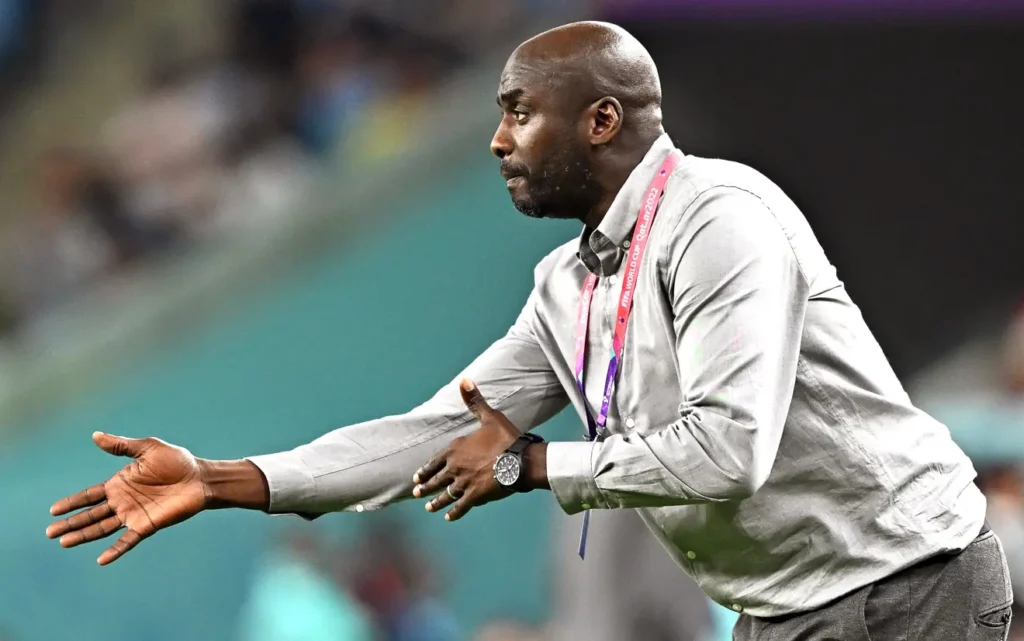
ACCRA, GHANA – Otto Addo would have been one of the most-watched figures when Ghana’s national football team, the Black Stars, began their World Cup campaign against Panama in June.
The 50-year-old former Borussia Dortmund talent scout and head coach has quietly achieved what no other Ghanaian coach has: qualified the Black Stars for two separate FIFA World Cup tournaments.
However, Addo’s performance with the national team hadn’t been enough to earn the confidence of his countrymen back home in Ghana.
Ghana’s Minister for Youth and Sports, Kofi Adams, in an interview last September, stated that he was “dissatisfied” with the coach’s performance with the team.
“If I tell you I’m impressed, then it means I don’t understand my job,” he said.
“There’s a lot of room for improvement. Even the coach himself admits when he gets things wrong and takes responsibility. But the question is: how long can you keep taking blame for poor decisions?”
With a crushing 5-1 defeat to Austria in an international friendly, followed up by a 2-1 loss to Germany three days later, the Ghana Football Association (GFA) on Tuesday, March 31, announced that they had fired Addo.
In a statement, the Association thanked Otto Addo for his contribution to the team and wished him the best of luck in his future endeavours.
A Tale of Two Turnarounds
To understand the current state of Ghanaian football is to understand what transpired in the last 24 months.
After a disastrous 2024 that saw the team fail to qualify for the Africa Cup of Nations (AFCON), Addo was reappointed amidst a storm of skepticism.
His new contract would have run until August 2026. Reports indicate he was paid approximately $50,000 per month.
The team’s failure to qualify for AFCON was stunning. Furthermore, the Black Stars had crashed out in the previous AFCON tournament, failing to win a single match.
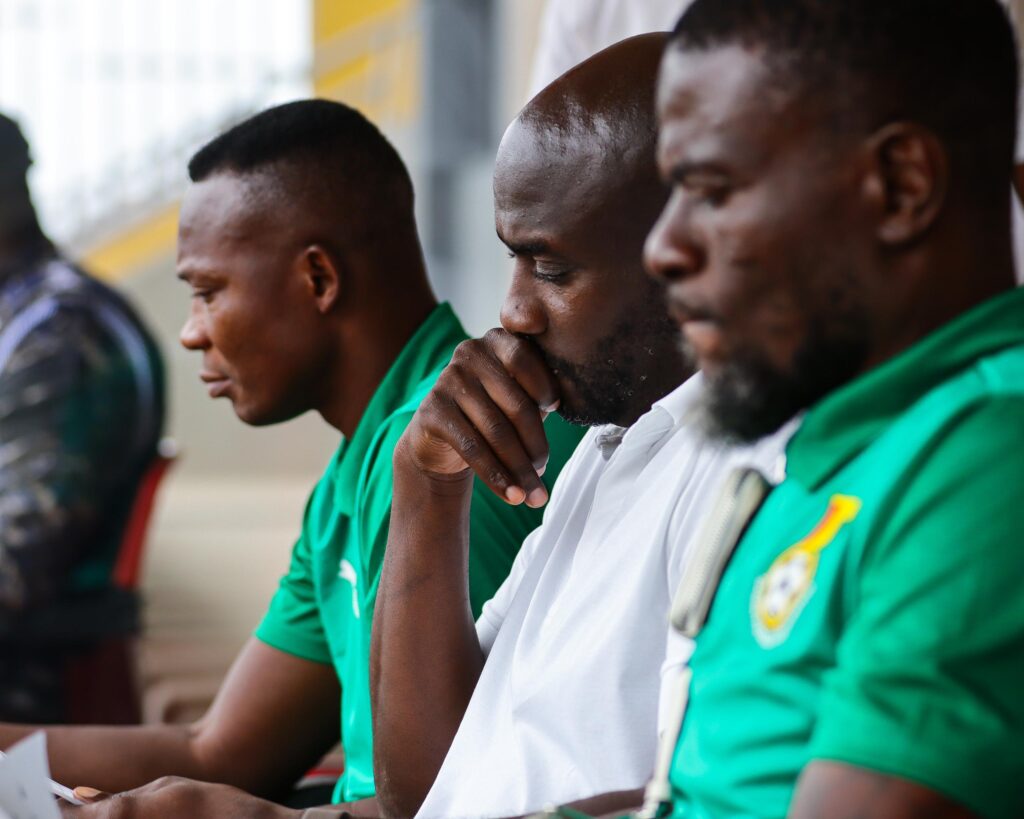
The sports press did not hold back, with most calling for his immediate dismissal.
What gave Addo more leeway with his job was his World Cup run.
The coach had inherited a team sitting fourth in their qualifying group with a mere three points. He helped orchestrate an unbeaten run, racking up 25 points from ten matches and finishing atop Group I with a +17 goal difference.
The team officially qualified for the 2026 World Cup by beating Comoros 1-0 in October last year.
At the World Cup draw, Ghana was placed in Group L with Panama, Croatia, and England.
“We want to win every match, this is for sure,” Addo told reporters after the World Cup draw in Washington. “On a good day, I know we can beat everyone, but I also know we can lose against everyone if we underrate them.”
From Germany To Ghana
Born in Hamburg, West Germany, on June 9, 1975, Addo’s footballing identity was shaped in the rigorous systems of German football.
A versatile attacking midfielder and winger, his playing career reached its peak at Borussia Dortmund, where he won the Bundesliga title in 2002 and reached the UEFA Cup final.
Despite his German upbringing, Addo’s heart remained with his ancestral home in Ghana.
He debuted for the Black Stars in 1999 and was a key member of the 2006 World Cup squad that reached the round of 16—Ghana’s debut on the world stage.
He officially retired in 2008 and transitioned into coaching to focus on youth development and scouting.
He spent years refining his craft in the backrooms of elite European clubs, including stints at FC Nordsjælland & Gladbach, and Hamburger SV as a youth coach and assistant.
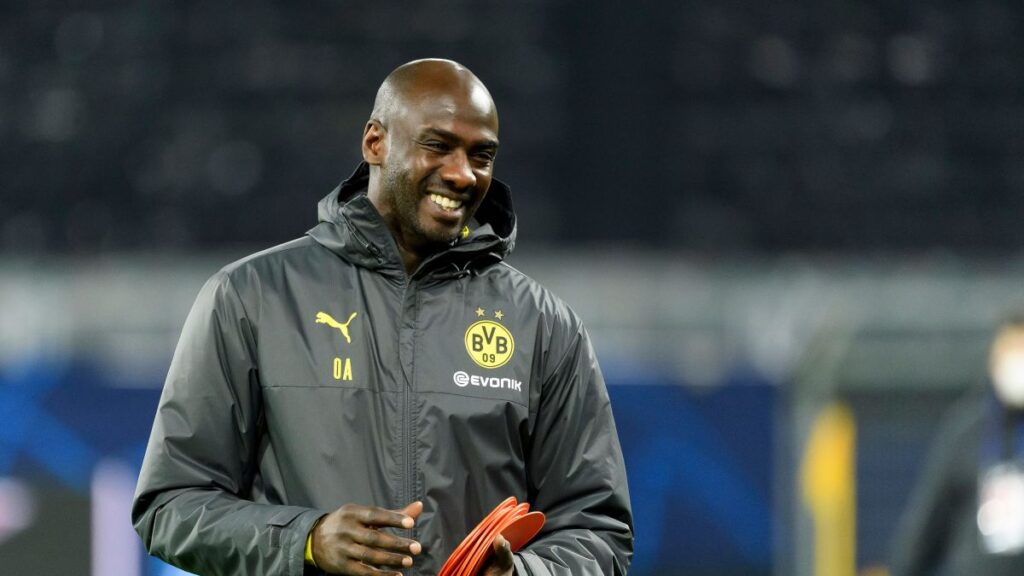
He later transitioned to Borussia Dortmund, serving as a “talent coach”. He has been credited with helping transition superstars like Erling Haaland and Jude Bellingham from youth prospects to first-team regulars.
“The way Dortmund integrates young players into the first-team squad is next level,” Bellingham said in an interview about his time at Dortmund.
“There is a person there for every player, especially Otto [Addo], the former Dortmund and Ghana striker, who has worked with the young players. He is great.”
In February 2022, Addo was hired as the interim manager of the Black Stars. As manager, he led the team through the World Cup playoffs against Nigeria and coached during the Qatar 2022 World Cup.
The team unfortunately crashed out of the tournament after winning only one game against South Korea in the group stages.
The Black Stars also failed to win their grudge match against Uruguay, whose controversial win at the 2006 World Cup knocked them out of the quarter-finals.
Appointment as Permanent Head Coach
After the World Cup in Qatar, Addo returned to Dortmund and resumed his specialized role.
The Ghana Football Association (GFA) turned to Chris Hughton, who had served as a technical advisor under Addo during the previous World Cup.
Hughton was officially appointed head coach in February 2023.
But the English coach’s stint did not end well. The team’s performance dipped, ultimately resulting in a disastrous group-stage exit at the 2023 AFCON. He was fired in January 2024.
Two months later, the Football Association announced that they had reappointed Addo as head coach, this time for a permanent role.
The Downs and Ups as Head Coach
Addo immediately faced headwinds as the new Black Stars coach.
As manager, the Black Stars failed to qualify for the 2025 Africa Cup of Nations. This was the first time in 20 years that Ghana did not make the tournament.
The team finished at the bottom of Group F, failing to win a single game against Angola, Sudan, and Niger.
The backlash was intense. There were calls for Addo’s dismissal in late 2024, with fans and pundits describing the campaign as “one of the worst in the team’s history.”
While AFCON may have been disastrous, the World Cup Qualifiers were a different story.
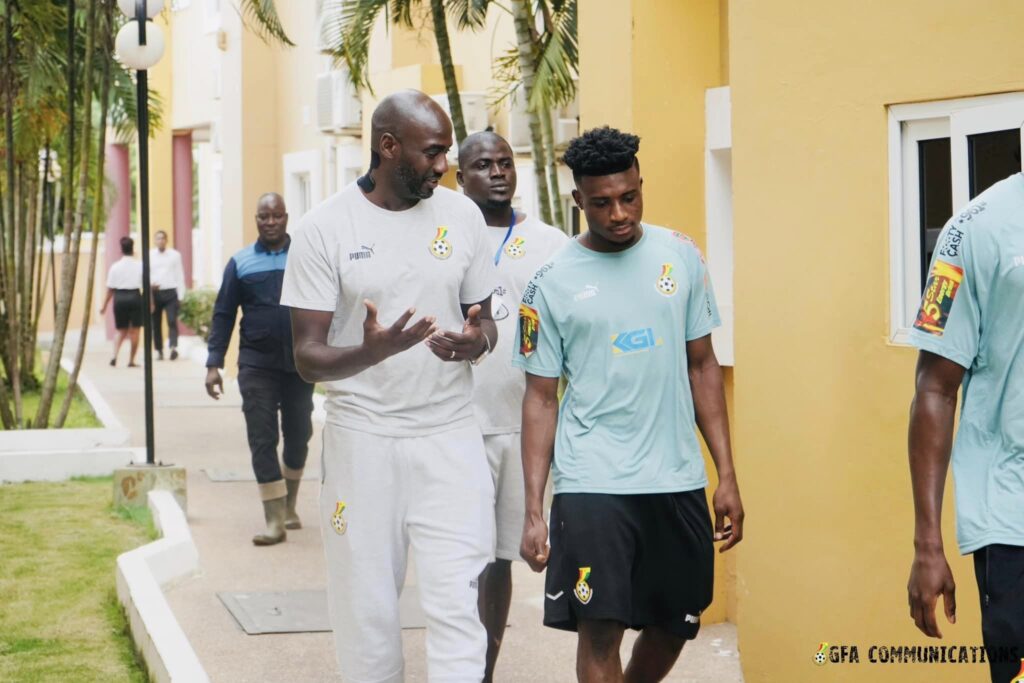
In the qualifying matches that counted, Addo led the team to 7 wins and 1 draw in 10 games.
He secured a 2-1 away win in Mali and a 5-0 thrashing of the Central African Republic.
On October 12, 2025, a 1-0 win over Comoros (thanks to a Mohammed Kudus goal) officially punched Ghana’s ticket to the 2026 World Cup.
While qualifying for the World Cup in June 2026 should have relieved pressure, some skeptics do not have confidence in the coach.
Joy Sports journalist Michael Oti Adjei publicly stated his doubts about the coach in an interview.
“I don’t understand how a coach goes through a World Cup qualifier, plays eight games, wins all but draws one, loses one, and the following day the conversation is, is he a good coach?” he said.
The Road Ahead
Ghana opens its campaign against Panama on June 17 in Toronto. The team will now have to find a new coach before the tournament begins.
Some of the favorites to replace him include former coach Kwesi Appiah, who is currently coaching the Sudan national team.
Addo could have been the man to lead Ghana past the group stages for the first time since 2010. But the team’s performances over the last few months ultimately led to his dismissal.
With a few months to the tournament, it’s anybody’s guess who will succeed him.
Before his dismissal, Addo had high hopes for his team.
“We don’t have the biggest stars,” he said in an interview. “But we can become the best team if we work for each other.”
With his loss to Germany, records show that Ghana won only two of their last 12 friendlies.