
Story Highlights
- Parliament passed the Airport Infrastructure Development Charge (AIDC) in December 2025 as part of Ghana’s 2026 budget reforms.
- International passengers will pay $100 per return trip; domestic travelers will pay GH¢100 per ticket. The levy takes effect April 1, 2026.
- Revenue goes into a dedicated escrow account under the Ministry of Transport, earmarked strictly for airport development.
- Industry groups warn the new charges could make Ghana one of the most expensive aviation markets in the world.
Ghana’s skies are getting more expensive to navigate.
Starting April 1, 2026, every passenger passing through a Ghanaian airport will pay a new levy — one the government says will finally give the country the aviation infrastructure it has long needed, and that critics say could price Ghana out of the regional market.
What Is the AIDC?
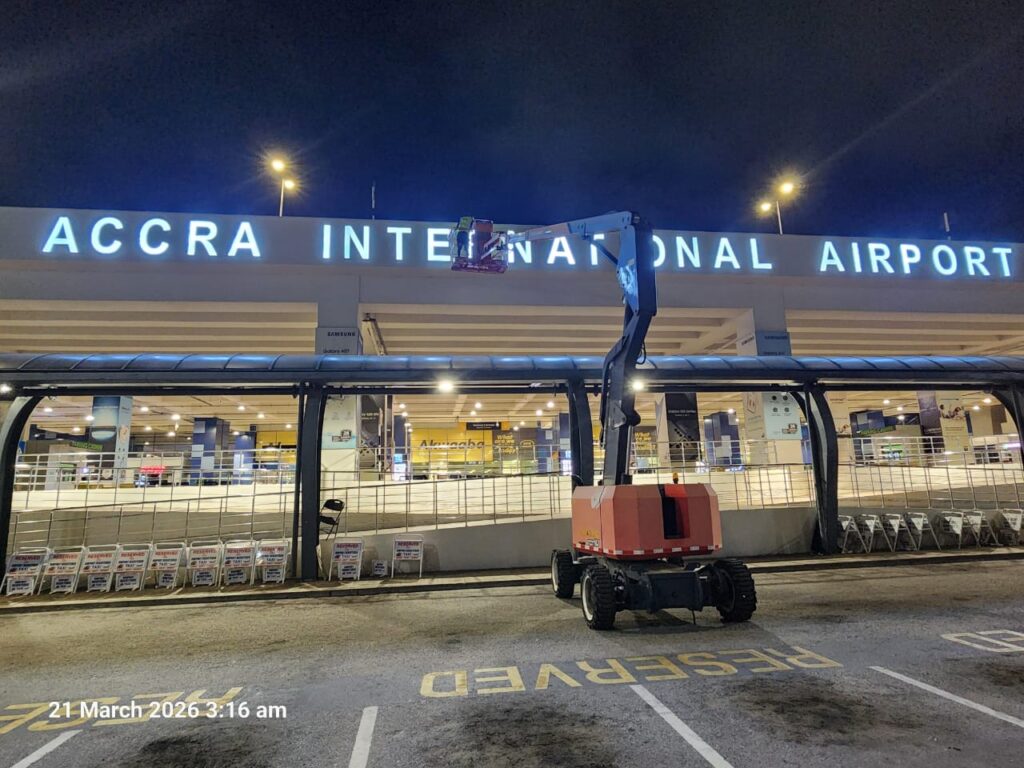
The Airport Infrastructure Development Charge (AIDC) was passed by Parliament in December 2025, with the stated purpose of funding major airport infrastructure projects at Accra International Airport and at airports across the country.
Revenue generated from the AIDC — $100 for international passengers and GH¢100 for domestic passengers — will be paid into a dedicated fund and escrow account managed by the Ministry of Transport, earmarked strictly for airport infrastructure development nationwide.
The charge is distinct from the existing Airport Passenger Service Charge, which funds day-to-day operations.
The main difference lies in purpose: while the passenger service charge covers routine services, the infrastructure development charge is a specific levy to finance major airport modernisation or expansion projects.
It is worth noting that the AIDC is not the only new charge hitting travelers. An $18 Advance Passenger Information and Passenger Name Record fee was introduced on February 1, 2026, separate from the AIDC.
What Will the Money Build?
The government has a specific list of projects in mind. Among the projects earmarked under the AIDC is the construction of a connecting concourse between Terminals 2 and 3 at the country’s main international airport, which is expected to deliver seamless airside transfers.
Other projects include the Northern Apron — a 10-aircraft-capacity parking bay that has been suspended for four years due to lack of funds — as well as a 2,000-capacity multi-storey car park at Terminal 3.
Beyond Accra, the levy signals a new era for regional airports. The Managing Director of Ghana Airports Company Limited (GACL), Yvonne Nana Afriyie Opare, confirmed that plans are underway for new airports in Bolgatanga and Wa, in the Upper East and Upper West Regions, respectively.
President Mahama has since publicly embraced this agenda. During the launch of the SheaPark Resource Hub Project in Wa on February 1, 2026, he announced plans for an entirely new airport in the Upper West regional capital, noting that urban development around the existing facility has constrained its future expansion.
Why Was This Needed?
The short answer: Ghana’s regional airports are not paying their own way. Auditor-General reports from the past two years have repeatedly flagged that none of Ghana’s regional airports is financially self-sustaining.
Due to extremely low domestic passenger charges, airports such as Tamale, Wa, Ho, Sunyani, and Kumasi generate insufficient revenue to cover basic operations — forcing Accra International Airport, which handles profitable international traffic, to subsidise the operational costs of all regional airports.

The AIDC is designed to break that cycle by creating a ring-fenced fund that spreads the financing burden more broadly across all passengers.
The Pushback
At AviationGhana’s fifth Breakfast Meeting in Accra, industry representatives raised pointed questions about whether the country can absorb more charges without consequences.
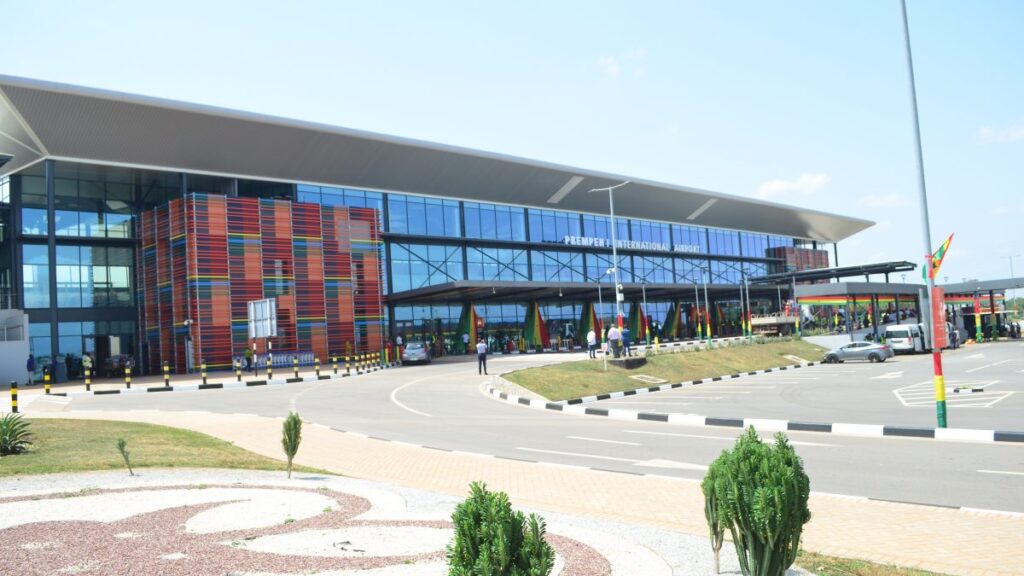
The Board of Airline Representatives Ghana warned that the new charges would raise total international passenger fees to $173 for a one-way ticket and $243 for a return ticket, potentially placing Ghana among the ten most expensive countries globally for passenger charges and the third highest in Africa.
That is a striking number, particularly given the direction regional aviation policy is supposed to be heading. The increases run contrary to an ECOWAS directive from December 2025 calling for a 25 percent reduction in regional passenger charges by 2026 to stimulate air traffic growth.
The Institute of Statistical, Social and Economic Research has also raised questions about the economic rationale for some of the projects — particularly the rehabilitation of Sunyani Airport and the construction of a new airport in Bolgatanga.
They are calling for clearer alignment between the levy, proposed projects, and Ghana’s wider tourism development strategy.
What Authorities Are Saying
GACL’s managing director has acknowledged the concerns but pushed back on the framing.
She stated that the objective of the charge is not only to raise revenue but to directly improve airport infrastructure and passenger comfort, moving away from the old system where the main international hub alone funded smaller regional facilities.
She added that if Ghanaians can see what the money is going towards, the charges will sit more easily with the public.
The Director-General of the Ghana Civil Aviation Authority has echoed the broader ambition, calling for deeper collaboration among stakeholders, airport authorities, and government agencies to achieve Ghana’s goal of becoming an aviation hub in the sub-region.
What This Means for Travelers
If you are flying out of Ghana after April 1, 2026, expect to pay more. Whether the upgraded terminals, new airports, and modern baggage systems materialise on schedule will determine whether those extra charges feel like an investment — or just another cost of flying in West Africa.
This article was edited with AI and reviewed by human editors
Subscribe to our newsletter
Author