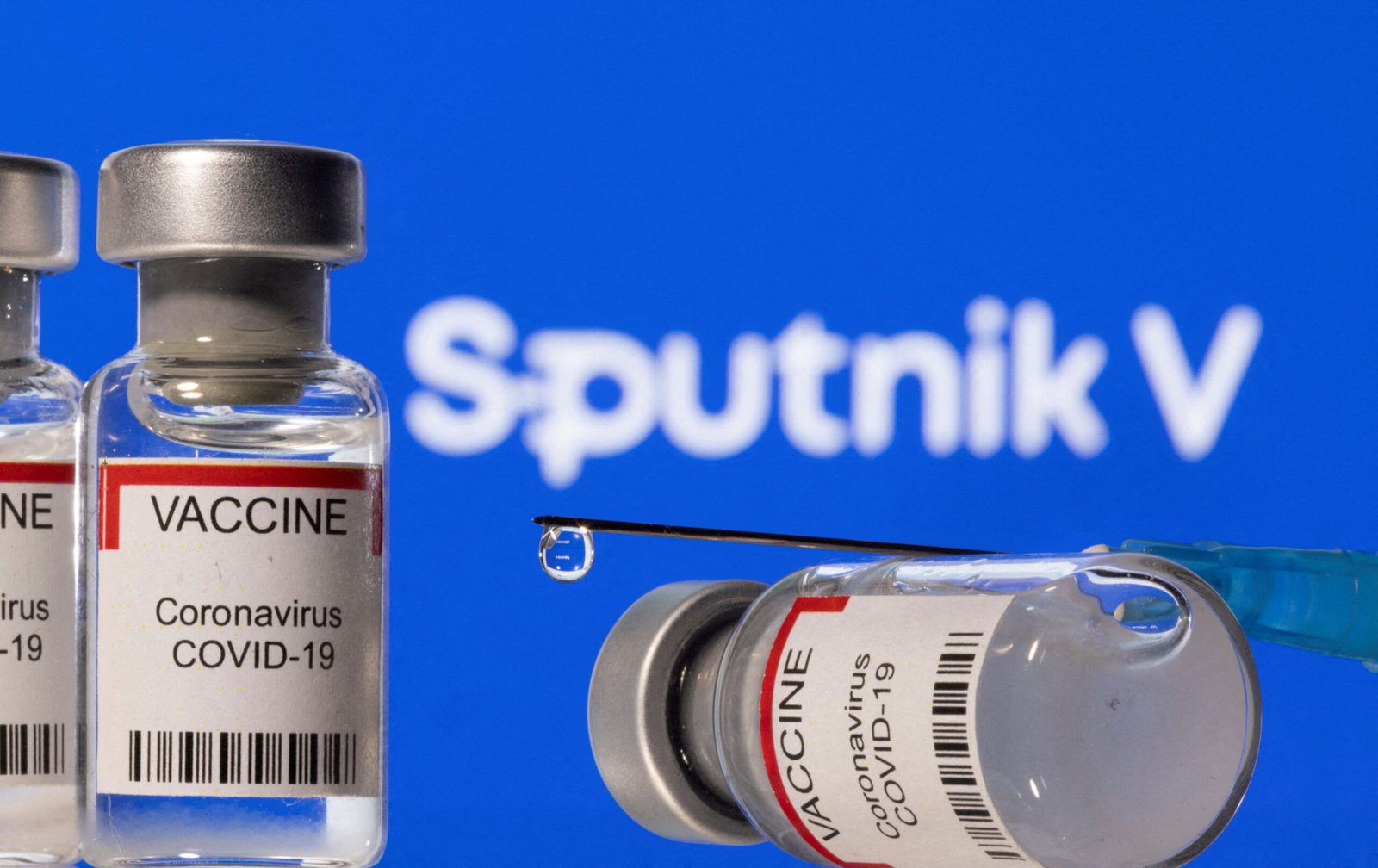
When Ghana’s Former Minister of Health, Kwaku Agyemang-Manu, appeared before a parliamentary committee in July 2021, he admitted to having made the purchase of COVID vaccines without prior parliamentary approval.
What he said made his appearance more controversial:“I was seriously in a situation that couldn’t make me think properly.”
The admission, broadcast live on national television, triggered a wave of public fury. More than four years later, those words may be revisited in a courtroom.
Ghana’s Government Communications Minister Felix Kwakye Ofosu confirmed last week that the former Health Minister has already been arrested, interrogated, and cautioned, and that formal criminal charges are expected within the coming weeks.
The dockets — two of them, covering separate procurement controversies — have been compiled by the Economic and Organised Crime Office and handed to the Attorney-General.
After years of delays, investigations, and political back-and-forth, accountability may finally be arriving.
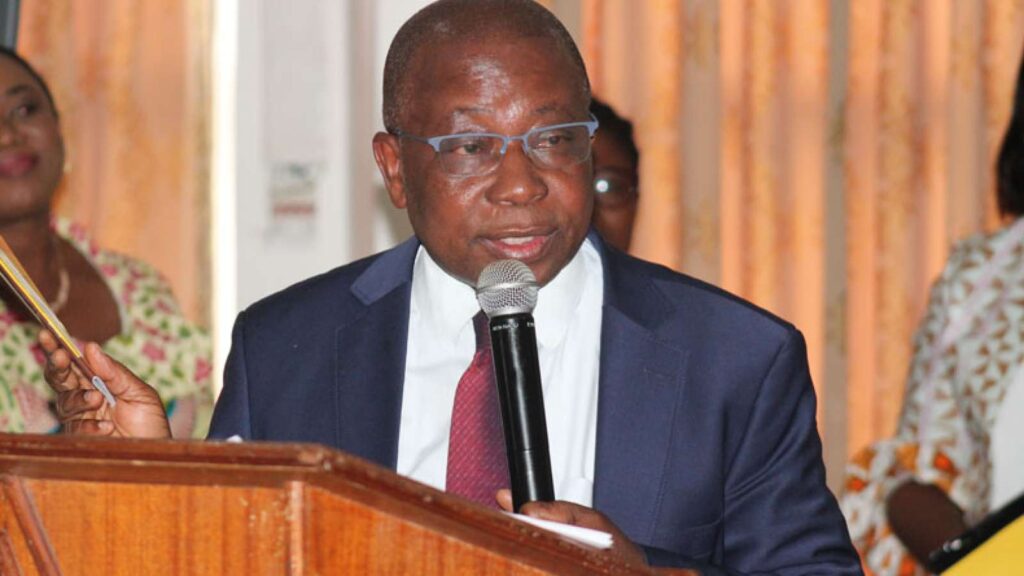
The case against Agyemang-Manu rests on two distinct but intertwined controversies that define how Ghana managed public procurement under the cover of pandemic emergency.
The first is the purchase of Russian Sputnik V vaccines through an Emirati middleman at nearly double the manufacturer’s price.
The second is the awarding of a lucrative COVID-19 testing contract at Kotoka International Airport to an obscure private company that would go on to earn more than ten times what the Ghanaian state received.
Exposed By A Norweigian Newspaper
The scandal broke not in Accra but in Oslo.
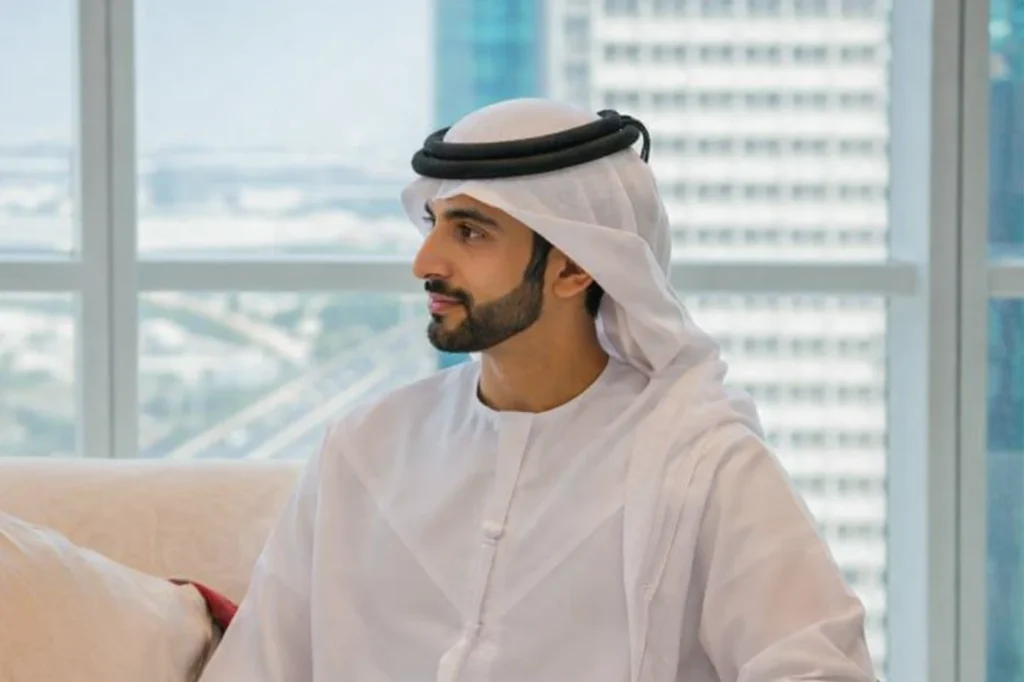
In mid-2021, the Norwegian newspaper VG revealed that Ghana had secured a deal to purchase Sputnik V COVID-19 vaccines through an intermediary — Sheikh Ahmed Dalmook Al Maktoum, a member of the royal family of Dubai — at a unit price of $19 per dose.
The manufacturer’s direct price at the time was approximately $10. The markup, nearly double the factory price, was bad enough. What compounded it was the revelation that Ghana had paid $2.85 million for vaccines that largely never arrived.
The Ministry of Health had signed agreements with both Sheikh Al Maktoum and a Ghanaian company, S.L. Global, in March 2021, targeting the procurement of 3.4 million doses.
Under clause 4.2 of the contract, a Letter of Credit was established, and 50 percent of the value for the initial 300,000-dose tranche was disbursed.
Of those doses, only 20,000 were ever delivered. By July 2021, the Sheikh’s office had terminated the contract, citing an inability to secure the vaccines from the Russian producers.
The Ministry’s defence — that official diplomatic channels had failed to yield vaccines, and that emergency conditions justified unorthodox procurement — quickly unravelled under parliamentary scrutiny.
A nine-member ad hoc committee constituted by Parliament found that both agreements had been signed without parliamentary ratification, in apparent breach of Article 181(5) of the 1992 Constitution, which requires legislative approval for international business or economic transactions.
The Attorney-General had reportedly offered that same advice before the deal was signed.
“Those were not normal times, and I was seriously in a situation that didn’t make me think properly, the way you think,” the former Minister said at the Parliamentary hearing.
The committee further found that the Ministry had not sought or received approval from the Public Procurement Authority, and that the ratification subsequently applied for under Section 90(3)(c) of the Public Procurement Act had not been granted.
There was also the matter of sequencing: Agyemang-Manu claimed he only turned to the Sheikh after exhausting diplomatic routes to the Russian government — yet paper trails examined by the committee showed he wrote to Russia’s Minister of Trade on March 23, 2021, two weeks after the Sheikh’s contract had already been signed.
Parliament’s minority moved a vote of censure. Civil society organisations called for the minister’s resignation or dismissal.
In his only public comment, President Nana Akufo-Addo laughed and suggested his minister had “endured a lot.”
The minister was placed on a brief administrative leave. He was never fired. He later served out the full tenure of the Akufo-Addo administration, concluding his time in office in January 2025.
The Sheikh eventually refunded $2.47 million to Ghana, though the full amount disbursed to him — $2.85 million — was not recovered.
The remaining balance, the cost of 20,000 doses administered to census officials shortly before they expired, was effectively absorbed by the Ghanaian public.
The Airport COVID Testing Controversy
The Sputnik V deal was not the only COVID-era procurement to land Agyemang-Manu in legal jeopardy.
The second docket prepared by investigators relates to Frontiers Healthcare Services Limited, the company that was awarded an exclusive contract to conduct mandatory COVID-19 testing at Kotoka International Airport when Ghana reopened its borders to international flights in September 2020.
The contract’s terms, long shielded from public view despite repeated Right to Information requests, were eventually disclosed through investigative reporting.
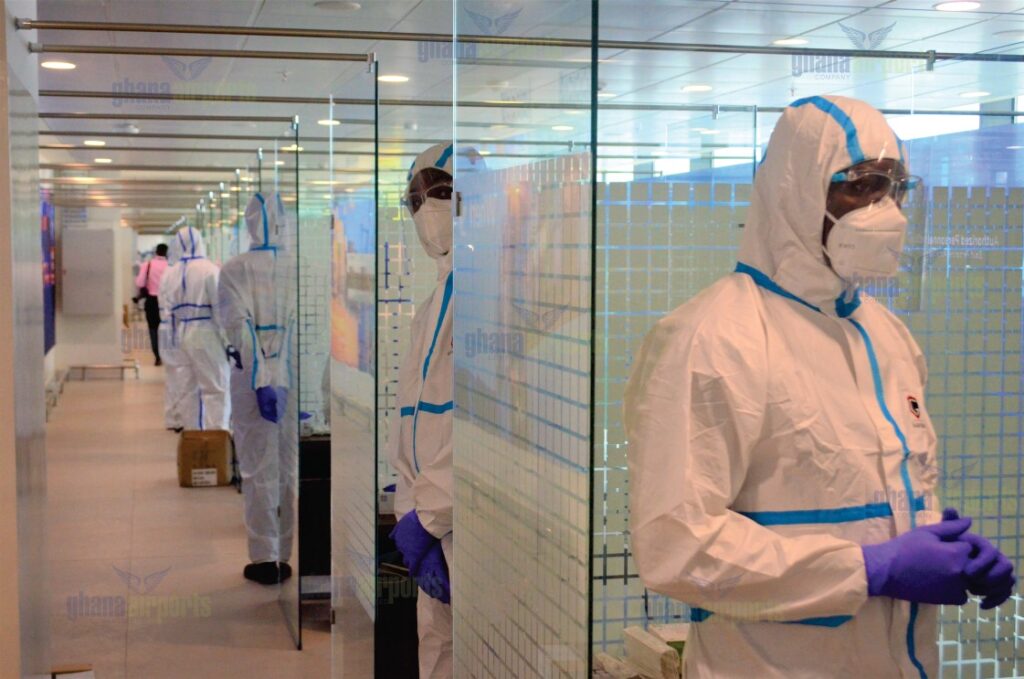
They revealed an arrangement that would strike most observers as extraordinary: Frontiers retained $140 of every $150 charged to arriving passengers, while the Ghana Airports Company Limited (GACL) received just $10 per test.
Over the duration of the two-year contract, that formula translated into Frontiers earning approximately $87.5 million — $84 million from arrivals and $3.5 million from departures. Ghana received just under $6.4 million in total.
Less than six kilometres from KIA, private antigen testing centres were charging as little as $16 for the same test.
Virologist Dr. Joseph Humphrey Kofi Bonney of the Noguchi Memorial Institute for Medical Research told reporters at the time that a fair price should have been between $10 and $20. That was one-tenth to one-fifteenth what Frontiers was charging at the airport.
The procurement process was opaque from the start. The contract between GACL and Frontiers was signed on September 1, 2020 — the same day Frontiers began conducting tests.
The company had not yet received a licence to operate under the Health Facilities Regulatory Act; that licence was issued two months after operations had begun.
The Public Procurement Authority was not consulted before the contract was awarded. When six government ministers appeared before Parliament’s Appointments Committee in 2021, none of them could identify who had signed off on the arrangement.
Political Shield
After the National Democratic Congress (NDC) returned to power under President John Mahama in January 2025, and under a broader anti-corruption mandate, that the machinery of state prosecution began to move.
Kwakye Ofosu said publicly last week that Agyemang-Manu had attempted to publicly claim that “nobody has touched” him — a claim Kwakye Ofosu flatly rejected.
“He was arrested. He was interrogated, questioned, and cautioned,” the Government Communications stated on JoyNews.
“In the next few weeks, the Attorney General will be taking him to court, and he will charge him formally.”
Accountability Test
Ghanaian anti-corruption advocates and governance analysts will be watching the coming prosecution closely, less for its individual outcome than for what it signals about institutional durability.
Past investigations into pandemic procurement — in Ghana and across the continent — have a history of disappearing under political transitions, prosecutorial inertia, or legal technicality.
The question is whether the formal machinery of the Attorney-General’s office can sustain a complex procurement case through Ghana’s courts.
On the Frontiers side, the legal challenge will be establishing ministerial accountability for a contract whose origins remain deliberately opaque.
Threading that accountability back to Agyemang-Manu will require the Attorney-General to build a chain of evidence linking the Health Ministry’s oversight — or its deliberate absence — to the deal.
For many Ghanaians, the arithmetic speaks loudly enough. Nearly $3 million paid for vaccines that didn’t arrive. More than $80 million extracted by an airport testing company in exchange for less than $6.4 million to the state. A minister who told a parliamentary committee he was not thinking properly.
Whether the courts deliver a verdict in keeping with that arithmetic is a different question.
This article was edited with AI and reviewed by human editors