
Accra’s real estate space has witnessed a boom over the last decade. The city’s landscape is littered with new flashy properties, including high-rise apartments.
These developments seemingly signify that investors are willing to invest in Ghana’s capital city.
In the suburb of the Airport Residential area sits a growing real estate agency that has been at the forefront of this boom.
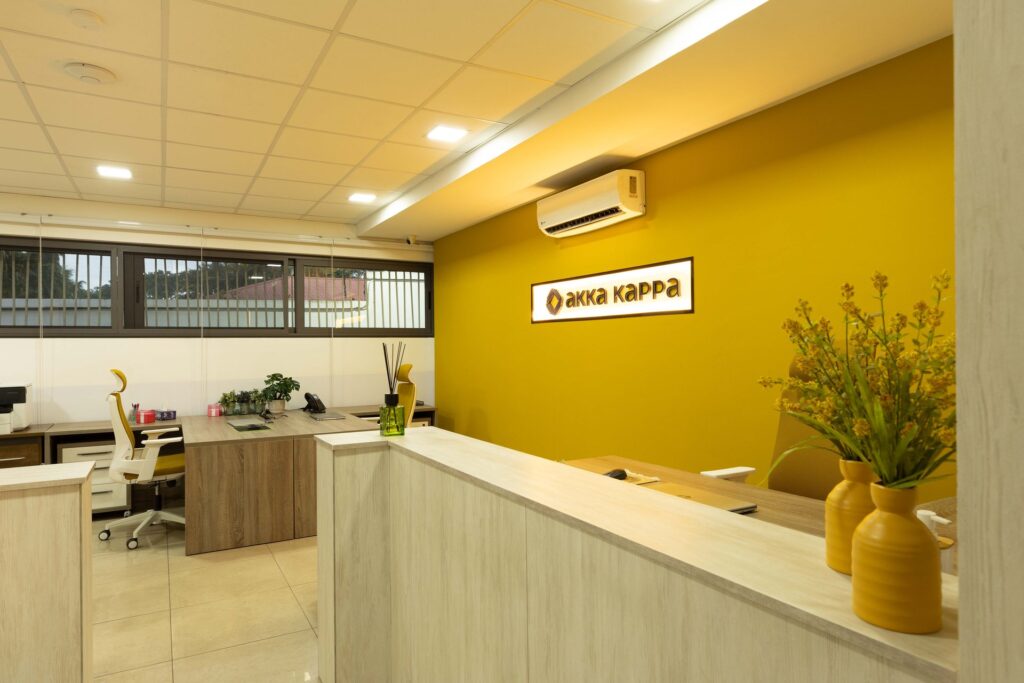
In an office building sit employees of Akka Kappa, one of the well-known brands in real estate.
The building, which was renovated and converted into an office space, features a clean and pristine design. Amongst the employees, helping to push the company forward, is its managing director, Jolanda Castagna.
Originally from a small town in Italy, Ms. Castagna has grown a modest business into a trusted name in Accra’s real estate sector.
A lot has changed for Ms. Castagna, whose first official “office” was a shipping container on a muddy construction site almost two decades ago.
Armed with little more than a brochure and stubborn determination, the silver-haired managing director practically started her real estate career from “scratch”.
Her firm now manages high-end rentals for multinational executives, brokers sales of prime properties in Accra, and advises developers navigating a growing and increasingly crowded market.
“I followed my husband,” she says simply, when asked how an Italian woman who arrived in Ghana in 1995 became a fixture in its property landscape. “If he had opened a jewelry shop, maybe I would be a jeweler today.”
Her husband, Jimmy Castagna, a civil engineer born in Nigeria to Italian parents, brought the family to Accra for a job overseeing what was then the city’s tallest office tower—the Ridge Tower (which is home to Fidelity Bank).
Ms. Castagna, raising two young children, settled into expat life. She worked for five years at the British High Commission in the visa section. Over time, she grew restless and eventually left her position.
“I resigned with the intention of studying French or improving my French so I could get other work opportunities,” she said.
In 2006, over dinner at their home, the chairman of a construction company mentioned a new residential project called Villaggio Primavera. He needed someone to sell its 100 luxury apartments.
Ms. Castagna, with no real estate experience, decided to take the plunge and apply for the job.
Learning On The Job
The Accra of 2006 bore little resemblance to today’s skyline. At the time, high-rise living was novel.
Ms. Castagna was initially skeptical of the prospects for her new real estate arena.
“There was very little development in terms of high-rise [apartments],” she said.
“The competitor at the time was the Polo Court. Villaggio Primavera was a very ambitious project. And in my mind was like, ‘how can I sell 100 apartments’?“
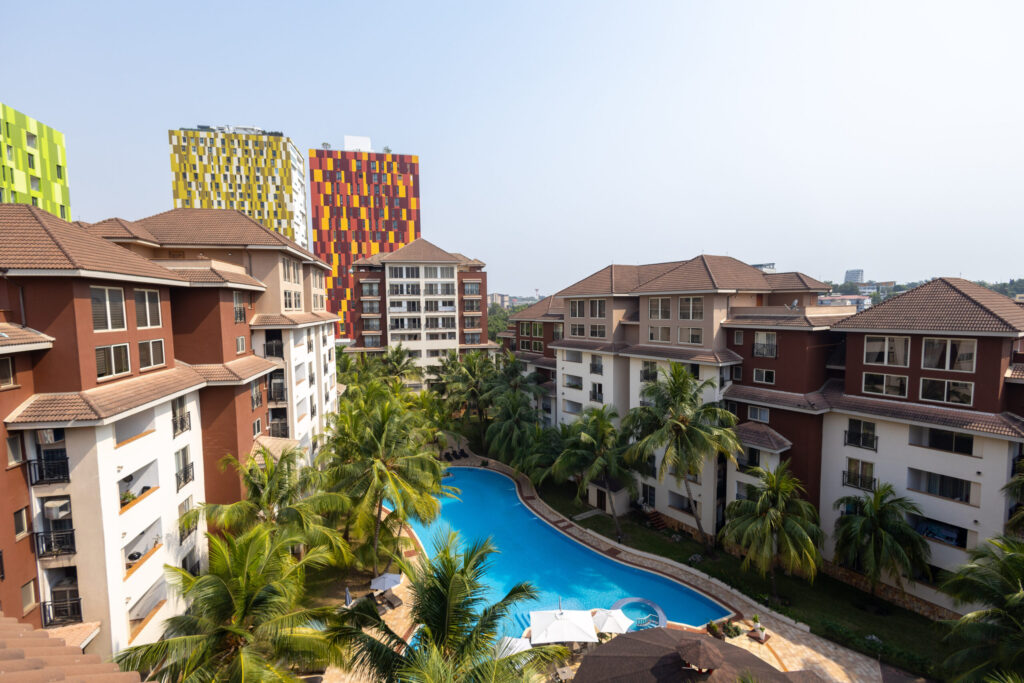
When she began work, her first office was a container on the construction site. She learned everything on the fly: leasehold versus freehold ownership, land title complexities, sales contracts.
Ghana’s property system is rooted in customary law, colonial legacies, and slow bureaucracy. This proved a steep curve for someone like Ms. Castagna, who was more accustomed to Italy’s straightforward cadastral registry.
Early client conversations were humbling. “I didn’t know certain terms,” she admits. Nevertheless, she persevered.
At the time, Ghana’s economy was on the rise. The country has just discovered oil off its shores, and investors—tired of sending money abroad—saw opportunities at home, especially in real estate.
Villaggio apartments, priced between $350,000 and $500,000, sold briskly. The property was so high in demand that tenants moved in before construction was fully completed.
Ms. Castagna steadily built a small sales team, later managing additional projects for the same developer.
Health Recovery and Building Her Own Business
In 2014, Ms. Castagna was diagnosed with breast cancer. She returned to Italy for treatment, resigned from her job, and confronted a fragile new reality.
“I quickly realized that I couldn’t handle that physical and emotional part and continue to be employed. There was too much on my shoulders. I decided that it wasn’t fair to continue, and so I resigned.”
After treatment, Castagna returned to Accra in 2015. She decided to jump back into the fray of real estate—this time for herself.
“I realized that I needed to do something to keep me going because it’s not an easy part of life,” she said.
“I really needed something to look out for and not continue to think about the negative aspects of the past.”
She would start her own firm, calling it “Akka Kappa” (The name combines the Italian pronunciation of the letters “H” and “K,” standing for “Housing” and “Karim” (Jolanda’s grandson), signifying “Karim’s House”).
Her husband converted part of their compound into offices. The first clients were former Villaggio buyers and tenants asking for help renting their units.

Nestlé, Tullow Oil, and other multinationals followed. The team grew, and their garage became an additional workspace.
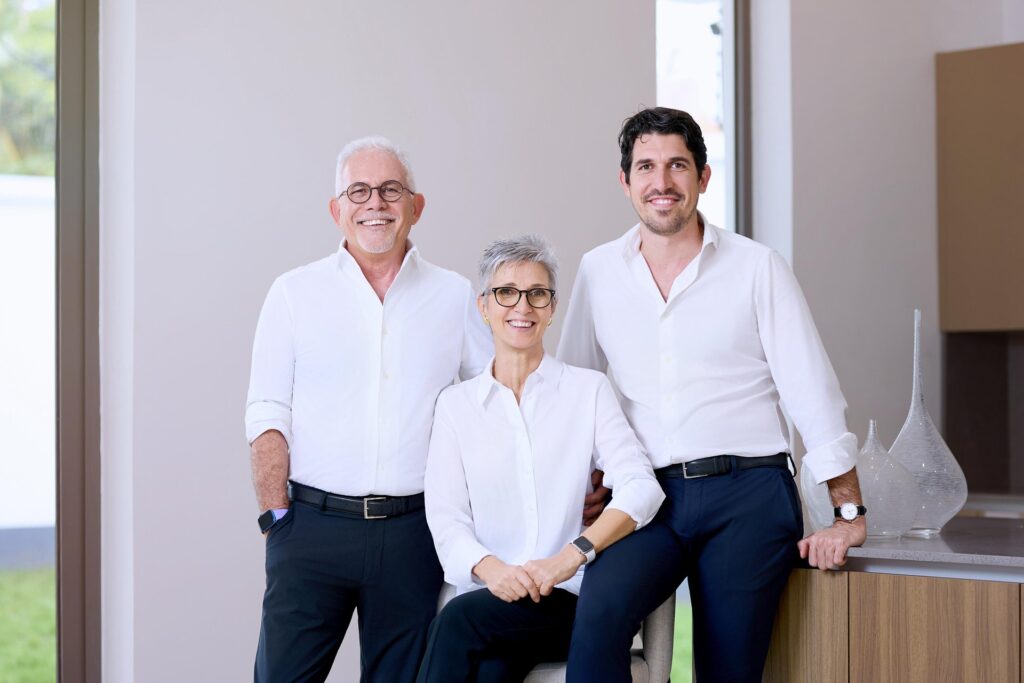
Today, Akka Kappa employs dozens across sales, rentals, property management, and construction consultancy. Her son Edoardo is gradually taking the helm, while her husband shares strategic duties.
The firm’s reputation rests on meticulous due diligence and long-term client relationships—a trait which is rare in a market long dominated by informal brokers.
Challenges in Ghana’s Real Estate Space
Ms. Castagna is candid about the industry’s persistent challenges. Human resources tops the list: real estate is still a young profession in Ghana, with few trained marketers, agents, and property managers.
Ownership disputes in the country are also common—land registered in the wrong name, spousal consent missing, titles encumbered, and informal agents undercut professionals by skipping due diligence.
Last year, government officials announced new initiatives to help sanitize the space.
On October 15, 2025, the Real Estate Agency Council (REAC) hosted a major seminar at the Labadi Beach Hotel in Accra titled “Strengthening Real Estate Regulation Through Stakeholder Engagement and Collaboration” to discuss challenges and solutions in the space.
They officially began the formal registration of real estate firms on Monday, November 3, 2025. This mandate requires all agencies, brokers, and developers to be licensed to operate legally in Ghana.
The Council spent the latter half of 2025 finalising a new Legislative Instrument to provide the legal “teeth” needed to enforce Act 1047, the legislation that regulates real estate agency practice in Ghana.
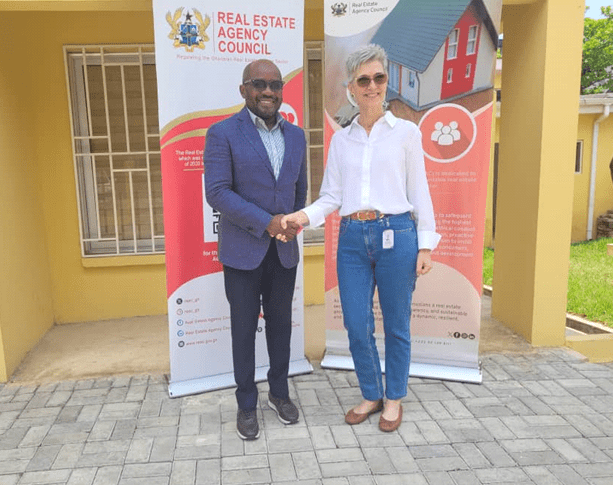
Ms. Castagna welcomes the new REAC, hoping it will professionalize the sector and curb practices that enable fraud or money laundering.
“For us, the fact that this council is now set up gives us the power, the strength to go to property owners and say, ‘This is a new [real estate legislation], and we have to comply with.“
As sanitisation of the real estate space plays out in the background, Accra’s current building frenzy continues.
Ms. Castagna estimates more than 40 projects along the Cantonments-Labone-Ridge-Airport stretch. These projects have the potential to deliver 4,000 new units by 2028.
For Airbnb owners, their units might not perform too well in the long term.
Ms. Castagna notes that demand for two to four-bedroom units will continue to grow because corporate tenants prefer that arrangement. This is in contrast to most one-bedroom listings on Airbnb.
Older projects, she predicts, will adjust rents downward to stay competitive—a healthy correction for a maturing market. Investors who bought early have already recouped costs; lower rents still cover maintenance and generate income.
Downtime with Family and Future Plans
For Akka Kappa, expansion beyond Accra is not yet on the horizon.
“What distinguishes us is the client experience,” Ms. Castagna says. “When you move away from your core area, delivering that level of service becomes complicated.”
Instead, the firm courts foreign investors drawn to Ghana’s stability amid global uncertainty.
When she’s not actively managing the business, Ms. Castagna’s downtime is focused on family, particularly her three grandchildren (she hinted at a fourth during the interview).
Her other favorite pastime is learning, particularly through YouTube.
“I discovered learning during COVID with YouTube,” she said.
“You can continue to learn, improve, and to find new ideas. So that’s what gives me continuous motivation to bring new things on board.”
Asked if she has regrets, Castagna is unequivocal. “I started late—at 50 or 51,” she says. “But without the cancer, this company would not have happened.”
The disease, and the simultaneous news of her daughter’s first pregnancy, gave her both urgency and purpose.
Ms. Castagna does not see herself slowing down anytime soon. Her son Eduardo is gradually taking over, but she doesn’t expect to fall back from Akka Kappa anytime soon.
“I still have a passion for this place. So until I don’t have the energy, I’m fine to work. But we are balancing very well. We are sharing the load.”