Story Highlights
- Ghana launched a digital rent control platform in September 2024, built by SuperTech Limited — a company with a contested history of government technology contracts that officials didn’t mention at the launch
- The contract cost is unknown. The Ministry didn’t disclose what it paid SuperTech, and no procurement record has surfaced in the Public Procurement Authority’s database.
- The company has been here before. SuperTech previously managed Ghana’s biometric voter registration system across multiple elections — a relationship that generated procurement disputes, a disputed audit, and allegations that the Electoral Commission’s own staff lacked access to the country’s voter database.
ACCRA, Ghana — On a Thursday morning in September 2024, Ghana’s Deputy Minister for Works and Housing stood before a crowd of officials and dignitaries at the forecourt of the Architecture and Engineering Services Limited compound in Accra and described what he called the beginning of a new era.
“As we launch this project today, we are not just embracing technology, we are committing to a future where our services are more responsive, accessible and transparent to everyone,” Former Minister Dr. Prince Hamid Armah declared.
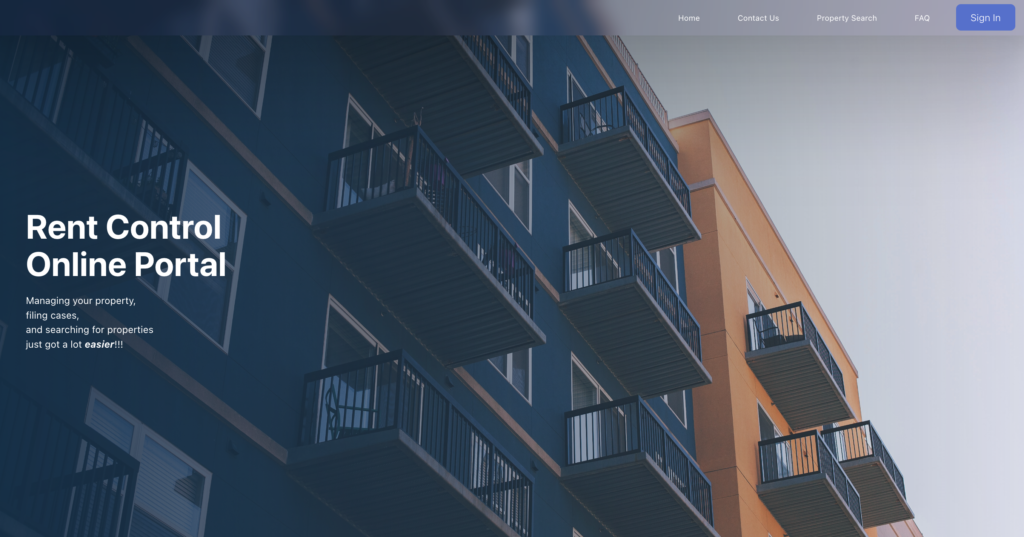
The occasion was the launch of rentcontrol.mwh.gov.gh — a new digital platform for Ghana’s Rent Control Department. It was built to allow landlords and tenants across the country to register properties, file complaints, sign tenancy agreements, and resolve disputes online, from any location, without setting foot in an office.
The promise was compelling. Ghana’s rental market serves more than 5.4 million citizens. For decades, those citizens had to navigate an underfunded, often inaccessible department burdened by paper files. The platform, officials said, would change all of that.
What they did not say — and what no reporter in the room appeared to ask — was who built it, and what that company’s history with the Ghanaian state actually looked like.
No Price Tag
The digital platform was developed by SuperTech Limited, a Ghanaian ICT company based in the Airport Residential Area of Accra.
Founded roughly two decades ago, SuperTech has grown into one of Ghana’s most prominent technology contractors, managing data centers and private networks for both corporate clients and government institutions.
The company’s Business Development Manager, Kwesi Essel, took the stage at the launch to tout the system’s capabilities.
“For the general public, this system opens up a world of convenience at your fingertips,” Essel told the audience.

But one number was conspicuously absent from every speech, every press release, and every news report that followed: how much the government paid for it.
The Ministry of Works and Housing did not disclose the contract value. Supertech did not disclose it. No procurement record has surfaced in the Public Procurement Authority’s online database.
The platform’s Phase I would reportedly cover 15 offices across 11 regions — Accra, Tema, Cape Coast, Techiman, Sunyani, Takoradi, and others. Phase II, officials said, would extend to all 16 regions.
The total cost of a multi-phase national digitization contract of this scope, for a public institution, would typically require competitive tendering and public disclosure under Ghana’s Public Procurement Act. No evidence has emerged that either occurred.
The Labari Journal emailed the Ministry of Works and Housing for comment and information on the platform’s cost. We did not get a response by the time of publication.
A Company With Past Controversies
SuperTech Limited — formerly operating as Superlock Technologies Ltd — is not new to large-scale government technology contracts.
Its most significant previous work was for the Electoral Commission of Ghana, where it supplied and managed the biometric voter registration infrastructure used in multiple election cycles.
That relationship produced a trail of controversy that stretched across nearly a decade.
In 2011, at least one competing firm, Smartmatic, petitioned the Public Procurement Authority, alleging that Superlock Technologies did not meet a key tender qualification — a demonstrated record of similar work in countries with comparable conditions.
They allege that despite the non-compliance with the requirement, Superlock was awarded the biometric voter registration contract.
That early procurement dispute would prove to be the first of several. By 2017, the relationship between the Electoral Commission and SuperTech had become entangled in a broader institutional scandal.
Staff of the Commission alleged that then-Chairperson Charlotte Osei had unilaterally abrogated and re-negotiated the company’s contract without involving other Commission members — a claim that contributed to Osei’s eventual removal from office.

Then came the question of data. Civic pressure groups alleged that SuperTech had compiled a voter register that allowed duplicate registrations in select areas.
More troubling, they argued, was that the Electoral Commission’s own IT staff did not have full access to the biometric database SuperTech managed. They claimed this effectively made the Commission dependent on a private contractor for the integrity of the country’s electoral data.
A UNDP review reportedly cited inadequate handover of the system from SuperTech to the Commission’s internal team.
In 2018, the Auditor-General’s report cited the company in connection with a contract sum figure that SuperTech publicly disputed — the company claimed the actual value was GH¢8.3 million, not the GH¢53.8 million stated in the report, without fully clarifying the discrepancy.
By 2020, then-EC Chairperson Jean Mensa publicly stated that the Commission lacked access to its own voter data and data centers under the SuperTech arrangement.
The maintenance costs, she said, were unsustainable. The Commission moved to procure an entirely new biometric system, effectively ending the SuperTech arrangement.
Convenience and Costs
None of this is to say the Rent Control platform will produce similar problems. The use cases are different, the data less politically sensitive, and the government has framed the initiative as a straightforward modernization project.
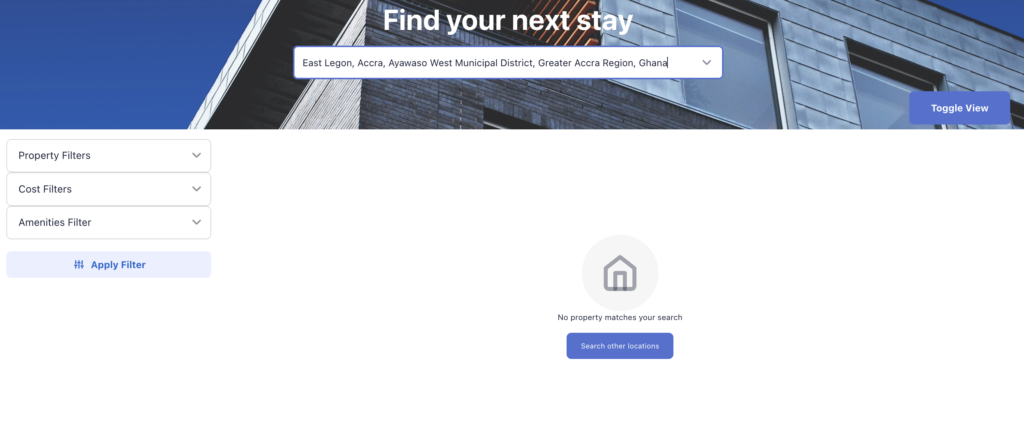
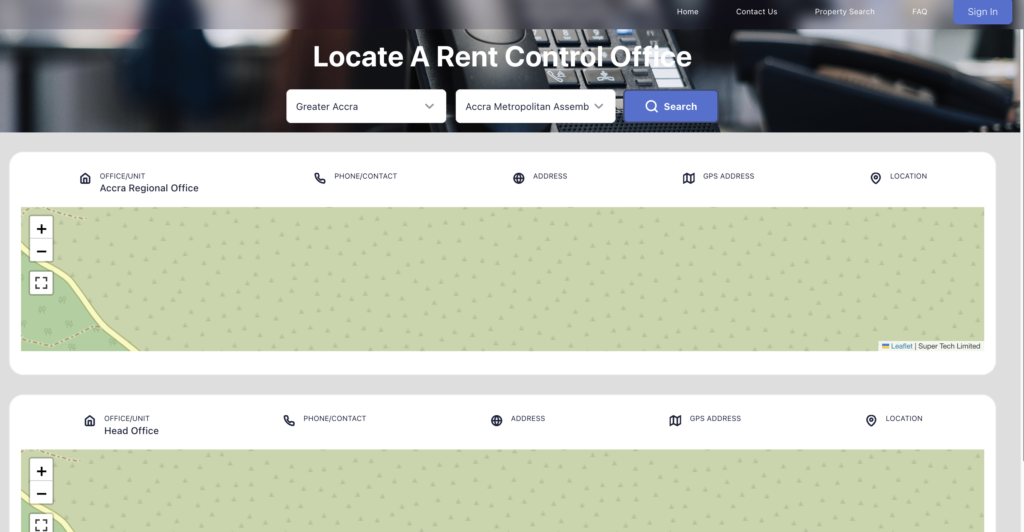
Although the platform appears functional, The Labari Journal was unable to search for properties in the Accra area using the site’s search functionality.
Other search features did not produce any results.
The pattern raises questions that Ghanaian citizens deserve answers to. How was a company with SuperTech’s contested procurement history selected for another major government technology contract?
Was competitive tendering conducted? Who will own and control the data generated by the platform — the Rent Control Department, or the contractor? What are the handover obligations when the contract ends?
These are questions that deserve answering if the government wants to be transparent on the project it implements for the average Ghanaian.