


Story Highlights
- Countries worldwide — Australia, France, Denmark, Spain, Malaysia, Brazil, and others — are passing or drafting laws restricting minors’ access to social media, with age limits ranging from 15 to 16 years
- A 2025 study found that 96% of Ghanaian children aged 10–15 use social media, and 7 in 10 have been exposed to harmful content including violent, misogynistic, and self-harm-related material
- Research links heavy social media use among Ghanaian youth to anxiety, depression, and poor academic performance — but the same studies show over 40% of students use platforms like WhatsApp and Telegram for peer learning and academic support, especially in under-resourced areas.
In late 2025, Australia decided to push back against social media companies.
On 10th December 2025, anyone under 16 in Australia was prohibited from keeping or making accounts on social media apps like TikTok, Instagram, YouTube, Snapchat, X, and Facebook.
Social media companies had to enforce this ban or face up to A$49.5m (US$32m) for serious or repeated breaches.
The Australian government said firms needed to take “reasonable steps” to keep kids off their platforms and use multiple age assurance technologies, including government IDs and or face or voice recognition technology.
The ban on restricting teens under 16 was pushed after a study Australia commissioned in 2025 found that 96% of children aged 10-15 used social media, and that seven out of 10 of them had been exposed to harmful content.
This included misogynistic and violent material as well as content promoting eating disorders and suicide.
After the ban in Australia, other countries have started following suit, issuing their own bans and restrictions on social media platforms for teens.
In West Africa, there have been conversations on whether Ghana should consider a similar ban or restriction.
A Global Wave Ghana Could Be Joining
If Ghana were to join the bandwagon of regulating social media, it would be in good company.
In November 2025, Denmark secured cross-party political support for a ban on under-15s, with legislation expected as early as mid-2026.
France’s National Assembly passed a bill in January 2026 banning social media for children under 15, supported by President Emmanuel Macron and widely expected to clear the Senate.
Spain’s prime minister announced plans in February to ban under-16s, while Germany, Malaysia, and Slovenia are all at various stages of drafting similar legislation.
Brazil passed a law in September 2025 requiring social media companies to implement age verification and link accounts belonging to under-16s to their parents, with the law expected to take effect in March 2026.
Malaysia announced in November 2025 that starting January 1, 2026, all social media platforms must ban users under 16 and implement electronic identity verification.
The momentum is real, and it is broad.
If Ghana were to take this path, the question it must answer is not whether the instinct to protect children is correct, but whether the instruments to be deployed would work well.
If the answers are yes, does the country have the infrastructure to enable them to work at home?
What Research Says About Teens and Social Media
The case for restriction draws heavily on mental health research. In Ghana, that research paints a picture that parents and teachers will find familiar.
A 2025 systematic review of social media’s impact on Ghanaian youth, published in the International Review of Research in Social Sciences, found that high-frequency social media use is consistently associated with increased symptoms of anxiety, depression, and addiction.
More than 45% of students surveyed acknowledged negative impacts on their study habits and academic performance, citing heightened distraction and procrastination.
A study of 400 children aged 8 to 17 in the Tema Metropolitan Area found that 87.5% had used social media, with TikTok commanding the highest usage at 88.7% of all platforms.
Documented harms included exposure to sexually explicit material, addiction, and diminished academic achievement.
But the same research that documents these harms tends to record something else alongside them — something that gets lost in the ban debate.
Over 40% of Ghanaian students actively participate in academic WhatsApp, Facebook, and Telegram groups, facilitating peer learning, resource sharing, and informal mentorship. Social media helps bridge resource gaps in formal education and improves digital literacy.
For teenagers in rural Ghana, where libraries are scarce and educational infrastructure is stretched, this is not a marginal benefit. It is sometimes the primary access point to supplementary learning.
A Ghanaian study on the impact of restrictions found that over half of child participants believed the absence of social media entertainment would result in significant boredom and negatively impact their mental well-being.
Researchers concluded that while social media use can be restricted, controlling it should not deprive young people of entertainment, as this potentially conflicts with Article 17 of the Convention on the Rights of the Child.
At the global level, the science is more contested than ban advocates typically acknowledge.
A February 2026 paper in Nature Health, authored by Cambridge psychologist Sander van der Linden, concluded that social media bans for teens lack a strong evidence base.
The Australia Test Case
Because it moved first and at scale, Australia’s under-16 ban has become the closest thing the world has to a live experiment in what these policies actually produce. The early results are instructive — and humbling.
By January 2026, platforms had restricted access to 4.7 million under-16 accounts across Australia, a significant logistical achievement. But the behavioural picture was less tidy.
In February 2026, Guardian Australia reported that teenagers under the age of 16 were still able to access some social media platforms, while others felt more isolated from communication, and some encountered vastly different content on their feeds.
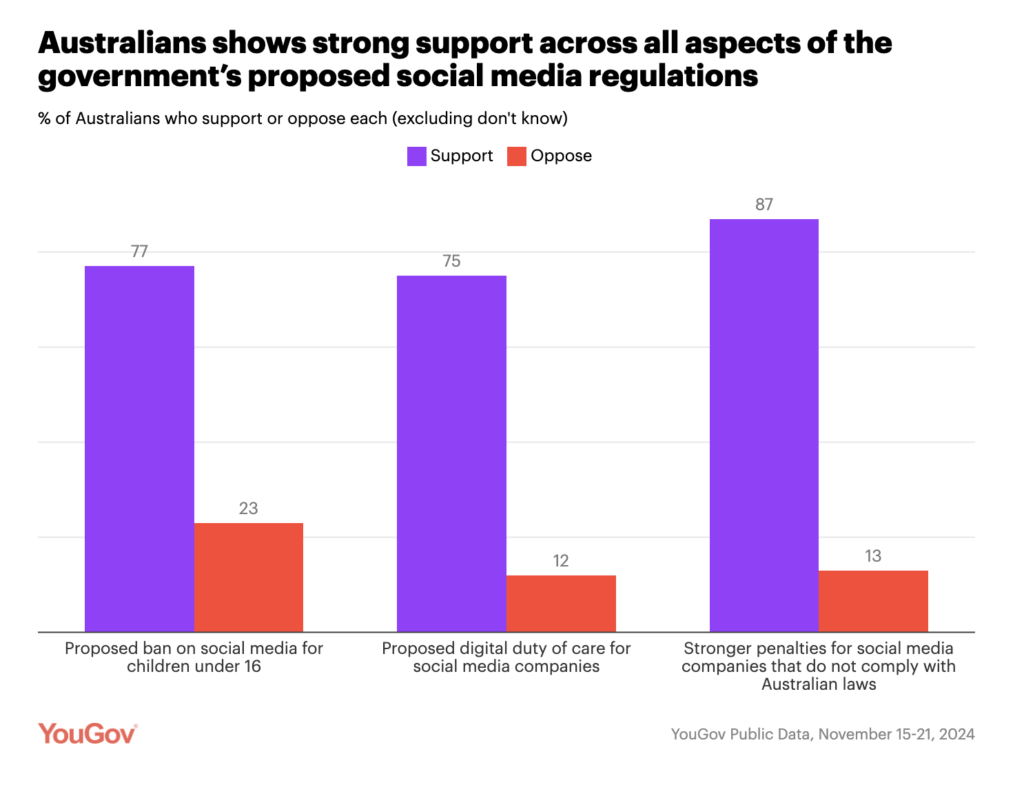
Tellingly, the Australian public broadly supported the policy in the abstract but doubted it in practice.
An opinion poll conducted by YouGov in November 2024 found that 77% of Australians supported the age limit. But only 25% believed it would work, compared to 67% who thought it would not achieve its aims.
The ban is also facing a legal challenge.
Reddit, a popular social media platform, has argued in the High Court that the law restricts the political discourse of young people.
They argue that a person under 16 can sometimes be better protected from online harm if they have an account — since moderation tools apply to account holders — than if they are locked out entirely and forced into unsupervised workarounds.
Possible Implementation Challenges in Ghana
Australia is a high-income country with a mature digital identity infrastructure, strong ISP compliance frameworks, and a well-resourced regulator in the eSafety Commissioner.
Ghana is not yet any of those things.
If a ban were to be effected, the Ministry of Communication would have to direct ISPs and telecommunications companies to enforce age restrictions nationwide using Ghana Card verification.
Citizens would need to verify their ages on certain websites using their Ghana Cards if legislation were to be passed.
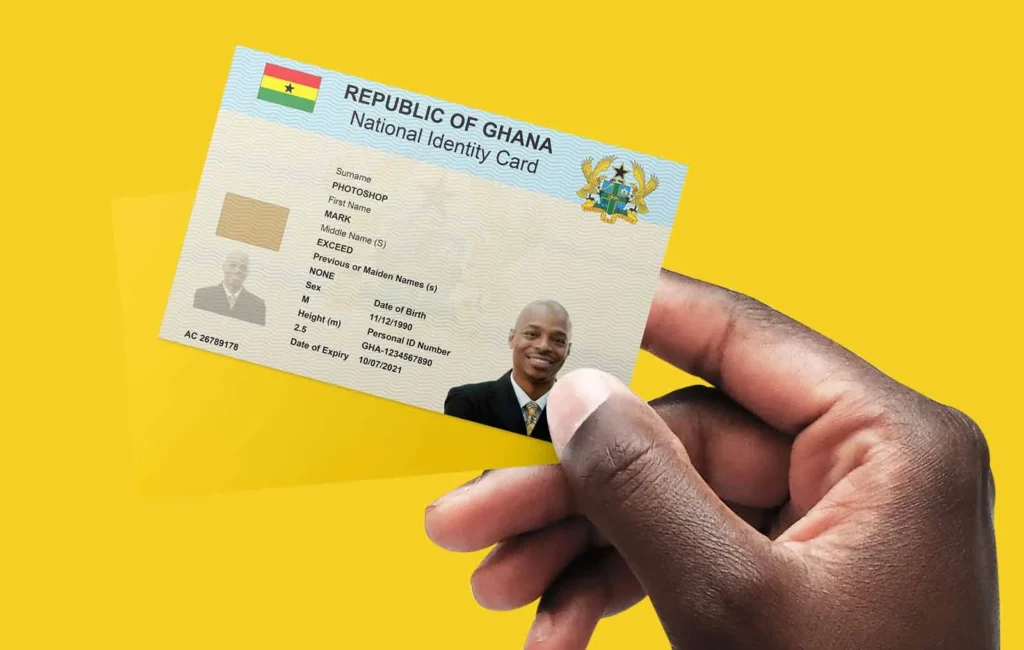
The Ghana Card (the ECOWAS biometric identity document managed by the National Identification Authority) has made impressive strides in adult enrolment, but its penetration among children under 18 is far lower.
Children’s Ghana Card enrolment requires parental involvement and has historically lagged behind adult registration.
A system that relies on Ghana Card verification to gate social media access for minors would, in practice, either exclude a large number of children who have no card. It could create a black market in adult card credentials.
There are also concerns that broad content filters could inadvertently block educational or age-appropriate material, and that any legislation would be difficult to enforce effectively in a rapidly evolving digital landscape.
Questions linger about how “adult content” will be precisely defined, and whether the definition could become a slippery slope toward broader censorship.
The data inequality dimension sharpens the problem further. Rural and marginalised Ghanaian youth already face persistent barriers, including limited internet access, low digital literacy, and inadequate cybersecurity awareness.
An age verification system imposed at the ISP level would work best in urban environments with predictable, registered connectivity.
What Ghana’s Children Are Actually Doing Online
One of the persistent failures of the ban debate is that it treats teen social media use as a monolith — as if every hour a Ghanaian teenager spends on TikTok carries the same risk profile as a predator-laden chatroom. The actual picture is more varied.
The main reason children in Tema used social media platforms (cited by 87% of respondents) was for entertainment: watching comedic content, listening to music, following sports, and viewing dance videos.
Children described choosing platforms based on their mental state and immediate needs at the time, suggesting purposeful rather than compulsive use patterns.
In Ghanaian universities, over half of the students spend more than three hours per day on social media. Students themselves describe it as a “two-edged sword”.
They reported advantages including relationships, social capital, and creative opportunities, while also acknowledging that unchecked use can harm mental health, interpersonal skills, and academic performance.
This matters for policy design. A blunt restriction would treat the teenager using a private Facebook group to coordinate exam revision the same as one being groomed in a stranger’s DMs. Getting the policy right means acknowledging that difference — and designing for it.
What a Smarter Policy Looks Like
Ghana’s October 2024 National Child Online Protection Framework, championed by the Second Lady and developed with schools and civil society, gestures toward the right approach: collaborative, multi-stakeholder, and focused on education rather than prohibition.
Minister of Communication Sam George has held direct talks with Meta and ByteDance on content moderation standards and time limits for minors.
The countries that are doing this most thoughtfully are not simply banning teenagers from platforms. They are combining age verification with algorithmic restrictions — stopping platforms from feeding minors with engagement-maximising content that they never asked for.
Age verification is something the Minister of Communication has said the government is currently monitoring and confirmed that the Cabinet could approve the initiative this year.
Meta’s Loss in Court and Future of Social Media
Earlier in March, Meta (formerly Facebook) was found liable by a court in New Mexico for misleading consumers about the safety of its platforms and endangering children.
In a separate case in the city of Los Angeles, a court also found Meta and YouTube negligent in the design of their platforms, ruling that their negligence was a substantial factor in causing harm to a plaintiff.
The jury awarded $3 million in compensatory damages, finding Meta 70% responsible
These cases have emboldened activists to push for more punitive measures against social media companies for causing harm to teens. More countries could see these judgments as vindication to enact more policies to restrict social media.
In Ghana, debates will continue whether a restriction or ban is needed to shield teens from the dangers of social media. But the country must be careful in this approach or risk causing more harm than good.
This article was edited with AI and reviewed by human editors


Follow