


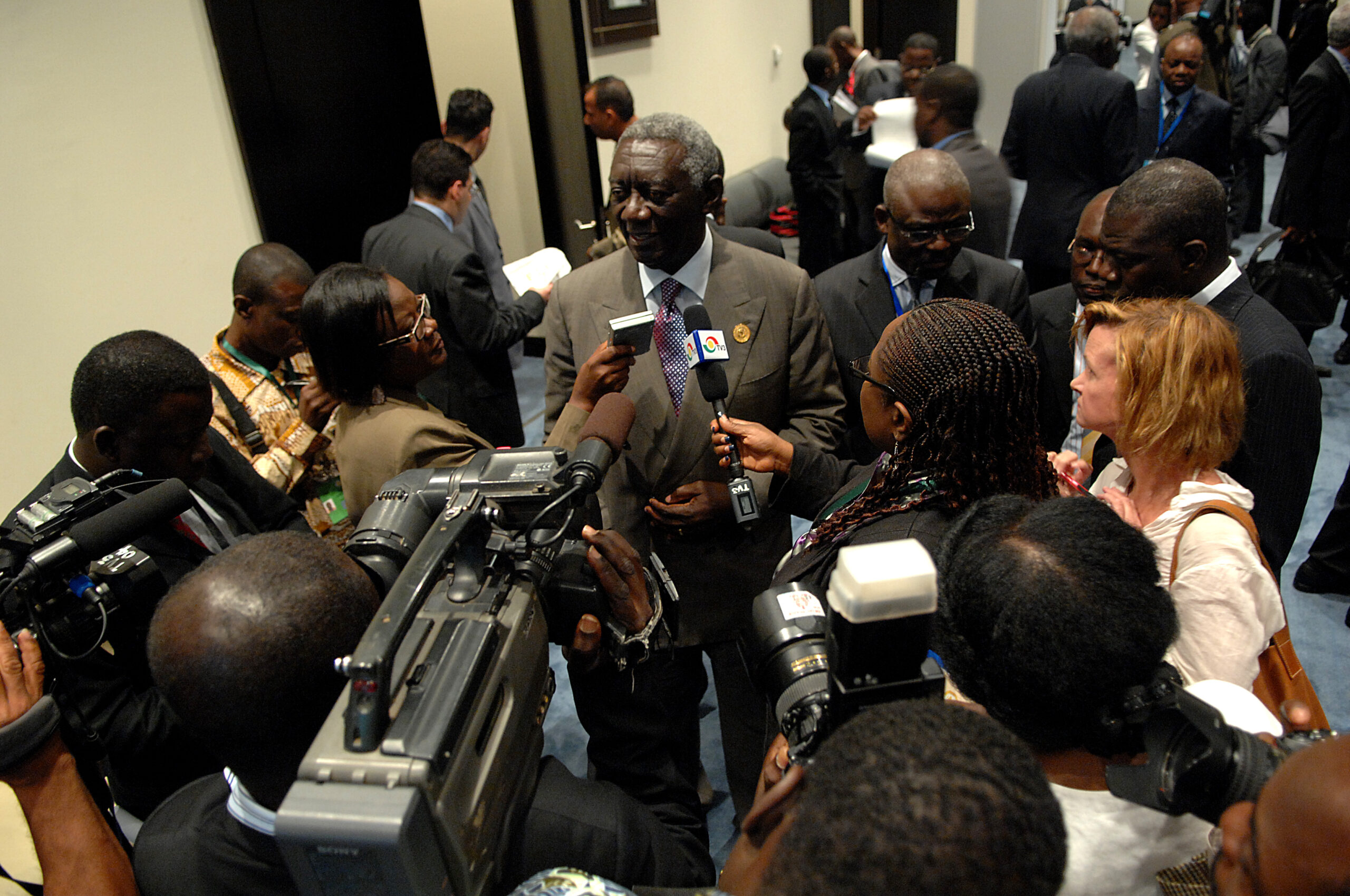
Ghana likes to tell itself a flattering story. It is the press freedom model. The democratic anchor of West Africa. The country where journalists can speak without fear.
That story is becoming harder to defend.
A growing body of evidence — from international watchdogs, academic researchers, and Ghanaian journalists themselves — points to a media ecosystem that has been quietly colonised by political interests.
The result is a press that too often amplifies partisan noise rather than informing the public. And on social media, that noise spreads at a velocity that fact-checkers cannot match.
Owned Before the First Broadcast
The problem begins with who owns the microphone.
According to Reporters Without Borders, one-third of Ghana’s media outlets are owned by politicians or individuals with ties to the country’s two dominant parties — the New Patriotic Party (NPP) and the National Democratic Congress (NDC). The content they produce, the organization notes plainly, is largely partisan.
Ghana’s 1992 Constitution allows new media outlets to launch without a licence. That freedom — intended to diversify voices — has instead fueled the spread of politically aligned outlets.
With at least 100 media organisations now operating, including radio stations, television channels, and news websites, the sheer volume creates an illusion of plurality. The reality is different.
A Reuters Institute analysis put it more sharply: “Stories are reduced to he-said/he-said arguments between the two major parties.”
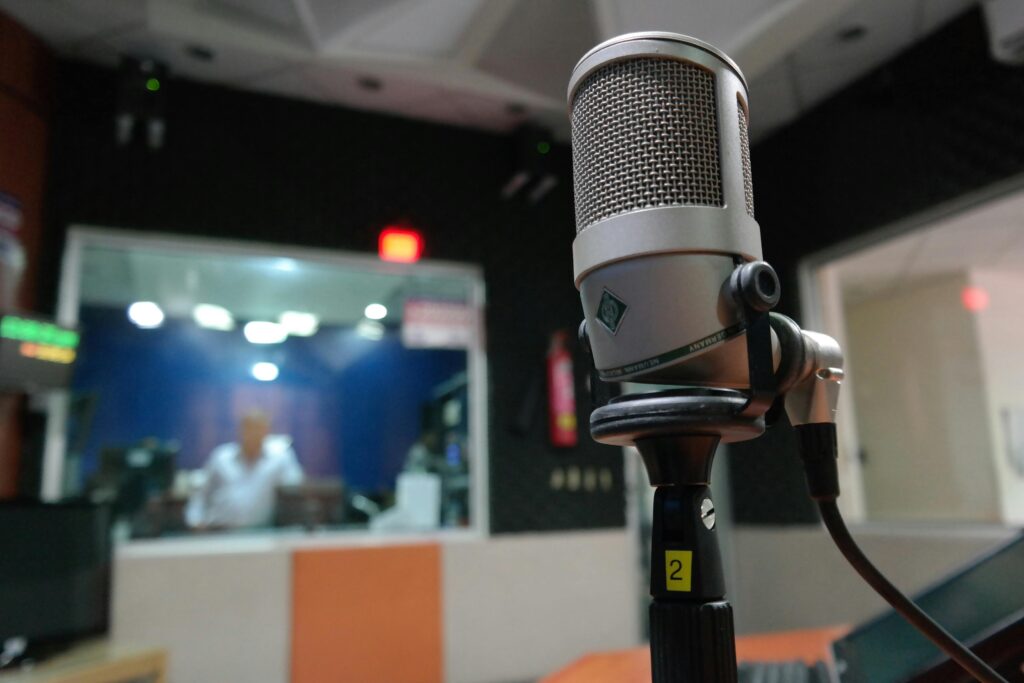
The same report found that 83 percent of radio discussion voices were male, and that voices from outside Accra, women, persons with disabilities, and other marginalised communities were systematically excluded.
The conversations that dominate Ghanaian airwaves are narrow, elite, and partisan.
That is not journalism. That is political theatre with a broadcast license.
The Newsroom Under Pressure
Inside these outlets, journalists know the rules — even when no one states them.
A 2025 study published in the academic journal Cogent Social Sciences, which interviewed eight Ghanaian media practitioners, found that editors and reporters are routinely steered away from stories that could embarrass the outlet’s owner or their political allies.
One investigative journalist quoted in the study was direct: “The government is interested in the work of journalists because it wants to control the airways and cover its corrupt activities.“
The consequence is self-censorship.
Reporters protect their jobs by avoiding certain names, certain contracts, and certain scandals. The watchdog role — the very justification for press freedom — is surrendered quietly, without announcement.
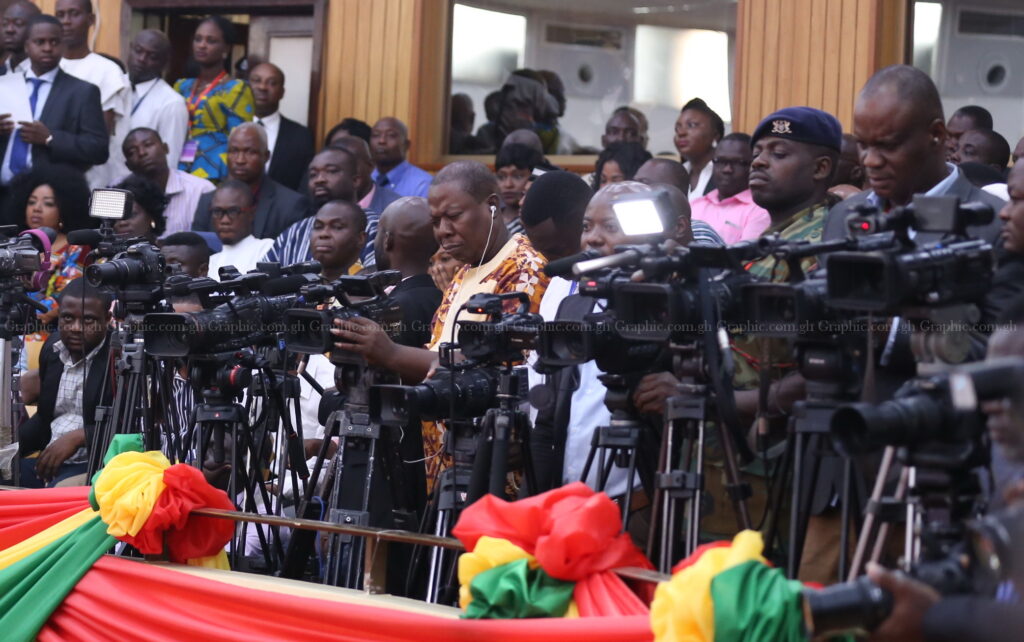
What makes this especially corrosive is how much these journalists actually know.
As the Reuters Institute reported, Ghanaian journalists often know which officials own properties they cannot afford on their government salaries. They know whose palms are greased before state contracts are awarded. They know, and they do not say.
That is not timidity. It is a structural failure, built into the ownership model itself.
Social Media Turns the Volume Up
If political ownership is the disease, social media is the accelerant.
During Ghana’s 2024 general elections, the Ghana Fact-Checking Coalition found that social media accounted for roughly 79% of the disinformation observed.
The mechanisms were varied — coordinated smear campaigns, AI-generated content, forged news graphics carrying the branding of legitimate outlets.
The news card problem was particularly instructive.
In Ghana, visually packaged news graphics have become a primary way people receive information quickly.
During the 2024 campaign, fake versions — carrying the logos of trusted media houses — spread rapidly across WhatsApp and X, formerly known as Twitter.
Reputable outlets fought back by stamping false content with “FAKE NEWS” labels.
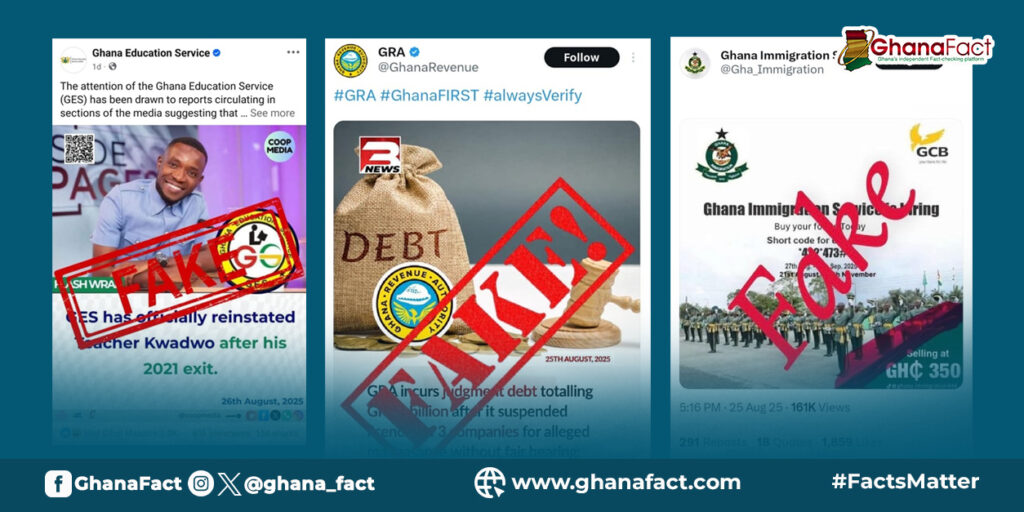
Politicians and their surrogates then weaponised the same tactic, stamping accurate but unflattering stories with identical labels.
This made it hard for readers to distinguish what was real and reliable. The credibility of legitimate outlets was diluted by association with the forgeries, and partisan actors had plausible deniability for any inconvenient truth.
A day before the December 2024 polls, fact-checkers identified a coordinated campaign on X that pushed hashtags like #IncompetentMahama to the top of Ghanaian trends.
Investigations revealed the trend was manufactured by a small number of accounts liking, quoting, and posting identical messages to each other.
A Framework That Cannot Keep Up
Ghana is not without institutions trying to address this. The Ghana Fact-Checking Coalition — a partnership of GhanaFact, Fact-Check Ghana, and DUBAWA Ghana — ran media situation rooms in Accra and Tamale throughout the election period, monitoring and debunking claims in real time.
Their work is important. But it is also reactive. Fact-checkers are always chasing the fire.
Dr. Serebour Quaicoe, Director of Training at Ghana’s Electoral Commission, acknowledged the gap at the launch of the Coalition’s post-election report in January 2025.
He urged media outlets to do more to publicise fact-checking findings. “The media must also be interested in churning out the truth,” he said, “because they conduct the findings but how many people get to hear of it?“
The answer, in most cases, is: not enough.
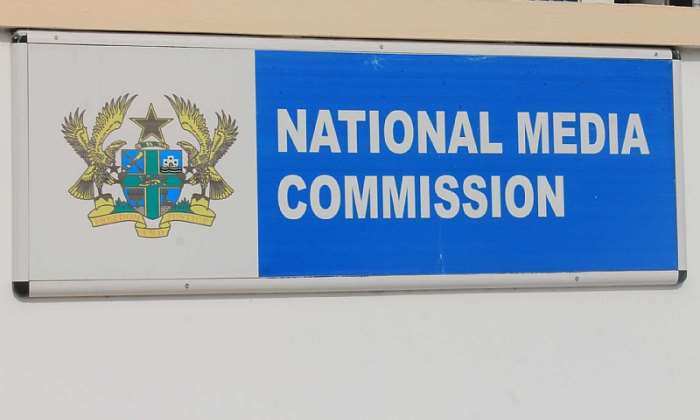
Ghana’s regulatory body, the National Media Commission, has its own credibility problem. Its members are selected by the government — the same government with obvious interests in how the media operates.
The Comfortable Open Secret
What Ghana’s media crisis ultimately reveals is a culture of selective silence among people who know better.
Journalists know. Editors know. Outlet owners certainly know. But the economic incentives — access to power, advertising revenue, protection from legal harassment — point in one direction. Keep the peace. Run the party line. Let the politicians have their platform.
The public pays for this arrangement. Not with money, but with something more valuable: accurate information about who is governing them and how.
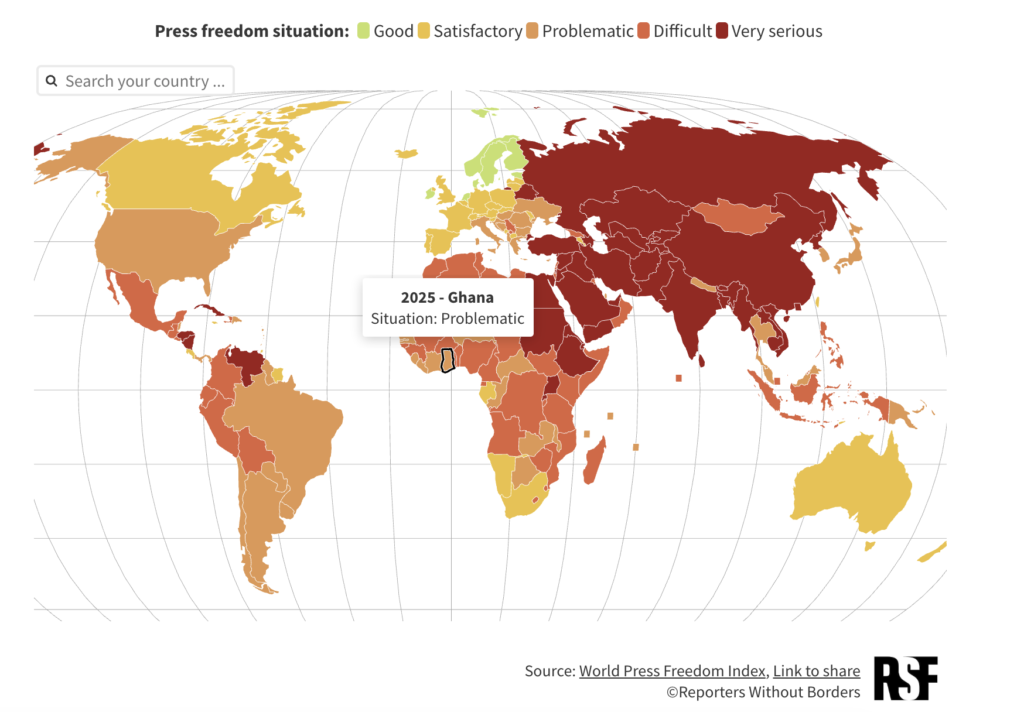
Reporters Without Borders ranked Ghana 52nd out of 180 countries on its 2025 Press Freedom Index — a slide from 50th the year prior. That ranking still looks generous. A number cannot capture the daily texture of a press corps that knows what it will and will not say before a politician finishes speaking.
Ghana deserves better than a media that functions as a relay station for political messaging. Its citizens — particularly those outside the capital, outside the political class, outside the familiar voices invited to panel discussions — deserve journalism that asks the questions power would prefer to leave unasked.
That kind of journalism is possible in Ghana. There are individual reporters and editors who still practice it, often at personal risk. But they are operating against the grain of a system that was not designed with them in mind.
The question is not whether Ghana’s media has a problem. The question is whether the country is willing to name it clearly enough to fix it.
This article was edited with AI and reviewed by human editors


Follow