



The subjects in this story were survivors featured on a podcast project by the Queer Education Fund. Their names have been changed to protect their identities.
A family meeting was called after one of the most traumatic days in Wilson Larbi’s life back in 2022. He and some friends had just been the victims of a violent hate crime perpetrated by a group of men, some of whom were dressed like police officers.
They raided a party he hosted in his rented apartment, beating him and over 20 attendees. They also forced some, with violence, to declare their homosexuality. Larbi’s family soon got wind of this.
“I couldn’t hide it anymore”, recalled Larbi about the moment his family confronted him at their home in a suburb of Greater Accra.
Feeling very suicidal at the time, he confirmed his sexual orientation to them, and since then, he said his life has fallen apart. “It has been hell for me.”
Larbi’s family turned on him at a time when he needed them most. He was also unable to hold a job because of the discrimination at his workplace. “When I get a job, someone would come up and bring it up [my sexuality], and I would be asked to stop the job.”
Because of money problems, close family insisted that Larbi’s sexuality was a curse holding him back. “Sometimes my mom will tell me if you are still doing that [being gay], you have to stop. God doesn’t like that. If you keep doing that, you can’t move forward in life,” he said.
Knowing he came from a home with conservative Christian ideals, Larbi was not surprised by the hurtful words and lack of support from his family.
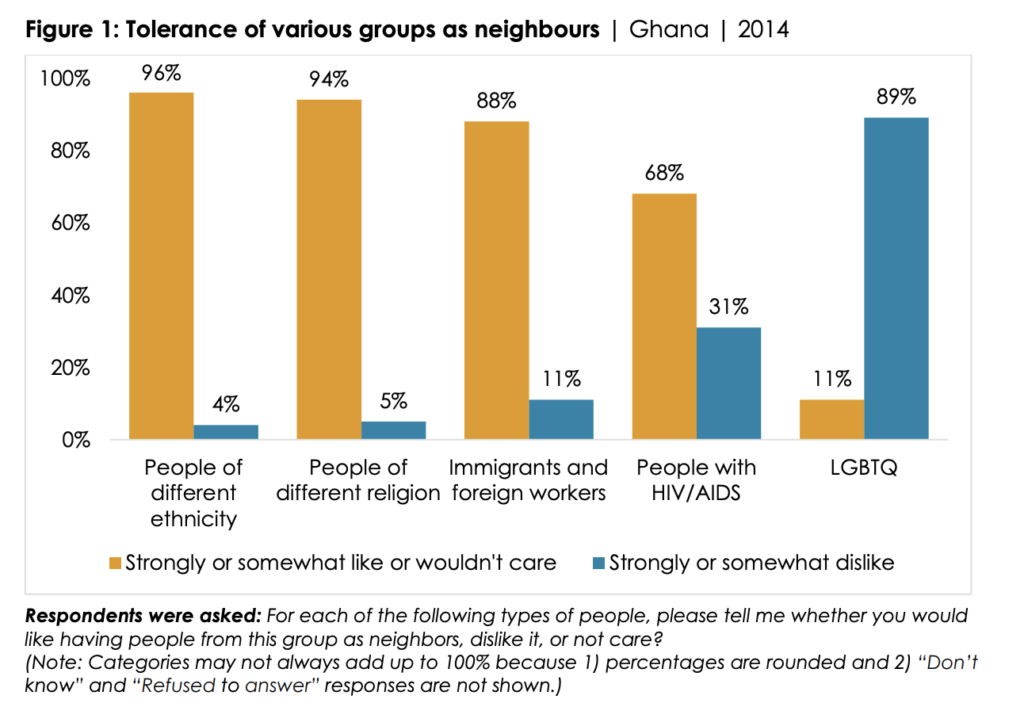
A 2020 Afrobarometer report indicated that about 90% of Ghanaians were not tolerant of the LGBTIQ community.
In the immediate aftermath of the attack, Larbi had to leave his apartment and move in with a friend for temporary refuge, feeling he would find no warmth in his family, which now considers him a walking taboo.
Despite longstanding intolerance towards Ghana’s LGBTIQ community, it has only been in the last decade that there have been intense efforts to crack down on them with legislation.
“If you are not accepted by family and community, then who will accept you out there? It is family who is supposed to keep you safe”
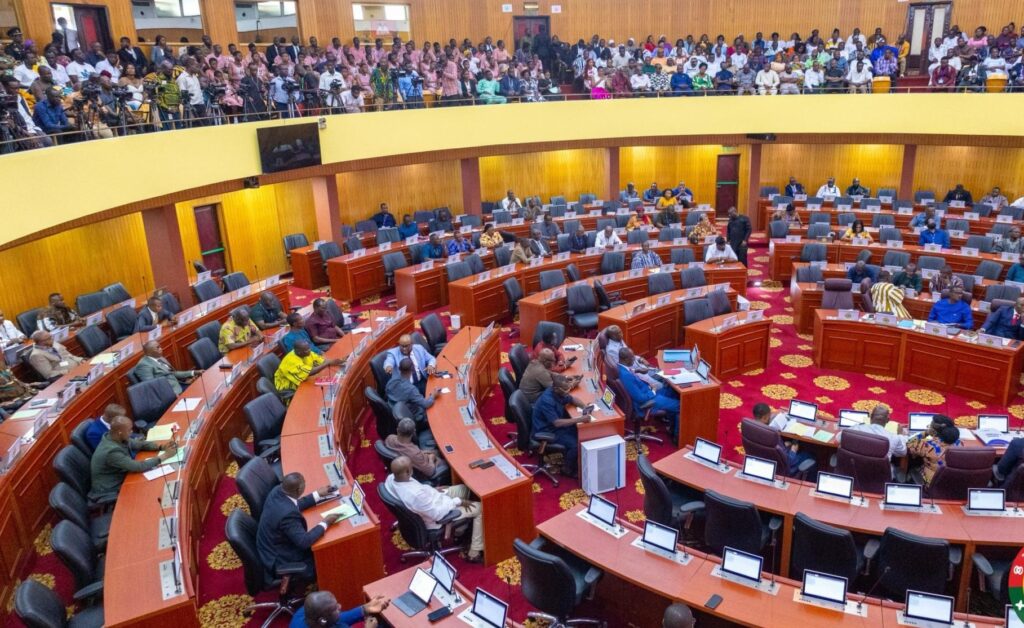
The Human Sexual Rights and Family Values Bill in Parliament could see LGBTIQ persons facing up to three years in jail. Parliament first passed a version of the bill in 2024, but it expired without then-President Nana Akufo-Addo’s assent amid legal challenges at the Supreme Court.
While the hypothetical of life under new anti-gay laws — which could prescribe a three-year jail term for people who identify as gay, and five to 10 years for people who advocate for the queer community — are capturing public attention, the reality is that a significant number of queer people are already dealing with intense discrimination, which manifests in physical, emotional, and socio-economic peril.
For example, rights activists in Ghana have said homelessness among queer people disowned by their families is a big problem amid increased hostility because of the bill.
Mac-Darling Cobbinah, the Executive Director of the Centre for Popular Education and Human Rights NGO, noted that most queer people abandoned by family end up homeless, being sexually exploited, or doing the exploiting by blackmailing other queer people.
“If you are not accepted by family and community, then who will accept you out there? It is family who is supposed to keep you safe,” Cobbinah said.
“If your family throws you out, it is very difficult, and you have to survive, so you become very wild on the streets.”
Larbi was spared the plight of being homeless when he returned to his family home as a last resort. He had lost his apartment by then. The offering of shelter was the limit of his family’s kindness. New doors of abuse, however, opened.
Passive-aggressive acts, like turning up radio broadcasts with hate speech, were a common occurrence and remained fresh on Larbi’s mind.
With time, the disappointment in how his family handled things morphed into paranoia. Larbi said it was difficult to feel comfortable living with people who had essentially disowned him after the trauma he faced.
“Things are still bad. I can’t eat from their pot,” he said symbolically. “I don’t trust them.”
Much like Larbi, Innocent Gyamfi was outed without his consent to his parents when he was 23, over seven years ago, in a town in the middle belt of Ghana. This coincided with a period of poor health and suicide ideation for him.
He faced an extended period of admission to the hospital, and the extent to which his family had abandoned him because of his sexuality hit home.
They offered no support during his hospitalisation, and his parents claimed they had received spiritual advice telling them to wash their hands of him.
“They were like, I am Satan. If they take care of me and I get well, what am I going to do to them?” recounted Gyamfi.
Luckily, he had an insurance policy to cover his medical costs. Friends and benefactors also stepped in to be the family he didn’t have in his time of dire need.
Gyamfi had special gratitude for an older man in his area, now deceased, who he believed did a lot of the heavy lifting, offering counselling, money, food, and sometimes shelter.
This man was also the link between Gyamfi and some of his friends, whom his family had chased away.
“His mother developed some hatred for those of us who were close to him,” said Mike Tanoh, one of Gyamfi’s friends.
“When you go looking for [Gyamfi], the scene his mother would create would draw the whole neighbourhood.”
Tanoh and his friends would gather contributions from friends and allies and hand them over to the older man to pass on to Gyamfi. Through the times Gyamfi battled with depression and suicidal thoughts, it was important to Tanoh that Gyamfi knew people still loved and cared about him.
“We are like family, like brothers,” he stressed. “We psyched him up to calm the depression and let him know he had more life ahead of him.”
Despite the kindness from friends, the coldness of his own family still pierces through Gyamfi’s heart. It’s something he has struggled to get over since he was outed to them.
He has worked to build a life for himself by enrolling in university without their help and funding his way through school with support from various benefactors.
But in that time, he was as good as dead to his family. “For someone who is unwell and you claim to love, they didn’t even call to check up and see if I had killed myself or hurt myself,” he lamented.
It is the lost relationship with his mother that hurts the most. “We were close, and I could confide in her.” Gyamfi once held out hope that he could mend that relationship with deeds.
“I used to cook for her, sweep for her, fetch water for her. My other siblings didn’t even care for her or offer such help.”
Now, the worst thing for Gyamfi has been coming to the realisation that the affection his family, his mother in particular, had shown him for over 20 years meant absolutely nothing, given the way he was treated because of his sexuality.
“It was fake love that she had been giving to me all my life.”


