


STORY HIGHLIGHTS
- The Ampadu Fofie Committee, constituted by President Akufo-Addo in August 2023, was tasked with reviewing the salaries, benefits, and ex-gratia payments of Ghana’s Article 71 officeholders
- Its recommendations were submitted to Parliament in January 2025 and approved, forming the current pay structure for ministers, MPs, and senior judiciary
- President Mahama campaigned on scrapping ex-gratia — promising to begin the constitutional process in 2025; nearly eighteen months into his tenure, no process has been initiated
- A separate RTI request seeking disclosure of Article 71 payments under the Akufo-Addo administration was stonewalled by the Mahama presidency
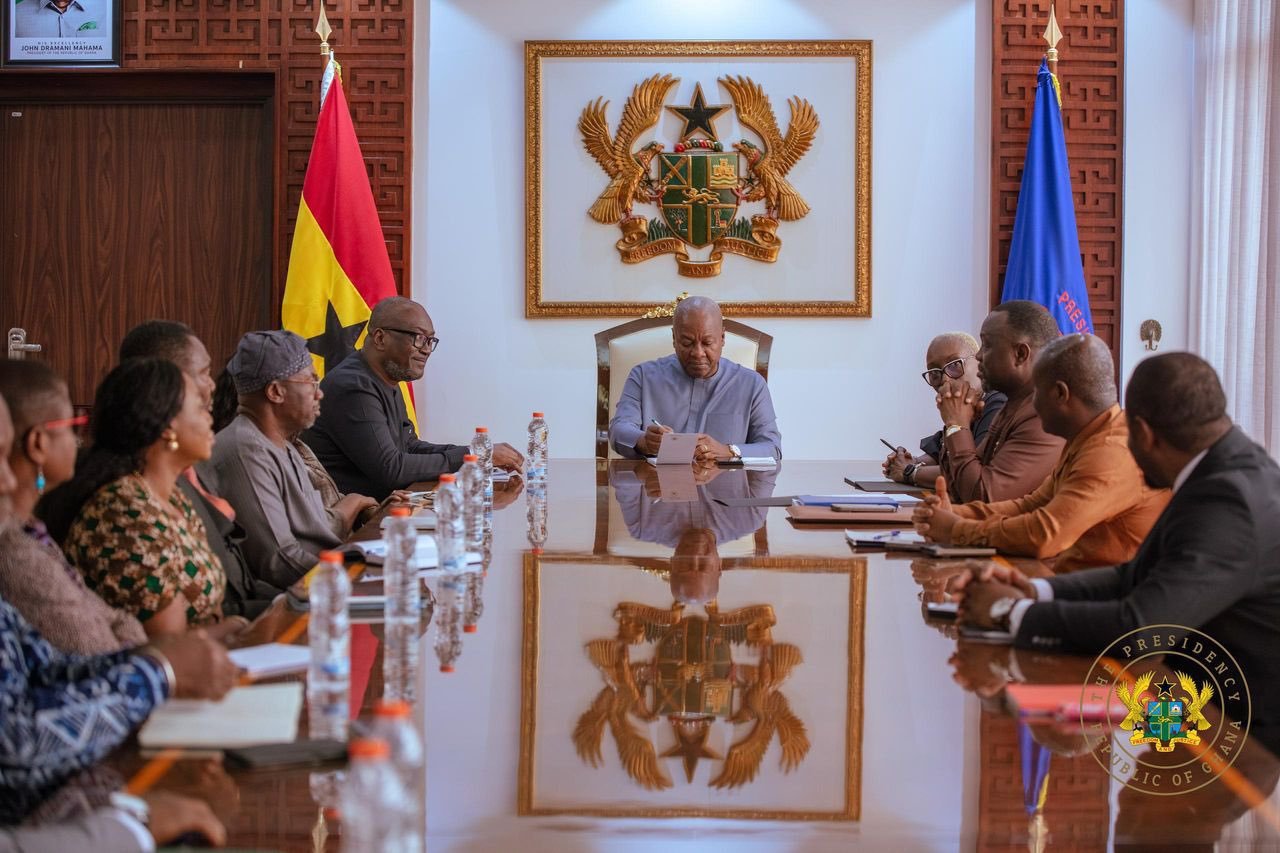
ACCRA — In the final months of a government already burdened by fiscal crisis, austerity, and public fury over elite privilege, former President Nana Akufo-Addo did something quietly consequential.
He convened a five-member committee — led by Dr. Janet Ampadu Fofie, a lawyer and the immediate past Chairperson of the Public Services Commission — to determine what Ghana’s top public officeholders should earn.
The committee was constituted on 31 August 2023, under the constitutional mandate of Article 71 (1), with terms of reference that included making recommendations on the emoluments and privileges of Article 71 officeholders, and reviewing public concerns arising from the implementation of that provision.
The report that was eventually produced has had real consequences for the public purse. Yet it has never been formally published. And its very passage through Parliament has reignited a debate Ghana has been having — and failing to resolve — for over three decades.
The Architecture of Elite Pay
To understand the controversy, one must first understand the system it operates within.
Under Article 71, public officers are paid their salaries in arrears, based on prior approvals from a similar committee. For the four years they serve in office, their salaries are pegged at previously approved rates and finalised at the end of their tenure — with any balance paid accordingly.
Additionally, these officeholders receive ex gratia payments at the conclusion of their service, determined by a specific formula. The responsibility for approving these benefits is shared between Parliament and the executive.
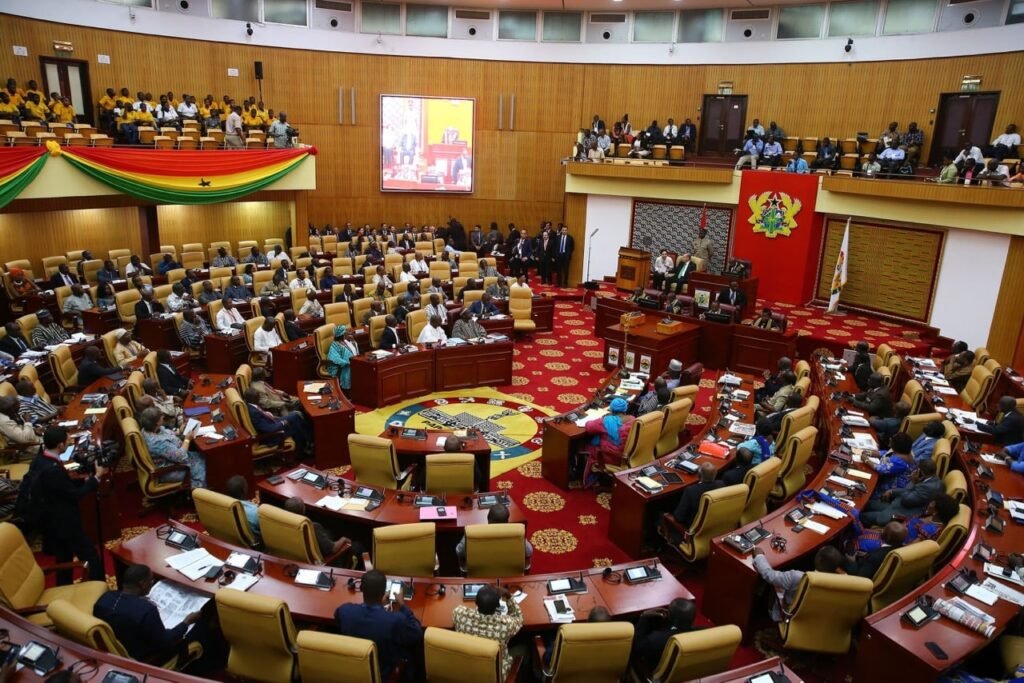
The officeholders covered by this arrangement include the President, Vice President, Speaker of Parliament, Members of Parliament, the Chief Justice and other Superior Court justices, and the heads of independent governance bodies such as the Electoral Commission and the National Media Commission.
Speaker of Parliament Alban Bagbin has argued that what the public calls “ex gratia” is in fact accumulated salary arrears — gratuity owed to officeholders whose salaries were only finalised at the end of their four-year terms.
“I as the Speaker do not know my salary,” he acknowledged, calling the practice “wrong.”
That structural opacity — by which the most powerful people in the country do not know what they are being paid until their term ends — is precisely what the Ampadu Fofie Committee was asked to help fix.
A Process, Not Yet a Public Document
The five-member committee included Professor George Gyan-Baffuor, Chairman of the National Development Planning Commission; Gloria Ofori-Buadu, a lawyer and women’s rights activist; Prof. Isaac Osei-Akoto, a research fellow at ISSER, University of Ghana; and Benjamin Arthur, Chief Executive of the Fair Wages and Salaries Commission.
Members swore an Official Oath and an Oath of Secrecy.
That secrecy oath is significant. It helps explain why the report’s specific recommendations have never been formally disclosed to the Ghanaian public — even as the pay structures it produced have begun to take effect.

During a stakeholder conference in March 2024, Dr. Ampadu Fofie noted that the current emoluments for Article 71 officeholders had been approved in 2020 and that no adjustments had been made to their salaries, privileges, or benefits since then.
Government spokesperson Felix Kwakye Ofosu confirmed in June 2026 that the committee’s recommendations were transmitted to Parliament by outgoing President Akufo-Addo in January 2025 and subsequently approved.
Ministers, Deputy Ministers, and Members of Parliament who served in the 8th Parliament have since received their ex gratia payments and salary top-ups based on those approved recommendations.
The report, in other words, quietly became law — without any public release of its contents.
A Class System by Any Other Name
The Ampadu Fofie process triggered an unusually candid public debate about the inequality baked into Ghana’s governance structures.
Participants at the committee’s stakeholder conference — drawn from the Trades Union Congress, the Fair Wages and Salaries Commission, and the Ghana Medical Association — contended that Article 71 had created a class system that was “unfair and unjust,” and called for ex gratia to be scrapped entirely.
Reports of top officeholders earning GH¢60,000 and above as monthly salaries have rekindled the debate about whether such remuneration is fair, given the emoluments of the average public servant and the state of the public purse.
Legal scholar Professor Bondzi-Simpson noted that since 1993, successive emoluments committees — from the Miranda Greenstreet Report to the Ampadu Fofie Report — have been set up to investigate and reform public sector compensation, yet not much has been realised in practice.
That verdict — committees without consequence — is perhaps the most damning structural indictment of the entire exercise.
Mahama’s Broken Clock
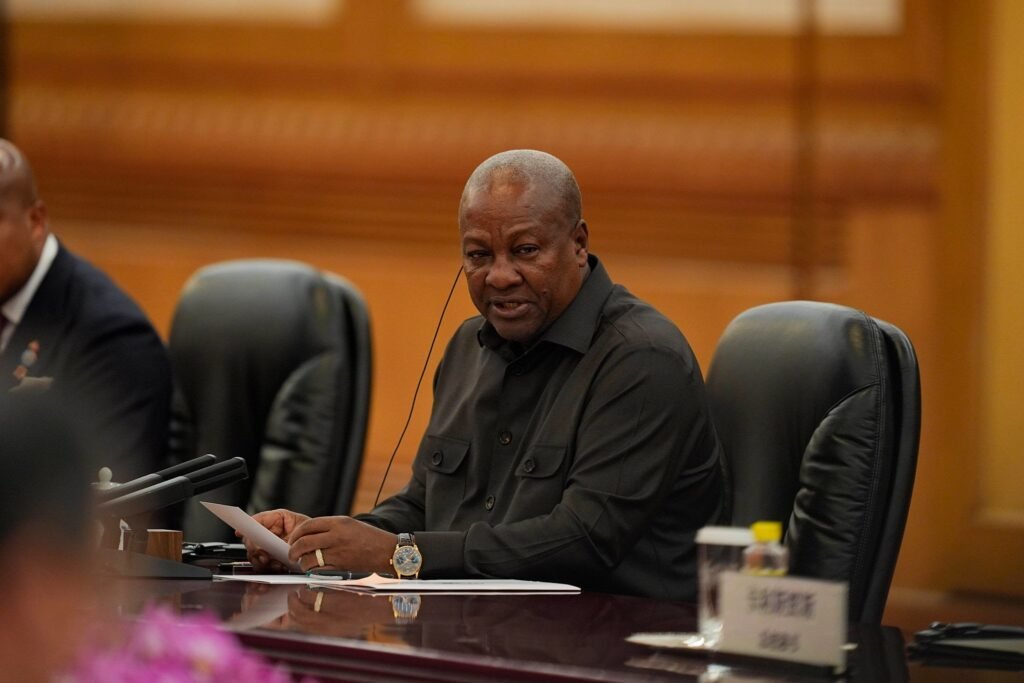
Into this vacuum walked President John Mahama, who made abolishing ex gratia a centrepiece of his 2024 campaign.
Mahama pledged that ex gratia payments to members of the executive under Article 71 would be scrapped, and that the necessary constitutional steps to begin the process would commence in earnest in 2025.
He also promised to persuade the other arms of government to accept its removal.
He also went further: the NDC manifesto pledged to establish an Independent Emoluments Commission, to be created by merging the Presidential Commission on Emoluments and the Fair Wages and Salaries Commission, to address disparities in remuneration between Article 71 officeholders and the broader public service.
Mahama has now been in office for over seventeen months. No official communication on how the promise of cancelling ex gratia will be attained has been released.
Under the Constitution, scrapping or amending Article 71 requires a referendum, as it is an entrenched provision.
The Mahama administration has maintained that it has not constituted any new emoluments committee and is implementing the salary structure it inherited — the one produced by the Ampadu Fofie process and approved by Parliament in January 2025.
The transparency record has also been troubling.
A Right to Information request submitted to the Mahama presidency seeking details of Article 71 emoluments paid to former government officials during the Akufo-Addo administration went unanswered, raising fresh questions about transparency in public expenditure.
The Deeper Problem
The Ampadu Fofie Report did not create Ghana’s elite pay problem — it simply administered it.
The deeper issue is structural: a constitutional arrangement that determines elite compensation through a closed, oath-bound committee process; that pays salaries in arrears over four-year cycles; and that uses the constitutional entrenchment of Article 71 as a shield against meaningful reform.
The Constitution Review Committee, chaired by Prof. Henry Kwasi Prempeh, recommended that the salaries of Article 71 officeholders be determined by an “Independent Public Emoluments Commission” — but stopped short of recommending the abolition of ex gratia itself.
The political will required to go further — to amend an entrenched constitutional provision through a national referendum — has yet to materialise under any administration, including the current one.
Ghana has had no shortage of committees. What it has lacked, consistently, is the political courage to act on them.
This article was edited with AI and reviewed by human editors



Follow