


More Ghanaians are going online thanks to increased internet penetration and the availability of smart devices.
According to the Digital 2026: Ghana report by DataReportal, Ghana now has more than 26 million internet users, representing nearly three-quarters of the population.
That’s an increase of 8.6% from the previous year — evidence of Ghana’s fast-growing online ecosystem driven by affordable smartphones, cheaper data bundles, and better internet infrastructure.
A Young, Connected Nation
With a median age of just 21, Ghana’s digital transformation is being powered by its youth. Most new users are mobile-first — many have never used a desktop computer. Instead, their phones are their workplace, their marketplace, and their social hub.
There are now 41.8 million mobile connections in Ghana, a figure that exceeds the total population. Multiple SIM cards are common, as people juggle networks to take advantage of different data offers and coverage quality.
Internet Speeds are Improving — Slowly
The report shows a median fixed internet download speed of 49.5 megabits per second, up nearly 31% from last year. Faster connections have fueled the rise of streaming and remote work — trends that surged during the pandemic and have continued to reshape daily life.
Still, for many outside urban centers, connectivity remains unreliable or expensive.
About 9 million Ghanaians remain offline, mostly in rural areas where access to affordable broadband and smartphones is limited.
That gap reflects a broader challenge: while Accra and other major cities are seeing a digital boom, the benefits of connectivity have yet to reach all corners of the country.
Social Media Surge
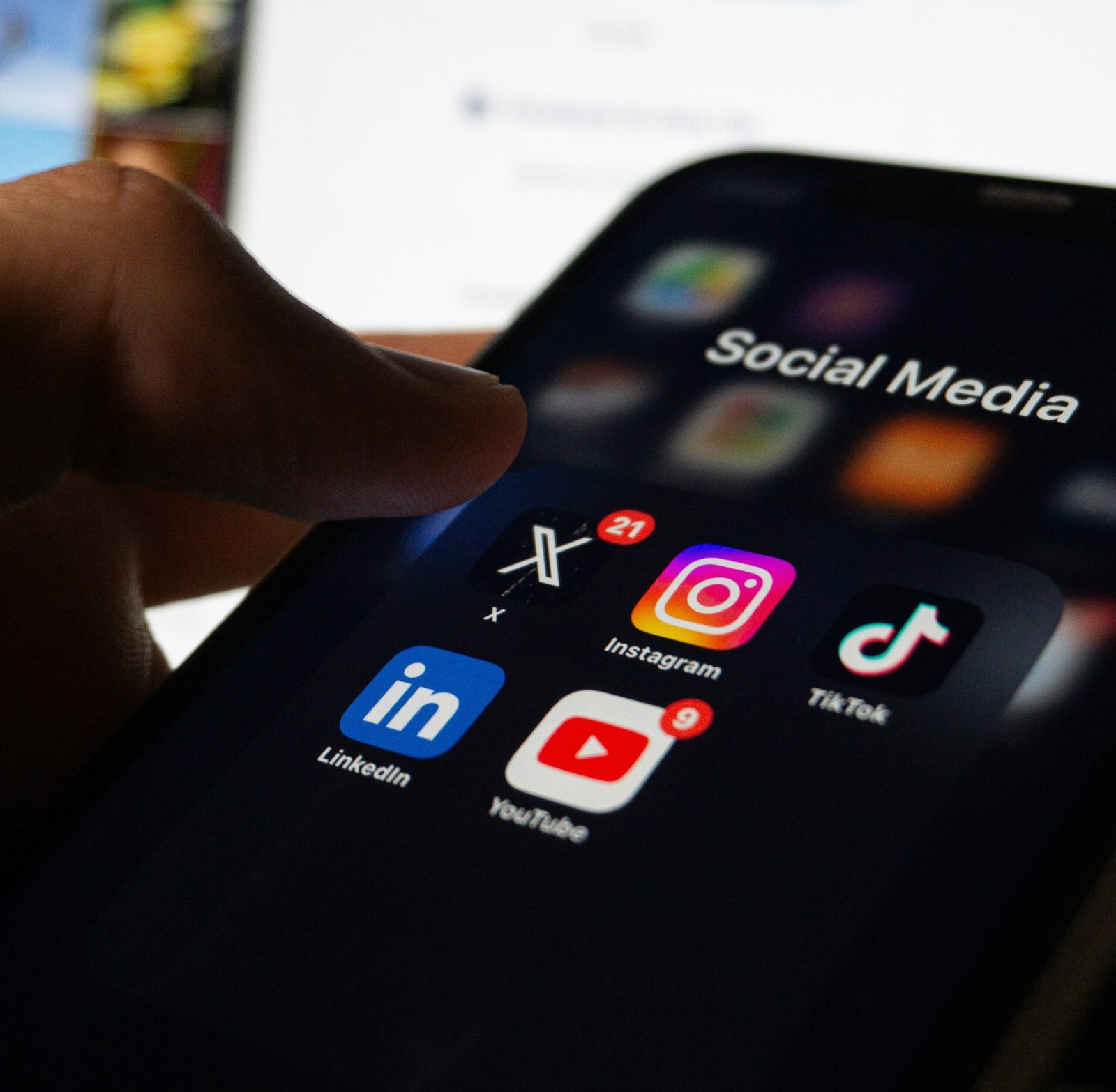
Social media remains one of the strongest drivers of Ghana’s digital growth. The report counts 8.6 million social media user identities, up 10% from the previous year.
Facebook and YouTube dominate the scene, each reaching roughly a quarter of the total population.
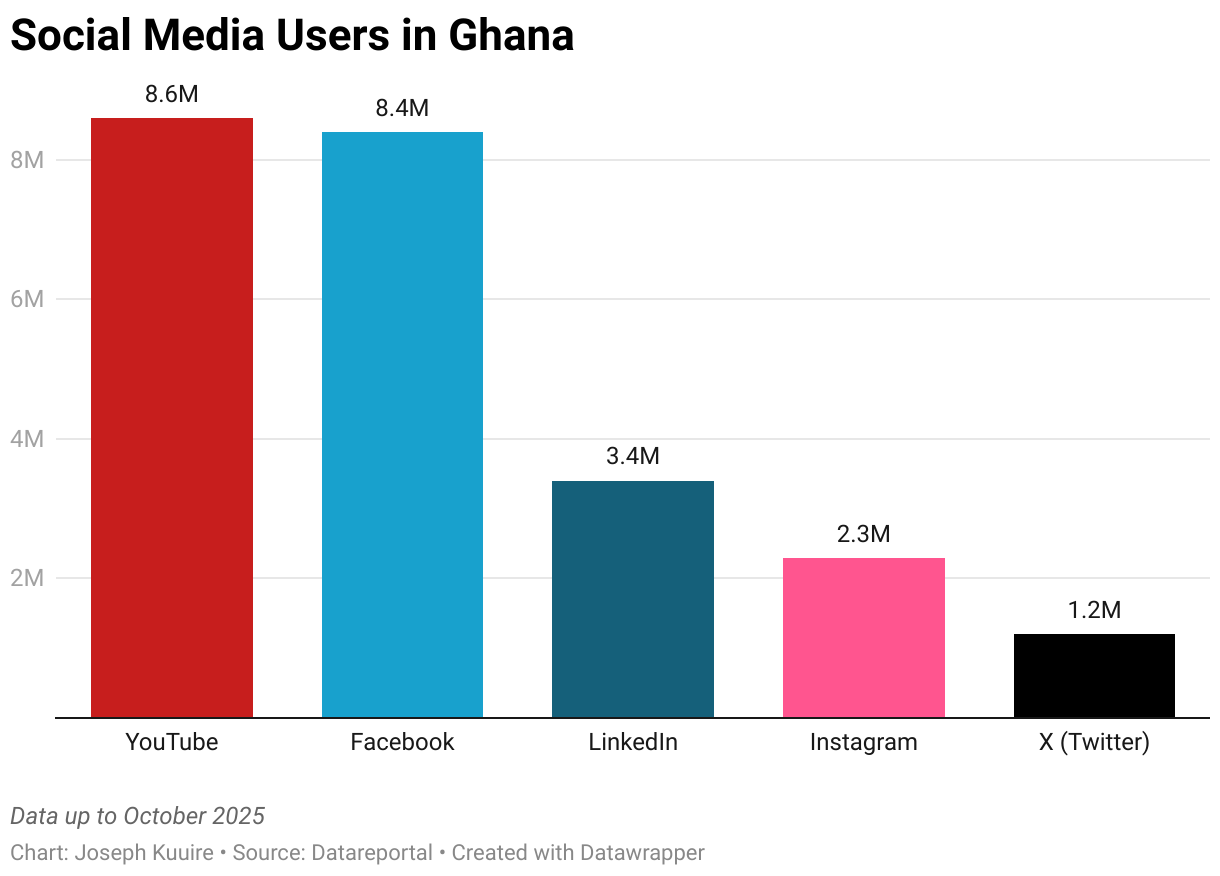
LinkedIn has grown by 17%, reflecting a surge in professional networking among Ghana’s expanding startup and corporate sectors.
Instagram continues to attract younger users, while X (formerly Twitter) saw a slight decline.
The explosion of short-form video and influencer culture has also reshaped Ghana’s media landscape.
This article was edited with AI and reviewed by human editors



Follow