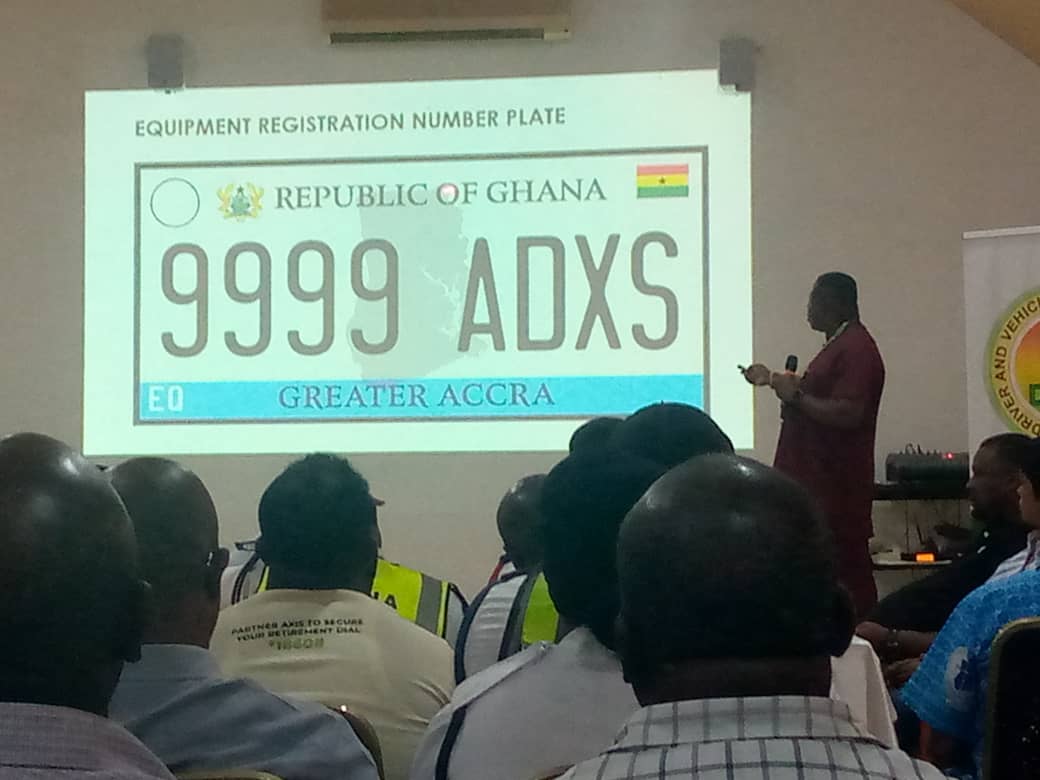
Starting in January 2026, all new vehicles registered in Ghana will be equipped with a license plate embedded with a tiny radio-frequency identification (RFID) chip.
Ghana’s Driver and Vehicle Licensing Authority (DVLA) has mandated that all new registered vehicles from January 1, 2026, will be issued these new plates. Existing vehicles will be required to replace their existing plates by April 2026.
The DVLA expects to register over four million existing vehicles from April 1, 2026 to December 1, 2027.
Officials say the new plates (which will replace the current year-of-registration suffix with regional and zonal codes) will link each vehicle to a central database. An RFID reader at a checkpoint or toll booth will instantly verify ownership, insurance status, and customs clearance.
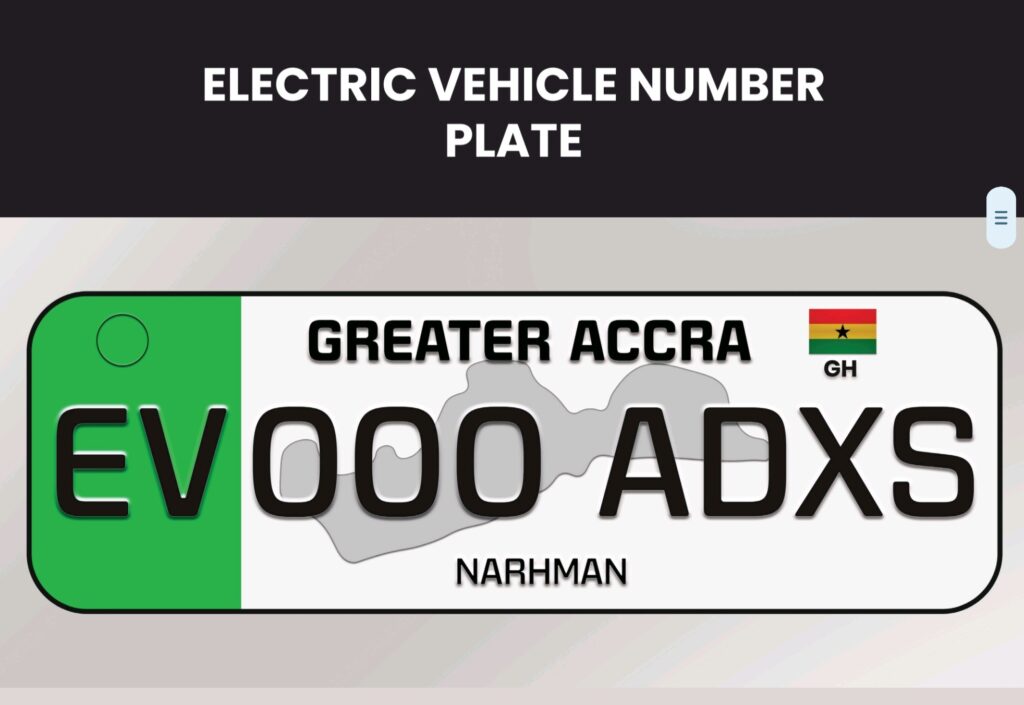
The new number plates will be colour-coded for easy identification: white for private vehicles, yellow for commercial vehicles, blue for motorcycles and tricycles, and green-marked plates for electric vehicles.
“This is a game changer for law enforcement and revenue protection,” Julius Neequaye Kotey, the DVLA’s chief executive, said in October. The chips, he promised, will make it “very difficult for crooks to outsmart the system.”
However, this new technology does come with concerns about privacy for vehicle owners.
How RFID License Plates Work
RFID in vehicles is hardly new. The technology uses radio waves to transmit a unique identifier from a passive chip (no battery required) and first gained traction in the 1990s for electronic toll collection.
By the early 2000s, companies like Germany’s Tönnjes were embedding UHF RFID chips directly into metal license plates or windshield stickers, creating what the industry calls electronic vehicle identification (EVI).
Germany, Brazil, Mexico, and the Cayman Islands use tamper-proof RFID plates or “third-plate” stickers on windshields to combat theft and fraud.
China has rolled them out in major cities for congestion charging and pollution control.
Dubai and parts of India employ them for access control and parking.
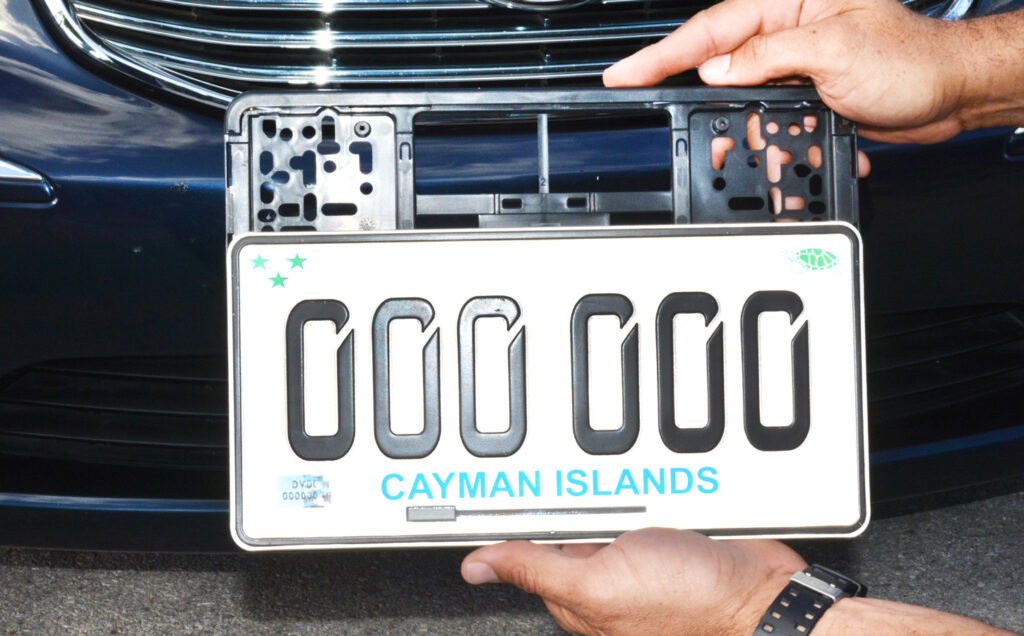
Advocates for the technology say plates can be identified, even if obstructed by dirt, or weather.
RFID plates offer other enhanced benefits include contactless tolling and instant flagging of stolen or uninsured vehicles.
In developing economies like Ghana, where counterfeit plates and unregistered cars are rampant, it promises to boost tax collection and road safety.
The Ghana Revenue Authority (GRA) Customs division reported intercepting 1,200 “Togo cars” (vehicles potentially smuggled via the Togo border) in a two-year period, indicating a separate channel of illicit vehicle movement.
Privacy Concerns
With every technology rollout comes certain concerns. RFID license plates are not excempt from scrutiny.
Critics argue that a network of readers — at tolls or police checkpoints — could compile detailed movement profiles without warrants or oversight.
In the United States, where digital plates (some with full e-ink displays, others simple RFID) are being piloted in California, Arizona, and elsewhere, privacy advocates have warned of a “surveillance infrastructure on wheels.”
But advocates have pushed back on those concerns.
In practice, they say most systems are passive: the chip broadcasts only a unique ID, not GPS coordinates, and decryption keys are held by authorities.

Still, the fear persists that data could be abused, sold, or hacked.
The DVLA has not yet detailed how it will protect vehicles owners’ data especially since the country does not have detailed privacy laws (The country has established a Data Protection Authority).
New Era for Efficiency and Surveillance
The DVLA is currently piloting RFID plates in the Oti region. New vehicles owners will get the plates after January 1, 2026 and current vehicles owners can apply from April 2026.
The costs for the new license plates have yet to be shared.
Currently, four African countries, including Rwanda, Uganda, Togo and Ivory Coast, have rolled out digital plates for their citizens.
Uganda, which rolled out its RFID plates in 2024, has become a topic of concern, with critics saying RFID can used as a tool of surveillance. Privacy advocates are demanding more transparency.
Hopefully, Ghana’s DVLA will also be more transparent on issues of privacy for its plates.
For now, Ghanaian motorists have one certainty: by the end of 2027, every journey will leave a faint but indelible digital footprint.
Whether that footprint feels like progress or surveillance may depend on how transparently — and carefully — the government walks the line between security and privacy.