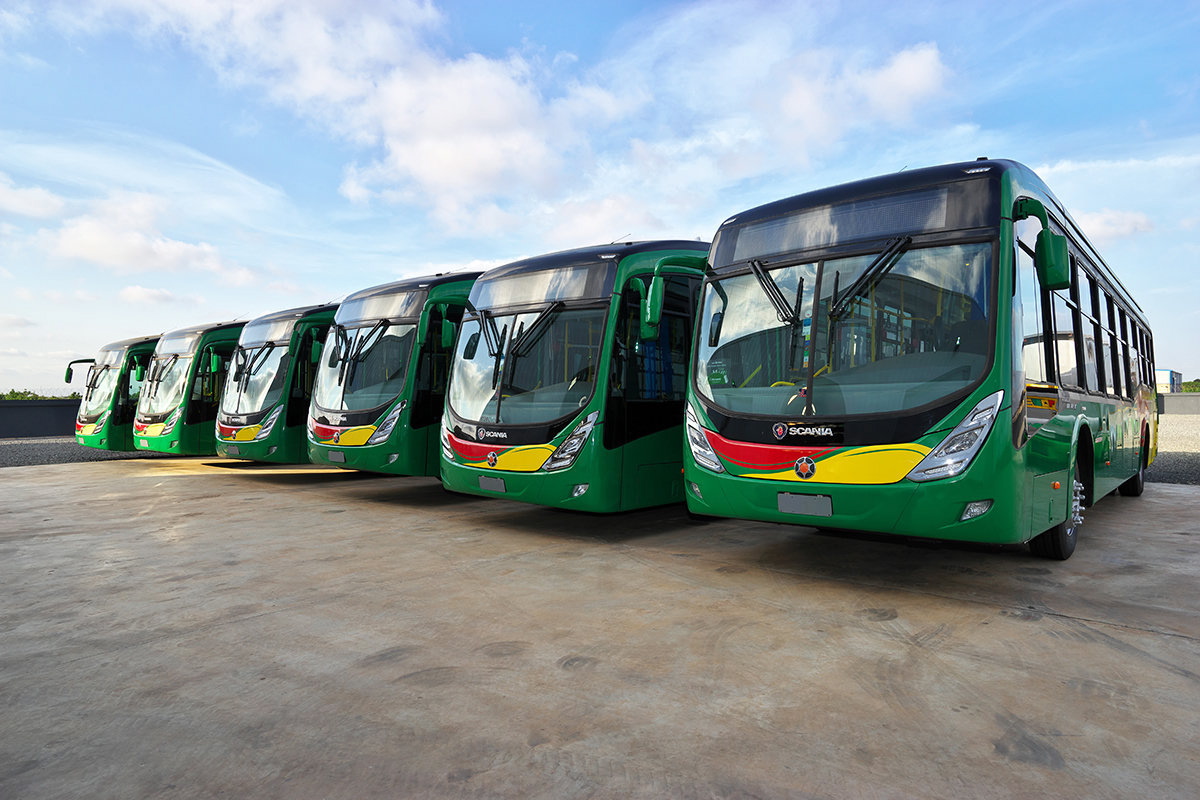
Every few years, a familiar scene unfolds at the Tema Port. Rows of gleaming, brand-new buses—painted in the vibrant colors of the national flag or the orange of the Metro Mass company—are offloaded from cargo ships.
Speeches are made, and politicians promise a “new era” of urban mobility.
Yet, a few miles away, at Accra’s Kwame Nkrumah Circle, the reality remains unchanged.
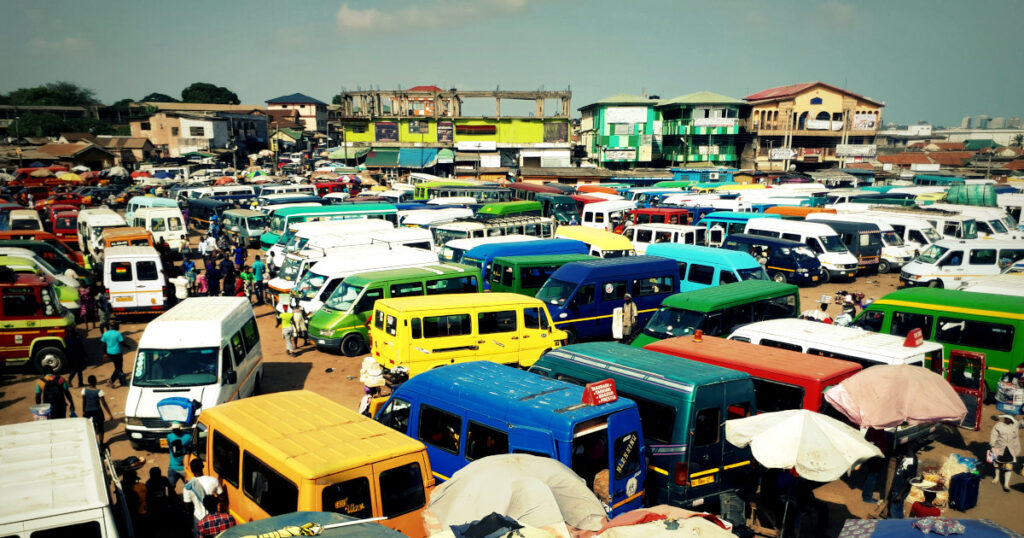
Commuters scramble into “tro-tros”—old, imported used minibuses—while the “new” buses from previous years sit in weed-choked depots, cannibalized for parts or sidelined by broken gearboxes.
Ghana’s public transport strategy has become a repetitive cycle of procurement rather than a plan for movement.
Recently, the Minister of Transport, Joseph Bukari Nikpe, announced that the State Transport Company (STC) and Metro Mass Transit (MMT) will receive new buses by the end of the first quarter of 2026.
“God willing, by the end of the first quarter of 2026, both state transport companies will begin to receive new buses,” the minister said.
According to Mr. Nikpe, the bus acquisition will be a continuous process, with plans to add more than 150 buses each year to strengthen STC’s operations. Metro Mass Transit will also receive new buses in phases annually to renew its fleet.
Politicians over the years appear to be focused on importing hardware (buses) without investing in the software (maintenance, dedicated lanes, and integrated systems).
The Allure of the “Quick Fix”
For successive administrations, importing buses offers an immediate, photogenic solution to a systemic crisis.
Since the early 2000s, Ghana has seen a revolving door of initiatives: the Metro Mass Transit (MMT), the Aayalolo Bus Rapid Transit (BRT), and various regional shuttle schemes.
| Initiative | Launch Year | Primary Promise | Current Status |
| Metro Mass Transit | 2003 | Affordable inter-city and intra-city travel | Large portion of fleet grounded; frequent mechanical failures. |
| Aayalolo (BRT) | 2016 | Fast, dedicated-lane commuting in Accra | Failed to secure dedicated lanes; buses stuck in same traffic as cars. |
| STC Expansion | Ongoing | Luxury inter-city travel | Successful but limited to elite, high-cost corridors. |
The problem is that a bus is only as fast as the road it sits on.
In Accra and Kumasi, these 80-passenger vehicles are forced to compete for space with thousands of smaller trotros and private cars on roads that were never designed for mass transit.
Without dedicated bus lanes, a million-dollar imported bus is just a very expensive, slow-moving obstacle.

A Maintenance Crisis
The fatal flaw in Ghana’s import-heavy strategy is the lack of a domestic supply chain.
Most buses are imported from Europe, China, or Brazil. When a specialized sensor fails or a hydraulic part snaps, the bus is grounded.
A major reason for the poor maintenance culture is the skills gap. Local mechanics are masters of the “second-hand” market, but they often lack the diagnostic tools and training for the complex electronics of modern Euro-standard buses.
The Informal Giant: The Tro-Tro Paradox
While the state struggles to manage its fleet, the informal sector—the tro-tro—provides almot 95% of the country’s transport services. These are mostly retired Sprinter vans or Toyota Hiaces imported from Europe after they have exceeded their useful life there.
Ironically, while the behavior of trotro drivers can be seen as a nuisance to be replaced, they are the only reason the economy hasn’t ground to a halt.
They are agile, they go where the big buses can’t, and they require zero state subsidy.
By trying to “replace” them with imported fleets instead of integrating them into a regulated franchise system, the state creates a rivalry it cannot win.
Why the Wheels Aren’t Turning
The failure to fix public transport in Ghana isn’t a lack of vehicles; it’s a lack of systemic design.
Ghana spends heavily on the buses themselves but under-invests in the “last mile”—the paved neighborhood roads and terminals that allow a system to function.
Procurement is a “fast” win. Building a comprehensive rail-and-bus network takes decades and spans multiple election cycles, making it less attractive to politicians seeking immediate visibility.
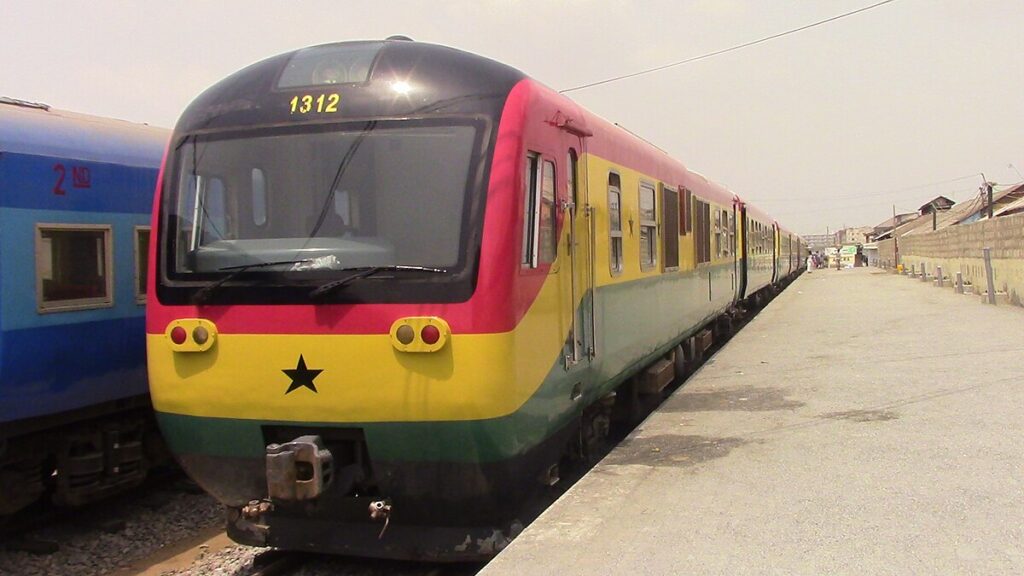
It’s not only the buses that have been neglected. Ghana’s record on rail networks for public transportation is also abysmal.
Only 13% of Ghana’s colonial-era rail network is operational. Without a backbone of high-capacity rail to move people into the city centers, the road network will remain perpetually choked, regardless of how many buses are imported.
Until Ghana shifts its focus from importing buses to building infrastructure for public transportation, the country’s public transit sector will remain stagnant.