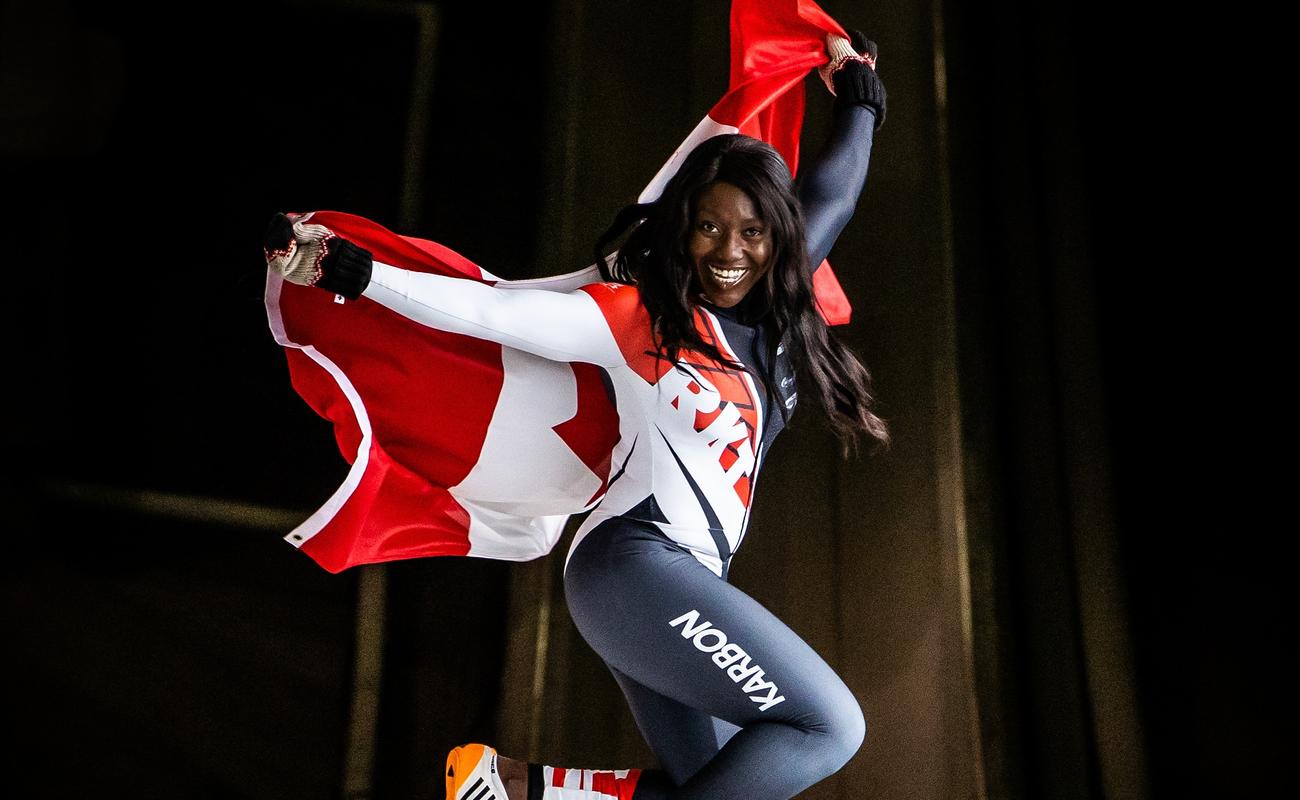
In an online video, a female athlete dressed in black spandex hurtles down an icy track, strapped into a sleek fiberglass sled that weighs almost three times her body weight.
Her gloved hands grip the steering reins, her body a coiled spring of power and precision.
It looks like a scene straight out of a Hollywood blockbuster — Cool Runnings, but with a solo black female protagonist.
For Cynthia Appiah, the 35-year-old Canadian bobsled pilot with Ghanaian roots, this adrenaline-fueled rush is just another day at the office.
In a sport mostly dominated by Europeans in spandex and Scandinavians in parkas, Appiah stands out: She’s a Black athlete and a two-time Olympian.
Born to Ghanaian immigrants in Canada’s multicultural landscape, Appiah’s path from modest Toronto apartments to the Winter Games is a testament not only to hard work but also a bit of luck and great timing.
Cold Beginnings
Her parents’ voyage to Canada in the late 1980s was the first pivot point, a calculated leap toward finding a better life for their family.
“It was a chance for new experiences, to live in a better country, and try to give my siblings and me a better life,” she said, recalling her parents’ motivation to move from the country of their birth.
Appiah became a Canadian by birthright. The family settled into community housing in Toronto, scraping by on entry-level jobs and the goodwill of earlier arrivals.
“We didn’t have everything that our friends had,” Appiah said about early living experience. But she was grateful for everything you could afford.
“We had a loving family, we had a roof over our head, we had food on the table, and that is what we needed to kind of grow into the people that we are.”

Becoming An Athlete
As a child in her apartment complex’s summer program, Appiah dabbled in sports like baseball. She was also interested in football (soccer), but the high registration fees to participate were a deterrent.
In elementary school, a teacher noticed Appiah’s ability to throw in the shot put, a sport where athletes throw a spherical weight over from their shoulders for distance.
“The teacher said ‘Cynthia, you threw it the farthest. You’re going to do shot put,” she said about her initial trials.
Participation in the shot put led to track and field, a sport that was considered a “big deal” in Ontario, Canada.
In university, she had planned to tread a path towards teaching, and not sports. But the keen eyes of an athletic coach convinced her to reconsider.
“By chance, a throwing coach for a university happened to be at a [track and field] competition, and we got introduced. That opened the door for me to be able to continue [sports] in university.”
After five years at McMaster University, Appiah realised that teaching would not be in her future. As luck would have it, a new opportunity dropped in her lap in the form of a trial for the Canadian bobsled team.
Going Bobsledding
At 22, fresh from university and flush with student debt, Appiah took a chance and decided to try out for the bobsled team. Her parents’ initial reaction wasn’t too welcoming.
“The first reaction was, they didn’t know what bobsled was. But they were immediately against it once they learned about it. It’s a dangerous sport“, Appiah admits.
“But I’m also very stubborn. Eventually, once they saw how passionate I was and they started to buy into it.”
She scraped together $2,000 for the first training camp, with her mother chipping in to support.
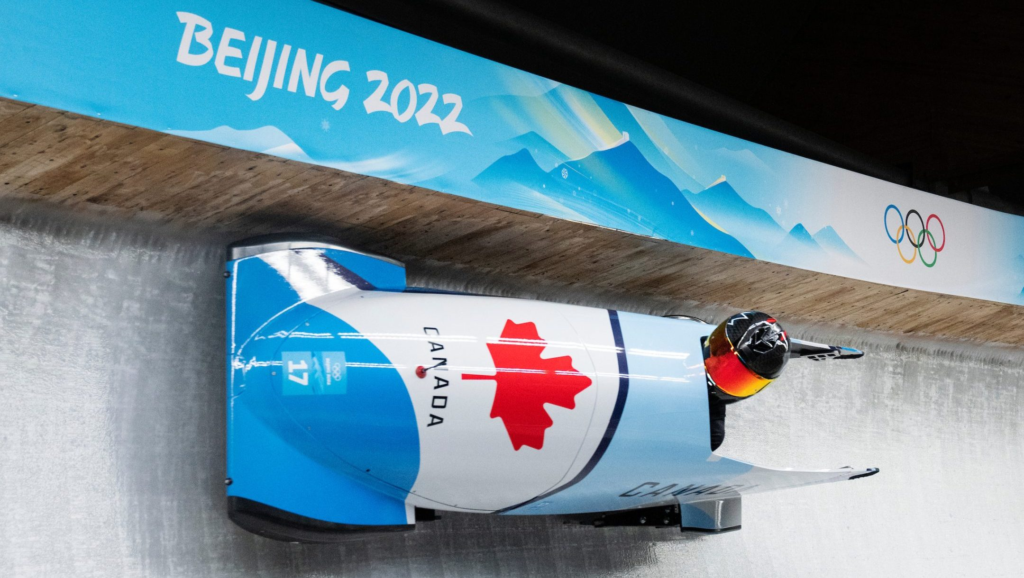
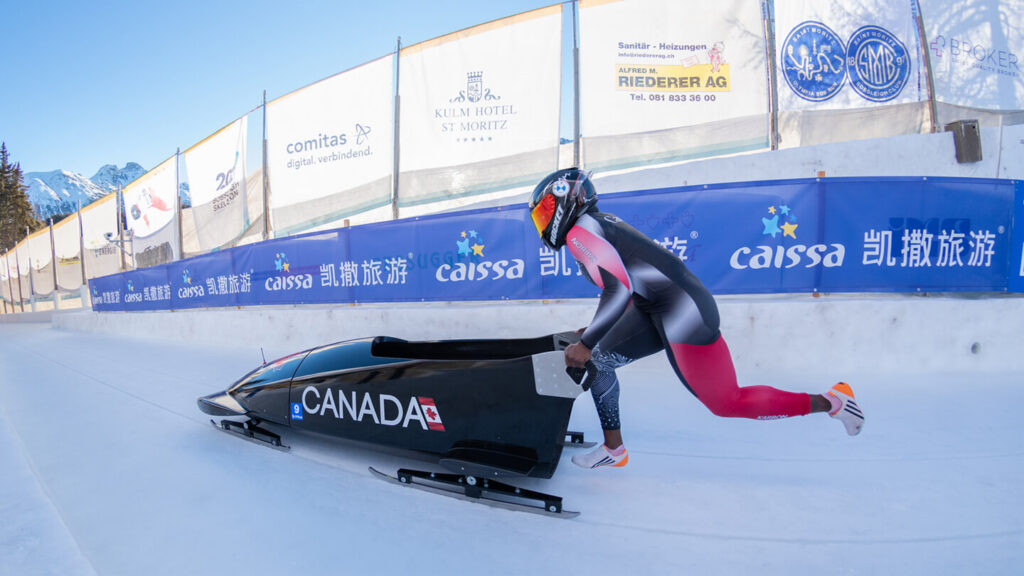
The sport of bobsled is not for the faint-hearted. A sled weighs close to 350 pounds and can go as fast as 90 miles per hour on a track. It requires lots of weightlifting and running to compete on a high level.
“We’re doing a lot of squats, a lot of bench, a lot of power cleans, plyometrics, and then a lot of sprinting”, Appiah said on her intense training regimen.
Her dedication to the sport has manifested in positive ways.
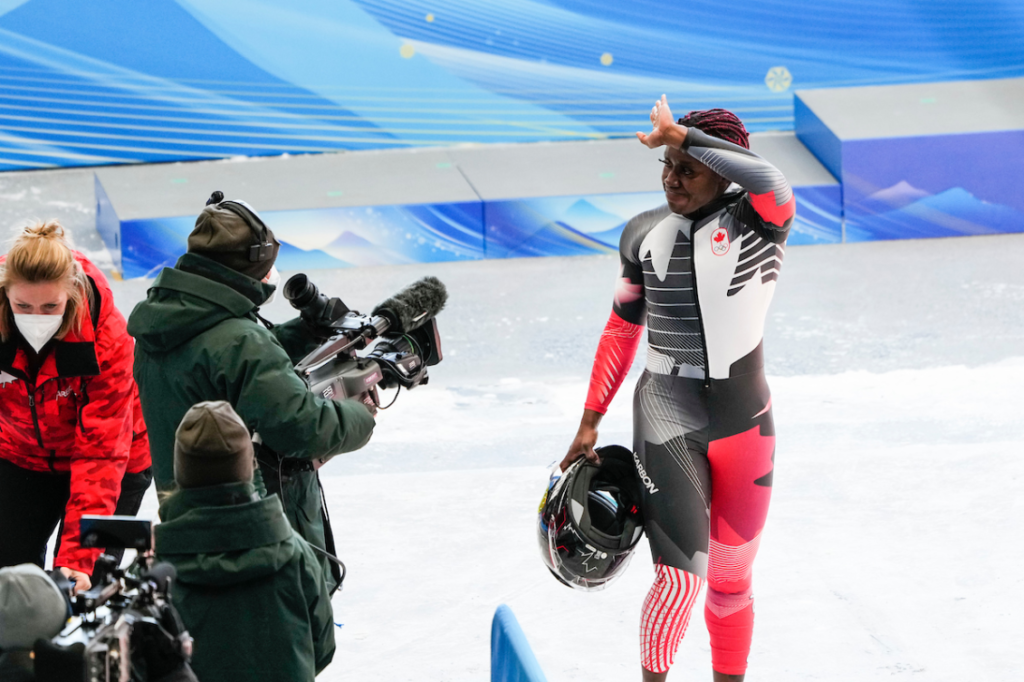
For 11 years on Canada’s national team, her career has been marked by major successes. She competed for Canada in PyeongChang in 2018 and made her Olympic debut in 2022 at the Beijing Winter Games.
Breaking Stereotypes and Overcoming Obstacles
Black athletes in winter sports are rare. Even the ones who do make it still face some stereotyping.
According to Appiah, it’s been said that black competitors did not excel as bobsled pilots.
“There was this weird unspoken rule that black people couldn’t drive sleds,” she said, adding that black athletes were often relegated to brakesperson. But even that role is not guaranteed.
“The inherent danger of being a brakeman is that there’s not a lot of job security because you’re only as good as your previous performance. If someone comes in and they’re faster than you, your spot’s gone,” Appiah said about the competition to get into the sport.
Another barrier to entry for competing in winter sports is often the high price of equipment.
A professional-grade bobsled can cost between $25,000 and $70,000. Competing in a single season can incur up to $4,350 for startup costs (sled, helmet, shoes, travel).
Winter sport athletes tend to skew older, peaking in their 30s amid mortgages and family milestones.
For Black athletes, often hailing from tropical realms like Ghana or the Caribbean, the pull of the sport can feel alien.
But Appiah stated that the dynamic is slowly changing.
“We’re now starting to see more and more teams have black athletes come into the sport. We’re now starting to see more black athletes access the sport and grow it up to being an even better sport.”
Back To Her Roots
Appiah admits that it has been close to 10 years since she last visited Ghana.
“It’s embarrassing,” she confesses with a laugh. But she’s already plotting a 2026 pilgrimage with her sisters to explore Accra, a detour from her hometown of Kumasi.
As an Olympian and Diasporan living in Canada, would she be open to helping local athletes compete in winter events?
“I think it’s definitely something I would love,” she says enthusiastically.
She references fellow Ghanaian, Akwasi Frimpong, who competes in bobsled and was the first Black athlete to compete in the skeleton.
“I want more Ghanaians [to compete] because obviously I think we’re the best athletes in the world.
But it would require a huge uptaking from the government to really commit the financial dollars that would be needed to get someone up and started in this sport.”

What’s Next for Cynthia
After close to 11 years of being on the national team, Appiah says it might be getting close to hanging it up for the Olympics. But it’s not yet a certainty.
“I’ve committed to coming back next year just because of World Championships, which are very big for us,” she says about her next moves.
If she does decide to retire from the sport entirely, she envisions a future doing color commentary and sports analysis.
I’ve been really interested in sports broadcasting since being in the sports world. So, you know, we’ll see.”
Although she never fully envisioned her current path as a bobsledder when she was young, Appiah has taken all the opportunities that have come her way.
“My life has really been a series of opportunities that have been presented to me and then me taking up on those chances as they come along.”
For those following her journey, they’ll have to stay tuned to see what follows next.
“I don’t want to say anything too concrete just yet because who knows what can happen tomorrow.”