


STORY HIGHLIGHTS
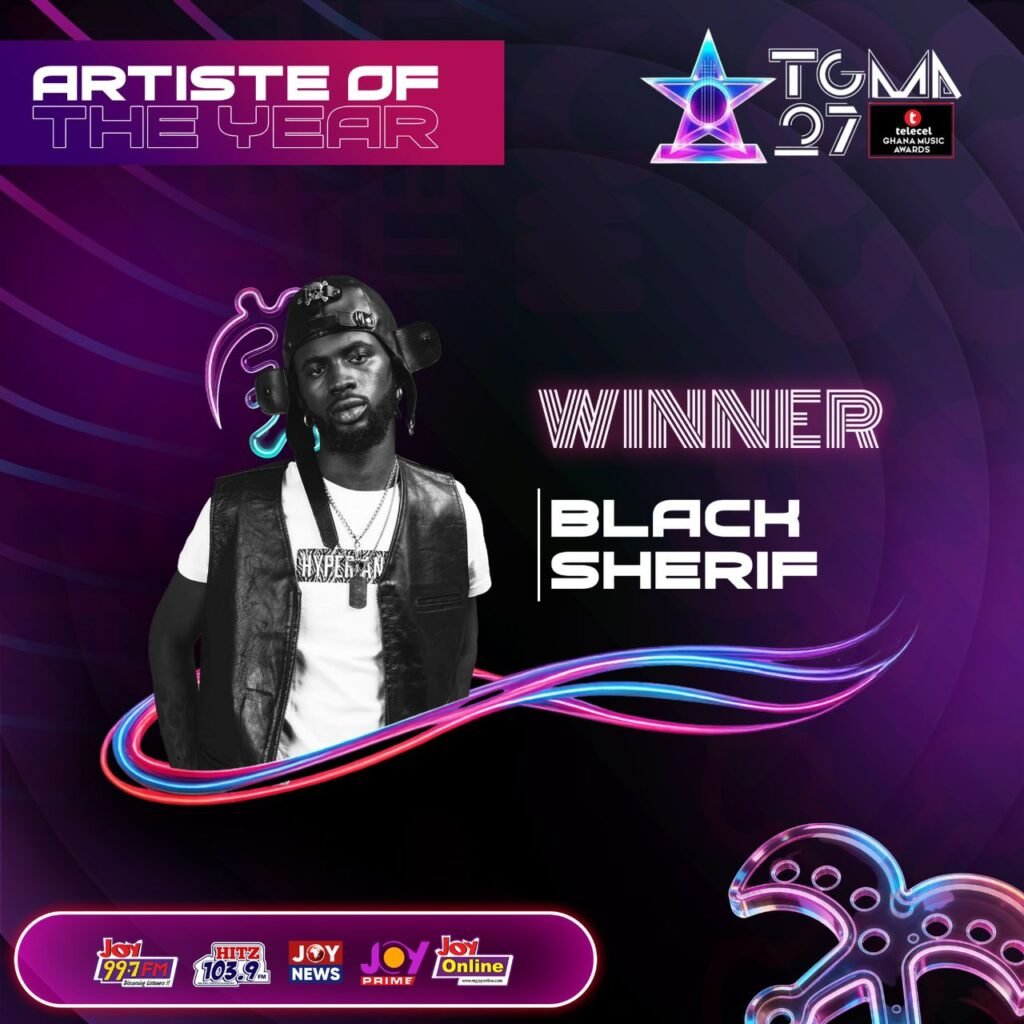
- Black Sherif wins Artiste of the Year and Album/EP of the Year at the 27th Telecel Ghana Music Awards, held May 9 at the Accra International Conference Centre
- The 2026 edition was marked by a chaotic last-minute venue reversal — from La Palm’s Palms Convention Centre back to the Grand Arena — weeks before showtime
- Critics and artists, including Bisa Kdei and Kwaw Kese, have raised recurring concerns about the nomination process, transparency, and institutional planning
Accra, May 10, 2026 — When Black Sherif finally lifted the Artiste of the Year trophy at the 27th Telecel Ghana Music Awards (TGMA) on Saturday night, the Grand Arena of the Accra International Conference Centre (AICC) erupted.
A Twitter post confirming Black Sherif’s victory circulated rapidly as the night drew to a close. It was a coronation long anticipated — but the path to that stage had been anything but smooth.
The ceremony took place at the Grand Arena of the AICC, a venue confirmed by organisers Charterhouse after weeks of public anxiety over the event’s location, following an earlier plan to move it to La Palm’s Palms Convention Centre.
The glitter was real. So were the familiar cracks.
The Winners
Black Sherif dominated the night, claiming Artiste of the Year, Album/EP of the Year for Iron Boy, Best Hip-Hop Song for Where Dem Boys, Best Afropop Song for Sacrifice, and Songwriter of the Year — also for Sacrifice.
Medikal was the night’s other major haul. He won Best Hiplife Song for Shoulder (featuring Shatta Wale and Beeztrap KOTM), Best Hiplife/HipHop Artiste, Collaboration of the Year for Shoulder, and the Telecel Most Popular Song of the Year.
Other major winners included:
- Best Highlife Song: Kofi Kinaata — It Is Finished; Best Highlife Artiste: Kofi Kinaata
- Best Traditional Gospel Song: Piesie Esther — Nyame Ye; Best Gospel Artiste: Diana Hamilton
- Best Afrobeats Song: Kojo Blak ft. Kelvyn Boy — Excellent; Best Afrobeats/Afropop Artiste: Wendy Shay
- Best Reggae/Dancehall Artiste: Stonebwoy; Best Reggae/Dancehall Song: Moliy, Shenseea, Skillibeng & Silent Addy — Shake It to the Max RMX
- International Collaboration of the Year: Moliy — Shake It to the Max RMX
- Best Music Video: AratheJay — Put Am on God, directed by David Duncan
- Best Male Vocal Performance: Asiama — Akoma; Best Female Vocal Performance: Enam — Amin
- Best Rap Performance: Strongman — Mensei Da
- Best New Artiste: Kojo Blak; Record of the Year: Kwabena Kwabena
- Producer of the Year: A Town TSB; Group of the Year: Keche; Best African Song: Davido
- Unsung: Morgan Nero
Ghanaian-American singer Moliy celebrated her first-ever TGMA win after Shake It to the Max RMX clinched International Collaboration of the Year.
Last Minute Venue Changes And Familiar Complaints
The awards delivered spectacle on the night. Getting there, however, required last-minute improvisation that exposed a deeper institutional failure.
Charterhouse initially announced the Palms Convention Centre at La Palm Royal Beach Hotel as the venue for the 2026 edition after being informed that the Grand Arena would be unavailable due to planned renovations of the AICC.
The Palms Convention Centre, while elegant and functional, is a significantly smaller space and not designed for the scale, broadcast complexity, and audience size associated with Ghana’s biggest music awards event.
Charterhouse’s Head of Public Events and Communications, Robert Klah, acknowledged that the Palms option — with a capacity of roughly 2,000 — was never the ideal choice.
“Plan B was the Palms Convention Center, but it is not the most suitable place. But if we create the kind of stage we create at the Grand Arena, it won’t work,” he said.
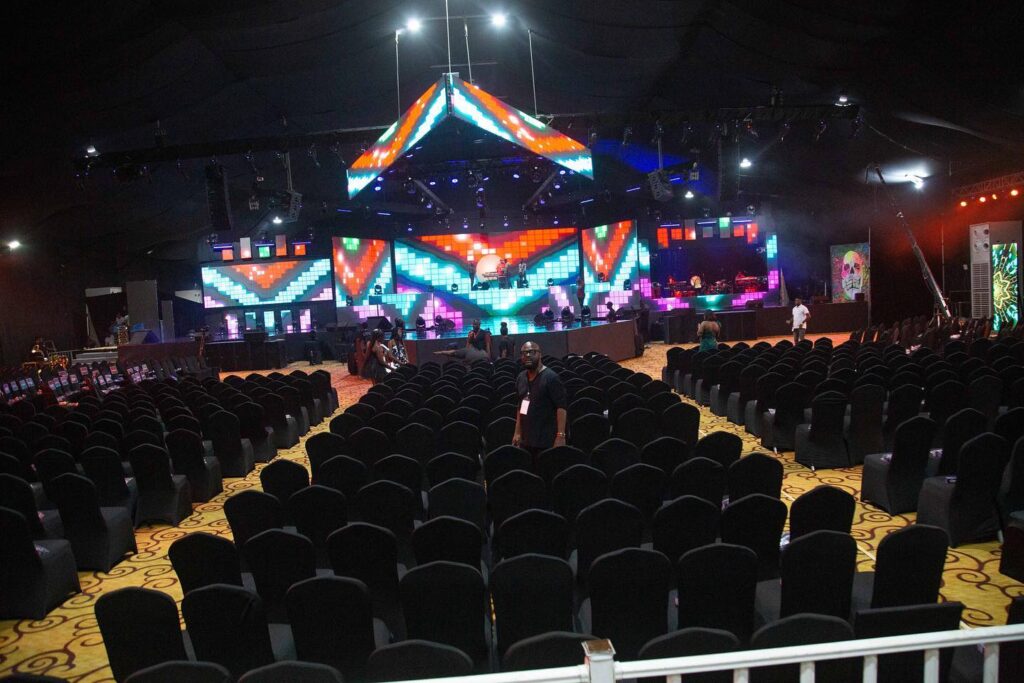
Following public outcry, sustained industry pressure, and reported intervention from headline sponsor Telecel Ghana through sector ministries, Charterhouse later confirmed that approval had been granted for the Grand Arena after all.
Media personality Abena Moet publicly criticised the organisers for lacking a permanent venue after more than two decades of hosting the awards, questioning their long-term planning.
“The event is 26 years old, and you’re still scouting for a venue just weeks before the show,” she said.
Criticism of the event’s red carpet fashion was quite vocal on X, with many users expressing disappointment over the overall lack of glamour, creativity, and effort for what’s supposed to be Ghana’s biggest music night.
The main show itself was not without familiar criticism. Many viewers (especially watching from home) called the sound “trash,” “bad,” or “poor” for most performances — low mic volumes, unbalanced mixing, and unclear audio.
Overall, the themes of late starts to the main show and overly long red carpet segments keep recurring, with critics wondering why the same issues keep happening after 27 years of the show’s existence.
Recurring Questions About Credibility
In March, hiplife heavyweight Kwaw Kese ridiculed the nomination process as opaque and bewildering, taking to X to suggest that the awards scheme operates without any visible or predictable selection timeline, leaving the public blindsided by announcements.
Social media debates about category placements and omissions have become a near-annual ritual.
Following the nominations, heated debates erupted over perceived snubs, including Kojo Blak’s Excellent missing out on Best New Artiste and questions over DopeNation’s absence — later explained by the TGMA board as the duo not giving consent for their nomination.
Highlife musician Bisa Kdei, speaking in April 2026, captured the prevailing mood.
“I hope TGMAs get better. Every year, there’s a new story and controversies around it,” he said, calling for consistency and transparency to maintain credibility.
Black Sherif’s triumph will be what fans remember from Saturday night. But the enduring story of the 27th TGMA may be the one told off-stage — a 27-year-old institution keeps making the same errors and having the same performance issues.
This article was edited with AI and reviewed by human editors



Follow