STORY HIGHLIGHTS
- NaCCA’s revised K-6 curriculum, submitted to Education Minister Haruna Iddrisu on July 22, adds Chinese as an optional foreign language from Primary One
- The Confucius Institute at the University of Cape Coast provided “technical and cultural expertise” in developing the curriculum, and has offered to pilot it in 10 schools
- The curriculum is benchmarked against China’s own Hanyu Shuiping Kaoshi proficiency standard
- No public record shows a signed agreement between the Ghanaian government and Chinese state entities specifically covering the K-12 curriculum’s funding or oversight terms
- Existing MOUs between the Confucius Institute and Ghanaian universities — Accra Technical University and UniMAC — offer a template for how such partnerships are typically structured
ACCRA — Ghana’s education authorities have formally added Chinese-language instruction to the country’s basic school curriculum, a decision officials describe as an economic strategy rather than a purely academic one, even as the terms of China’s institutional role in shaping the program remain outside public view.
A Curriculum Overhaul, With Chinese Included
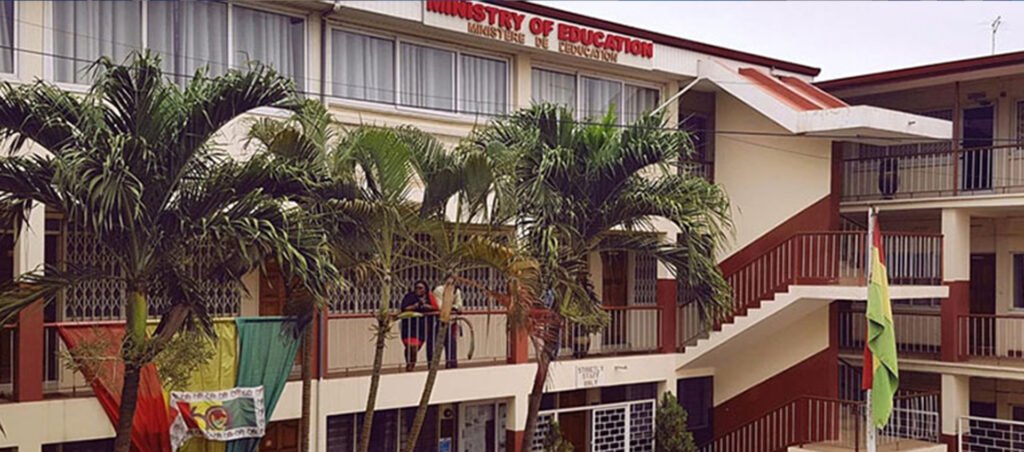
The National Council for Curriculum and Assessment presented a revised curriculum covering kindergarten through Primary Six to Education Minister Haruna Iddrisu on July 22.
The document, developed by a technical working group over several months, spans 13 subject areas and introduces artificial intelligence literacy, coding, and citizenship education alongside changes to language instruction.
Chinese enters the curriculum as an optional foreign language from Primary One, alongside a standardized Arabic track and continued instruction in French. NaCCA’s director-general, Professor Samuel Ofori Bekoe, told the minister the revisions were intended to close learning gaps and reduce subject overload.
Mr. Iddrisu has directed the Ghana Education Service to complete a review within one week and prepare the curriculum for implementation.
The government has separately reaffirmed that Ghanaian languages will remain the medium of instruction from kindergarten through Primary Three, with English taught as a subject to strengthen early literacy.
The Confucius Institute’s Role
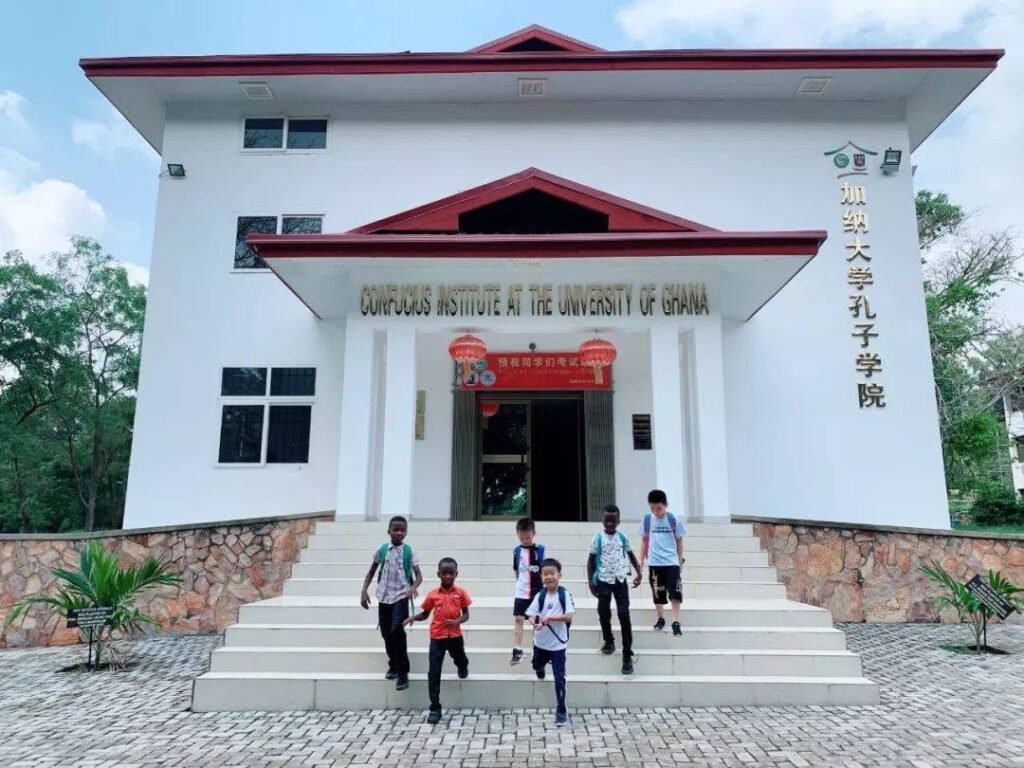
The Chinese-language component did not originate inside NaCCA alone. Vincent Assanful, chairman of NaCCA’s governing board, said in December 2025 that the curriculum was developed through sustained collaboration with the Confucius Institute at the University of Cape Coast, an institution jointly run with Chinese partners since 2013.
Mr. Assanful described the work as moving “beyond appreciation of the language to the rigorous science of pedagogy.”
He added that the resulting draft was benchmarked against the Hanyu Shuiping Kaoshi, or HSK — China’s own standardized Chinese-proficiency examination — while being adapted to fit Ghana’s existing curriculum framework.
Mr. Assanful was explicit that the initiative extends beyond language education. He described it as an economic intervention intended to reduce barriers to trade, diplomacy and technology transfer between Ghana and China.
It reflects a rationale officials have repeated publicly: that fluency in Chinese will position Ghanaian students to engage more directly with the country’s largest source of infrastructure financing and trade.
At the launch event marking the Cape Coast institute’s tenth anniversary, NaCCA officials confirmed the Confucius Institute has offered to pilot the new curriculum in ten schools using three teachers, with Mr. Assanful calling on the institute to continue supporting professional development for Ghanaian teachers who will eventually deliver the program independently.
What MOUs Exist — and What’s Missing
Formal agreements between Confucius Institutes and Ghanaian institutions are not new, and two recent examples illustrate how such partnerships are typically structured.
In November 2023, the Confucius Institute at the University of Ghana signed a memorandum of understanding with Accra Technical University.
The institute would support language teaching, cultural programming, proficiency examinations and scholarship applications, while opening a pathway for Ghanaian students to pursue technical degrees at Nanjing University.
In March 2025, the same institute signed a similar MOU with the University of Media, Arts and Communication.
Those agreements were announced through joint ceremonies and university statements, with broad descriptions of collaborative activities but no published financial terms.
For the K-12 curriculum specifically, no equivalent document has surfaced publicly. NaCCA’s own public statements describe an ongoing technical partnership with the Confucius Institute rather than a discrete, signed contract.
Officials have not disclosed what — if anything — the Chinese side is contributing financially to the rollout, or what oversight role, if any, the Confucius Institute retains over curriculum content once it moves from pilot to national implementation.
That absence stands in contrast to the pattern documented around Confucius Institutes internationally, where the Chinese government typically provides both start-up and recurring funding to host institutions in exchange for a degree of institutional presence.
Such arrangements have drawn scrutiny in the United States and Europe over questions of academic independence, though no comparable dispute has surfaced in Ghana to date.
A Familiar Debate, Different Context
Confucius Institutes have operated in more than 160 countries since 2004 with a stated mission of promoting Chinese-language teaching and cultural exchange.
In some Western countries, they have faced restrictions over concerns about their ties to Chinese state authorities and their influence over curriculum content, prompting institutional funding bans and closures in the United States.
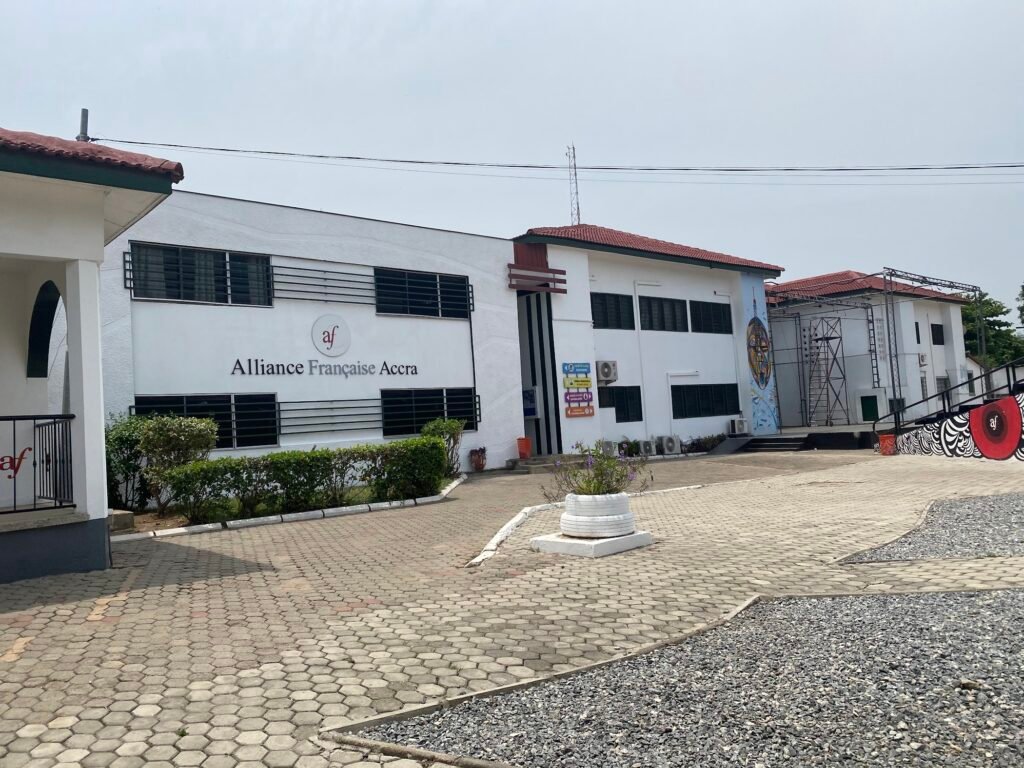
It could be argued that the institutes function similarly to other countries’ cultural and language bodies, such as the Alliance Française or the British Council, and that the criticism reflects Western geopolitical anxieties more than evidence of harm in the Ghanaian context.
Ghana currently hosts three Confucius Institutes — at the University of Ghana, the University of Cape Coast, and, most recently, the Kwame Nkrumah University of Science and Technology, whose approval officials credited in part to direct advocacy from China’s ambassador to Ghana.
Outstanding Questions
The curriculum reform is proceeding on the minister’s compressed one-week review timeline, but key details about the Chinese-language component remain unresolved in the public record.
Whether a formal government-to-government agreement underpins the partnership, what financial or in-kind contributions the Confucius Institute is making to the national rollout beyond the ten-school pilot, and what mechanisms exist to ensure the Ghana Education Service — rather than an externally funded institute — retains final authority over content as the program scales nationally.
This article was edited with AI and reviewed by human editors