
At the Mobile World Congress in Barcelona this week, Ghana’s Communications Minister Samuel Nartey George, delivered a statement that plays well in a press release.
“One network will not roll out 5G. All networks will roll out 5G on the same day,” he declared, framing the policy as a triumph of fairness — a level playing field for all operators, a coordinated national moment of technological arrival.
It is, in practice, nothing of the sort.
The minister’s insistence on a simultaneous, nationally coordinated 5G launch risks delaying a rollout that Ghana can barely afford to rush.
All the while, the country has not yet solved the far more urgent problem sitting directly beneath its feet: that millions of Ghanaians still cannot get a reliable 4G signal.
A Country That Hasn’t Finished the Last Race
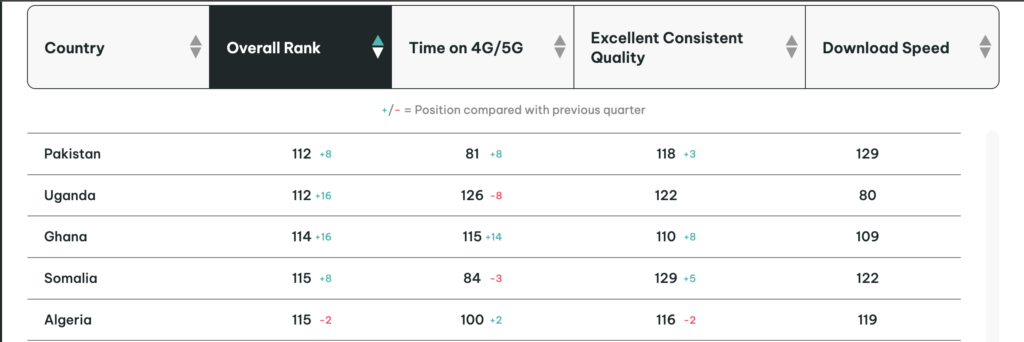
As of early 2026, Ghana ranks 114th on the Global Network Excellence Index. The country’s 4G/5G availability (mostly 4G) stands at roughly 71%.
Consistent quality of the country’s mobile internet is 36.8%. In practical terms, even where 4G exists, it frequently doesn’t work well enough to be useful.
Rural Ghana is worse.
When the Next Gen InfraCo shared infrastructure project was launched, 4G penetration stood at approximately 15 percent of the country’s geography — an indictment of how unevenly distributed the existing network is.
The ambitious plan to build 4,400 new 4G and 5G sites over three years, bringing coverage from 15 to 80 percent, is still largely aspirational (On the 5G side). And yet the government is now pivoting its political energy toward 5G launch.

The International Telecommunication Union’s 2024 global data shows that in low-income countries, only about 30 percent of rural inhabitants have 4G coverage.
5G is “essentially unavailable” in rural areas, reaching just 10 percent of urban populations.
Ghana sits in that band. The global evidence is unambiguous: countries at Ghana’s development level that rush 5G before consolidating 4G tend to produce networks that exist primarily in capital cities, serving smartphone users who were already well-connected.
The Simultaneous Launch “Fallacy”
Mr. George’s “everyone launches together” doctrine may sound equitable. It is, in practice, a mechanism for collectively moving at the speed of the least-prepared operator.
The logic behind staggered rollouts — where a first-mover operator deploys, competitors respond, and the regulator manages terms of access — is that competition accelerates coverage.
South Korea, which launched 5G in 2019, became the global benchmark for the technology. It did so through a structured but competitive auction that created urgency among operators to deploy.
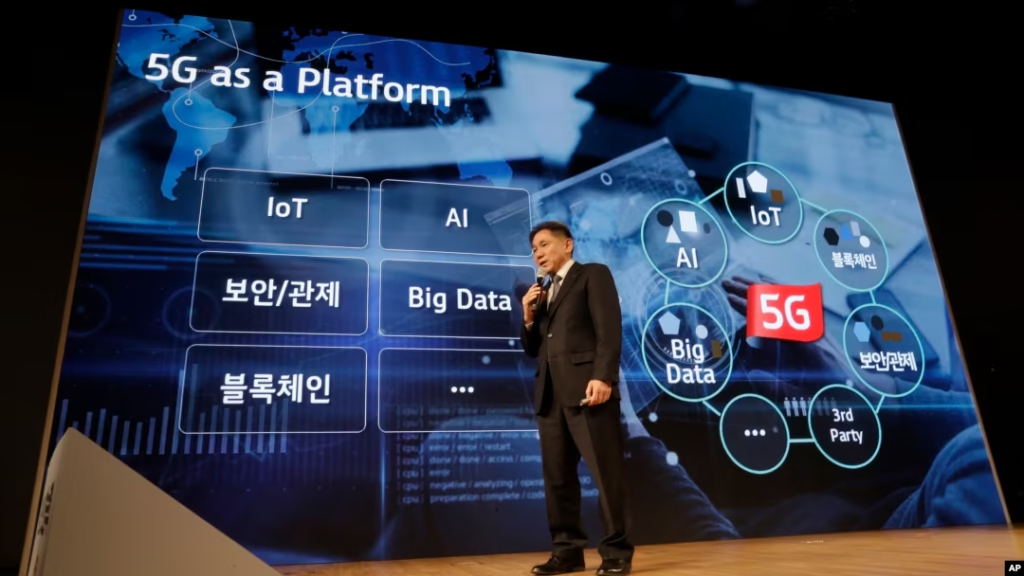
By 2021, South Korea had covered over 90 percent of its population with 5G — and it did so because operators were racing each other, not waiting for a synchronized national curtain call.
Ghana’s model inverts this dynamic. By requiring all operators to launch simultaneously, the government creates a coordination problem where every operator’s readiness becomes a constraint on every other’s.
One company falls behind on spectrum payments, and the entire policy framework stalls. Ghana’s National Communication Authority (NCA) disclosed that NGIC has been in default of licensing obligations since September last year.
The minister’s own words expose the fragility: Ghana has over 1,600 cell sites in Greater Accra alone, while NGIC claims readiness with 43.
The mandatory national roaming framework — requiring operators that win spectrum to allow others to use their sites at cost price — has a superficial logic to it.
However, research from similar arrangements in Europe and Latin America shows that such frameworks, when mandated rather than negotiated, tend to depress infrastructure investment.
Why build if you are obligated to share? The carrier bearing the capital expenditure and the risk shoulders costs while competitors “free-ride” on mandated access.
Brazil’s operators, navigating compulsory infrastructure sharing under CADE oversight, have repeatedly warned that such arrangements reduce the return-on-investment calculus and slow deployment — particularly in lower-revenue rural markets.
The Demand Problem
Even if Ghana managed a perfect simultaneous 5G launch across all operators next year, there is a more fundamental question: who is going to use it?
Research on 5G adoption in developing economies consistently identifies a core problem — the absence of a device ecosystem and viable use cases.
As of 2024, only about one in four people in sub-Saharan Africa use mobile internet on their own devices, the lowest rate in the world, according to the GSMA.
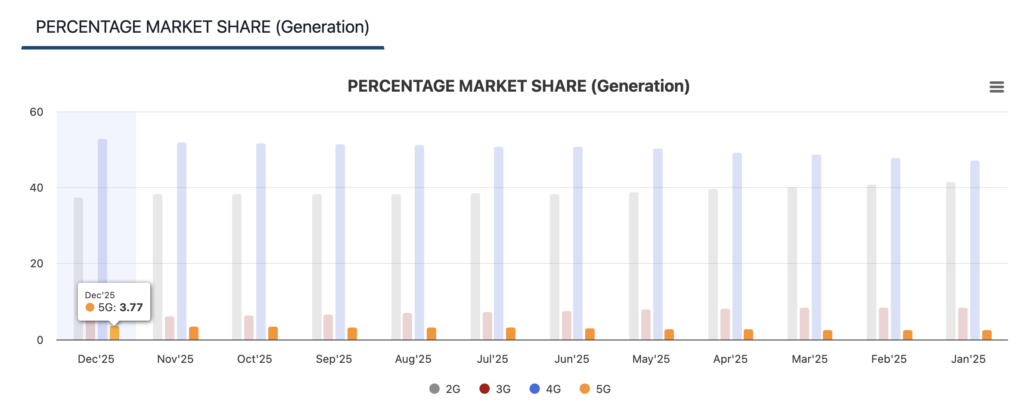
The region remains overwhelmingly dependent on 3G. Most Ghanaians who are mobile internet users access it through entry-level Android devices — devices that will not support 5G.
The Minister did announce there were discussions with Huawei to build 5G-enabled devices locally to help offset costs.
But the transformational use cases that justify 5G investment in high-income countries — autonomous vehicles, smart manufacturing, augmented reality, industrial IoT — do not yet have a meaningful business case in the Ghanaian context.
What Ghana’s economy actually needs from connectivity is better, more reliable, more affordable 4G: the kind that lets a farmer in the Brong-Ahafo region check commodity prices and lets a nurse in the Upper East access a patient record.
These are not 5G use cases. They are 4G use cases, and Ghana has failed to reliably deliver at scale.
Nigeria launched 5G commercially in 2022. As of 2025, MTN Nigeria’s own CTO acknowledged the country was still dealing with significant infrastructure gaps, vandalism, and growing demand that had outpaced the network’s capacity to serve existing subscribers — while 5G remained a premium urban curiosity.
Zambia, Tanzania, and Kenya have all seen similar patterns: symbolic 5G launches followed by years of under-utilization, while the 4G rural coverage gap persists unaddressed.
Is Starlink Mobile A Better Option?
While Ghana’s government is consumed with the optics of a simultaneous 5G launch, a connectivity revolution is quietly taking shape above it — one that addresses exactly the problem Ghana has failed to solve on the ground.
In December 2025, Airtel Africa announced a landmark partnership with SpaceX to deploy Starlink’s Direct-to-Cell satellite technology across all 14 of its African markets.
The service, set to begin rolling out in 2026, works directly with standard LTE smartphones — no dish, no extra hardware, no new SIM card required.
It uses low-earth orbit satellites that function as cell towers in space, using the same cellular protocols that existing phones already understand.
In areas where it is prohibitively expensive to build a tower — which, in Ghana’s case, describes the overwhelming majority of the country’s geography — a satellite overhead can simply replace it.
The Airtel-Starlink deal could transform connectivity in Nigeria, Kenya, Uganda, Rwanda, and eleven other markets — while Ghana watches from the sidelines.
Starlink’s technology promises to deliver connectivity to areas where, as Airtel Africa’s own CEO put it, “deploying terrestrial network solutions are challenging.”
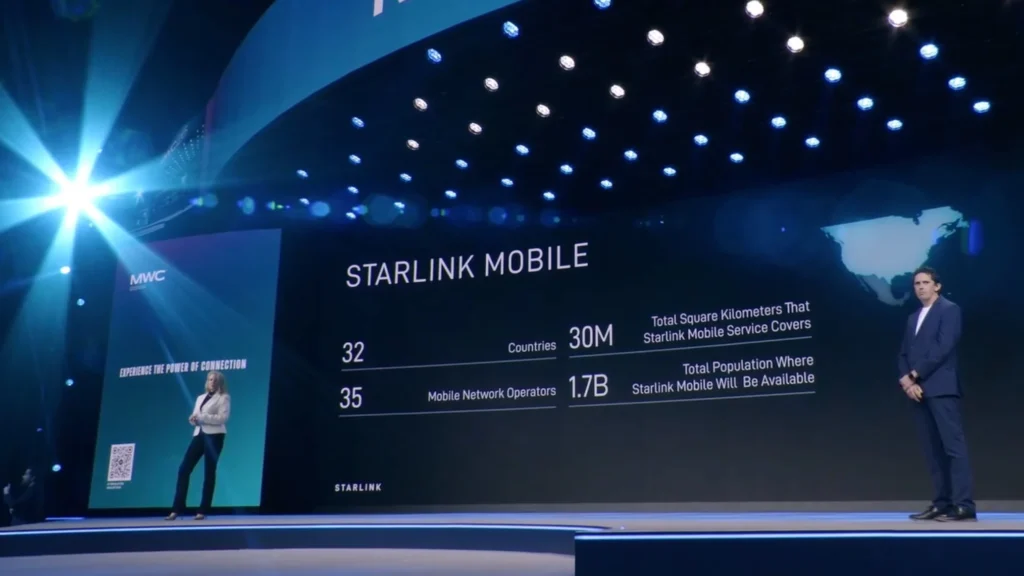
That describes 85 percent of Ghana’s geography.
Starlink’s service begins with basic text and data in 2026, with next-generation satellites offering speeds up to 20 times faster to follow.
The question Ghana’s digital policy community should be asking is not how to stage a coordinated 5G launch. It is why, in a country where citizens can barely get 4G, the government’s regulatory attention is pointed at the premium end of the market rather than the technologies now available to serve the 85 percent left behind.
Keep Your Eye On The Ball
None of this means Ghana should ignore 5G. The question is sequencing, honesty, and resource allocation.
A credible digital connectivity strategy for Ghana in 2026 would look less like a coordinated national 5G press event and more like a set of hard, unglamorous commitments:
- a binding timeline for 4G coverage expansion, enforceable quality-of-service minimums in rural regions (which the Minister has championed)
- an aggressive engagement with satellite direct-to-cell operators to ensure that when this technology scales across Africa, Ghana is not watching from outside the tent.
The minister is right that spectrum policy and the NGIC default are real problems that need resolving. He is also right that technology neutrality and quality-of-service reforms have already prompted MTN and Telecel to accelerate network investment. These are genuine policy wins, and they deserve recognition.
But they are being overshadowed by the political allure of a 5G launch — the kind of announcement that photographs well at Mobile World Congress, lands in international tech media, and positions Ghana as a “digital leader” in West Africa, regardless of whether a single Ghanaian outside Accra will experience it.
This article was edited with AI and reviewed by human editors