In 2020, Ghana’s Ministry of Communication signed a financing agreement with the Chinese technology company Huawei.
Under the agreement, Huawei would deploy 2000+ RuralStar sites for Ghana. The sites would provide voice and data services for over 3.4 million people in underserved and unserved communities.
Launched in 2017, RuralStar was Huawei’s answer to Africa’s connectivity conundrum: vast rural expanses too sparse for traditional cell towers.
On the sites, structures no taller than a two-story building, powered by solar panels, deliver 3G and 4G signals to more than residents in communities who have been left out.
With the project, Huawei strengthened its connection with local officials and further deepened its ties on the continent.
Former Communications and Digitalisation Minister, Ursula Owusu-Ekuful highlighted the benefits of RuralStar project.
“The project is very critical to our digital inclusion project and we cannot wait for the telecom companies to do it alone because it may not be fast as we expected,” she said at an event.
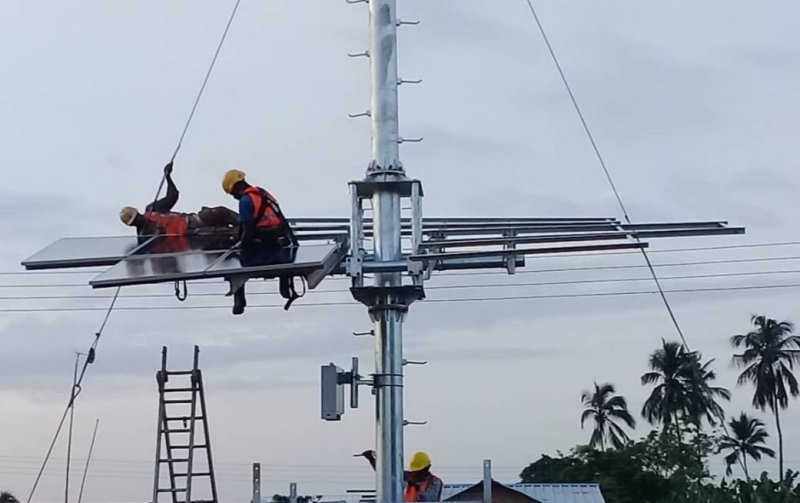
“The benefits of connectivity to your community goes beyond students using it to advance their knowledge, take advantage of services like Mobile Money, eCommerce, and explore new business opportunities and boost your existing businesses,” she added.
For Huawei, the project has been a major success in getting more buy-in with public officials and making a local impact.
Over the past decade, the Chinese telecommunications behemoth has poured billions into Africa, positioning itself as the continent’s indispensable tech partner.
In Ghana, that means everything from solar grids powering Catholic churches to AI-driven mining safety systems.
But as Huawei cements its foothold, it drags along a trail of controversies, including allegations of surveillance states, data espionage, and a geopolitical tug-of-war with the United States.
A Digital Lifeline
Huawei’s relationship with Ghana began humbly in the early 2000s, when it helped outfit the country’s fledgling mobile networks.
Today, it’s a full-court press. In October 2025, Huawei’s country director, Li Wei, paid a courtesy call on President John Dramani Mahama, pledging deeper ties in cloud computing, AI, and skills training to transform Ghana into “Africa’s digital hub.”
The meeting, held at the Jubilee House, underscored Huawei’s two-decade footprint: over 300 local employees, training programs for thousands of Ghanaians, and investments topping close to $100 million in ICT infrastructure.
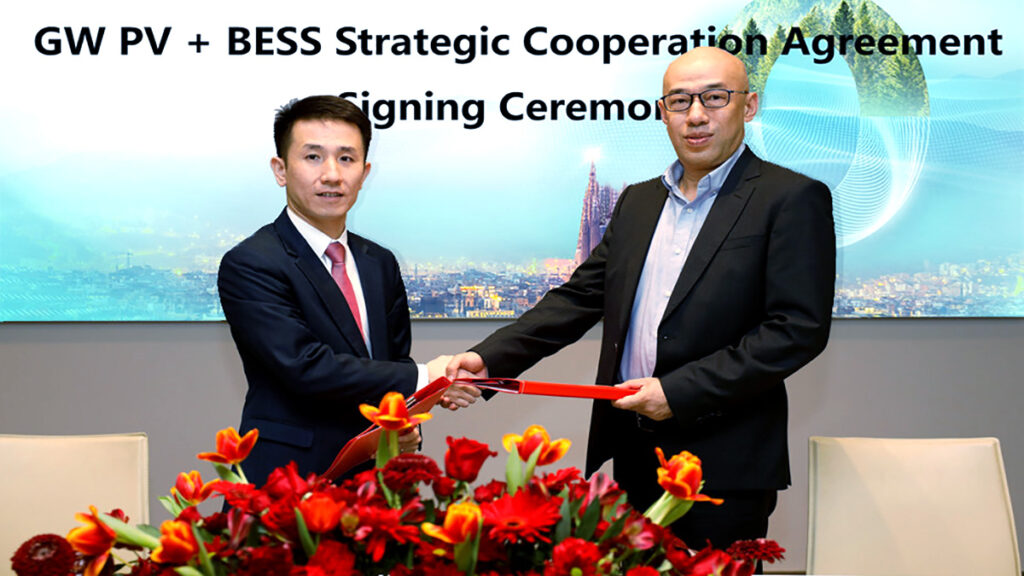
How dedicated is the firm? A sprawling solar initiative was unveiled in 2022, blending Huawei’s digital prowess with green energy ambitions.
Partnering with Meinergy, Huawei is deploying a 1-gigawatt photovoltaic plant and 500-megawatt-hour battery storage system — enough to power 200,000 homes in Ghana.
Huawei’s reach even extends to the clergy.
In a pact signed with the Ghana Catholic Bishops’ Conference, the firm will solarize over 4,000 church institutions, from rural chapels to urban schools, financed by $16 million from Letshego, a financial institution.
The Chinese firm has also extended its reach to government and policing.
By 2021, Ghana’s Ministry of National Security had rolled out a Huawei-backed video surveillance network, complete with “intelligent video analysis” for real-time tracking across Accra and Kumasi.
Echoes Across the Continent
Ghana is no outlier. Huawei’s reach spreads across the African continent. In Nigeria, Africa’s most populous nation, Huawei turbocharged CloudExchange into a leading internet service provider, handling data flows for millions in Lagos’ megacity sprawl.
South Africa’s Ekurhuleni, a bustling Gauteng hub, leans on Huawei for city-wide networks, cloud centers, and e-government apps that process everything from pothole reports to tax filings.
There, President Cyril Ramaphosa cut the ribbon on Huawei’s Innovation Center in 2023, a Pretoria beacon for AI and 5G research.
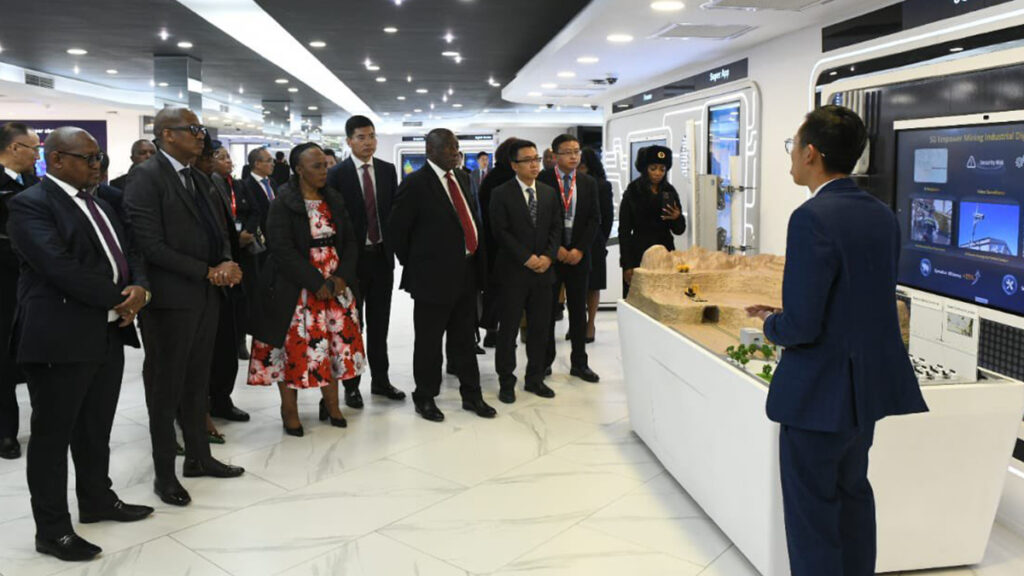
Further south, Huawei’s 5G DigiSchool in Johannesburg’s townships beams lessons to under-resourced kids via Rain’s network, training over 10,000 since 2020.
In Algeria, Huawei’s North African factory assembles handsets for export, employing hundreds in a win for localization.
Namibia’s telecoms sit on Huawei’s CDMA backbone, while Kenya’s nomadic Maasai in Isiolo County tap solar-powered mini-towers for voice and data.
And in Morocco, Huawei’s May 2024 Digital Africa Summit rallied 500 leaders around “accelerating intelligence” — code for AI-infused growth.
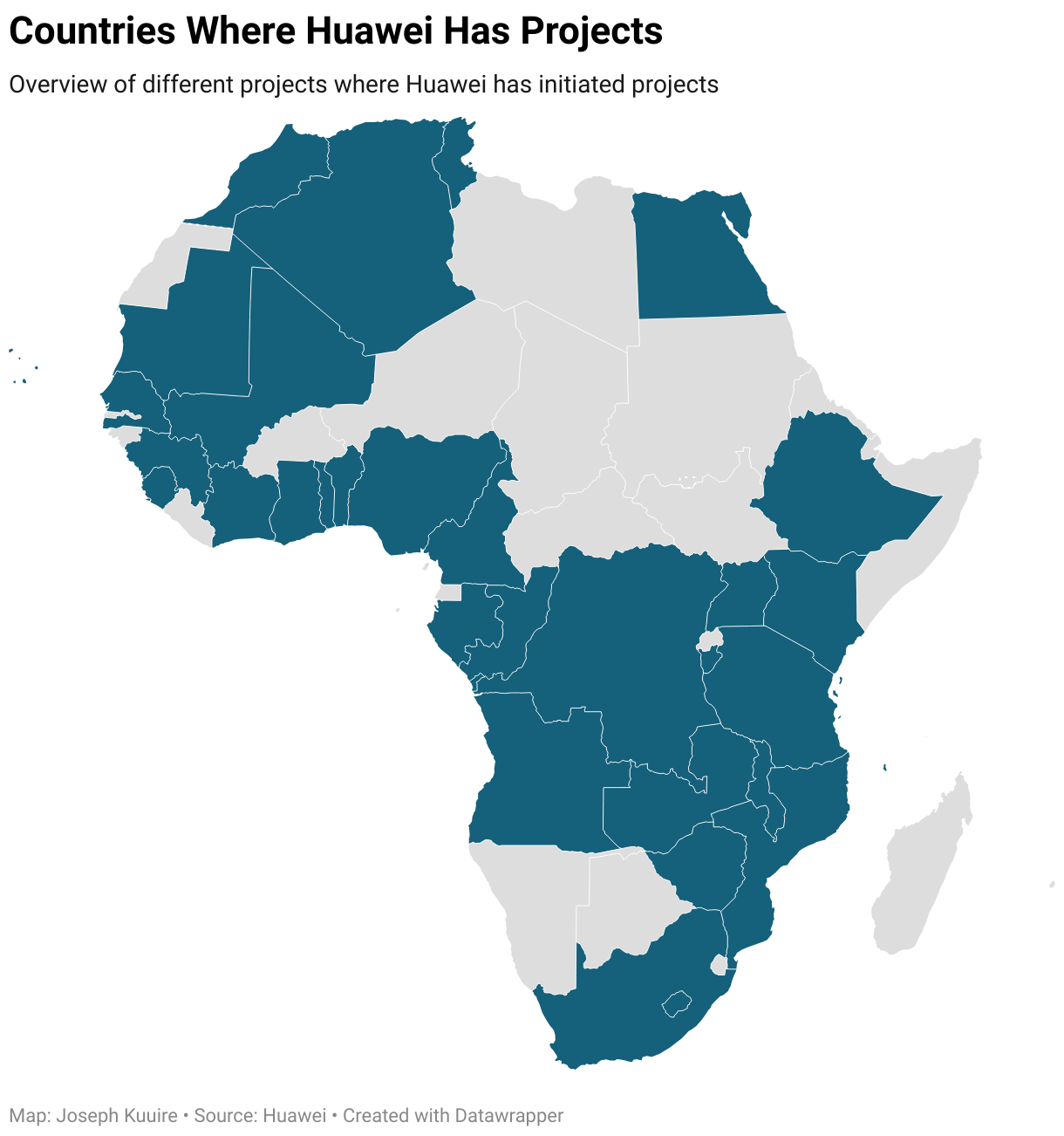
With 70% of Africa’s undersea cables now Huawei-laid and 50 countries running on its gear, the firm claims to have connected 300 million Africans.
Controversies with Huawei
In recent years, Huawei has come under scrutiny.
The firm’s African journey has been shadowed by scandals that paint it as Beijing’s “digital Trojan horse”.
In 2020, a report alleged Huawei rigged the African Union’s Addis Ababa headquarters — a $200 million Chinese gift — with backdoors that siphoned five years of sensitive data to Shanghai servers.
Huawei denied the allegations.
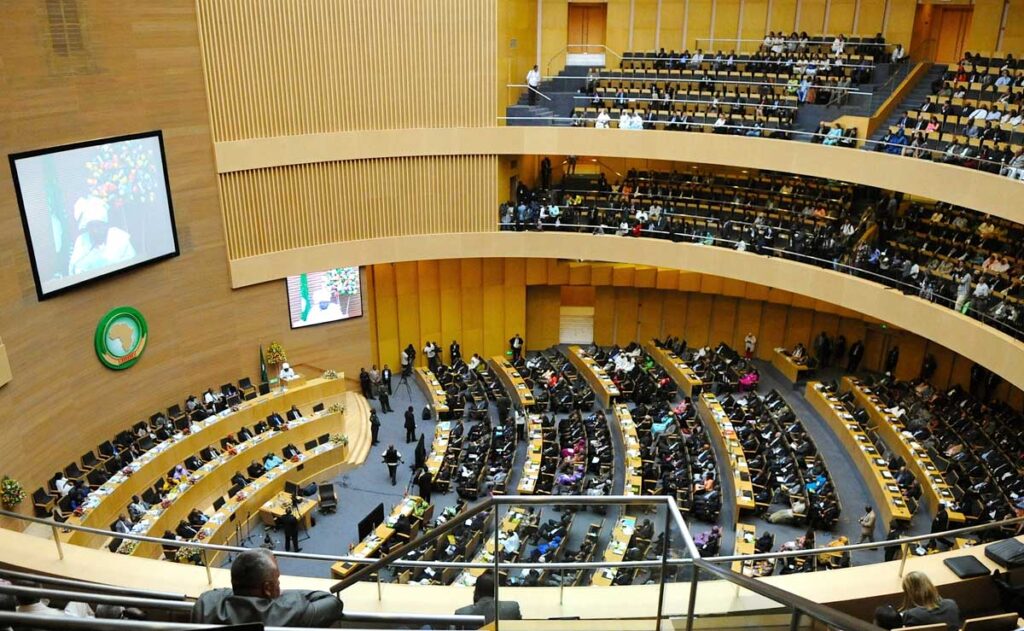
Wall Street Journal investigations revealed Huawei engineers embedded surveillance tools in telecom networks, enabling governments to track opposition figures’ calls and locations — tools later used to harass dissidents.
In Uganda, Huawei’s “Safe City” system, sold as a crime-fighter, morphed into a tool of suppression, with facial recognition nabbing protesters, including the popular activist Bobi Wine.
The U.S. placed a ban on Huawei, labeling Huawei a national security threat over alleged military ties and intellectual property theft. Washington has blacklisted the firm, withholding chips and Android access.
South Africa and Brazil, however, rebuffed U.S. pleas for 5G bans in 2022, prioritizing economic pragmatism over securitization.
In Ghana, the surveillance net raised issues as well.
Human Rights Watch flagged Huawei’s national security cameras as potential tools for quashing dissent, especially amid 2024 election tensions.
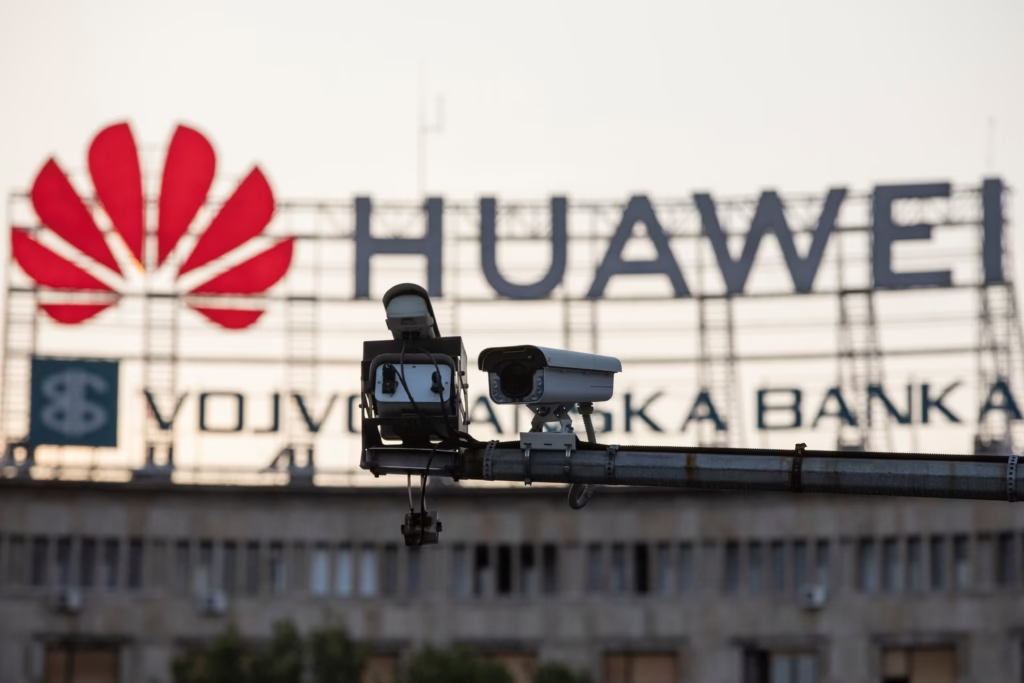
Huawei was also involved in the controversial Accra Intelligent Traffic Management System (AITMS) project.
The $100 million project traffic-control centre was supposed to coordinate all the “intelligent” traffic lights so they could dynamically respond to traffic flow.
First awarded to Beijing Everyway Traffic & Lighting Technology Co, the project was controversially re-awarded to Huawei Technologies (another Chinese firm) and China National Technical Import & Export Corporation (CNTIC).
Beijing Everyway Traffic & Lighting Technology Co. sued Ghana for early termination of the contract.
Huawei on Solid Ground
Despite concerns, Huawei continues to make progress and business in Ghana.
Earlier in November, the firm signed a Memorandum of Understanding (MoU) with the Telecel Group to advance network modernisation and digital transformation in Ghana.
The MoU “establishes a framework for cooperation on the Telecel Ghana Rollout Project, a multi-phase initiative valued at approximately $70 million.”
Despite its past controversies, Huawei appears to have goodwill in the majority of the African countries in which it operates.
For communities benefiting from its RuralStar sites in Ghana to telecom operators relying on its infrastructure, Huawei has built a strong foothold on the continent.
Despite the urges from the US and Europe on the dangers of China’s influence, it will be hard to break Huawei’s grip on the continent.