ACCRA, Ghana — Somewhere on a sun-scorched tarmac, dozens of high-capacity Scania buses sit in silent rows.
These buses were intended to be part of a mobility revolution in Accra, a city where a five-mile commute can easily swallow two hours of a worker’s day.
Instead, they have become expensive monuments to a “Bus Rapid Transit” system that is currently neither rapid nor truly a system.
Ghana’s flagship transit project, popularly known as Aayalolo—a Ga word meaning “still moving on”—is, ironically, stuck.
Officially launched with fanfare in 2016 by the first John Mahama administration, the system was designed to move 12,000 passengers per hour across the capital. Today, fewer than half of the original 245-bus fleet is operational.
Most have been relegated to a “Quality Bus System” (QBS), a bureaucratic euphemism for buses that lack dedicated lanes and must fight for space in the same crawl as the city’s ubiquitous “trotro” vehicles.
Miles from the city of Accra, Senegal appears to have learnt lessons from the mistakes of Ghana’s rollout of its BRT, when its own system, which appears to be thriving and expanding.
So why did Senegal’s BRT system flourish while Ghana’s failed to be successful?
Setbacks
While Senegal’s electric BRT went from groundbreaking to operation in roughly four years (2020–2024), Ghana’s journey was a nearly decade-long saga of missed deadlines and shifting goals.
Ghana’s rollout for its system took an estimated 9 years from planning to official operations. But even when it took over, it was a “lite” version of the original plan.
In 2007, the World Bank approved the Ghana Urban Transport Project (GUTP), providing the initial funding and framework for a BRT system.
Early construction was scheduled to begin in 2008, but the project was immediately met with fierce resistance from trotro unions who feared the high-capacity buses would end their livelihoods.
The project was originally scheduled for completion in 2012. However, by late 2012, the World Bank rated the progress as “moderately unsatisfactory,” noting that less than 40% of the funds had been utilized.
Further postponements occurred due to “bottlenecks” in road construction and the failure to secure dedicated lanes through densely populated areas like Kaneshie. Reports say city officials could not clear the necessary right-of-way without massive social and financial costs.
The project was officially commissioned and launched by President Mahama in November 2016, almost four years behind schedule.
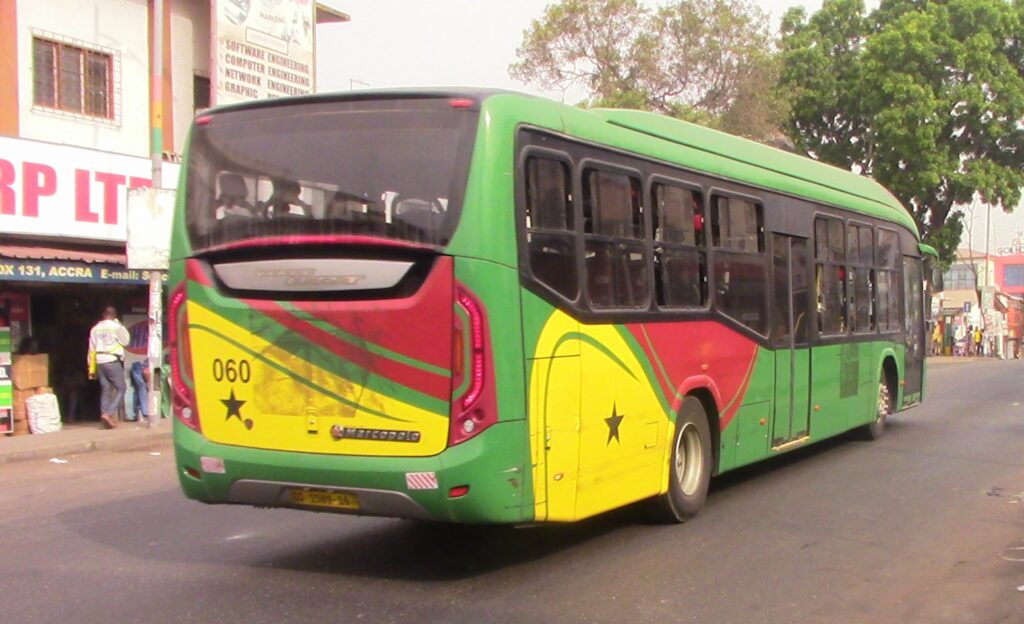
The project was shuffled between the Ministry of Roads and Highways, the Ministry of Local Government, and the newly formed GAPTE, leading to “bureaucratic paralysis.”
The dedicated lanes for the BRT buses were never fully completed, forcing buses to merge into regular traffic, essentially becoming just very large, very expensive standard buses.
Investigative reports into the Ghana project revealed a critical flaw: $61 million was spent on 245 high-end Scania buses before the dedicated lanes were even ready.
The Data of a Deadlock
The failure of Accra’s BRT is rooted in a fundamental disconnect between planning and execution.
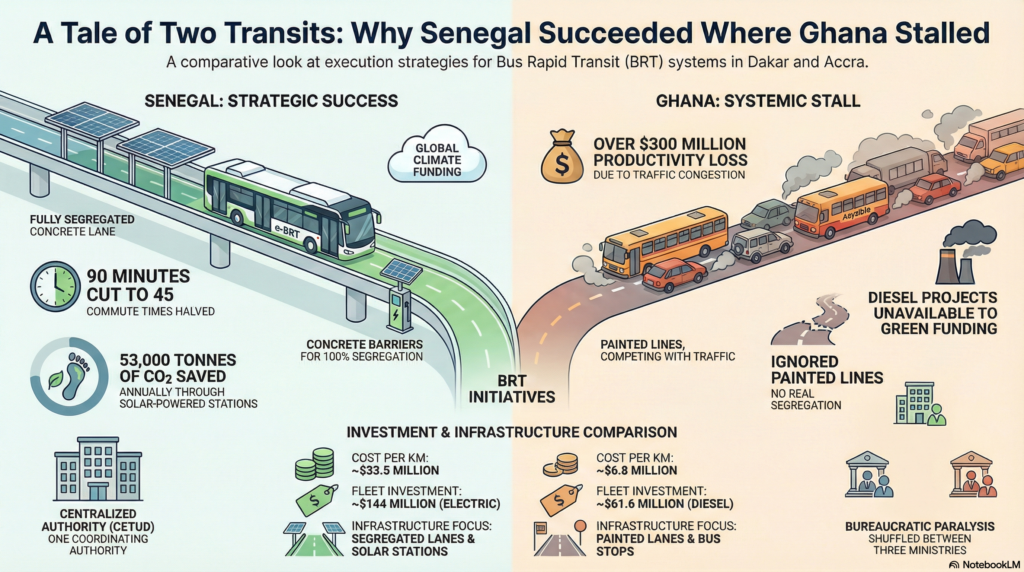
According to World Bank data, nearly 70% of Accra’s road network is severely congested, yet the city has struggled to enforce even a single kilometer of truly exclusive bus lanes.
The economic cost is staggering. Research from the Copenhagen Consensus Center suggests that traffic congestion in Accra creates a present-value loss of over $300 million in productivity.
For the average commuter in Accra, transportation costs can devour up to 16% of their monthly income, often for a service that remains unpredictable.
The Senegal Standard: Dakar’s Green Leap
While Ghana’s buses system has stagnated, Senegal has provided a masterclass in modern urbanism.
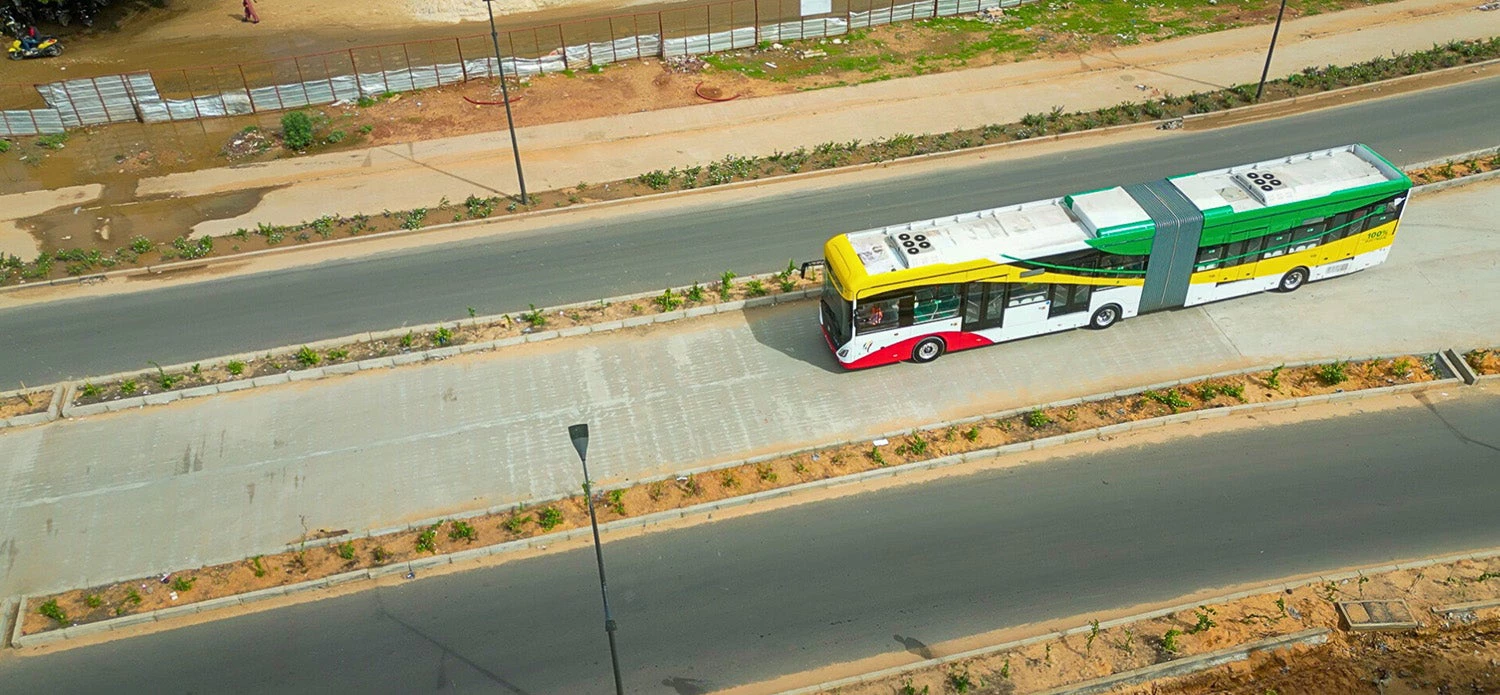
In early 2024, Dakar inaugurated Africa’s first fully electric BRT corridor.
Unlike Accra’s piecemeal approach, Dakar’s 18.3-kilometer route is entirely segregated from regular traffic, featuring 23 solar-powered stations and a fleet of 121 articulated electric buses.
| Financial Metric | Ghana (Aayalolo BRT) | Senegal (Dakar e-BRT) |
| Total Project Cost | ~$151 Million | ~$614 Million |
| Cost Per Kilometer | ~$6.8 Million / km | ~$33.5 Million / km |
| Primary Funding | World Bank, AFD, Govt. of Ghana | World Bank, EIB, Meridiam (PPP) |
| Fleet Investment | ~$61.6 Million (Diesel) | ~$144 Million (Electric) |
| Infrastructure Focus | Painted lanes & bus stops | Segregated lanes, solar stations, depot |
It’s reported that the e-BRT has slashed the commute from the northern suburbs of Guédiawaye to the city center from 90 minutes to just 45.
By switching to EV buses, Senegal was able to tap into global climate financing that diesel projects simply cannot access. The project is projected to mitigate 53,000 tonnes of CO2 annually.
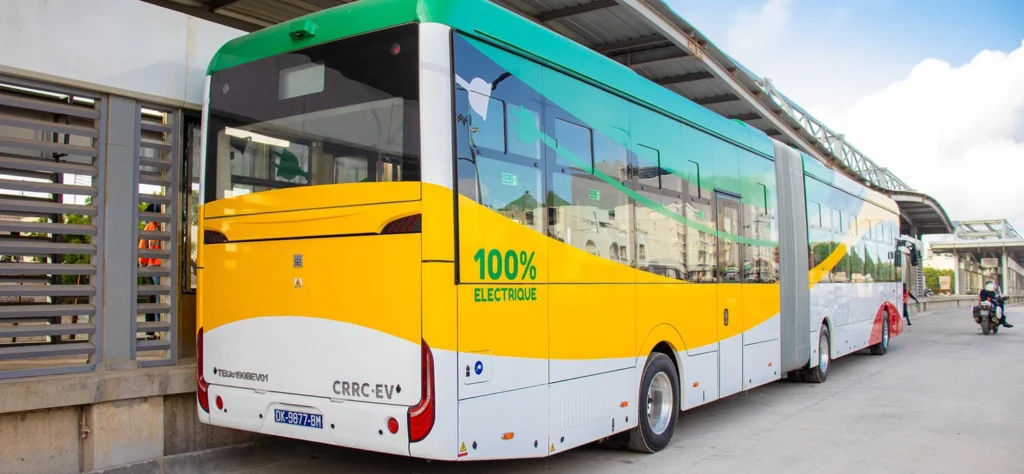
Planners in Senegal were able to physically separate their BRT lanes using concrete barriers. In Accra, “dedicated” lanes were often just painted lines that private cars ignored, rendering the buses useless during peak hours.
Dakar’s BRT project was also managed by CETUD, a single authority with the power to coordinate land use, resettlements, and private operators. This helped to mitigate the problem of overlapping institutions and responsibilities, which plagued Accra’s system.
Going in Opposite Directions
In Dakar, the new BRT has made 180,000 additional jobs accessible to low-income residents who previously could not afford the “time tax” of commuting.
In Accra, the opposite is happening: the failure of the BRT has forced residents back into trotros, which, while culturally iconic, contribute to the city’s mounting air quality crisis.
For Ghana to revive its transit dreams, it may need to look West—not for new buses, but for the political will to clear the road.