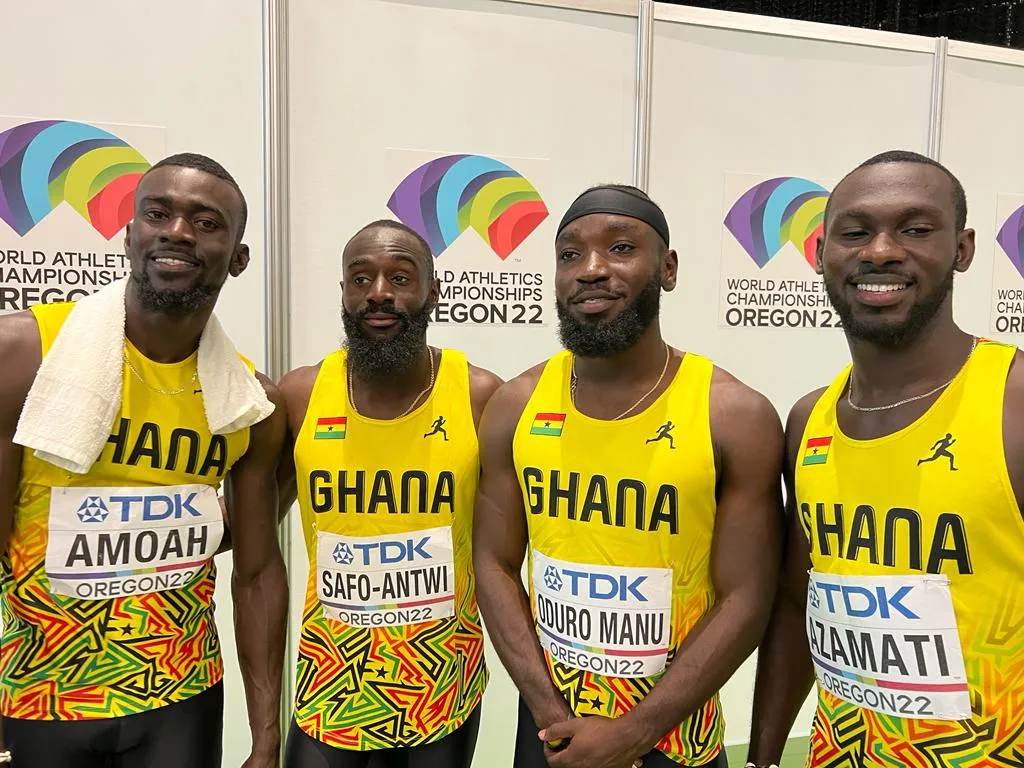
Story Highlights
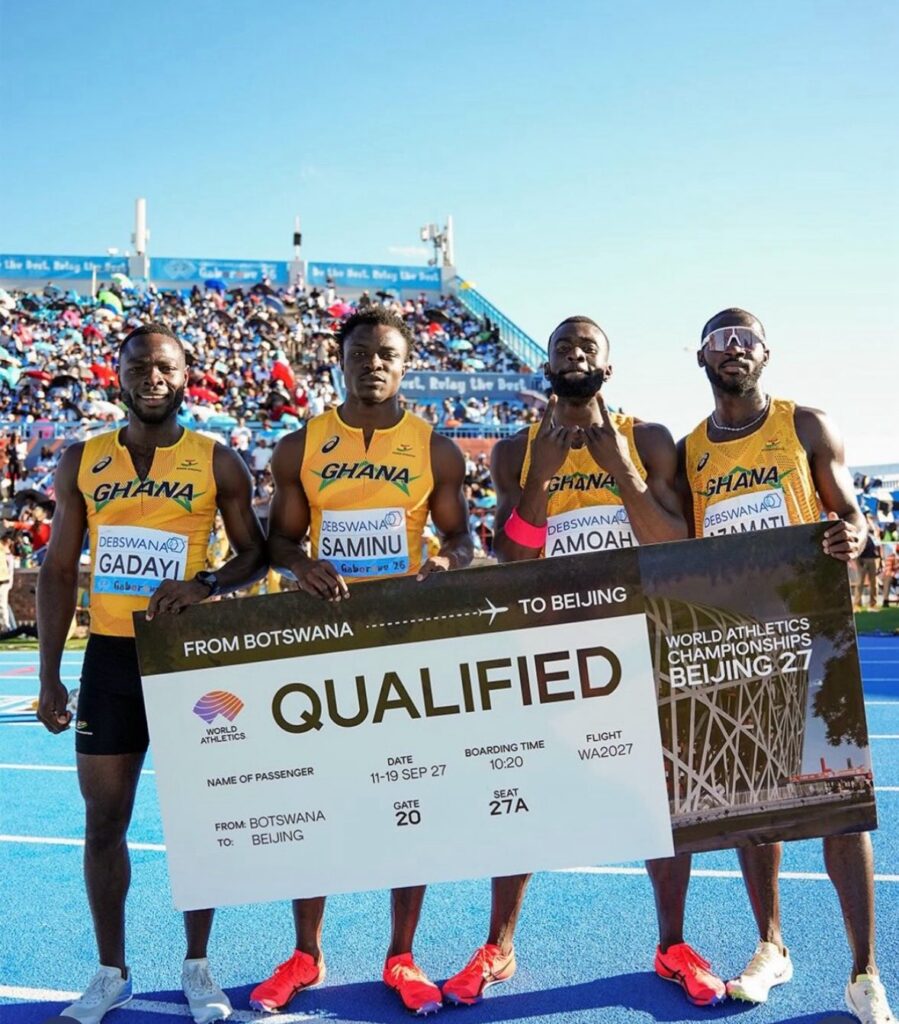
- Ghana’s 4×100 relay team qualified for the 2027 Beijing World Championships, but the lead-up was marred by controversy after sprinter Abdul-Rasheed Saminu publicly called out the Ministry of Sports over grueling travel arrangements
- Ghana is set to host the 2026 African Senior Athletics Championships in Accra (May 12–17), yet the event’s own president admitted funding approvals were dangerously slow, with authorization still pending just three weeks out.
- Football’s dominance continues to drain resources from other sports. Ghana has never won an Olympic medal in athletics, and recurring issues — unpaid allowances, governance disputes, poor facilities, and government interference
ACCRA, Ghana — Over the weekend, Ghana’s 4×100 relay team secured qualification for the Beijing Championships in 2027. But behind the scenes, the lead-up to the win had not been without controversy.
On social media, sprinters lamented about poor preparation due to inadequate resources and logistics from Ghanaian officials.
“The Ministry of Sports in Ghana needs to better, don’t set us for failure. If it was “Black Stars” flights, tickets will be ready month prior to their game. 14hrs flight 16hrs lay over is not acceptable for professional athletes. We running with jet lag, no proper recovery,” posted Abdul Rasheed Sameenu, one of the athletes at the games, on X about poor logistics for athletes.
The post ignited a debate on how athletes, specifically in athletics, have not been given fair treatment compared to other sports like football.
Ghana is preparing to host the 2026 African Senior Athletics Championships in Accra from May 12 to May 17.
Its athletes, coaches, and administrators confront a familiar question: Why does a country with such evident talent fail to adequately support its athletes?
Roots in the Gold Coast Era
The story of Ghanaian athletics traces back to the colonial period. The Gold Coast Amateur Athletics Association was founded in 1944, and the nation made its Olympic debut in 1952 in Helsinki as the first sub-Saharan African country to compete independently.
Early stars like Michael Ahey lit up the Commonwealth Games, winning gold in the 1962 sprints and contributing to memorable relay performances.
In the 1970s, Alice Anum dominated African sprints and long jump, winning multiple All-Africa Games golds and Commonwealth medals.
These pioneers laid a foundation built on school and college competitions, a system that still feeds much of today’s talent.
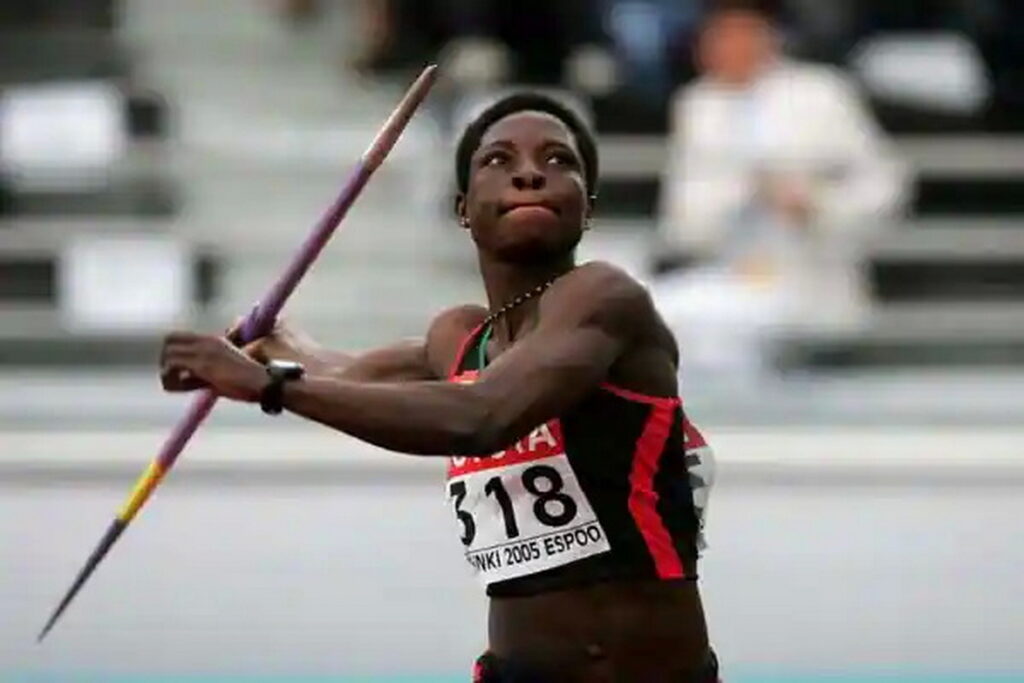
Margaret Simpson emerged as Ghana’s most decorated female athlete, winning heptathlon bronze at the 2005 World Championships in Helsinki — one of only two World Championship medals in the nation’s history (alongside Ignisious Gaisah’s long jump silver the same year).
Simpson secured multiple African titles and All-Africa Games golds, embodying technical excellence in a grueling seven-event discipline.
More recently, high jumper Rose Amoanimaa Yeboah has carried the flag. In 2025, she became the first Ghanaian woman in 20 years to reach a World Championships high jump final, clearing 1.92 meters and finishing emotionally in the top tier of global competition.
She has also claimed African titles, including gold in Douala in 2024.
The men’s 4×100-meter relay team has delivered the most consistent recent excitement.
In Tokyo 2025, they set a national record of 37.79 seconds to reach the final — a historic achievement powered by athletes like Benjamin Azamati, Abdul-Rasheed Saminu (national 100m record holder at 9.84 seconds), Joseph Paul Amoah, and others largely developed through the school system.
They have won African golds, beaten regional rivals like Nigeria, and secured multiple World Championship qualifications.
Yet these moments of brilliance contrast sharply with broader underachievement. Ghana has never won an Olympic medal in athletics. Its five total Olympic medals have come in boxing and football.
Funding, Logistics, and Governance
Behind the performances lies a litany of frustrations familiar to many African sports federations but particularly acute in Ghana, where football dominates resources and attention.
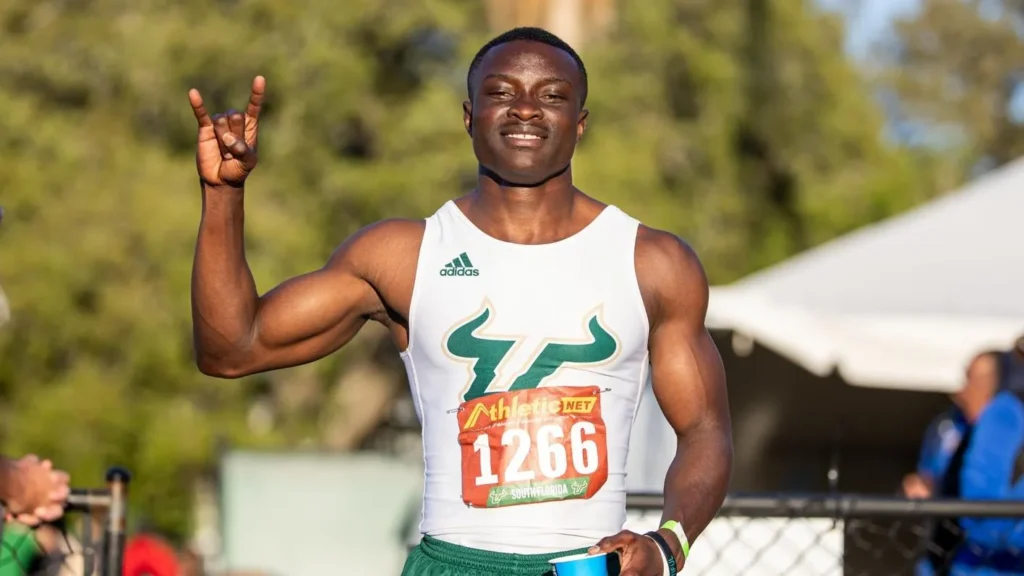
As noted earlier, sprinter Abdul-Rasheed Saminu publicly criticized the travel arrangements for the recent World Athletics Relays in Botswana.
He stated that athletes endured long flights with extended layovers, arriving with insufficient recovery time and competing while jet-lagged.
The Ghana Athletics Association (GAA, now often styled as Ghana Athletics) acknowledged the lapses, citing funding shortages, and issued apologies.
The team still qualified for the 2027 World Championships via repechage, but the episode highlighted deeper issues.
Unpaid allowances, delayed preparations, and substandard facilities are recurring complaints.
Past controversies include the 2016-2022 case of 800m runner Martha Bissah, who accused officials of extortion over a U.S. scholarship and faced a lengthy suspension for “indiscipline” before it was lifted.
Before the athletic competitions in Paris in 2024, athletes lamented about the issue of delayed payments.
“This issue is becoming prevalent. We were paid per diem during the African Games last June, but we haven’t received any allowances for competing in the AAC [African Athletics Championships]”, noted some athletes who spoke on anonymity to JoyOnline.
Election disputes, government interference, and administrative infighting have periodically paralyzed the federation.
In 2018, former GAA President George Lutterodt initiated legal action against the Ghana Athletics leadership, alleging that executives were manipulating the electoral process to favor specific candidates.
This led to an Accra High Court injunction stopping the 2018 elective congress in Tamale, which was scheduled to be held after the tenure of the current executives had expired.
Facilities remain a bottleneck. Even the tartan track at the University of Ghana Stadium, used for major events, has drawn complaints about maintenance. Many top athletes train abroad or rely on personal sponsors, underscoring the lack of a robust domestic development pathway.
Still, the perception of inadequate support can fuel cynicism.
A journalist from Sporty FM, who remarked that labeling non-football sports as “sunk costs”, provoked backlash from athletes who point to their continental medals delivered on shoestring budgets.
A Nation on the Cusp?
Bawah Fuseini, elected president of Ghana Athletics in 2023, has overseen a rebranding and preparations for hosting the 2026 African Championships. Officials promise better planning and investment ahead of the event.
But that competition might be having funding issues. In an interview with JoySports, Fuseini complained about the “slowness” of the process of funding.
“We have about three weeks to the competition and the authorisation hasn’t been done. It is the first time in my years as Athletics President that I am worried because of how slowly things are moving,” he said in the interview.
Ghana’s talent pipeline remains strong. School competitions continue to unearth fast-twitch athletes who could one day become star athletes.
With better coaching, nutrition, sports science, and — crucially — consistent funding, the relay team’s near-misses could become podium threats.
Rose Yeboah’s emotional reflections after her 2025 World final appearance captured the stakes: “I needed this.”
For a new generation, that need is both personal validation and a national call for change.
This article was edited with AI and reviewed by human editors