ACCRA, GHANA – As Ghana’s largest political party in opposition, the National Patriotic Party (NPP), geared up to elect its flagbearer for the 2028 general elections, the public discourse on who would be given the mandate was in full force.
Political pundits on radio and television opined about who they thought the NPP delegates would elect to lead them three years from now.
While others were looking at raw data, facts, and figures to determine who would be NPP’s contender, others looked elsewhere for guidance: the spiritual realm.
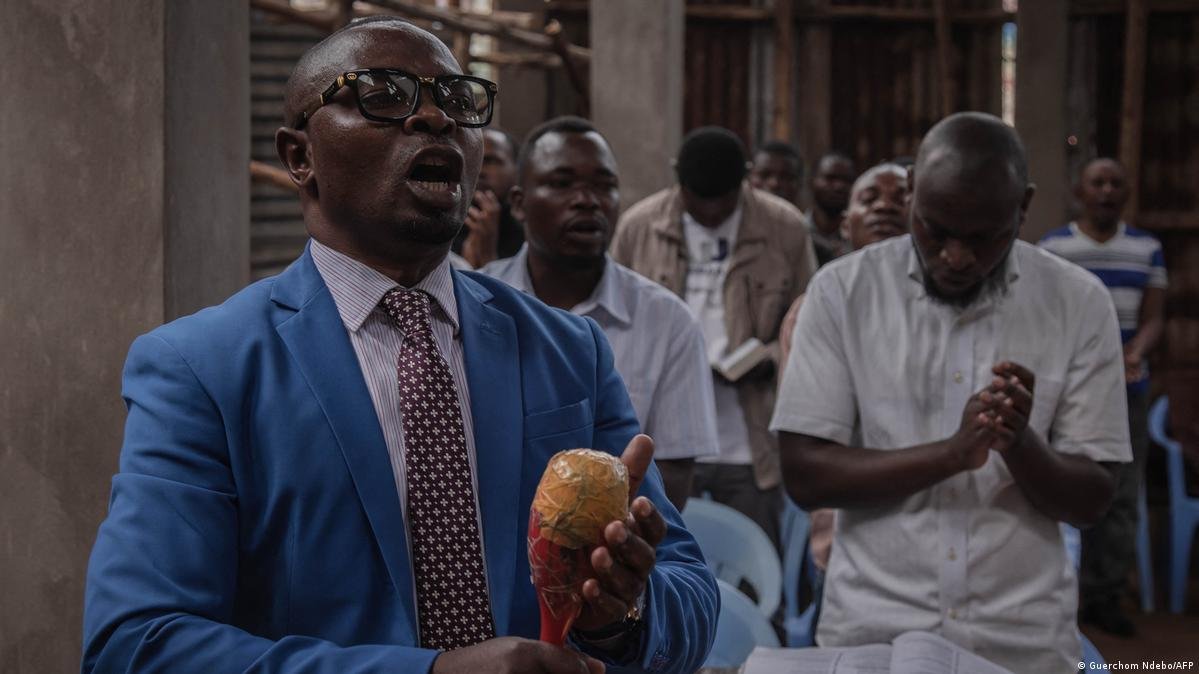
The country is no stranger to giving religious figures the spotlight to give their takes on what the future holds. These persons, popularly known as “prophets”, deliver prophesies or future predictions on what’s to come.
For the NPP’s flagbearer race, the prophets already had their winner.
One particular figure who made headlines was Prophet Bernard ElBernard Nelson-Eshun, founder of Spiritlife Revival Ministries.
The religious leader boldly proclaimed that former Member of Parliament, Kennedy Ohene Agyapong, would emerge victorious as the party’s flagbearer.
On January 31st, after polls closed, Mr. Nelson-Eshun’s “prophecy” had missed the mark.
Instead of Mr. Agyapong making his victory speech, it was former Vice President Mahamudu Bawumia taking his victory lap.
Surprisingly, Mr. Nelson-Eshun issued a rare public apology on his Facebook page for his missed prediction.
“That word did not come to pass. I missed it. I was wrong,” he wrote. “I am deeply sorry, and I ask for your forgiveness.”
He announced a temporary withdrawal from public ministry, acknowledging the emotional and spiritual toll on believers.
Mr. Nelson-Eshun is one of the handful of prophets who publicly make decries in public about the future.
In Ghana, prophets often get their predictions wrong, but their followers are still keen on hearing what these men of God have to say about the future.
Religious Prediction Makers
In Ghana, the practice of prophecising has become second nature. Religious leaders from different churches habitually make predictions of what’s to come at the end of the year.
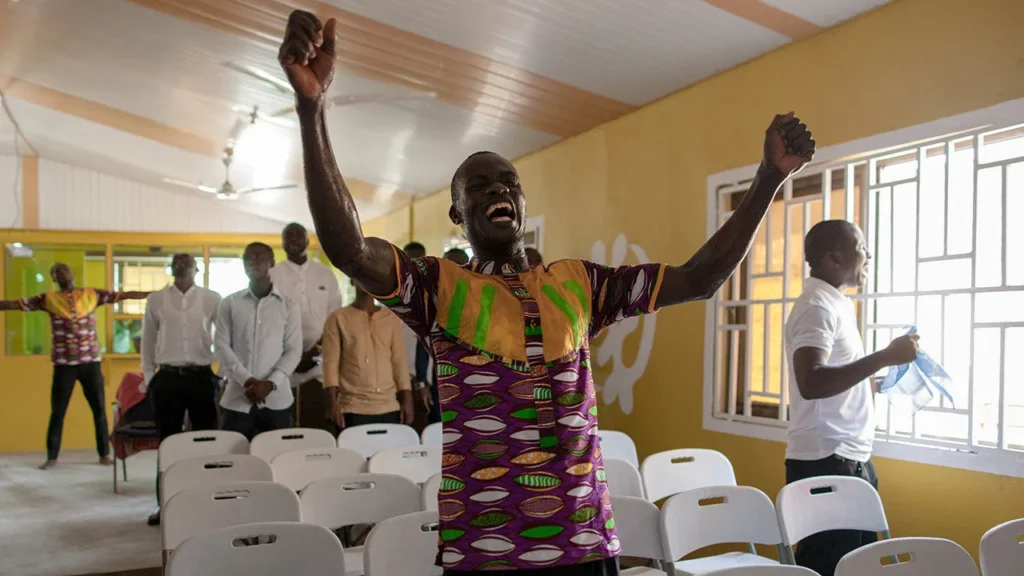
But a string of high-profile failures over the past year has ignited a national reckoning, prompting apologies from prominent pastors, arrests by authorities, and a new government mechanism to curb what officials call “doomsday prophecies” that sow public panic.
While some pastors would say they accurately foresaw the opposition National Democratic Congress (NDC) victory under John Mahama in 2024, many others who backed the NPP faced ridicule when results proved otherwise.
Prophet Nigel Gaisie, known for his pro-NDC leanings, had claimed divine revelations favoring Mahama for nine years, but his recent predictions drew fresh skepticism.
Gaisie has openly admitted that his prophecies are “not 100% accurate,” drawing parallels to biblical figures whose words sometimes fell short.
In 2024, Mr. Gaisie predicted that US Vice President Kamala Harris would win the 2024 U.S. presidential election. He was proven wrong after Donald Trump came out victorious.
He later backtracked, saying his prediction was about a woman leading the world and it was not focused on Kamala Harris.
Doomsday predictions have drawn even sharper criticism.
Last December, self-styled prophet Ebo Noah (also known as Ebo Enoch) warned of a global flood on Christmas Day 2025, urging followers to build or board one of his eight “arks” in Ghana.
Panic ensued: A Liberian man traveled to Elmina seeking refuge, while others sold possessions to secure spots.
When the day passed uneventfully, Noah claimed his prayers had “postponed” the apocalypse. He was arrested for spreading fear, though earlier detentions had ended without charges due to religious freedoms.
Pattern of False Predictions
These incidents are not isolated.
Academic research highlights a pattern in Ghanaian “new prophetism,” rooted in Pentecostal traditions and influenced by African spirituality.
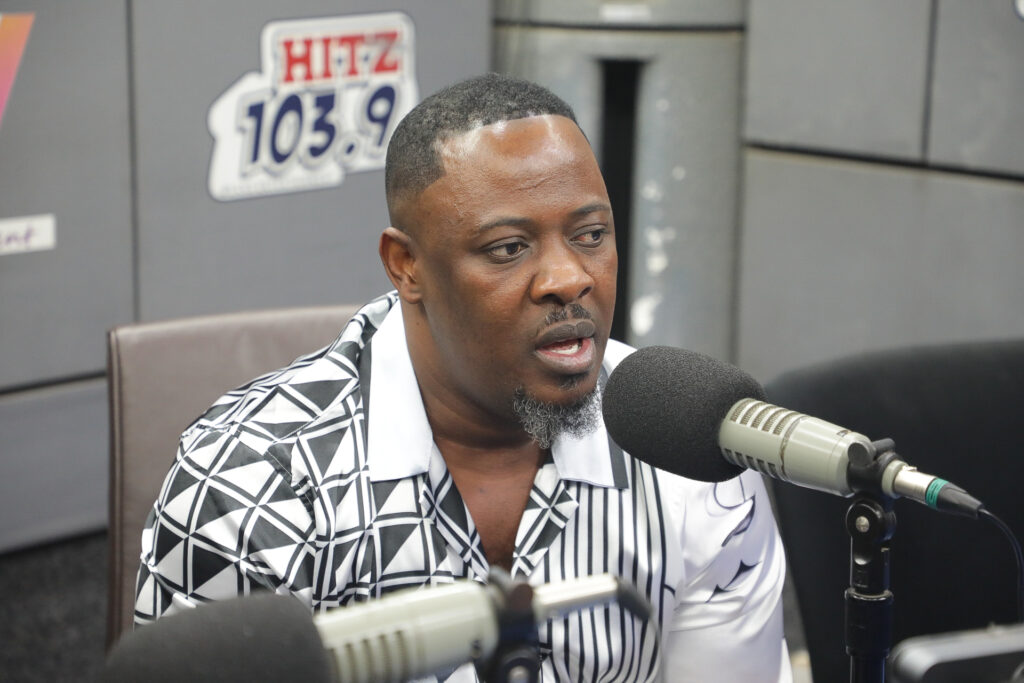
Studies from the University of Education, Winneba, and others note that prophecies often employ ambiguous language, assertives, and directives to influence behavior, but lack rigorous verification.
A review of election prophecies across Africa, including Ghana, found many lacking integrity, impacting voter behavior and governance without accountability.
The government recently responded with a new reporting system for unverified prophecies, especially those spread online.
Following a tragic helicopter crash in 2025, pastors exploited social media for “visions,” prompting the crackdown.
The Labari Journal reviewed a sample of past predictions to determine their accuracy.
Of 15 examples compiled from reports (2013–2025), only 4 were accurate (27%), while 11 were inaccurate (73%).
This aligns with qualitative studies that note vagueness and a lack of accountability in Ghanaian prophecies.
| Year | Prophet | Prophecy Summary | Actual Outcome | Accurate |
|---|---|---|---|---|
| 2013 | Isaac Owusu Bempah | Predicted that President John Mahama would die in 2013. | Mahama did not die; he served until 2017 and was re-elected in 2024. | No |
| 2018 | Isaac Owusu Bempah | Ghana would bury a first lady in 2018. | No first lady died or was buried in 2018. | No |
| 2018 | Isaac Owusu Bempah | A sudden death would occur at the presidency. | No such death occurred. | No |
| 2019 | Emmanuel Badu Kobi | Black Stars would not win the 2019 Africa Cup of Nations (AFCON). | Ghana did not win; eliminated in round of 16. | Yes |
| 2019 | Emmanuel Badu Kobi | Brazil would win the 2019 Copa America. | Brazil won the tournament. | Yes |
| 2019 | Emmanuel Badu Kobi | England would win the UEFA Euro Championship (held in 2020 due to delay). | Italy won Euro 2020. | No |
| 2020 | TB Joshua (influential in Ghana) | COVID-19 would end by March 27, 2020. | Pandemic continued globally beyond 2020. | No |
| 2020 | Multiple prophets | NPP (Akufo-Addo) would win the 2020 elections. | Akufo-Addo won re-election. | Yes |
| 2024 | Nigel Gaisie | Kamala Harris would win the 2024 U.S. presidential election (as a woman president). | Donald Trump won. | No |
| 2024 | Multiple prophets (e.g., Victor Kusi Boateng, Eric Boahen Uche) | NPP (Bawumia) would win the 2024 Ghanaian elections. | NDC (Mahama) won decisively. | No |
| 2024 | Bernard ElBernard Nelson-Eshun & others | NDC (Mahama) would win the 2024 elections. | Mahama won. | Yes |
| 2025 | Nigel Gaisie | Morocco would win the 2025 AFCON. | AFCON 2025 winner was Senegal | No |
| 2025 | Isaac Owusu Bempah | Mass blindness outbreak in Ghana. | No such outbreak occurred. | No |
| 2025 | Nigel Gaisie | Death of a West African vice president and beheading of a traditional leader. | No such events reported. | No |
| 2025 | Ebo Noah (Evans Eshun) | World would end with a flood on December 25, 2025. | No apocalypse occurred. | No |
Will The Trend Continue
Yet, in a nation where religion permeates politics and daily life, the allure of prophecy endures.
As one study notes, it’s not just about prediction—it’s about power, community, and hope in uncertain times.
The question now is whether regulation and reflection will temper its excesses, or if new voices will fill the void.
Religious leaders will likely continue to make their predictions as the end of 2026 approaches.
But at what point will Ghanaian congregants shy away from their prophets if they keep getting their predictions wrong?