
On Sunday, the National Communications Authority (NCA) signaled that its patience with subpar service has run out.
In a sweeping update to rules that have remained largely unchanged since 2004, the regulator issued a new set of “Quality of Service” standards that place significantly higher demands on mobile network operators (MNOs).
For the average consumer, these technical benchmarks translate into concrete changes in how your phone should work.
Here is a breakdown of what the new rules mean for your daily digital life.
Fewer “Hello? Hello?” Moments
The most frustrating part of mobile usage—the dropped call—is now under much tighter scrutiny.
The NCA has slashed the allowable “Call Drop Rate” from 3% down to less than 1%. This means your service provider is now legally expected to ensure that almost every call you start actually finishes without a technical glitch.

Furthermore, a new “Call Connection Success Rate” requires that more than 95% of your call attempts must connect successfully.
If you find yourself hitting “send” three times just to get a dial tone, your carrier may now be in violation of these standards.
A Floor for Data Speeds
In the era of 2004, 256 kbps might have felt sufficient. In 2026, it is unusable.
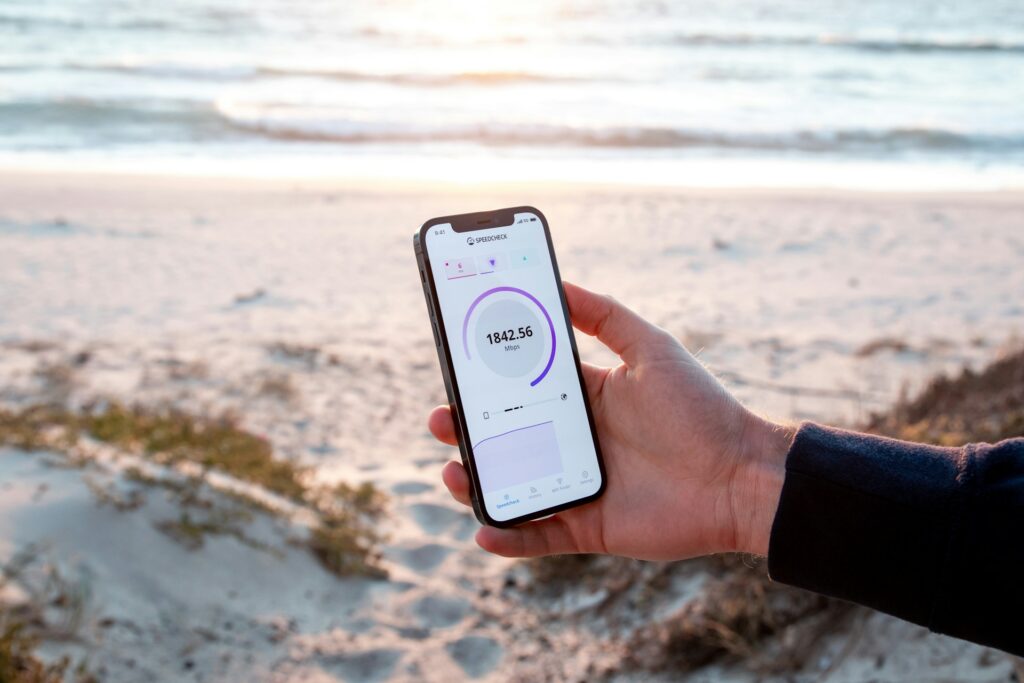
The NCA has officially retired that old threshold, mandating that 3G data download speeds must now average at least 1 Mbps.
While many modern 4G and 5G connections already exceed this, the new rule provides a “floor”—a guaranteed minimum speed that prevents operators from letting data quality slide into the “spinning wheel of death” territory.
Texting at the Speed of Conversation
While WhatsApp dominates, SMS and MMS remain critical for official alerts and banking. The new rules demand a 98% delivery success rate for messages.
More importantly, they must now arrive within five seconds. The days of receiving a “one-time password” (OTP) ten minutes after it has already expired should, in theory, become a thing of the past.
No Town Left Behind
Perhaps the most significant shift for rural and suburban residents is the “Expanded Coverage Obligation”.
Previously, operators were primarily obligated to cover district capitals; smaller constituent towns were a “nice-to-have” but not a requirement.
Under the new framework, coverage must extend to all towns within every Metropolitan, Municipal, and District Assembly (MMDA). This turns network expansion from a suggestion into a mandatory condition of an operator’s license.
Accountability in Your Pocket
The NCA isn’t just setting rules; it is inviting you to be the whistleblower. The regulator has intensified its field monitoring and warned that operators who fail these tests will face sanctions.
If your service isn’t meeting these new marks, the NCA has publicized direct channels for complaints:
- Toll-Free: 0800 30 30 30
- Email: complaints@nca.org.gh
This article was edited with AI and reviewed by human editors