


The eminent Kenyan-born Christian philosopher and writer, John Mbiti, famously stated that the ontology of Africans is embodied in the saying, ‘Africans are notoriously religious’.
Today, Mbiti’s statement remains emphatically true in relation to Ghana. Secularisation theory would have expected that, as the country modernised, religion’s public role would be marginalised.
But nothing could be further from the truth: Ghana’s very high level of religious affiliation – around 95% of Ghanaians profess to belong to one of the country’s three main religions (Christianity, Islam and ATRs) – goes hand in hand with the public prominence and influence of Christian leaders, including an influential theocratic movement led by Pentecostal-Charismatic ‘big men’.
The impact of this movement on Ghana’s formal politics is seen by some as a challenge to Ghana’s secular 1992 constitution, where no religion is favoured over others.
The 1992 constitution is rooted in secularity and pays homage to the symbolic and cultural power of religion. This is seen in the first line of the preamble to the constitution which states it is promulgated in the name of ‘Almighty God’.
Article 21 of Ghana’s constitution guarantees the ‘freedom to practice any religion and to manifest such practice’, while Article 56 makes it clear that ‘Parliament shall have no power to enact a law to establish or authorise the establishment of a body or movement with the right or power to impose on the people of Ghana a common programme or a set of objectives of a religious or political nature’.
The secular framework of the 1992 constitution has not stopped successive governments, including Christian and Muslim representatives in national decision-making.
Such religious figures are members of national bodies, including state commissions, committees, and national bodies, such as the National Peace Council and the National Media Commission.
The influence of prominent Christians in governance in Ghana has accelerated since Jerry John Rawlings’ two-term presidency ended in January 2001. From that time, prominent Christians have wielded much influence with successive presidents.
References to religion in the 1992 constitution and the involvement of religious individuals and entities in governance indicate that Ghana’s secularism, characterised by history and local conditions, is significantly impacted upon by religion’s public presence.
Ghana’s type of what might be called ‘religio-secularism’ cannot find a place in sociologist Jose Casanova’s social science-derived, three aspects of secularism: religion’s generally decreasing importance, its retreat or exclusion from the public sphere, and diminution of religious control in societal sub-spheres, including the economy, science, art, and politics.
Ghana is not experiencing ‘Casanova-style’ secularisation. Rather, it is undergoing what might be called ‘de-secularisation’. Whereas secularisation once appeared to be proceeding, now it has stopped and reversed, with a Pentecostal-Charismatic movement enjoying significant public and political significance.
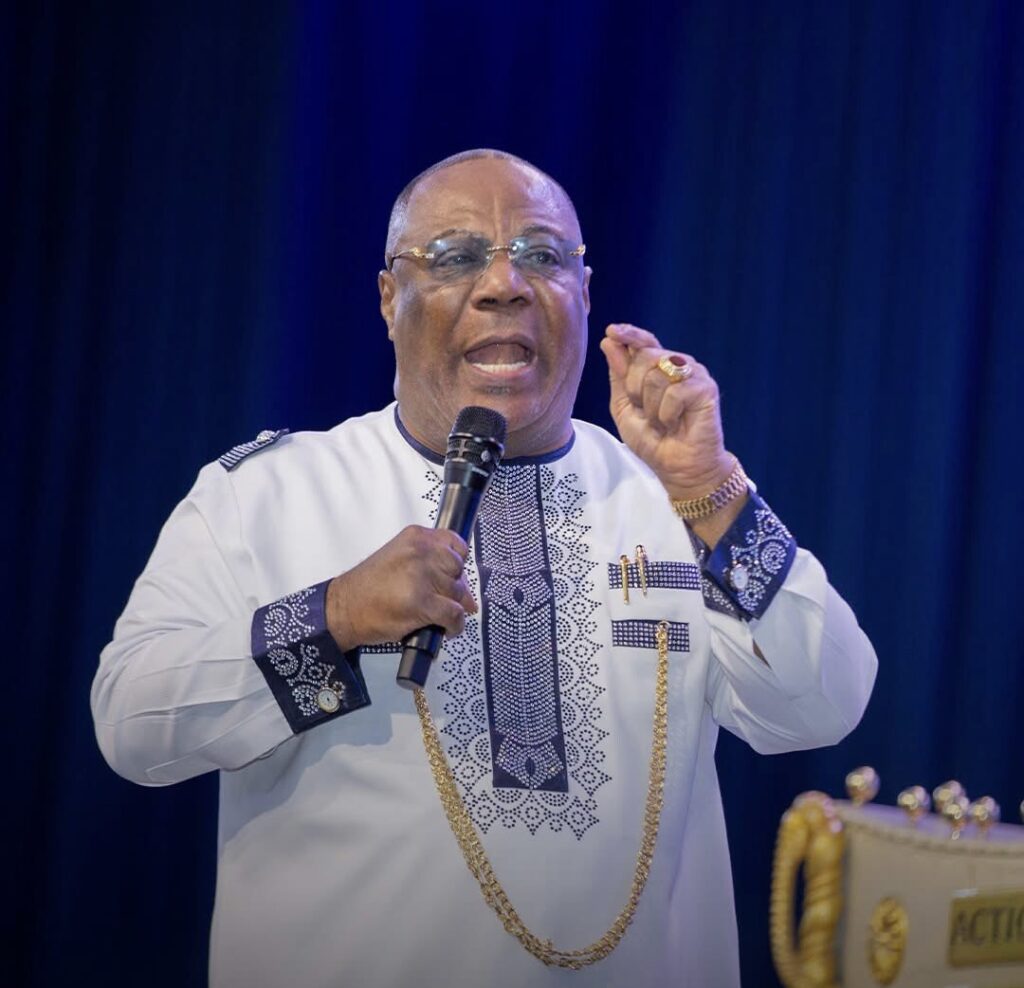
The movement is led by influential pastors, such as Archbishop Duncan-Williams, and includes prominent advocacy groups, including Ghana Pentecostal and Charismatic Council (GPCC) and Ghana Evangelism Committee (GEC).
The movement has become the dominant expression of Christianity, exerting significant influence on the country’s politics, governance, and national identity. Some observers even describe the nation as a ‘soft theocracy’ due to the strong presence of Pentecostal-Charismatic leaders in public discourse and the use of Christian symbolism in politics.
Their collective influence is focused on the politically powerful, including Ghana’s recent and current presidents.
The influence of prominent Christians in governance in Ghana has accelerated since Jerry John Rawlings’ two-term presidency ended in January 2001. From that time, prominent Christians have wielded much influence with successive presidents.
They do this via public expressions of their religious values, beliefs and norms and suggest that they should be more prominent in Ghana’s governance. Critics allege this threatens to undermine the principle and practice of separation of religion and state.
President John Dramani Mahama was elected president in a landslide in December 2024. He is a Christian, born a Presbyterian, who later became a member of the Assemblies of God Church following marriage in 1992 to his wife, Lordina.
Mahama fellowships with various clergy members and church leaders, notably the leader of the Assemblies of God, Rev. Stephen Wengam.
Archbishop Duncan-Williams is described as a ‘spiritual pillar’ and a source of wisdom for the President, and has publicly offered prayers and guidance for Mahama’s leadership and the nation’s prosperity.
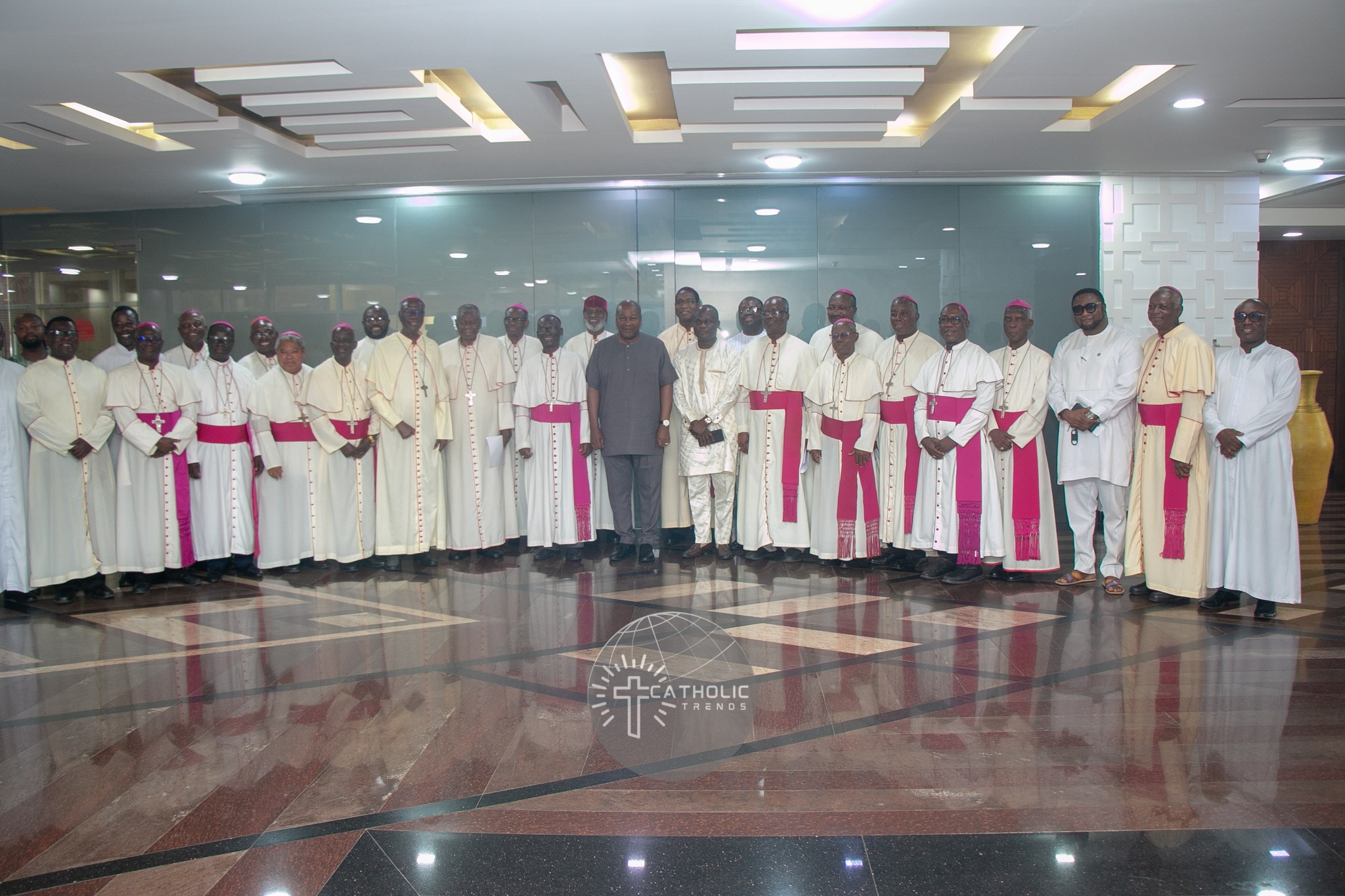
Ghana’s clergy, including Rev. Wengam, recently joined President Mahama for a special time of fellowship, offering thanks to God for a successful election. Acknowledging God’s grace and the nation’s peaceful transition, President Mahama expressed his appreciation to God.
In addition, President Mahama emphasised the importance of strengthening ties between his government and the church. He requested the church’s continuous support and prayers for his leadership, reaffirming his commitment to staying connected with the body of Christ for guidance and wisdom in governance.
Mahama’s commitment to strengthen ‘ties between his government and the church’ and to stay ‘connected with the body of Christ for guidance and wisdom in governance’ has been evidenced in several ways. These include consistently close relations between the presidency and members of the Pentecostal-Charismatic movement, including the GPCC and GEC.
To assess the political influence of the Pentecostal-Charismatic movement and to judge the veracity of the claim that Ghana is becoming a ‘soft theocracy’ requires examination of the former’s relations with government and with governance more broadly.
Governance involves the processes of governing, in relation to public policy-making. Governance, which in Ghana is moulded by the multi-party democratic framework established by the 1992 constitution, is a structured system, with rules and procedures, communicated and enforced through officially accepted channels emanating from the state.
Today, we see a strengthening of ties between the president and the government more generally with the Pentecostal-Charismatic movement, which offers regular opportunities for the president to draw on the ‘guidance and wisdom’ of some of the movement’s leading figures.
Critics fear that this opens the door to Ghana becoming a ‘soft theocracy’.
The views and opinions expressed in this article are those of the author and do not necessarily reflect the views of The Labari Journal. This content represents the author’s perspective and analysis.


Follow