


ACCRA, Ghana — On February 2nd, it was reported that a Ghanaian man living in Denmark died by suicide after discovering he was not the biological father of his four children.
According to a news report shared by Breeze 90.9 FM, a local radio station, Benjamin Offei discovered through a DNA test that the four children he had been raising for years were not his biological offspring.
Unconfirmed reports from social media posts stated that Mr. Offei had been in a long-term relationship with his wife for about ten years before marriage and had been married for almost nine years.
He was living in Copenhagen at the time of his death.
Denmark has no law against a spouse for providing inaccurate information about the paternity of their children.
But if she had been living in Ghana, Mr. Offei’s wife could have been facing serious legal implications, especially if a new law is passed this year.
Kwame Asare Obeng (more popularly known as A-Plus), a musician-turned-member of parliament, has reportedly drafted legislation to address the issue of “paternity fraud”.
If passed by parliament and signed into law, women who hide the truth of paternity from their significant others could face jail time.
A Legislative Hammer
The proposed legislation seeks to impose mandatory DNA testing in disputed cases and, more controversially, criminal sentences for mothers who knowingly name the wrong man as a biological father.
“Every woman who gets pregnant knows the father of her child,” A Plus said in a recent interview on television.

“If you are married and also having an affair with another man, no law stops you from getting pregnant. But when you do, don’t pin the pregnancy on someone who did not get you pregnant. Be honest with your partners.”
According to the MP, the bill has already been drafted and is ready to go to Parliament.
“The bill we said we are taking to Parliament. It is not something we are just thinking about; it has already been drafted,” he stated.
The Statistics of Suspicion
Under current Ghanaian law, paternity is often governed by customary traditions.
For many ethnic groups, the act of a naming ceremony—the Outdooring—is legally viewed as an “irrebuttable presumption” of fatherhood.
Once a man names the child, he is the father in the eyes of the community and, often, the Family Tribunals.
But Ghanaian courts are increasingly moving away from “customary naming” as the final proof of fatherhood, frequently ordering DNA tests in maintenance and inheritance disputes.

While official national data is sparse, private laboratories in Accra and Kumasi have reported a surge in “peace of mind” tests.
A facility called Blueprint DNA released a 2022 study, which claimed that 70% of the children tested were not biologically related to the men identified as their fathers.
Their data further suggested that 40% of the men who underwent testing were victims of paternity fraud. This implies that in contested cases, seven out of every ten children tested were found to have a different biological father.
Challenges of Proving Intent in Court
Women’s Rights Groups have opined that paternity fraud laws may have a negative effect, with some fearing that criminalizing paternity fraud will be used by men as a tool of domestic abuse or legal harassment.
They argue that many women may not be 100% certain of biological paternity, but name the man they are in a committed relationship with, assuming he is the father.
FIDA-Ghana (International Federation of Women Lawyers) has advocated for keeping these types of disputes in Family Tribunals (civil) rather than Criminal Courts. They argue that putting a mother in jail for paternity fraud effectively “orphans” the child.
A legal practitioner, Prince Benson Mankotam, has also raised concerns about the upcoming bill.
He noted that criminal prosecutions would require the state to prove intentional deception, which he believes will be difficult in many real-life situations, especially where there was an existing sexual relationship.
The Road Ahead
A Plus used the process of a Private Member’s Bill, a relatively new and significant legislative tool, to draft his bill.
Once presented in Parliament, it will go through a process of review.
But before the bill can even be mentioned in Parliament, it must be published in the Ghana Gazette, where it must stay for 14 days to give the public and other MPs notice of what is coming.
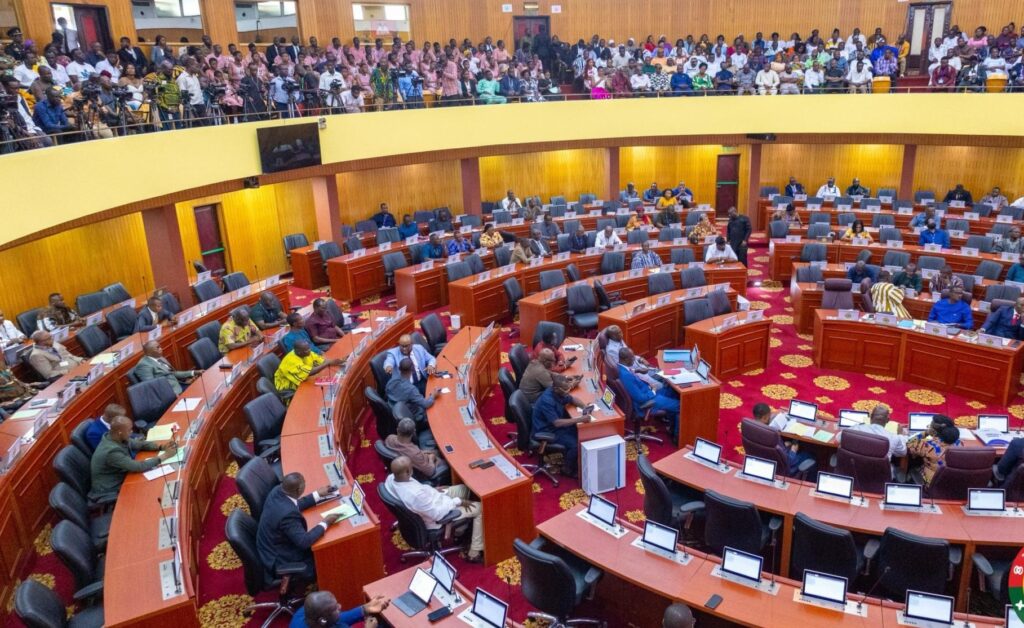
It will go through a “first reading” and be referred to the relevant Parliamentary Committee (likely the Committee on Constitutional, Legal, and Parliamentary Affairs).
Various stakeholders will then scrutinize it.
It will also be determined if the bill violates Article 108 of the Constitution (the “Financial Trap”). The article states that a Private Member’s Bill cannot be introduced if it imposes a “charge” on the Consolidated Fund (i.e., costs the government money).
If the bill passes this stage, a report will be presented to Parliament, where it will be debated and voted for (or against) by MPs.
If voted in favor, it will be reviewed line by line for amendments, and a final vote will be taken. It will then be sent to the President to be passed into law.
Details of the bill have not yet been published for public view.



Follow