Story Highlights
- Ghana’s SIM re-registration exercise, launched in October 2021, was marred by fraud, institutional dysfunction, and repeated deadline extensions before finally closing in May 2023
- Nearly nine million SIM cards were disconnected, cutting off millions from calls, data, and mobile money — including GHS 200 million sitting in frozen wallets.
- A post-exercise audit revealed that zero fingerprint records matched the national identity database, meaning biometric data collected from millions of Ghanaians was never actually verified.
- Ghana is now preparing to do it all over again — with a new government calling the previous exercise a “botched” re-registration.
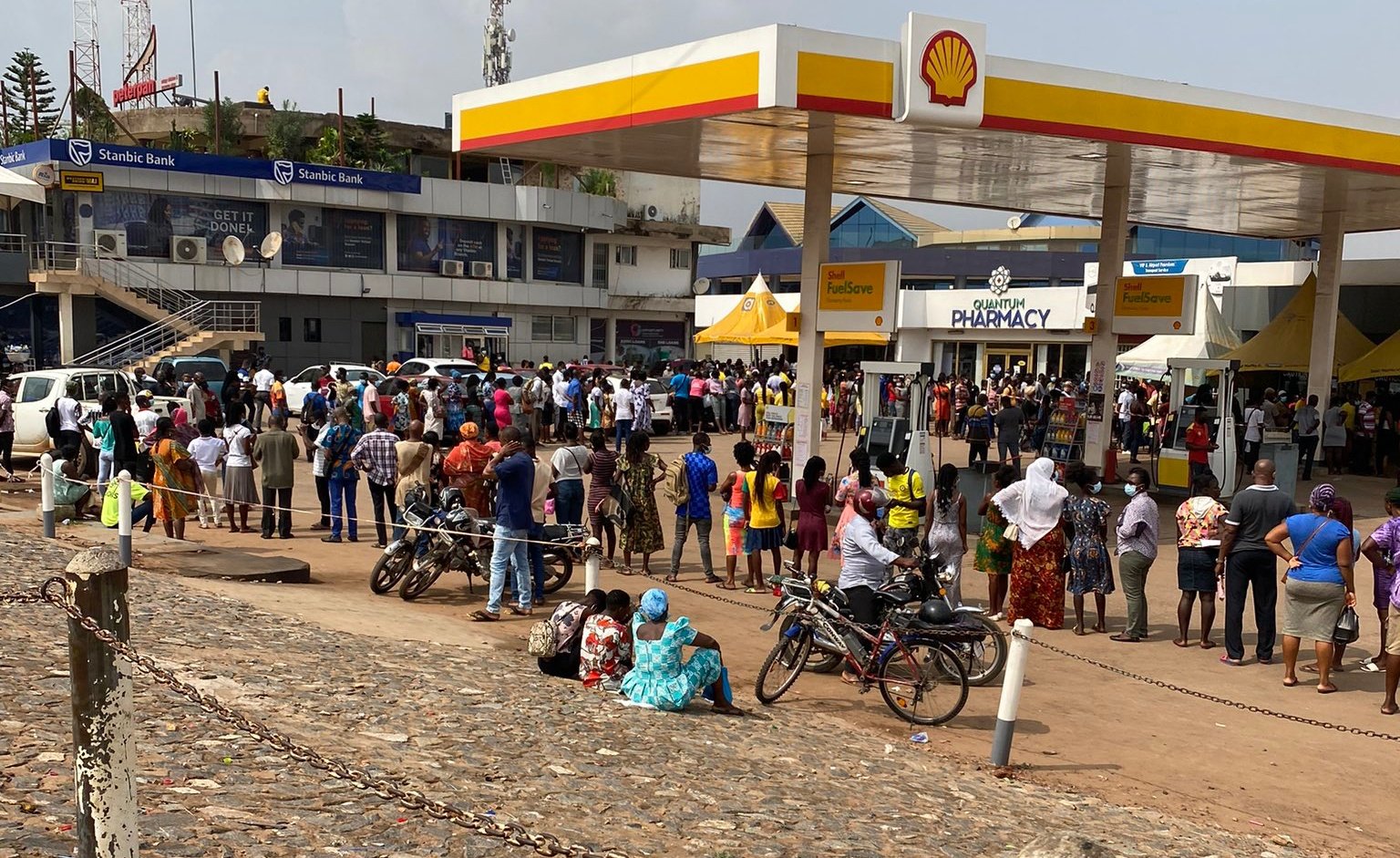
ACCRA, GHANA — When a government asks its citizens to wait in long queues, submit their fingerprints, and hand over their most sensitive personal details, the least they should expect in return is that someone, somewhere, actually checks that data.
Unfortunately, Ghana’s government did not deliver on that basic expectation.
The SIM card re-registration exercise, launched in October 2021, was designed to link every mobile phone number to a verified national identity card, curb fraud, and build a credible digital database.
It was, by any measure, an ambitious and necessary undertaking. Mobile money had become the financial backbone of millions of Ghanaians. Security threats were real and growing.
The logic was sound. The execution was not.
Five years on, Ghana is preparing to do it all over again, and almost nobody is happy about it.
A Worthy Goal, A Chaotic Start
The promise of the exercise was grounded in genuine concern. According to the Bank of Ghana, mobile money transactions in the country reached an estimated $88.3 billion in 2023.
That same year, about 7,250 mobile money fraud cases were reported by the Ghana Police Service’s cybercrime unit — a 32% increase from the prior year.
The idea of building a clean, verified subscriber database was not misguided.
The former Minister of Communication, Ursula Owusu, had initially announced that a SIM re-registration exercise would take place in 2022 and was scheduled to end on July 31, 2022.
She warned that any person who did not register their SIM would be disconnected by their telecom operator.
However, the deadline moved several times before authorities eventually disconnected all services to unregistered SIM cards in mid-2023, leaving roughly nine million subscribers without access to calls, texts, mobile data, or mobile money services.
The repeated extensions, rather than building public confidence, only deepened the sense of administrative confusion.
Each extension telegraphed the same message: the state had not planned for the scale of what it was asking.
Fraud From Within
Perhaps the most damning indictment of the entire exercise was not the chaos it caused, but the corruption it enabled.
Reports emerged that the Ghana Cards of some members of the public had been used to register SIM cards they did not own, with some individuals discovering that their identities had been linked to multiple unknown numbers without their knowledge or consent.
The very agents deployed to make registration accessible — the hands-on-the-ground intermediaries that the exercise depended on — became vectors for the crime the exercise was built to stop.
In one documented case, a subscriber received a message from MTN informing him he had exceeded the maximum of 10 SIM registrations permitted per person — registrations they had never made.
The National Communications Authority (NCA) later acknowledged that some agents were linking multiple SIM cards to people’s Ghana Cards without their consent, and deleted over six million SIM cards that had been fraudulently registered.
The Fingerprints That Were Never Checked
Then came the revelation that reframed everything that had come before.
An audit of SIM registration data between 2021 and 2023 showed zero fingerprint matches when cross-checked with the national identity database, raising concerns about the integrity of the existing system.
Millions of Ghanaians had stood in queues. They had submitted their fingerprints. They had complied. And the biometric data they handed over was never authenticated against any authoritative identity system.
The explanation, at least in part, appeared to trace back to an institutional standoff.
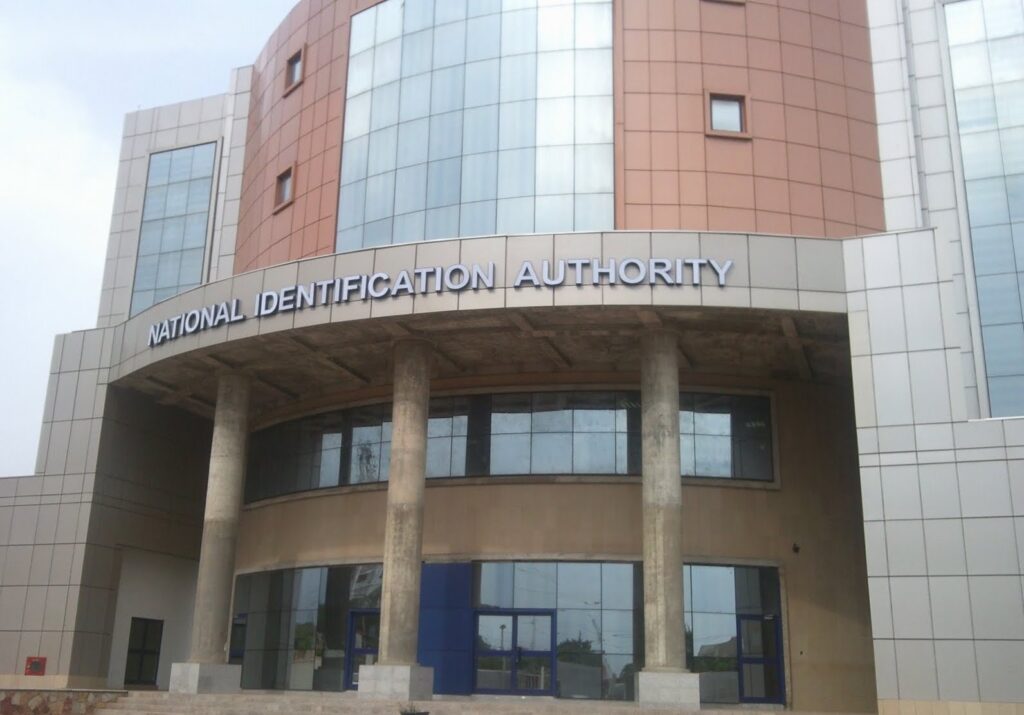
According to officials, the National Identification Authority (NIA) did not interface with the SIM registration system for biometric verification at the second stage of registration.
Whether that was a bureaucratic turf war, technical unpreparedness, or something more calculated remains a matter of dispute.
President John Mahama attributed the shortcomings of the previous exercise to poor coordination between key institutions, particularly the Ministry of Communications and the NIA, which undermined efforts to properly link SIM cards to verified national identity data.
Allegations of Breaches of the Data Protection Act
A report conducted by The Fourth Estate, an investigative publication in Ghana, interviewed a technology consultant named Maximus Ametorgoh, who stated that a Self-Registration app offered by the Minister of Communication had “issues”.
Mr. Ametorgoh alleged that a Nigerian company named XCEL INC LTD had developed the app to help consumers self-register their SIM cards.
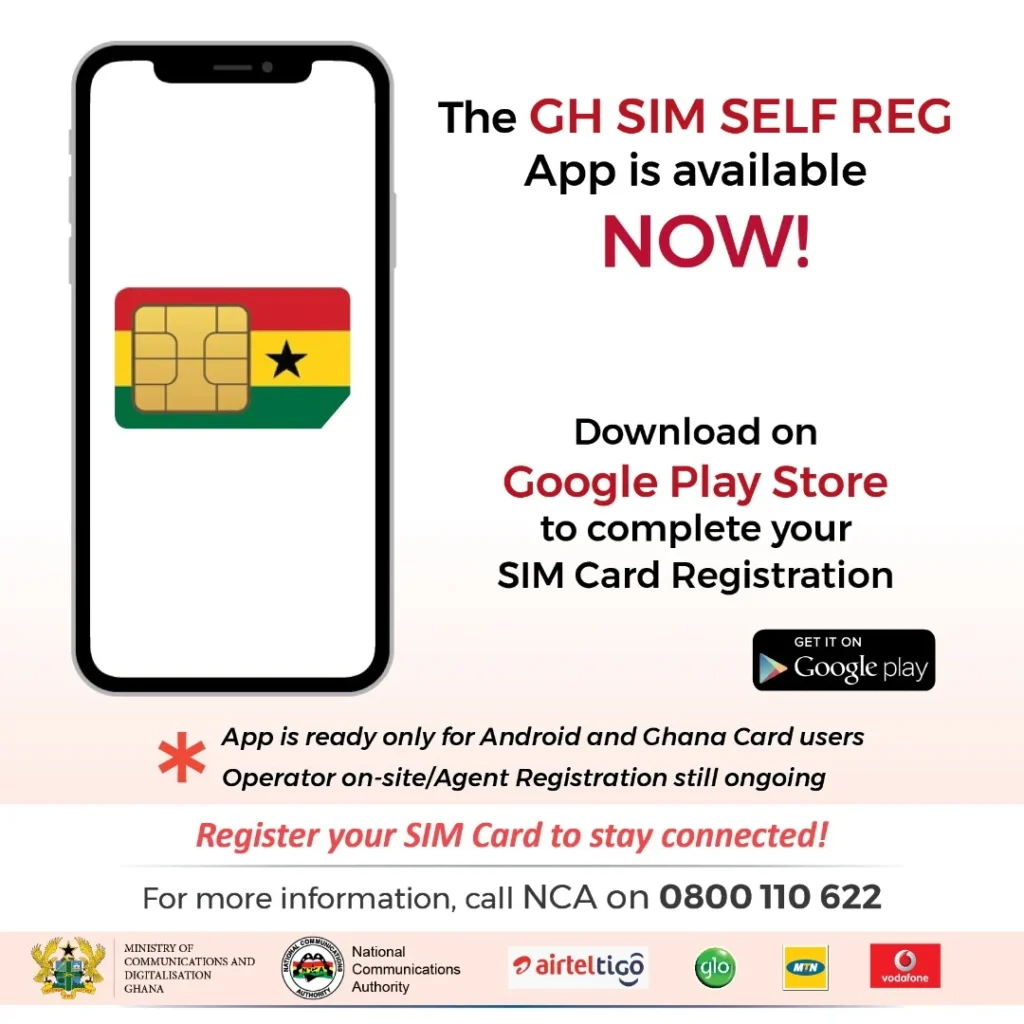
According to him, the NCA told stakeholders the app would be hosted in Ghana.
But after reverse engineering conducted by his colleague (a developer), it was discovered that the app was hosted on servers owned by Google and Amazon.
He further revealed that his colleague confirmed that the app was being hosted in the U.S.A and Belgium.
In further checks by the Fourth Estate, a company named Stranek-Africa also revealed that the data captured by XCEL INC LMT was “uploaded to an Amazon Web service server which is not controlled or owned by the government.”
According to experts, these infractions would contravene sections 17 and 18 of the Data Protection Act, 2012 (Act 843) and Article 18 (2) of the 1992 Constitution.
The Queues, the Blame, and the Political Fallout
Ghana’s current Minister of Communications, Sam Nartey George, criticised the previous government’s approach during his parliamentary vetting, particularly the long queues and inefficiencies faced by Ghanaians during the registration process.
Mr. George, who had been a vocal critic of the exercise while in opposition, entered office with a mandate to fix what he described as a broken system.
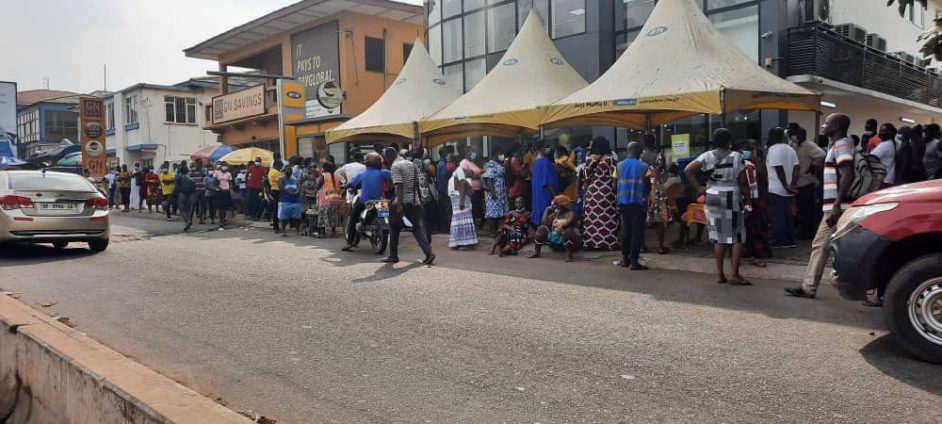
He described the previous exercise as a “botched re-registration” that had failed to meet its own key performance indicators.
Defenders of the previous exercise have pushed back.
Deputy National Communications Director of the New Patriotic Party, Kamal-Deen Abdulai, called the new exercise “needless” and instead called for a comprehensive audit of existing SIM registration data.
He suggested that any discrepancies identified should be addressed through collaboration with the NIA.

Another Merry Go Round
Ghana is now preparing for what the government is describing as the country’s “final” SIM card registration exercise, a fully biometric process designed to close the loopholes that undermined the previous exercise.
Mr. George has ruled out automatically migrating existing SIM data into the new system.
“You are not cleaning up. You are actually migrating the viruses. You have infected files, and you are migrating them onto a new system,” he said at an event.
The new exercise promises multi-agency collaboration involving the NIA as the single source of truth, live biometric verification, and the ability to self-register via smartphone.
Mr. George committed to avoiding the hard deadlines and long queues that characterised the 2021 to 2023 exercise, and confirmed that the rollout will not commence until the legal framework currently undergoing review has been completed.
The Minister has stated that the new exercise will come at no cost to the average Ghanaian and that the telecom operators will pay for it.
But analysts are already urging caution.
Technology experts are warning that without interoperability between the NIA’s database, the telecom networks, and the financial system, even a fraudster who registers legitimately can still move money through gaps that no amount of face scanning will close.

When it comes to the issue of cost, there is also doubt about its feasibility.
Charles Owiredu, the Deputy Ranking Member on Parliament’s Information and Communications Committee and MP for Abirem, warned that Ghanaians may still end up paying for the new SIM re-registration exercise.
“The MNOs are not Father Christmas. Yesterday I was with the Executive Secretary of their chamber and she made it clear that the MNOs are not Father Christmas. If you make them absorb the cost, what they will do is to find ways to make consumers pay,” he said.
Other officials have also questioned whether the exercise will have any effect in stopping fraud.
Chief Executive Officer of the Ghana Chamber of Telecommunications, Sylvia Owusu-Ankomah, says the SIM registration alone will not eliminate fraud in the country.
“SIM registration is not going to be a silver bullet that stops fraud. The nature of fraud that we are currently experiencing as a country is mostly on a social engineering scheme,” she said in an interview.
She further stated that its premature to confirm if there will be any costs associated with the new exercise.
“To be fair, to the extent that we haven’t commenced the implementation and we haven’t counted the cost, it’s quite premature to make any pronouncements on where the cost sits for this exercise.”
The Reckoning
What Ghana’s SIM registration exercise ultimately reveals is the cost of ambitious governance without the institutional infrastructure to match.
A country processing tens of billions of dollars in mobile transactions needs a verified subscriber base. The fraud was real. The urgency was legitimate.
But the failure to coordinate between ministries, the reliance on agents who became fraudsters, the collection of biometric data that was never verified, and the disconnection of nearly nine million people from the digital economy — these were not unavoidable growing pains.
They were the predictable consequences of an exercise that moved faster than the systems meant to underpin it.
A prominent economist, Dr. Frank Bannor of the Institute of Economic Research and Public Policy, publicly questioned whether millions of taxpayer funds had been well spent, warning that a new registration exercise would strain Ghana’s already limited fiscal reserves.
“If there were some loopholes, they should use technology to fix it instead of throwing away what has been done already,” he said.
The new government says this time will be different. They may be right.
But Ghanaians have been asked before to trust a process that promised order and delivered confusion.
The burden of proof, this time, is higher.
This article was edited with AI and reviewed by human editors