There is something deeply perverse about the way Ghana currently punishes its government institutions for refusing to share information with the public.
The Right to Information (RTI) Commission finds an institution guilty of stonewalling a citizen. It levies a fine. The institution pays that fine — from its budget.
The budget is funded by taxpayers. So the very Ghanaians who were denied information in the first place are the ones who end up paying for the crime committed against them.
And the official who actually slammed the door in their face? He keeps his salary. He keeps his job. He keeps doing exactly what he was doing before.
This is not accountability. It is theatre.
A Law Built on Hope, Undermined by Habit
Ghana’s Right to Information Act, 2019 (Act 989) was born of constitutional promise — specifically Article 21(1)(f) of the 1992 Constitution, which grants every Ghanaian the right to access information on public sector affairs.
The law, long in coming after nearly two decades of sustained civil society advocacy, was finally assented to by then-President Akufo-Addo in May 2019. When it passed, it was greeted with genuine optimism: a new era of open governance, democratic accountability, and citizen empowerment had arrived.
That optimism has since curdled.
A six-month investigation by Corruption Watch Ghana, conducted between February and July 2025, found that more than 70 determinations by the RTI Commission had led to fines totalling about GH₵5.6 million against at least 60 public and private institutions.
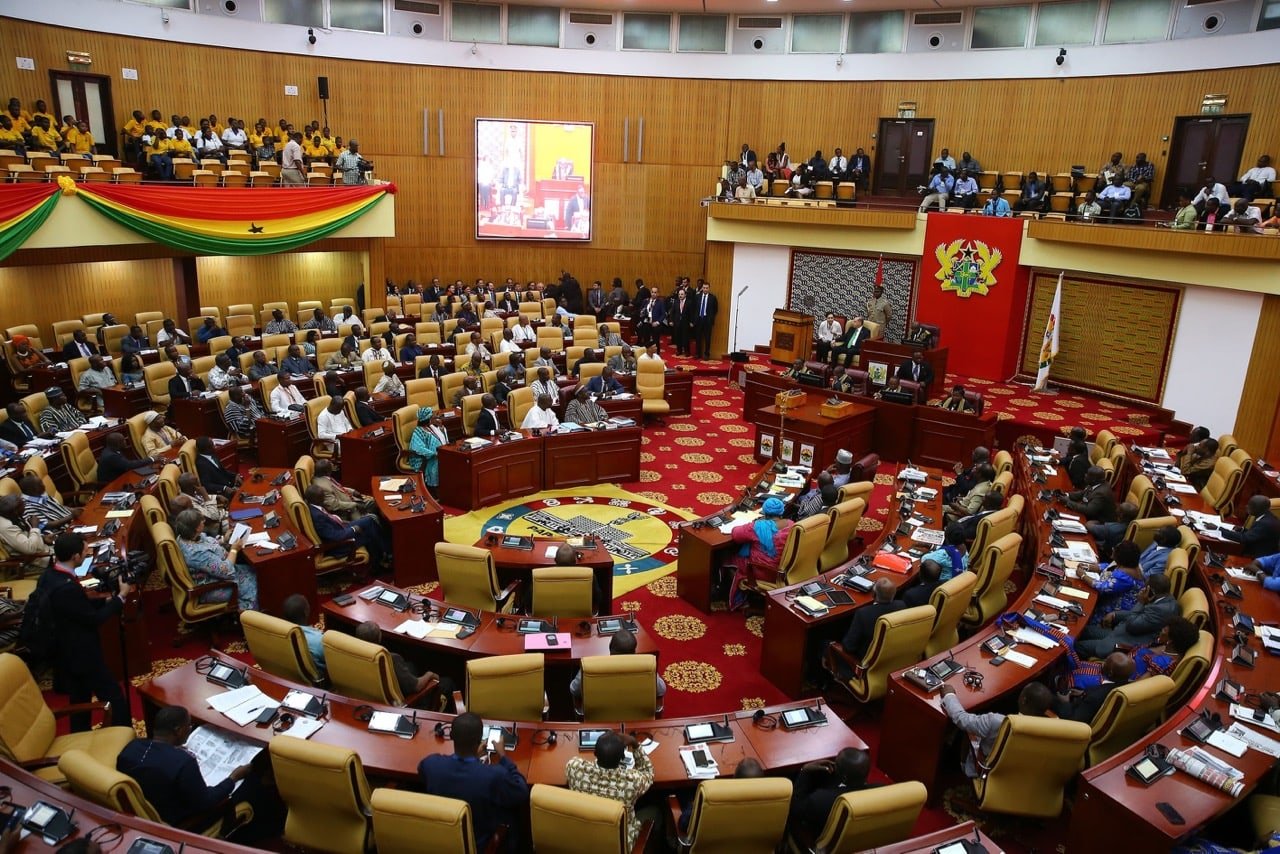
These are not obscure agencies. Among the institutions fined are the Ghana Police Service, Parliament, the Judiciary, the Attorney-General’s Department, and the Commission on Human Rights and Administrative Justice — ironically, the very institutions mandated to promote access to information.
A separate nationwide compliance exercise conducted in 2024 assessed 327 public institutions and found that 105 of them were non-compliant with the provisions of the Act.
When the Punishment Punishes the Wrong Person
The most damning detail in all of this is not the scale of the non-compliance. It is who bears the cost of it.
When public institutions are successfully challenged before the RTI Commission and subsequently fined, the penalty is absorbed by the state budget — effectively allowing the official who unlawfully withheld information to retain their position and salary, while the Ghanaian public, the very group the information was denied to, involuntarily funds the fine through their taxes.
Sit with that for a moment. A Director-General ignores a citizen’s RTI request. The citizen appeals. The RTI Commission rules in the citizen’s favour and fines the institution GH₵100,000. The GH₵100,000 comes from the institution’s government allocation — money derived from taxes.
The Director-General continues to draw his salary, sign government cheques, and attend high-level meetings. The citizen, meanwhile, may still not even have the information they requested.
The Ghana Education Service has been fined three times, accumulating penalties of approximately GH₵144,000. Its supervisory body, the Ministry of Education, has paid GH₵260,000 across four separate penalties — making it the most frequent repeat offender.

Four times, the Ministry of Education has been found to have violated the RTI law. Four times it has paid — from the public purse. And four times, apparently, it has learned nothing.
The Agricultural Development Bank topped the overall list with a record GH₵1,365,000 fine — the highest ever paid by a single institution. The Ghana Police Service paid GH₵450,357.
These are extraordinary sums by any measure. Yet not a single named official has faced so much as a pay dock.
The Perverse Logic of Institutional Fines
The current system operates on a faulty assumption: that fining institutions will pressure them into compliance. This logic works tolerably well in the private sector, where fines hit the bottom line, and shareholders demand accountability from management. In the public sector, it collapses.
A public institution has no shareholders. Its budget is not generated through productive enterprise — it is allocated by Parliament. Its chief executive is appointed by political processes, not market performance. When a fine is imposed, it is simply absorbed as a line item.
The institution does not become leaner or more cautious; it simply continues, somewhat less funded, perhaps, but otherwise unchanged.
When the fines are absorbed into institutional budgets, individual information officers or responsible staff who fail to comply with the RTI Law face no personal consequence for their actions. This creates a culture of impunity. And cultures of impunity, once established, are extraordinarily difficult to dislodge.
We have now had years of evidence. The fines are not working — at least not as a deterrent. They are working, perhaps, as a revenue stream for the RTI Commission, but that was never the point of the law.
The Case for Personal Surcharges
The solution is not complicated. It is also not novel. Ghana does not need to invent a new governance philosophy — it simply needs to borrow one that already works elsewhere.
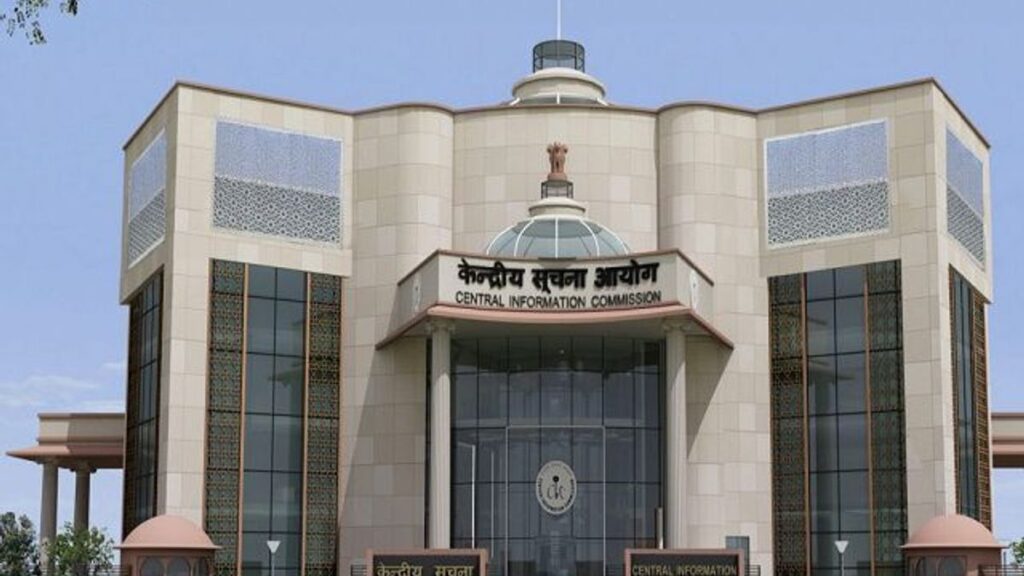
In India, under Section 20(1) of the RTI Act, 2005, the Central or State Information Commission can impose a personal penalty on a Public Information Officer for unreasonable delays or denials. The penalty is deducted directly from the officer’s salary. The effect is immediate, tangible, and personal.
In India, this mechanism has been credited with significantly improving response rates in jurisdictions where it is actively enforced. Officers who know their own money is at stake behave very differently from officers who know only their institution’s money is at risk.
Civil society groups and governance experts in Ghana are already pushing for mechanisms to surcharge fines directly to the salaries of designated information officers or institutional heads who deliberately obstruct access to information. This is not a radical demand. It is a minimum condition for the RTI law to mean anything at all.
The case for targeting heads of institutions specifically — not just information officers — is particularly important. Information officers are often mid-level civil servants operating within cultures set from the top.
When the Permanent Secretary or the Director-General signals, explicitly or implicitly, that RTI requests are a nuisance to be avoided, the information officer is not the true author of the violation. The accountability must flow upward, to the person who sets the institutional tone.
The RTI Act already acknowledges this logic. Under the RTI law, if an information officer does not provide information within 14 days, the requester can appeal to the head of the institution, which gives that head 15 days to provide the information.
The head of the institution is thus personally placed in the chain of accountability by the law itself. It is a short, logical step to also place them in the chain of financial consequences when they fail.
The Argument Against — and Why It Falls Short
Opponents of personal surcharges will raise several objections. They are worth addressing seriously.
The first is that information officers sometimes withhold information not out of bad faith but out of genuine uncertainty about what is exempt and what is not.
This is a real concern — Act 989 contains a range of exemptions covering national security, personal privacy, law enforcement, and commercial interests, and the lines are not always clear. Surcharging officials for good-faith errors would be unjust.
The answer is to build proportionality into the mechanism. Surcharges should be triggered not by every denied request, but by willful or bad-faith denials — cases where the RTI Commission finds the institution stonewalled a request for information that was plainly not exempt. The existing determination process already makes this distinction. It is not beyond Parliament’s creativity to encode it into law.
The second objection is institutional morale: that surcharging officials will make civil servants risk-averse, leading them to release information they should properly withhold.
This argument, too, fails scrutiny. The evidence before us is not of a civil service that is releasing too much information recklessly. The evidence is of a civil service that is releasing far too little.
If personal financial risk nudges officials toward caution, that caution will be directed at the right target — namely, ensuring they properly respond to RTI requests rather than ignore them.
The third objection is political: powerful institutional heads will resist such a law, and Parliament will lack the will to pass it. This is perhaps the most honest objection, and also the most important reason civil society, journalists, and citizens must sustain the pressure.
A Law That Must Have Teeth That Bite Individuals
Ghana’s RTI regime needs a serious rethink of its enforcement architecture. The fines-on-institutions model has had years to prove itself. It has not. What exists instead is a growing list of repeat offenders, a mounting bill being passed to taxpayers, and a body of public officials who have correctly calculated that non-compliance carries no personal cost.
The RTI Commission must be empowered — through legislative amendment if necessary — to surcharge the salaries of heads of institutions and information officers who are found to have willfully and deliberately violated the law.

The Auditor-General’s office, which already has the constitutional mandate to surcharge public officers for financial losses caused by negligence or misconduct, could be a natural partner in operationalising this.
The question is not whether this is technically feasible. It is. The question is whether those in power have the political will to hold their own kind accountable.
Ghana’s RTI law was built on the proposition that citizens have a right to know what is being done in their name, with their money, by their public servants. That proposition is meaningless if the public servants who violate it face no consequence that touches them personally.
The bill must follow the boss. Until it does, Ghana’s Right to Information law will remain, at best, an expensive aspiration.