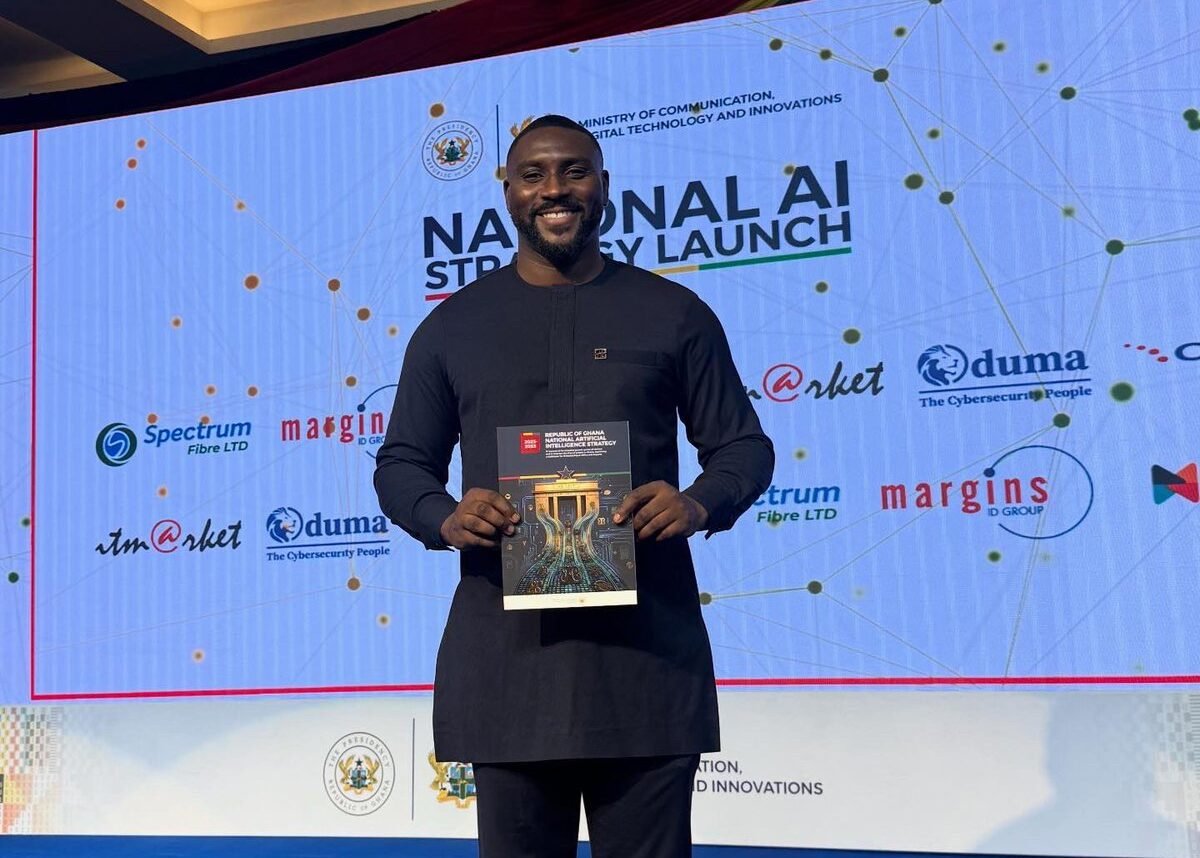
This story was originally recorded as an episode for Labari Media’s “What’s Your Story” podcast show
Story Highlights
- Julian Owusu is the British-Ghanaian CEO and co-founder of Zuberi Pay, a Ghana-based earned wage access platform founded in 2020.
- Before fintech, Owusu played professional football in the UK, Ghana, and Amsterdam from the age of 14, before pivoting to a career as a product manager in London.
- The idea for Zuberi emerged from watching his Ghanaian footballer colleagues borrow from loan sharks at interest rates as high as 50 to 60 percent.
- Owusu has gone on to launch multiple ventures, including POYNT, a social commerce platform, and BUILD, an entrepreneurship and AI upskilling initiative.
At 14, UK-born Ghanaian Julian Owusu discovered a talent that would earn him money: playing football.
It was the beginning of a journey that would take him far from London, through the training grounds of West Africa, into the digital agencies of the British capital, and eventually back to Accra — this time not as an athlete, but as an entrepreneur.
He started his professional journey at 16 when he joined Eleven Wise, a Division One football club based in Ghana, as a striker. Julian had joined the club on the recommendation of his agent, who felt he would benefit from the club’s rigorous training.
“It was actually my first solo trip to Ghana,” he recalled. “My folks had brought me over every year, but coming down to join Eleven Wise was the first time I’d be in Ghana on my own. And I think that trip is really what helped me build my entrepreneurial spirit.”
That experience — of arriving in a country he knew only through family visits and having to rapidly adapt — planted the seeds of a professional mindset he would carry into every venture that followed.
He had to forget his UK background and immerse himself in Ghana’s culture.
“I had to understand local cultures and become like my teammates. I had to understand what the fans wanted, and what my coaches wanted. So I learned a lot of lessons very quickly about becoming a professional.”
From Striker to Product Manager
Owusu played in football leagues in the UK, Ghana, and Amsterdam, but ultimately decided not to fully pursue a career in the sport. He went into business and became a Product Manager after spending time at various digital agencies in London, and also took the lead on developing products for new startups in the UK.
From his product management role at Landor & Fitch in 2018, Julian went on to manage other products at Culturetool and Spark44, right until he decided to build a product of his own: Zuberi Pay.
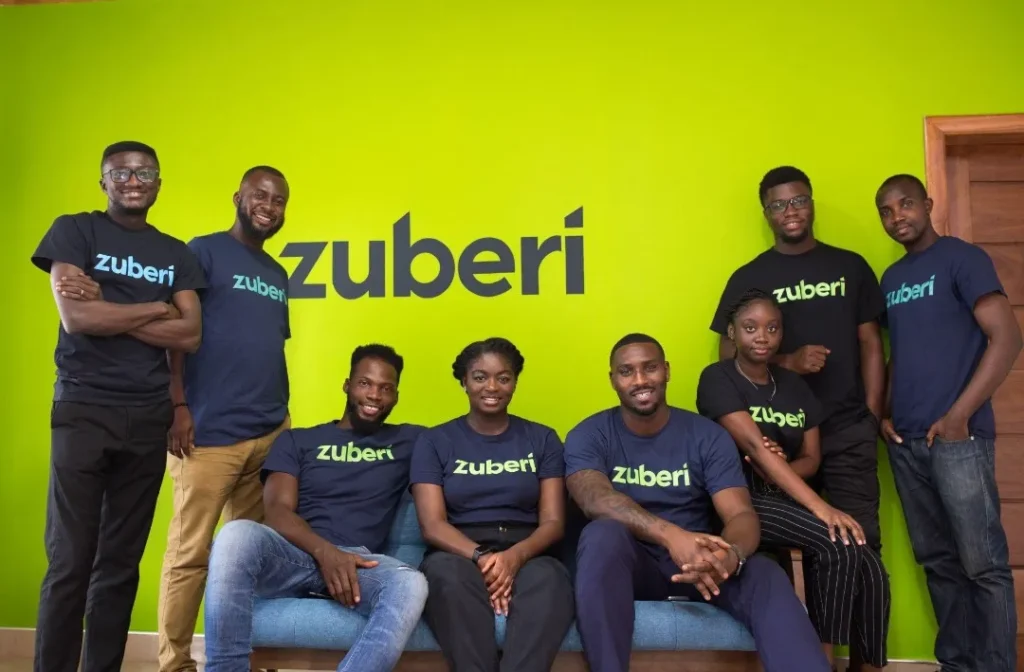
His years navigating the product development cycles of London’s tech scene gave him a rare combination — deep empathy for users coupled with the technical fluency to build for them.
“If you’re going to be a founder of a startup,” Owusu would later say, “I think the best role is probably to be a product manager because you’re basically the CEO of the product and you get to know the ins and outs of what you’re building.”
The Problem He Couldn’t Unsee
The idea for Zuberi did not emerge in a boardroom or a Silicon Valley incubator. It surfaced in a far more visceral setting: on the sidelines of a football pitch in Ghana, watching teammates in financial distress.
Owusu founded Zuberi in 2020, a couple of years after he returned to Ghana as a footballer and saw how his colleagues, in need of urgent money before payday, would borrow from loan sharks at interest rates as high as 50 to 60 percent.

“They didn’t really care because the pressure was on them and they just needed money today,” he recalled.
The idea crystallised as he drove through the streets of London. “I wasn’t even thinking of building a fintech. I just wanted to tackle a problem every day people had. And when I thought about what problems 90% of people had, it was cash flow, money.”
Building From a WhatsApp Group
Owusu’s early approach to Zuberi was characteristically scrappy. While the product was officially released for beta-testing in January 2021, Zuberi began operations right around the time COVID went mainstream in February 2020.
Owusu added 10 workers to a WhatsApp group and explained his idea: Zuberi would provide them with salary advances for a small fee. Within a few months, the number of people in the group had doubled.
Months later, he had raised about £22,000 from friends and family to build the first iteration of the Zuberi App. He also brought on Nana Adomako — who had worked as Growth Manager for Taptap Send — as co-founder.
By December 2021, Owusu quit his 9-to-5 as a product manager and moved to Ghana to focus on and lead the vision of Zuberi full-time.
How Zuberi Worked
Zuberi was an on-demand mobile employee benefits platform whose core product was a salary streaming feature that allowed workers to access a portion of their earnings daily after they have worked — rather than waiting until month’s end.

The model sits in a broader category known as earned wage access, or EWA, which is rapidly gaining traction across the continent.
While the Zuberi service was free for organisations, the platform charged employees a transaction fee each time they use the app to access their salary early.
“Personal cash flow is too slow for somebody living in such a volatile market as Africa,” Owusu has said. “There are so many unplanned events that completely throw people off any type of financial plan they have at the start of a month.”
Investors of Zuberi include Google for Startups Accelerator: Black Founders and Microtraction, and the platform has since been used by over 300 medium-to-large businesses in Ghana.
However, in 2021, the Zuberi platform run into regulatory issues with the financial regulator and could not fully go live.
Julian was undeterred. Funds from angel investors had exhausted but he pivoted, turning Zuberi into a SaaS solution whilst waiting for approval from the regulator.
Zuberi is now a fully-automated payroll solution which allows companies to run payroll at anytime of the month.
Beyond Zuberi and Pivoting to AI
Owusu’s ambitions have never been confined to a single venture. In 2023, he launched POYNT, a social commerce platform which allows anyone to discover their style by buying and selling both secondhand and new items.

He also regularly hosts product and business workshops through his platform “BUILD,” teaching existing CEOs and new entrepreneurs how to build teams and products that real customers love.
Most recently, his focus has expanded into artificial intelligence and talent development. He is the founder of BUILD, CACTUS Talent, and the BUILD AI Academy, where he is on a mission to upskill more than 300,000 Ghanaians for the AI era.
He recently presented the Collaborative Skills Economy framework at the UK Parliament, advancing new thinking on ethical, high-value global talent collaboration.
Owusu continues to work on building and scaling his ventures in Ghana, promoting his AI Academy and being an important character in Ghana’s tech ecosystem.
This article was edited with AI and reviewed by human editors