


Story Highlights
- Ghana’s Ninth Parliament has reintroduced the Human Sexual Rights and Family Values Bill, 2025, after its predecessor lapsed with the Eighth Parliament in January 2025
- The bill criminalises same-sex relations, LGBTTQAP+ advocacy, and related activities, with prison sentences ranging from three months to ten years
- It bars LGBTTQAP+ individuals from adopting or fostering children and imposes a duty on citizens, institutions, and the media to actively promote “family values”
- Offences under the bill are classified as extraditable, meaning Ghanaians abroad could face prosecution upon return
Four years after the opening of an LGBTTQAP+ advocacy centre in Accra ignited a national firestorm, Ghana’s parliament is again moving to legislate against same-sex relations and gender non-conformity — this time with a bill that is more expansive, more punitive, and more deliberately structured to endure.
The Human Sexual Rights and Family Values Bill, 2025, gazetted on 10th September 2025 and sponsored by eleven members of the Ninth Parliament across party lines, is the reincarnation of a measure that passed the Eighth Parliament in 2024.
The previous iteration lapsed without presidential assent when that parliament dissolved on 6th January 2025.
Its sponsors, citing what they describe as overwhelming public support, wasted little time reintroducing it.
A Bill Four Years in the Making
The legislative roots of the 2025 bill trace to January 2021, when news of a newly opened LGBTTQAP+ resource centre in Accra, which was attended by diplomats from the European Union, Australia, and Denmark.
This triggered condemnation from the National House of Chiefs, the Christian Council, the Catholic Bishops’ Conference, and a broad coalition of civil society organisations.
A statement read on the floor of parliament on 5th March 2021 signalled the intention to introduce a private member’s bill to proscribe LGBTTQAP+ activities.
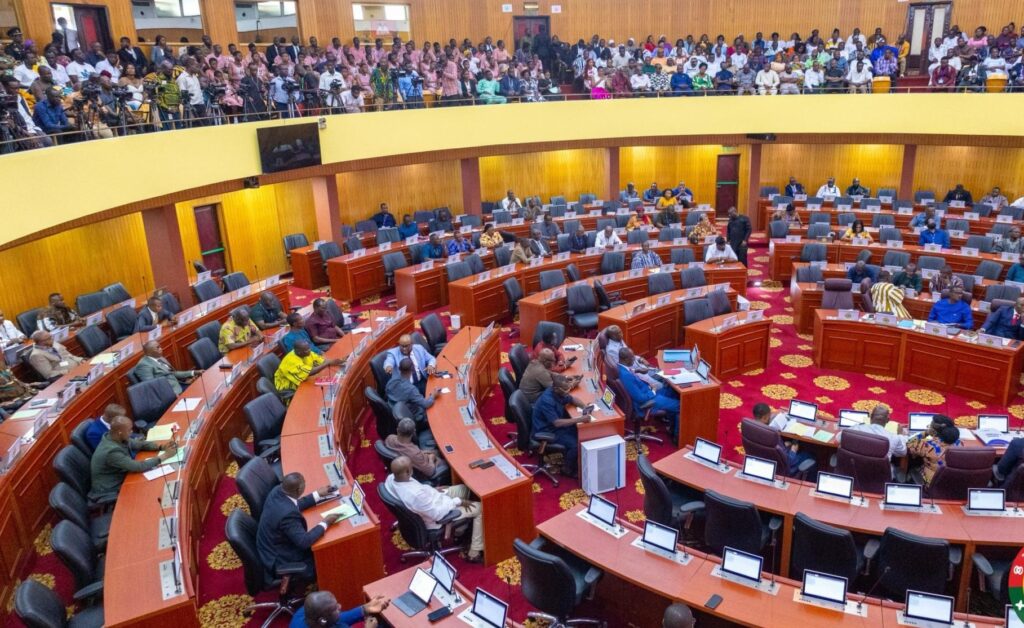
Eight MPs subsequently drafted the original bill, titled the Proper Human Sexual Rights and Ghanaian Family Values Bill, which after extensive stakeholder consultations, was passed by the Eighth Parliament in 2024 and submitted to then-President Nana Akufo-Addo for assent.
A Supreme Court challenge in the case of Richard Sky v. The Parliament of Ghana and the Attorney-General was dismissed, clearing the path for presidential assent — which never came.
The Ninth Parliament’s reintroduction under the revised title signals a determination to close that gap.
What the Bill Actually Does
The original draft contained a conversion therapy clause — a provision that would have authorised or mandated psychological intervention aimed at altering a person’s sexual orientation.
The clause was a flashpoint during committee deliberations and ultimately did not survive into the version that passed.
Other sections of the bill largely remain intact
Section 3 makes it a criminal offence to engage in same-sex sexual intercourse, to identify publicly as lesbian, gay, bisexual, transgender, queer, ally, pansexual, or non-binary, or to undergo or facilitate gender reassignment procedures.
Conviction carries a fine of between 750 and 5,000 penalty units, a prison term of two months to three years, or both.
The bill goes further than the bedroom. Section 9 prohibits producing, broadcasting, or distributing any material that promotes activities outlawed under the act — across any medium, including social media.
Penalties under this provision are among the most severe in the bill: five to ten years imprisonment.
Section 10 extends the same prohibition to content directed specifically at children, with sentences of six to ten years. Platform owners — of websites, television stations, and social media accounts — are deemed liable for offences committed through their channels unless they can prove they neither consented to nor connived at the violation.
Section 11 criminalises funding or sponsoring prohibited acts, targeting what the bill’s memorandum describes as organised foreign-linked movements that use financial inducements to recruit young Ghanaians into LGBTTQAP+ activities.
Sentences range from three to five years, with corporate officers held personally liable.
Legal Duty to Report — and the Limits on Mob Justice
One of the bill’s more striking provisions is Section 16, which imposes a legal duty on anyone with knowledge of an offence under the act to report it to police or a community authority within a defined timeframe.
The clause simultaneously prohibits verbal or physical abuse of persons accused of such offences, or of anyone experiencing what the bill terms a “sexual identity challenge.”
Contravention carries a sentence of three months to three years.
The dual design reflects a tension the bill’s drafters acknowledge openly: that widespread public hostility toward LGBTTQAP+ persons risks spilling into vigilante violence.
The bill attempts to channel that hostility through the formal legal system rather than suppress it.
Children, Adoption, and the Family Unit
Sections 14 and 15 bar courts and the Department of Social Welfare respectively from granting adoption orders or fostering approvals to any person who identifies as or holds out as LGBTTQAP+.
The drafters ground this in the Children’s Act, 1998, framing it as a child welfare measure.
Section 2 imposes a positive duty on parents, guardians, teachers, religious institutions, the media, and the creative arts industry to promote and protect what the bill defines as “human sexual rights and family values” — namely, the sanctity of heterosexual marriage and the binary understanding of gender as determined at birth.
The International Dimension
The bill’s final substantive clause amends Ghana’s Extradition Act, 1960, to classify LGBTTQAP+ offences as extraditable.
The practical implication is significant: a Ghanaian citizen who commits an offence under the act abroad and subsequently returns home could face prosecution on Ghanaian soil.

The memorandum makes no apology for this reach, invoking the principle of state sovereignty under Article 2(4) of the UN Charter and framing the legislation as a legitimate exercise of self-determination against what it characterises as foreign cultural infiltration.
A Collision Course
Human rights organisations and international partners have consistently warned that the bill, in either its current or prior iteration, violates Ghana’s obligations under international human rights law, including protections against arbitrary detention, freedom of expression, and the right to non-discrimination.
Those arguments failed to stop the bill’s passage in 2024, and its sponsors give no indication that a changed political landscape under President John Mahama will alter their determination.
For Ghana’s LGBTTQAP+ community — already operating largely underground — the bill’s reintroduction signals that the legal and social pressure will only intensify. Whether President Mahama will act where his predecessor did not remains the central unanswered question.
This article was edited with AI and reviewed by human editors



Follow