


Story Highlights
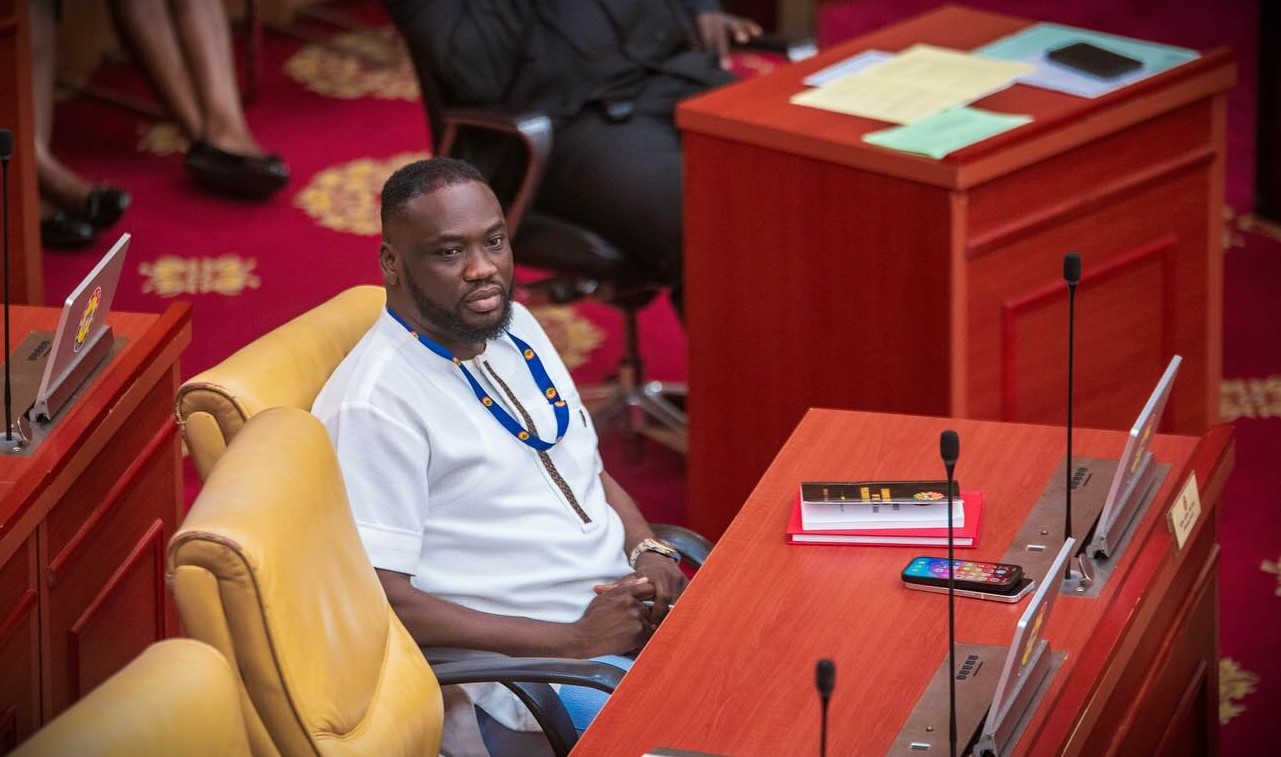
- Ohene Kwame Frimpong, a prominent independent Ghanaian lawmaker, remains in Dutch custody following his arrest at Schiphol Airport on a U.S. federal warrant.
- The United States Department of Justice is seeking his extradition to face charges of wire fraud and money laundering
- Legal allies in Accra argue that because Mr. Frimpong is a third-party national, the bilateral U.S.–Netherlands extradition treaty should not apply to him.
- Strict interpretations of the 1980 U.S.–Netherlands Treaty and Dutch statutory law dictate that territorial presence, rather than nationality, governs extradition mandates.
ACCRA, Ghana — When Ohene Kwame Frimpong, an independent Member of Parliament representing Ghana’s Asante Akyem North constituency, boarded a flight to Europe earlier this month, his itinerary pointed toward standard international travel.
Instead, a layover at Amsterdam’s Schiphol Airport turned into a high-stakes diplomatic and legal standoff.
Acting on an international arrest warrant issued by the United States Department of Justice, Dutch security officials detained Mr. Frimpong as he stepped off the aircraft.
The charges originating from Washington are substantial: federal allegations of wire fraud, romance scams, and money laundering.
In the weeks since his arrest, political circles in Accra have debated the limits of state sovereignty and parliamentary privilege.
Sympathetic legal commentators have publicly suggested that a novel defense might secure his release—specifically, that a bilateral treaty between the United States and the Netherlands cannot legally bind a third-party citizen from Ghana.
Yet an examination of the applicable international frameworks suggests that this optimistic legal strategy may rest on a foundational misunderstanding of territorial jurisdiction.
The Power of Territorial Presence
The defense strategy heavily relies on the argument that a bilateral agreement between Washington and The Hague lacks the jurisdictional reach to snare a citizen of a sovereign West African nation who was merely in transit.

However, international law experts note that the physical reality of the arrest overrides the passport in the suspect’s pocket. The moment an international passenger steps into the transit lounge at Schiphol, they are within the sovereign territory of the Kingdom of the Netherlands.
Consequently, they become subject to all local statutes and existing international treaty obligations maintained by the Dutch state.
The wording of the 1980 United States–Netherlands Extradition Treaty—reinforced by the modern 2003 U.S.–European Union Extradition Agreement—leaves little room for ambiguity.
Article 1 explicitly mandates that both states agree to extradite to one another “any person within its territory” who is accused of an extraditable offense.
By employing the expansive term “person” rather than “citizen” or “resident,” the framers of the treaty ensured that its provisions apply universally to anyone found within their borders.
Furthermore, modern international protocols dictate that an extradition request cannot be denied solely on the basis of the suspect’s nationality.
The Scope of Dutch Judicial Review
In evaluating the American request, the Amsterdam District Court will not hold a trial to determine Mr. Frimpong’s ultimate guilt or innocence.
Under the Dutch Extradition Act (Uitleveringswet), the judiciary’s role is primarily administrative, examining whether the request satisfies three narrow criteria:
- Dual Criminality: The alleged misconduct must constitute a serious crime carrying a prison sentence exceeding one year under the laws of both countries. Large-scale wire fraud and money laundering easily meet this threshold under both the U.S. Federal Code and the Dutch Criminal Code (Wetboek van Strafrecht).
- The Specialty Principle: The requesting nation must formally guarantee that the individual will only be prosecuted for the specific offenses approved during the extradition hearings. The U.S. Department of Justice routinely provides these standard diplomatic assurances.
- Human Rights Compliance: Under the European Convention on Human Rights (ECHR), Dutch courts must block any extradition if there is a verified risk of torture, the death penalty, or a flagrant denial of a fair trial. Because the U.S. warrant targets non-violent white-collar financial crimes, triggering these human rights blocks remains highly unusual.

A Delicate Diplomatic Position
The arrest has placed the leadership of Ghana’s Parliament and its diplomatic mission in The Hague in a challenging position.
While the state is obligated to offer consular assistance to its citizens abroad, it possesses no legal mechanism to interfere with Dutch judicial sovereignty.
Former lawmaker Andy Appiah-Kubi, whom Mr. Frimpong defeated in the December 2024 elections, publicly urged the public to maintain the presumption of innocence.
“He has the right to defend himself, and I’m sure he will exercise that right,” Mr. Appiah-Kubi stated, reflecting the cautious stance adopted by many in government.
Mr. Frimpong’s legal team has filed for interim bail while the full extradition proceedings play out.
But if the formal paperwork submitted by American prosecutors is procedurally sound and the identity of the target is undisputed, the text of the treaty indicates that the legal net closing around the lawmaker is exceptionally tight.
This article was edited with AI and reviewed by human editors



Follow