


STORY HIGHLIGHTS
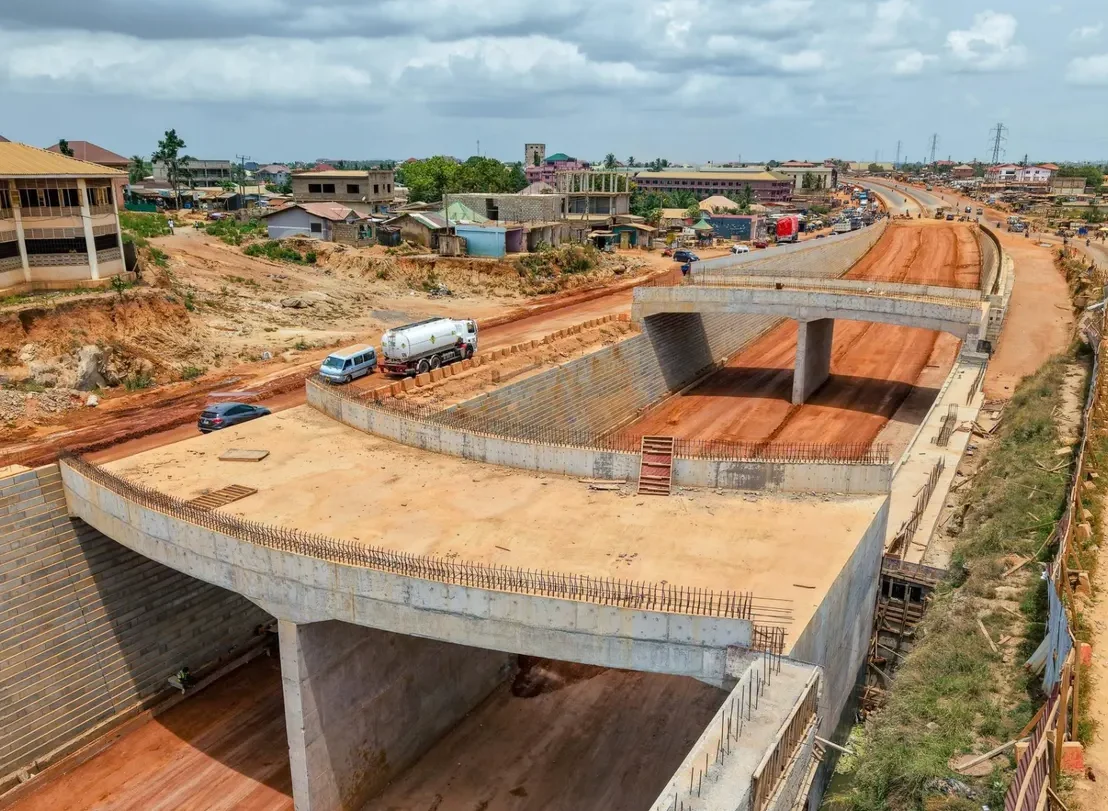
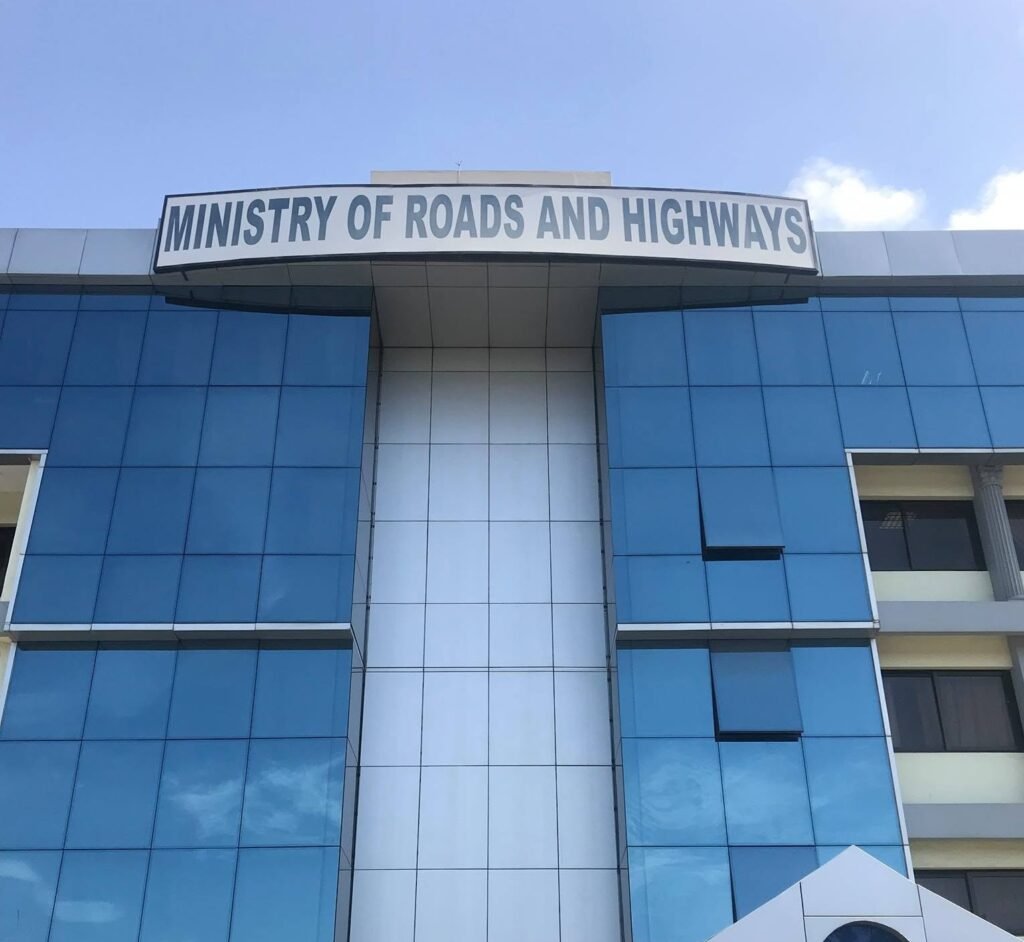
- A 72-page presidential report, released on May 22, cleared Ghana’s Ministry of Roads and Highways (MRH) of procurement abuse in Big Push road contracts, finding that only 4.58% of total MRH contracts were sole-sourced
- The report was authored by a Senior Presidential Advisor — a political appointee investigating a ministry under the same presidency — with no independent oversight or external auditor
- The Fourth Estate’s original investigation, based on RTI-obtained official data, found 76% of Big Push contracts were sole-sourced; the report resolves the discrepancy by changing the definition of the portfolio rather than the facts
- The report recommends sweeping future reforms while recommending zero retrospective accountability for contracts already awarded
When President John Mahama commissioned an investigation into allegations of procurement abuse at his Ministry of Roads and Highways (MRH) in April, the move was widely read as a signal of executive accountability.
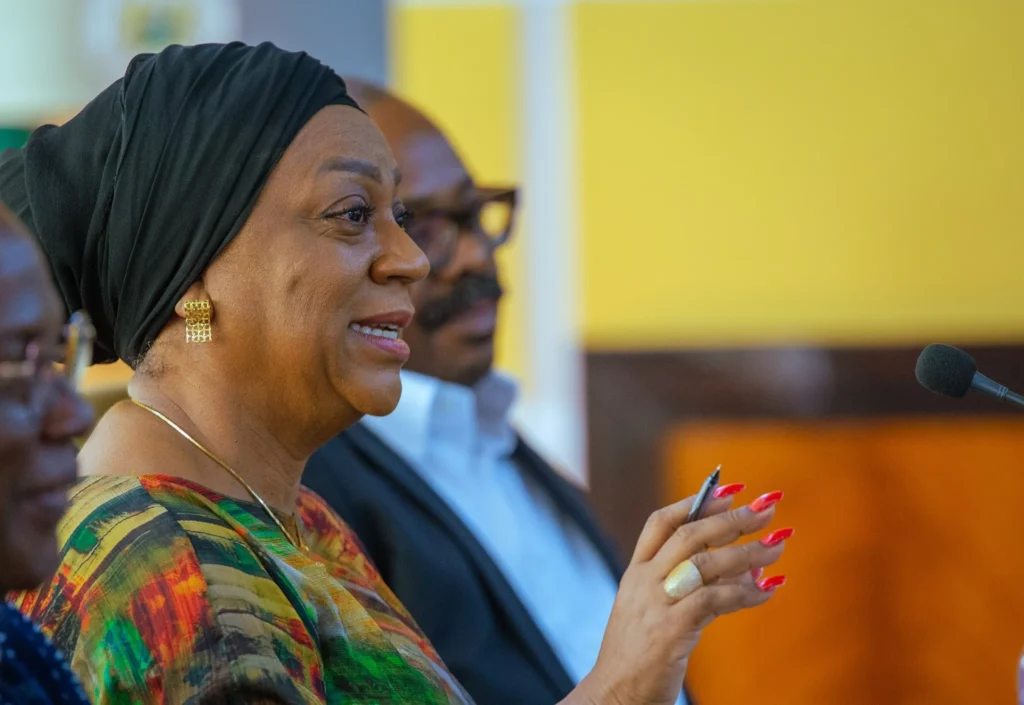
The resulting 72-page report, authored by Senior Presidential Advisor Dr. Valerie Esther Sawyerr and released on May 22, delivered a clean bill of health for the Ministry.
No laws were broken, it concluded. No contracts were improperly awarded. The system worked.
But a closer reading of the document reveals something more complicated — a report that is technically careful, politically useful, and analytically compromised in ways that matter.
The Investigator’s Problem
The most fundamental issue is one the report never names. Dr. Sawyerr is a political appointee of the same president whose government’s Ministry is under scrutiny.
Her investigation was commissioned by the Presidency, conducted within the Presidency, and its findings were communicated to the public by Government Communications Minister Felix Kwakye Ofosu — also a political appointee of the same administration.
No independent auditor reviewed the documentary evidence. No civil society observer was embedded in the process. No opposition representative was granted access.
The Public Procurement Authority (PPA) — whose board had approved the single-sourced contracts in question — was not called upon to provide an independent assessment of whether its own approvals were appropriately granted.
It can be concluded that the findings were not wrong, but they cannot be independently verified. That is a problem when the subject of the inquiry is public money running into the tens of billions of cedis.
A Number That Works — If You Squint at It Right
The report’s central defense is statistical: only 4.58% of the 1,441 road contracts awarded by MRH under the current administration were single-sourced.
The claim is technically accurate. It is also, on inspection, carefully constructed to be misleading.
The 1,301 competitively tendered contracts the report presents as evidence of MRH’s commitment to open procurement are overwhelmingly routine maintenance deals — 896 feeder road maintenance contracts and 405 highway maintenance contracts.
These are low-value, recurring, procedurally simple awards that are almost always competitively tendered as a matter of standard practice.
Including them in the same pool as the Big Push mega-contracts — and then citing the competitive share of the combined pool as vindication — is not analysis. It is arithmetic deployed as rhetoric.
The relevant question is the one the report works hardest to avoid: within the Big Push initiative, the programme specifically designed to deploy tens of billions of cedis on flagship national infrastructure, why was competitive tendering not used for a single contract from the start?
The Fourth Estate’s investigation, using data obtained through Right to Information requests directly from MRH and the Ghana Highway Authority, found that 81 of 107 Big Push contracts — 76% — were awarded through sole sourcing. That data came from the government’s own labelled Big Push master register.
The report’s response is to argue that the Fourth Estate used a “narrow filter” and that the correct universe of Big Push contracts is 140, not 107.
But this explanation introduces a new problem: if the government’s own master register of its own flagship programme produced one set of figures, and the presidential investigation produced another, the burden of explanation falls on the government — not the journalists who used the government’s documents.
Three Numbers, One Programme
The figure fluctuations are worth tracking closely. When Roads Minister Kwame Governs Agbodza first addressed Parliament on the Big Push programme after the Fourth Estate story broke, he put the number of new contracts at 54, plus 23 inherited projects, for a total of 77.

The presidential report says 140. The Fourth Estate’s RTI data produced 107. The Ministry’s own early website publication, according to MFWA’s original complaint, listed yet another set of figures, with procurement methods omitted.
Four different counts of the same portfolio, from official and semi-official sources, over a period of weeks. The report attributes the discrepancy to differing funding source definitions — Big Push Fund versus Consolidated Fund.
That may be part of the answer. But it is also the case that the figures kept shifting as scrutiny intensified, and the report declines to characterise this pattern as anything other than a definitional misunderstanding.
Urgency That Was Planned for Years
The report’s legal defense of sole sourcing rests on section 40(1)(b) of the Public Procurement Act, 2003 (Act 663), which permits single-source procurement where urgent need arises from “unforeseeable circumstances.”
The Ministry invoked road deterioration, national security vulnerabilities along border corridors, and inflationary risk as the urgent and unforeseeable circumstances that justified bypassing competitive tender for nearly half of the Big Push contracts.
But the Big Push was not an emergency response. It was a manifesto promise.
The NDC’s 2024 manifesto described it as a plan to “roll out the Big Push for rapid infrastructure development” and to “embark on a US$10 billion accelerated infrastructural plan.”
This is a planned acceleration — not an unforeseen crisis. The statutory urgency exception is designed for catastrophic events and genuine emergencies, not for situations created by a government’s own ambitious delivery timeline.
The report acknowledges this tension, noting that the standard competitive tendering timeline of 10 to 15 months would have delayed deployment.
It does not acknowledge that restricted tendering — which the government itself used for 51 of the 140 Big Push contracts — is considerably faster than open competitive tendering and significantly more competitive than sole sourcing.
The report never explains why restricted tendering was not the default for the entire Big Push rather than a secondary option used in fewer than half the cases.
The GHC30 Million Line Item Nobody Ordered Investigated
Perhaps the most striking finding in the report is one buried in section 5.6.6, presented without alarm.
The Department of Feeder Roads (DFR) embedded a provisional sum of GHC30 million — intended for maintenance of the DFR’s own headquarters building — inside the contract for the 9km Apegusu Mpakadan feeder road.
A separate GHC5 million allocation for the same headquarters maintenance appeared in another feeder road contract.
These are not road costs. They are administrative overhead items folded into construction budgets, a practice that obscures true project costs and evades normal institutional budget scrutiny.
The report notes that these allocations were reduced — the GHC30 million to zero, the GHC5 million to GHC975,000 — before the investigation concluded.
But it reveals that the corrections happened because the Ministry of Finance found that DFR contract awards had exceeded approved commitment authorisation limits, triggering a budget ceiling breach.
The ethics of embedding headquarters maintenance inside road contracts was not what prompted the correction. The money was running out.
The report records this and moves on. It does not ask who authorised the original allocations. It does not ask whether similar items appear in contracts that the investigation did not examine.
It makes no recommendation related to this finding.
What No Retrospective Accountability Looks Like
The report’s four recommendations are all forward-looking: mandatory Value for Money Office certification for large sole-sourced contracts, Cabinet approval for high-value awards, legislative reform to restrict administrative discretion, and publication of beneficial ownership data on a public procurement portal.
These are sensible reforms, and the government has indicated it accepts them.

But the report contains zero retrospective accountability. No contract is flagged for re-evaluation. No official is recommended for disciplinary review. No contractor is referred for further scrutiny.
The Adawso Bridge — awarded to a single contractor for nearly half a billion US dollars through sole sourcing, with no cost benchmarking offered — passes without comment beyond a line in the contracts table.
MFWA’s allegation that some individuals own multiple companies awarded contracts is dismissed as unsubstantiated, without any beneficial ownership investigation being conducted or disclosed.
What the Report Gets Right
Fairness requires acknowledging where the report’s findings appear credible.
The clarification that the Dodo Pepesu Nkwanta road contract was awarded through restricted tendering — with five companies evaluated — rather than sole sourcing, as initially reported, is supported by documentary evidence in the report.
It corrects what appears to have been a genuine error in the Fourth Estate’s characterisation of that specific contract.
The technical explanation that per-kilometre cost comparisons are misleading when project lots include different engineering scopes — viaducts, grade-separated interchanges, long-span river bridges — is sound.
The SSNIT worker count discrepancy appears to be a data version issue rather than fraudulent documentation.
And the report’s own acknowledgment that “public concern highlights the need for stronger transparency and reduced administrative discretion” represents an implicit concession that the Fourth Estate’s investigation surfaced something real, even if the report declines to say what.
The Transparency the Report Asks For — and Doesn’t Provide
President Mahama promised in both his 2025 and 2026 State of the Nation Addresses to make sole sourcing the rare exception. His government is now legislating to do exactly that.
The irony is that the case for reform is being built on the back of a procurement pattern that this very report insists was appropriate.
The Media Foundation for West Africa and the Fourth Estate had to fight an initial RTI denial to obtain the data that triggered this entire inquiry.
When the data was released, the Ministry’s figures shifted repeatedly before a presidential report arrived at a final count. That trajectory — resistance, fluctuation, then a government-authored acquittal — is not consistent with the open-government posture the President has repeatedly pledged.
The four reforms now on the table are worth supporting. But their credibility depends on whether they are driven by genuine institutional learning or by the political need to close a controversy.
The report, as written, answers that question less clearly than it should.
Full Report
This article was edited with AI and reviewed by human editors



Follow