Story Highlights
- The Ghana Trade Fair Centre, opened in 1967 under Kwame Nkrumah’s industrialisation drive, has been under a stop-start redevelopment since 2017
- A 2020 night demolition of tenant properties — carried out after a High Court injunction was lifted — drew accusations of political targeting from the opposition NDC
- Government and Ghana Trade Fair Company Limited (GTFCL) officials have repeatedly announced completion timelines — 2022, then late 2024 — that have not held
- The most recent flashpoint: the demolition of the Fantasy Dome entertainment venue in 2026, which its operator has attributed to the Trade Fair Company
- The project sits alongside a separate, unrelated closure: the Accra International Conference Centre, shut in March 2026 for its own long-delayed renovation
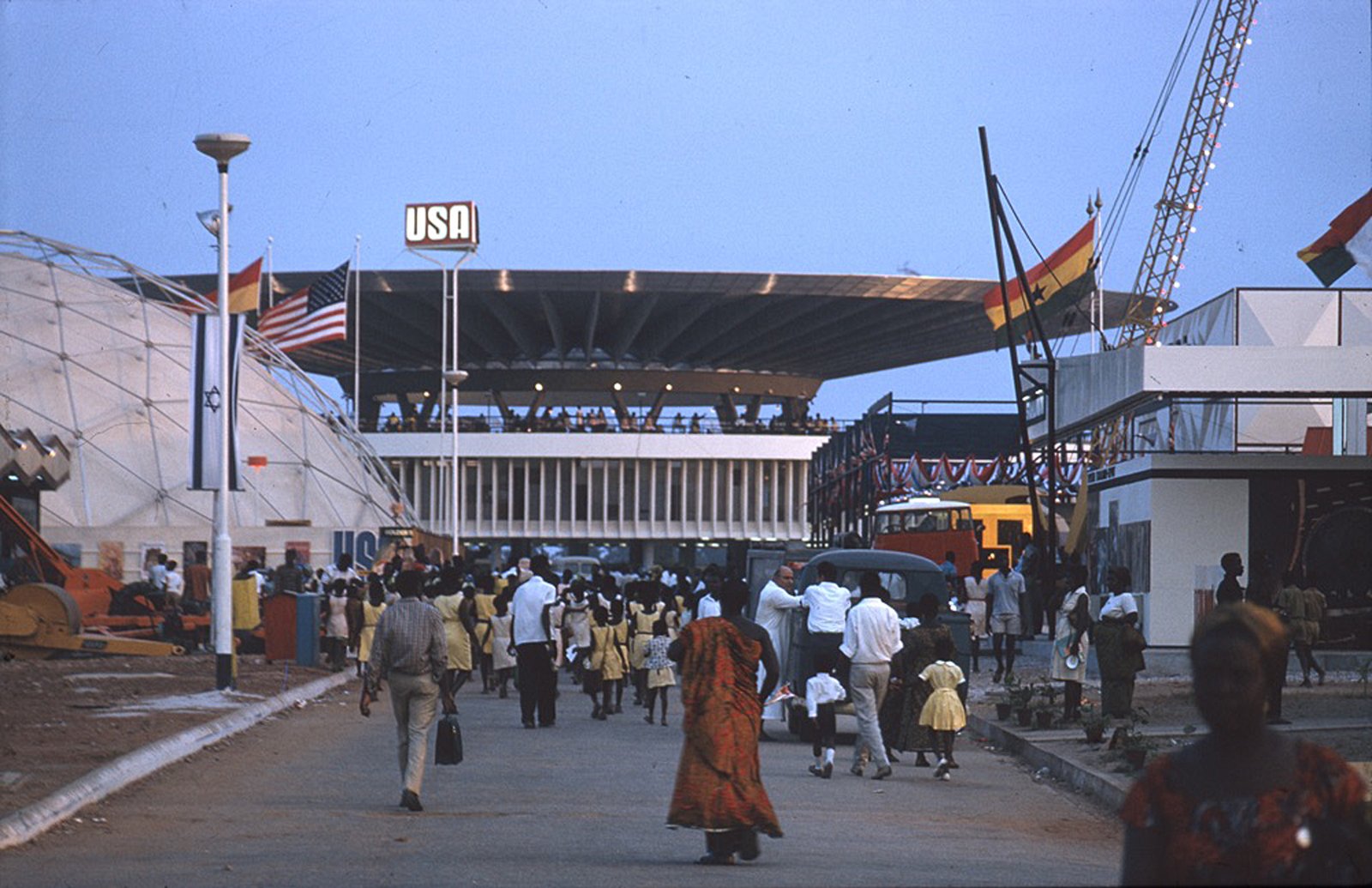
Accra, Ghana — For nearly six decades, the Ghana Trade Fair Centre has stood on 127 acres of reclaimed coastal land in La, Accra, as one of the country’s most symbolically loaded pieces of real estate.
It has also, for roughly a decade now, existed in a state of near-permanent redevelopment — announced, delayed, contested in court, and periodically punctuated by bulldozers.
The centre was constructed by the Ghana National Construction Company over a five-year period, conceived by Kwame Nkrumah’s government as tightly bound to Ghana’s export promotion goals and ambitions to become a Pan-African trade gateway.
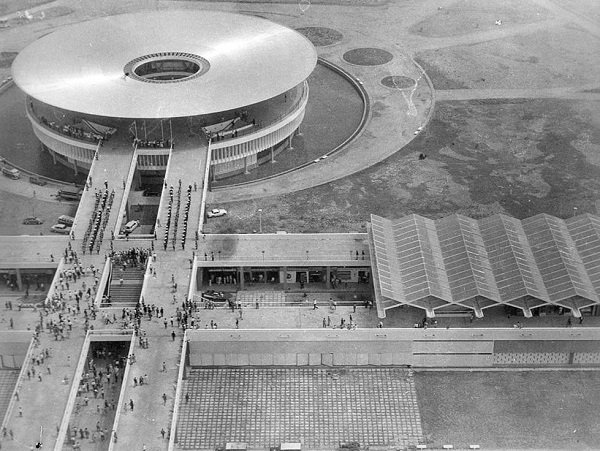
Designed and built through the 1960s, the project brought together Ghanaian architect Vic Adegbite with Polish co-designers Jacek Chyrosz and Stanisław Rymaszewski, framed within a broader vision of socialist-era development and Pan-Africanism.
In February 1967, Ghana hosted an International Trade Fair on the new grounds, drawing roughly 2,000 commercial and industrial exhibitors from 33 countries over a three-week period.
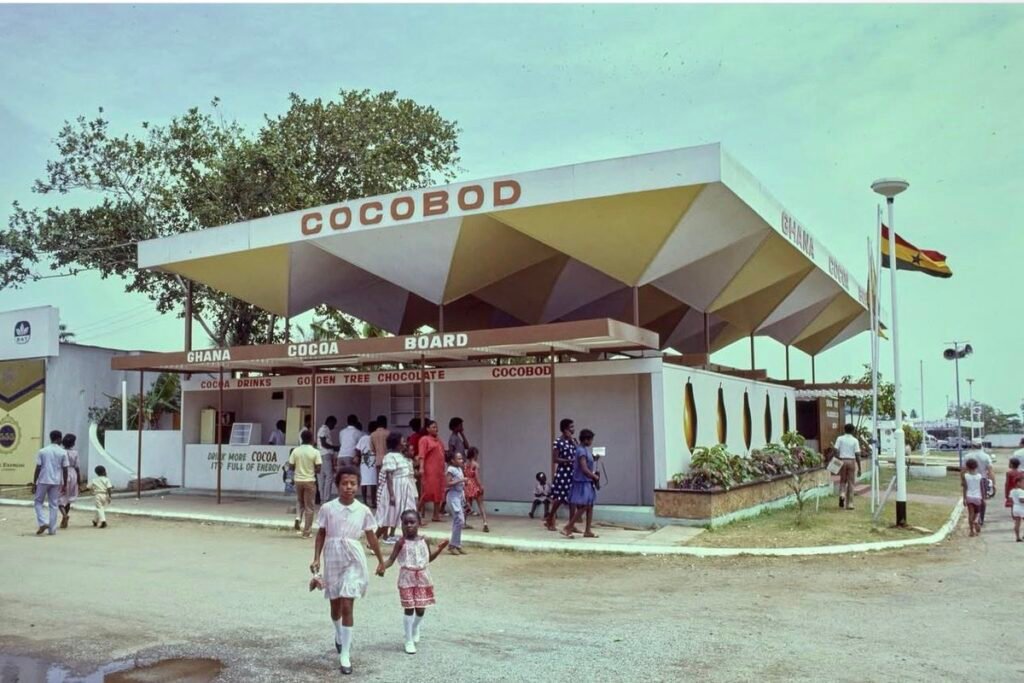
In its early decades, the fair functioned as a genuine discovery engine for Ghanaian industry and invention — exhibitors from small businesses to independent inventors used the grounds to attract customers, investors and official attention, with fair management producing detailed exhibitor catalogues to facilitate those connections.
That utility faded with neglect.
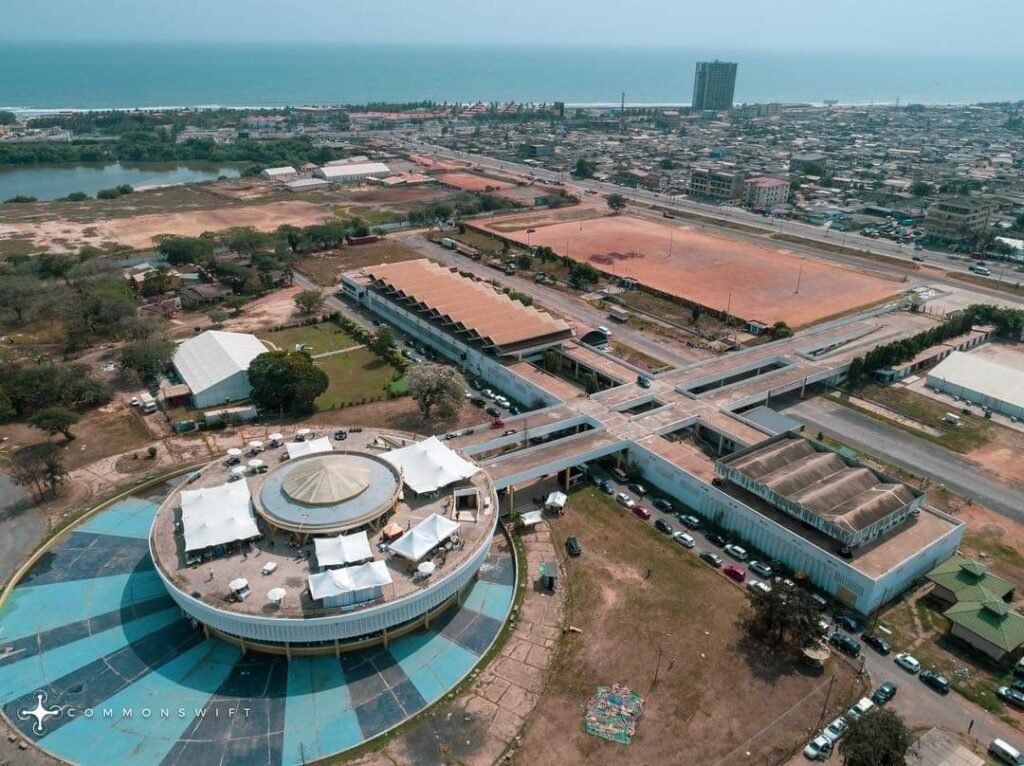
By 2017, the Ghana Trade Fair Centre — built over four decades earlier as a showpiece meant to host major fairs — fell into disrepair, its condition making it unattractive and unsafe to host large exhibitions, with facilities beyond a handful of pavilions overtaken by weeds.
Redevelopment Announced, Then Contested
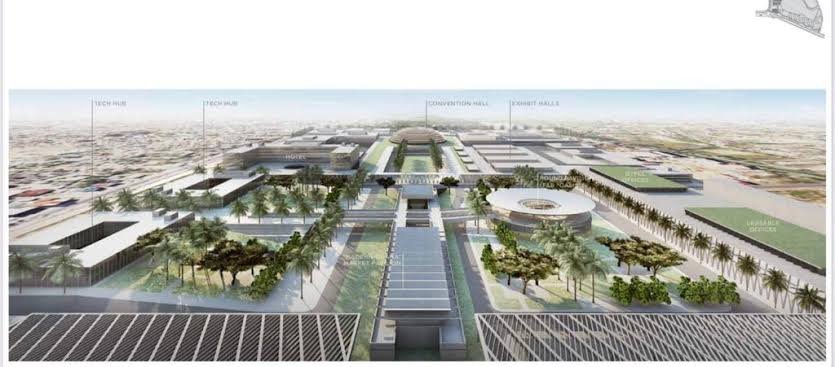
A masterplan for redevelopment was approved by the Ghana Trade Fair Company Limited (GTFCL) board and Cabinet, with a horizontal developer secured and Public Procurement Authority approval granted on 28 June 2019 to build the infrastructure needed to lease parts of the site to private developers.
At an investor conference following Cabinet approval of the masterplan, the Minister of Planning outlined a two-phase project across roughly 156 acres, with the first phase covering a modern convention centre, exhibition halls, a business park and commercial offices.
Later phases would add a technology hub, a “made-in-Ghana” trade village, apartments, malls and hotels.
The overall price tag was put at an estimated $2 billion.
Executing that vision meant clearing tenants — some of whom had operated on site for years.
GTFCL said it had notified tenants of the redevelopment as early as September 2017 and issued a formal six-month eviction notice on 10 July 2018, requiring vacation by the end of that year.
Matters escalated in February 2020. After the High Court’s Land Division vacated an injunction on 12 February 2020 — ruling that government could proceed “for the betterment of the nation as well as Plaintiffs” — demolition of structures began on the night of Sunday 16 February, carried out by two bulldozers under armed police oversight.
Among the properties destroyed were factories belonging to Universal Labels & Packaging Co. Ltd and Colour Planet, owned by former journalist Raymond Archer, who told reporters his operation had run for over a decade and represented a $10 million investment.
The opposition NDC seized on the episode.
Communications officer Sammy Gyamfi called the exercise “illegal, improper, unconscionable, unfair and barbaric,” describing it as “a political job” with “nothing to do with the law.”
GTFCL rejected the characterisation, insisting due process — including prior notices dating to 2017 — had been followed and that no valid injunction was in force at the time of the demolition.
Deadlines That Kept Moving
The completion date has been a moving target for years.
In mid-2020, GTFCL’s CEO Dr. Agnes Adu said the company remained committed to a 2022 completion deadline despite COVID-19 disruptions, while acknowledging the pandemic had slowed the global economy and would affect scheduling.
That date passed.
By late 2024, Dr. Adu was briefing then-Vice President Mahamudu Bawumia that the exhibition and convention centre — envisioned with a 20,000-person capacity, ten times the country’s existing capacity — would be ready within eight months, crediting a public-private partnership model for unlocking progress after the project “cleared a few hurdles,” including the pandemic.
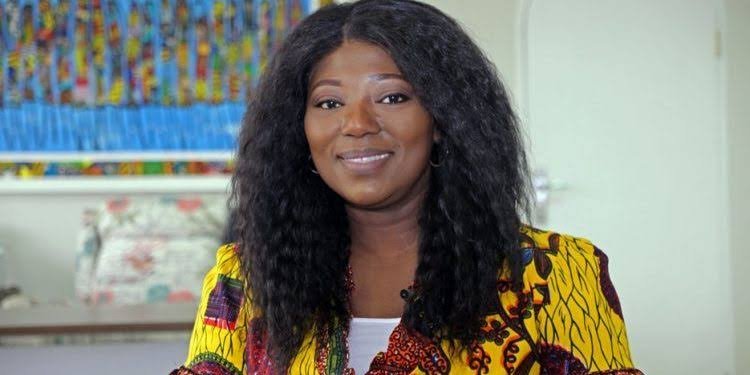
Around the same period, Dr. Adu separately projected completion by the end of that year.
Neither timeline held.
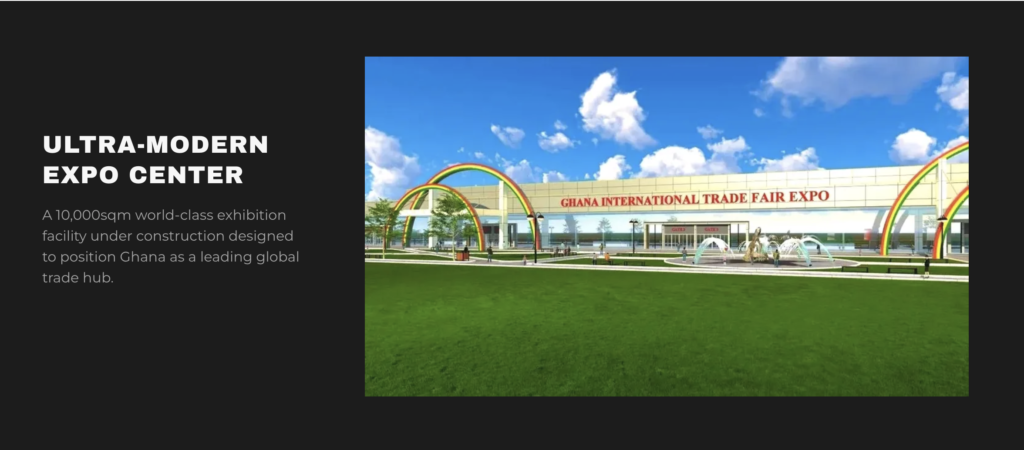
As of mid-2026, GTFCL’s own website describes a 10,000-square-metre exhibition facility as still “under construction,” designed to position Ghana as a leading global trade hub — a scaled description from the earlier 20,000-capacity ambition.
The Data Gap
What is notably absent from a decade of public statements is verifiable, independently audited data: exact disbursed capital against the original $2 billion projection, a construction-completion percentage, or a reconciled account of how many tenants were displaced and compensated.
Public reporting has relied almost entirely on GTFCL leadership’s own progress claims — repeated at investor conferences and ministerial briefings — rather than third-party engineering assessments or parliamentary audit findings.
That absence of hard, verifiable metrics has made it difficult for civil society or the press to independently confirm whether physical construction milestones match official rhetoric, or to assess value for money on a project now nearing a decade in execution.
A Fresh Flashpoint in 2026
The redevelopment’s tensions resurfaced this year. In May 2026, the operator of the Fantasy Dome — a popular entertainment venue that had occupied part of the Trade Fair grounds — alleged that its demolition was the responsibility of the Ghana Trade Fair Centre.
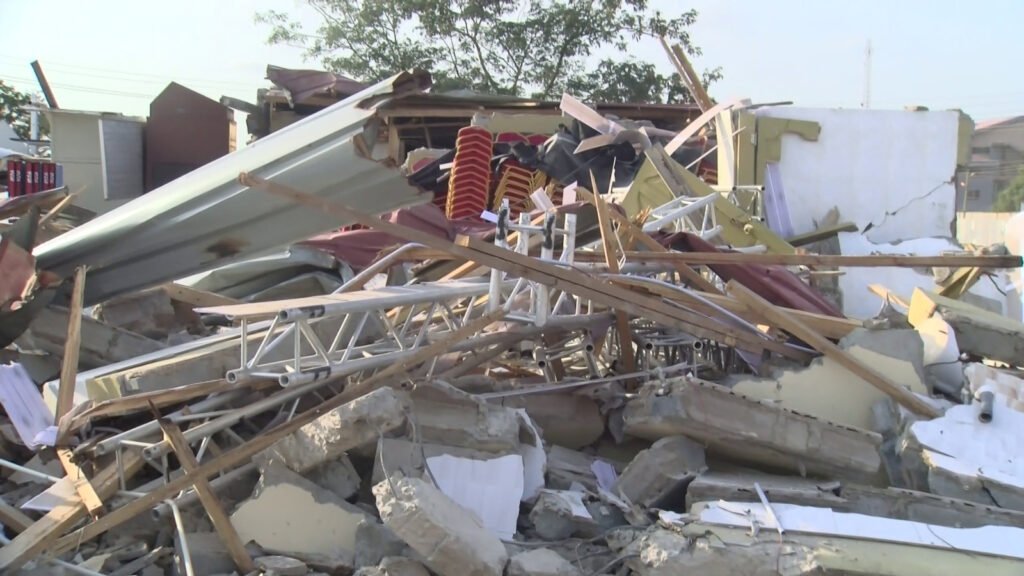
The controversy revived longstanding disputes between the Trade Fair Company and tenants over notice, compensation and the pace of clearances.
That controversy unfolded even as a separate, unrelated Accra landmark faced its own reckoning.
In March 2026, the Ministry of Foreign Affairs shut the Accra International Conference Centre indefinitely for renovation. The closure fulfilling a commitment President John Dramani Mahama made to Parliament, addressing structural concerns about the AICC’s pillars and waterlogged foundation site that had been documented since at least 2017.
The parallel timing of two major venue renovations — one commercial, one diplomatic — has fed a broader public conversation about the state of Ghana’s flagship public infrastructure.
This article was edited with AI and reviewed by human editors