Story Highlights
- Supreme Court rules 5-2 that Ghana’s delegate-based system for electing party flagbearers and parliamentary candidates is unconstitutional
- Parties given one year to adopt frameworks allowing all registered members in good standing to vote directly
- Ruling caps a case filed by Prof. Kwabena Frimpong-Boateng, Dr. Nyaho Nyaho-Tamakloe and Dr. Christine Amoako-Nuamah against the NDC, NPP and CPP
- The Attorney-General, NDC and CPP backed the suit; the NPP opposed it, defending the delegate system as constitutional
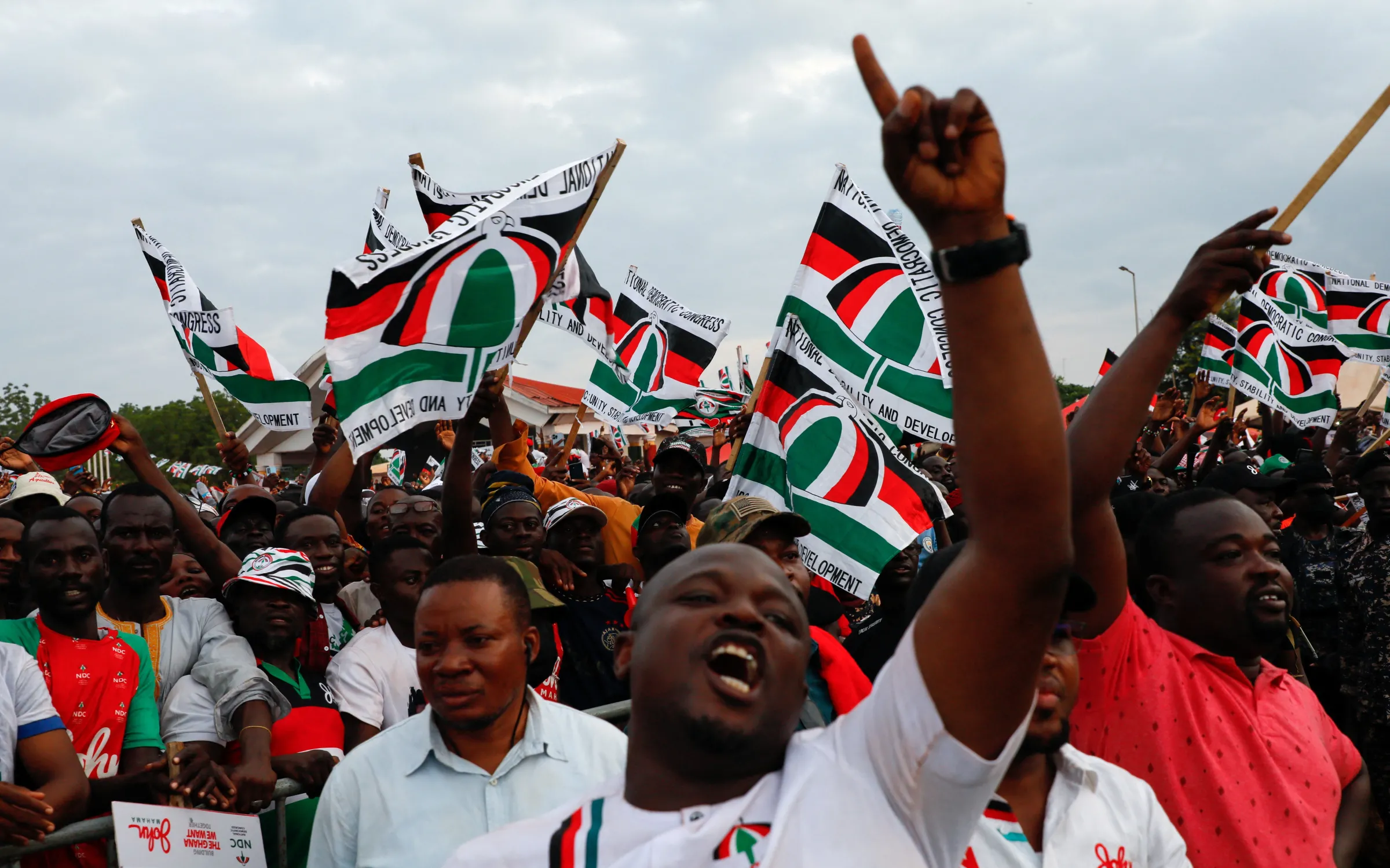
- NPP flagbearer elections grew from 2,000 delegates in 1996 to over 200,000 in 2024; NDC from 1,400 in 2004 to 355,000 in 2024
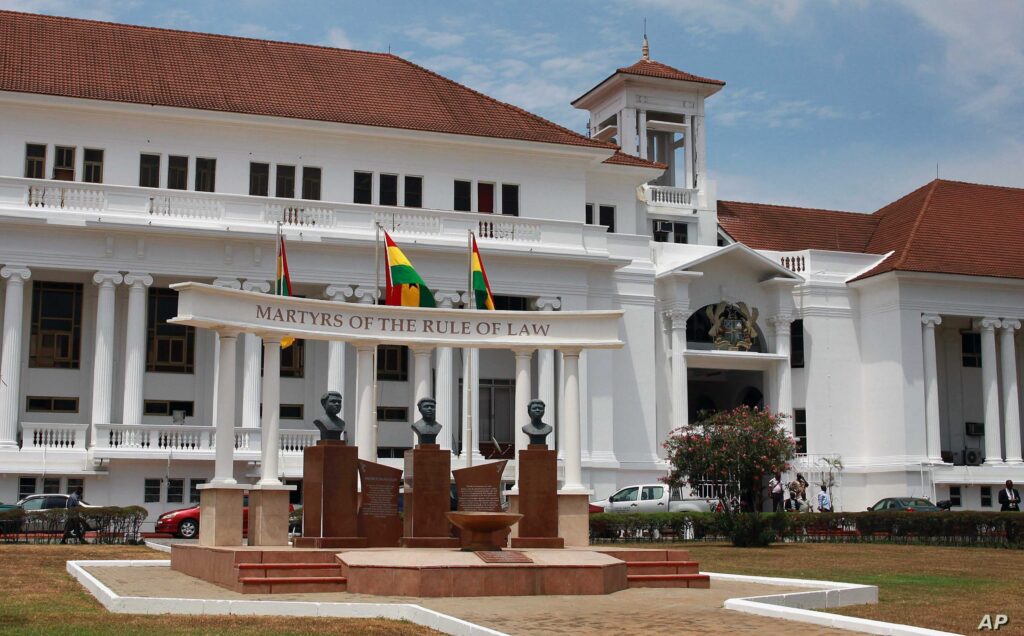
Ghana’s Supreme Court has declared unconstitutional the delegate system that political parties have relied on since 1992 to select their presidential and parliamentary candidates.
In a 5-2 majority decision delivered Wednesday, the court ordered political parties to adopt electoral processes that allow every member in good standing to participate directly in choosing candidates, giving them one year from the date of judgment to comply.
The decision brings a formal end — pending compliance — to a practice under which small pools of delegates, rather than the broader party membership, cast the deciding votes in presidential and parliamentary primaries.
It is expected to force the National Democratic Congress (NDC), the New Patriotic Party (NPP) and the Convention People’s Party (CPP) to rewrite constitutional and electoral provisions to bring their internal processes in line with the court’s interpretation of Article 55 of the 1992 Constitution.
The Case Behind the Judgment
The ruling closes out a suit filed earlier this year by three prominent statespersons: Professor Kwabena Frimpong-Boateng, a former Minister of Environment, Science, Technology and Innovation; Dr. Nyaho Nyaho-Tamakloe, a veteran politician and retired military officer; and Dr. Christine Amoako-Nuamah, a former minister.
Represented by lawyer Oliver Barker-Vormawor, the plaintiffs asked the court for three specific reliefs: a declaration that the delegate-based electoral system is unconstitutional, an order compelling parties to allow all registered members in good standing to participate directly in internal elections.
They also asked the court for a directive for the Electoral Commission to more actively enforce its statutory role under the Political Parties Act, 2000 (Act 574).
The suit, popularly known as the Anti-Delegate System (ADS) case, named the NDC, NPP and CPP as defendants, with the Electoral Commission and the Attorney-General also joined.
The plaintiffs argued that limiting internal party voting rights to delegates contravenes Article 55(5) of the Constitution, which mandates that political parties adhere to democratic principles.
A Divided Field of Defendants
The case produced an unusual split among the very parties it targeted. The NDC, the CPP and the Attorney-General all filed responses agreeing with the plaintiffs and inviting the Supreme Court to uphold the suit, while the NPP maintained throughout that the delegate system is constitutional.
The Electoral Commission, for its part, said it had no stake in the outcome and would abide by whatever the court decided.
The state’s position itself shifted over the course of litigation. Deputy Attorney-General and Minister of Justice Dr. Justice Srem-Sai had initially argued that the Constitution does not mandate universal adult suffrage or a “one member, one vote” model for internal party elections
and that political parties should retain considerable autonomy over their own electoral design.
The AG’s office later reversed course, filing arguments backing the plaintiffs and describing the case as one of the most consequential constitutional matters currently before Ghana’s Supreme Court in its Fourth Republic history.
But the shift drew accusations from critics that the state had aligned itself politically with the governing NDC rather than maintaining a neutral constitutional posture.
Why the Case Emerged Now
Although the delegate system has been in continuous use since the return to multiparty democracy in 1992, it took more than three decades and nine general elections before a formal legal challenge reached the Supreme Court.
Plaintiffs and commentators pointed to the sheer scale the system has grown to as part of the underlying tension.
When former President John Agyekum Kufuor was elected NPP flagbearer in 1996, the party had 2,000 delegates; by 2024, when Dr. Mahamudu Bawumia was elected flagbearer, a little over 200,000 delegates took part.

On the NDC side, 1,400 delegates elected the late President John Evans Atta Mills as flagbearer in 2004, while as many as 355,000 delegates took part in electing President John Mahama in 2024.
Critics of the system, including the plaintiffs, argued that even as delegate numbers expanded dramatically, the arrangement continued to exclude the vast majority of registered party members from the most consequential internal votes, while creating conditions that favoured well-resourced candidates able to court large delegate blocs.
One Year To Implement Changes
With the Supreme Court’s compliance deadline now running, the NPP, NDC and CPP face a one-year window to design and adopt new electoral frameworks opening presidential and parliamentary primaries to their full membership.
The practical questions are significant: parties will need to determine voter verification standards, logistics for potentially hundreds of thousands of eligible voters, and mechanisms to prevent the vote-buying concerns that plaintiffs said the delegate system already enabled.
The ruling arrives ahead of future general elections, meaning any party contesting a presidential race under revised rules will be doing so under a fundamentally different nomination process than the one that produced their last several flagbearers.
Legal observers have noted the judgment’s implications extend beyond the three parties named as defendants, potentially setting a binding constitutional standard for all registered political parties in Ghana.
This article was edited with AI and reviewed by human editors