


Story Highlights
- Ghana is expected to replace the Minerals and Mining Bill, 2026, now before Parliament, with a revised version, according to three people cited by Reuters.
- The revision would set new mining leases at a maximum of 20 years. The published draft capped them at 15 years or the life of the mine, whichever is shorter.
- Current law allows leases of up to 30 years.
- A mines ministry official described the 15-year provision as an error in the document sent to Parliament.
- The Ghana Chamber of Mines says the proposed state “special share” power already exists under the 2006 mining law.
- No date has been given for reintroducing the revised bill.
Ghana is expected to replace a draft mining law currently before Parliament with a revised version that restores a maximum 20-year lease term for new mining projects, Reuters reported on Friday, citing two senior government officials and a mining executive.
The move follows concerns from mining companies over provisions in the Minerals and Mining Bill, 2026. The bill, published by Parliament last month, would have sharply shortened lease periods and expanded the state’s leverage over mining firms.
What the Draft Bill Proposed
Reuters reported on September 30 that the draft bill would limit new mining leases to 15 years, or the projected life of the mine, whichever is shorter. Under the Minerals and Mining Act, 2006 (Act 703), leases can run for up to 30 years.
The draft also gave the minister responsible for mines the power to require mining companies to issue the state a special share. That type of share typically grants the government rights over key company decisions, such as changes in control, without a corresponding claim on profits.
The revised bill is expected to replace the 15-year provision with a 20-year maximum. That figure matches a policy position the mines minister set out in July, when the government approved a revised mining law framework aimed at strengthening oversight of the sector.
Government Calls It a Drafting Error
A mines ministry official, who spoke to Reuters on condition of anonymity, said the version submitted to Parliament contained a mistake that would be corrected. The official was not authorised to speak publicly.
The sources did not say when the revised bill would be reintroduced. Parliament has not publicly commented on the expected change.
Industry Response
The Ghana Chamber of Mines, which represents large-scale producers, said on Friday that the special share power is not new. According to the chamber, the provision already exists under the 2006 Act and is largely being carried over into the new bill. The main difference is tougher penalties for companies that fail to comply.
Ken Ashigbey, the chamber’s chief executive, said talks with the authorities had produced “good compromise positions,” including the 20-year lease term. He said outstanding issues would be raised with Parliament as the bill moves through the legislative process.
Why Lease Length Matters
Lease length is central to mining investment decisions. Large gold mines often require years of exploration, permitting and construction before producing. Companies typically need long-term tenure to raise financing and recover capital costs.

A 15-year cap, with a further limit tied to mine life, would have shortened the window for investors to earn returns. Industry groups argued it could have discouraged new projects and expansions.
The government’s position has been that shorter terms give the state more frequent opportunities to review agreements and renegotiate terms as conditions change. A 20-year cap represents a middle ground between the draft and the existing 30-year limit.
Background: Rewriting a Two-Decade-Old Law
Ghana is Africa’s largest gold producer, and gold is the country’s leading export earner. Mining is also a major source of government revenue through royalties, corporate taxes and the state’s free carried interest in mining companies.
The Minerals and Mining Act, 2006, has governed the sector for nearly two decades. It has been amended several times, but successive governments and civil society groups have argued it no longer reflects the realities of the industry.
The current rewrite is being driven by several pressures. High global gold prices have increased the value of the country’s mineral wealth and renewed debate over how much of it the state captures. The government has also pursued a broader effort to increase local participation in the sector and to tighten oversight of mining licences.
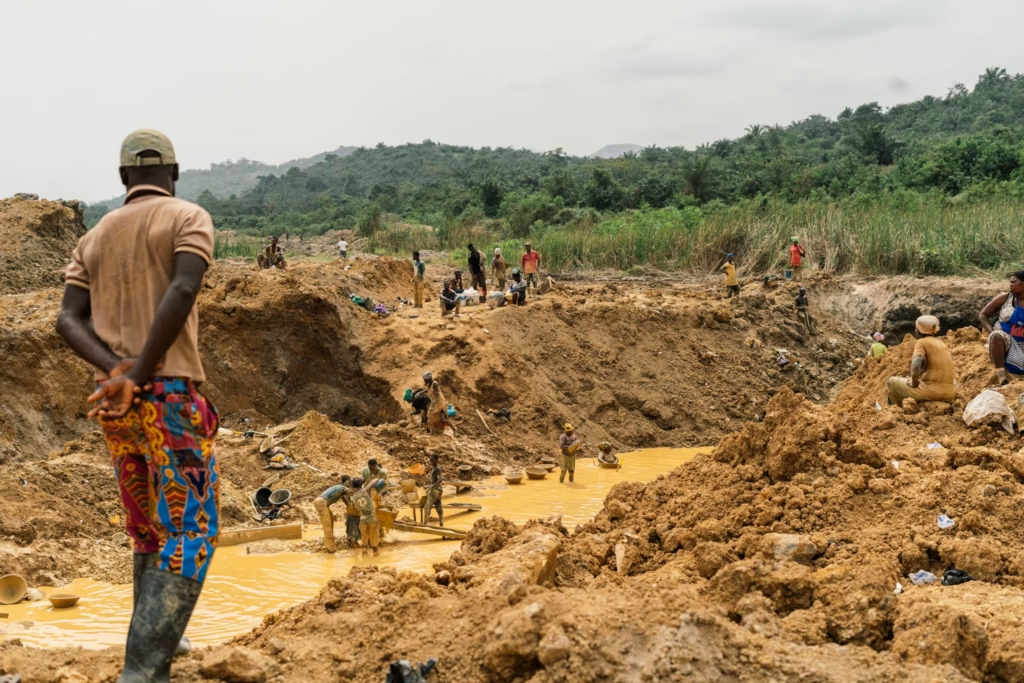
Illegal small-scale mining, known locally as galamsey, has added to the urgency. The practice has polluted major rivers and destroyed farmland and forest reserves. It has become one of the country’s most politically sensitive issues, with civil society groups and labour unions demanding tougher enforcement.
The government has framed the new legislation as part of a wider reset of how mineral rights are granted, monitored and revoked.
The Investor Balance
Ghana’s approach mirrors a trend across several African mining countries. Governments in Mali, Burkina Faso, Niger and Guinea have revised mining codes in recent years to secure larger state stakes, higher royalties or greater control over operations. In some of those countries, the changes led to prolonged disputes with foreign mining companies.
Ghana has generally positioned itself as a more stable and predictable mining jurisdiction in the region. Industry representatives have argued that maintaining that reputation depends on consultation and clear rules, particularly on tenure and state rights.
The expected revision suggests the government is willing to adjust provisions that drew industry objections, while keeping its broader policy goals. The special share provision, with stronger penalties, appears set to remain.
What Comes Next
The revised bill must be formally laid before Parliament before debate can proceed. Lawmakers will then consider it at committee stage, where industry groups, civil society organisations and other stakeholders are likely to make submissions.
Key points to watch include the final wording of the lease provision, how the special share power is defined and enforced, and whether other contested clauses are amended.
The Chamber of Mines has said it will continue engaging Parliament on unresolved issues. The government has not indicated a target date for the bill’s passage.
This article was edited with AI and reviewed by human editors



Follow