


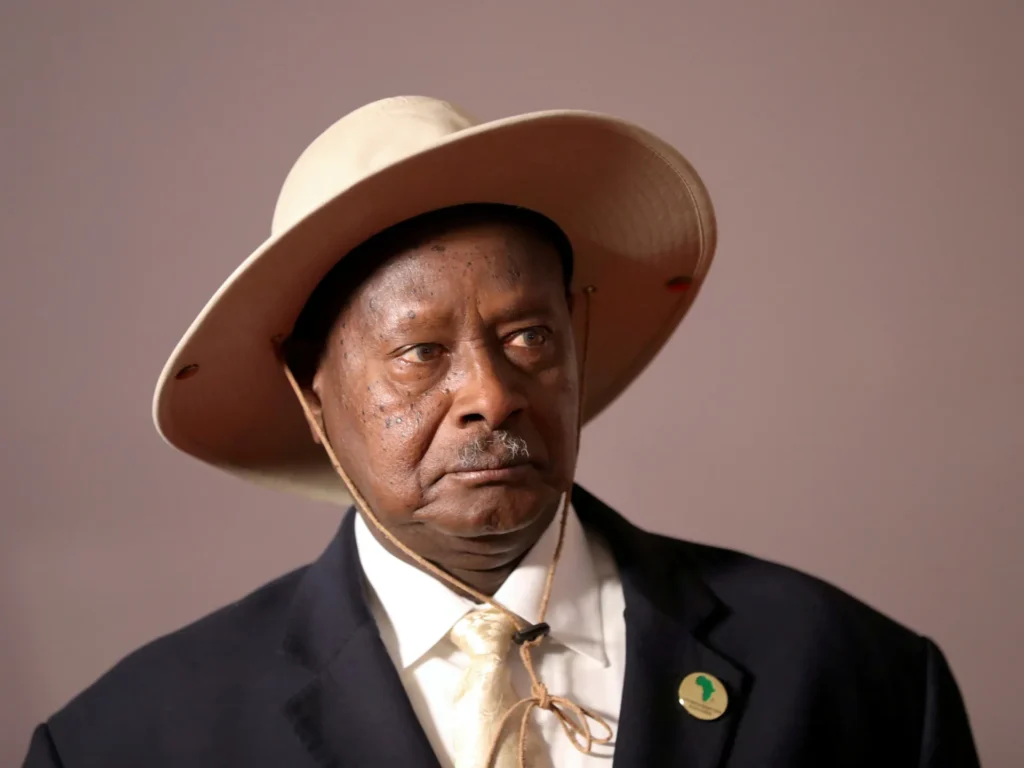
A few days after their general elections, Cameroonians on social media thought they had finally gotten rid of President Paul Biya, the 92-year-old who has ruled the country for 40 years.
After collating results from polling states, the country’s main opposition leader, Issa Tchiroma Bakary, claimed an unofficial victory.
But on Monday, the country’s electoral commission announced that Biya had won 53.7% of all votes, making him eligible to continue serving the country for the next eight years.
He will be close to 100 years old at the end of his eighth term.
When Biya first took office in 1982, Michael Jackson’s Thriller had just been released. Today, Cameroon’s median age is 19. Many of its citizens have never known another leader.
And Biya is not alone.
Across Africa, a generation of leaders who came of age in the liberation and postcolonial eras, still grip the levers of power, even as the rest of the continent’s demographics have turned over entirely.
Old Men Of Young Nations
In Côte d’Ivoire, Alassane Ouattara, now 83, has just secured a fourth term in office — a feat he insists is about “continuity” and “stability.”
In Uganda, Yoweri Museveni, 81, governs a nation where nearly 80% of people are under 30. He announced he will run again for a fifth term in the next elections scheduled for January 2026.

In Equatorial Guinea, Teodoro Obiang, 83, has ruled since US President Jimmy Carter was in the White House. Obiang has been the country’s second president since 1982.
Together, this sample of leaders embodies the paradox of modern Africa: the youngest continent in the world, led by some of its oldest rulers.

Playing The Long Game
The longevity of some of these presidencies isn’t accidental. Over the years, many have rewritten constitutions, abolished age limits, or reshaped courts to ensure their political survival.
In Uganda, parliament scrapped the presidential age limit of 75 — the final barrier that could have forced President Museveni to retire.
In Côte d’Ivoire, Ouattara argued for a “new constitution” which reset his term count.

In Togo, parliament adopted a new constitution, shifting the country from a presidential to a parliamentary system, eliminating direct presidential elections, and introducing the new role of “President of the Council of Ministers“.
This new rule effectively allows President Gnassingbé to stay in office until 2030. He is currently 86.
The justification for most of these changes in some African countries is often framed as experience.
“We cannot change captains in the middle of a storm,” Biya once said.
But for many Africans, that storm has lasted half a century.
Generation Gap
Africa’s demographic story is a ticking clock of its own. By 2050, one in four people on Earth will be African, and the majority will be under 25.
Yet most African countries are led by men who built their careers before the internet in their countries, before smartphones, before multiparty democracy.
In many countries, young activists are turning to digital organizing — Twitter/X threads instead of rallies, viral memes instead of manifestos.
While their energy is positive and relentless, their political system often feels immovable.
Twilight of the Strongmen
When Paul Biya travels abroad, speculation floods social media: Is he ill? Has he stepped down? But speculation soon dies down when he physically emerges.
Before his demise, President Mugabe of Zimbabwe sought medical care in countries like Singapore, while his own country continued to lack adequate health care systems.
In a sense, these leaders are ghosts of an earlier era — when independence heroes were celebrated as saviors, and authority came cloaked in permanence. But that myth is wearing thin.

Cameroon is currently in the midst of protests, following the announcement of Paul Biya’s win. Some political figures have been arrested, and civil unrest is slowly creeping into different locales across the country.
Many African youth have become despondent. Some cheer for figures like Ibrahim Traoré (37 years old) of Burkina Faso, who is currently in charge of the country after a successful coup in 2022.
While some view him as a modern Thomas Sankara, others are wary of his consolidation of power.
Whether Traoré decides to relinquish power and adopt civilian rule in the near future is anybody’s guess.
It may take time, but history — like youth — is impatient.
Africa’s young people are still waiting for their turn at the helm. Whether their leaders will hand over peacefully or with force is something that needs to be closely monitored.



Follow